

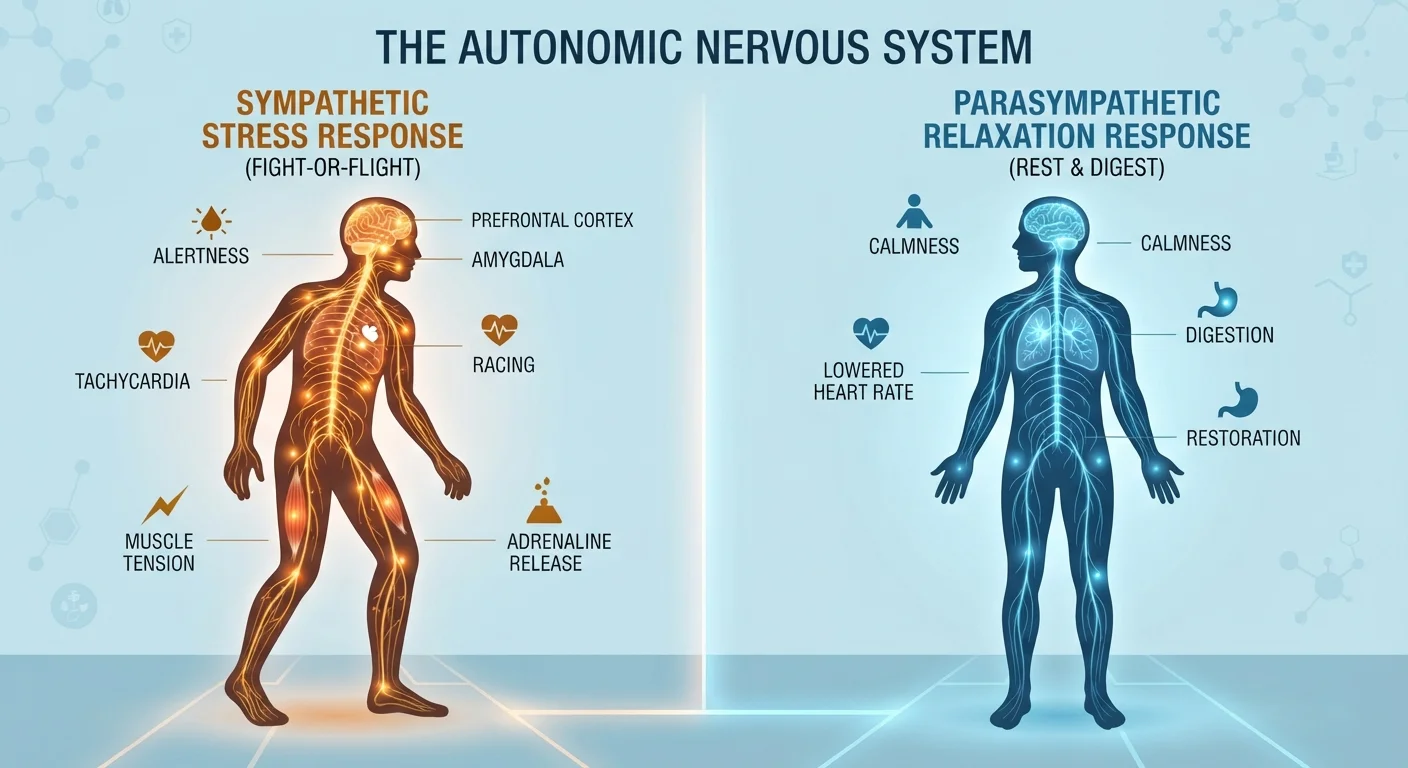
The Biology of Stress: What's Actually Happening
When your brain detects a threat — whether a car swerving into your lane or a tense email from your boss — a region called the amygdala fires an alarm signal. This triggers the hypothalamus to activate two key systems simultaneously: the sympathetic nervous system and the adrenal glands. The result is an immediate surge of adrenaline (also called epinephrine) that accelerates heart rate, sharpens focus, and redirects blood flow to muscles.
Seconds later, a second wave follows: the HPA axis (hypothalamic-pituitary-adrenal axis) releases cortisol, often called the stress hormone. Cortisol keeps your body on high alert, suppresses non-essential functions like digestion and reproduction, and floods the bloodstream with glucose for quick energy. This system evolved to handle short, acute threats — not the relentless low-grade demands of modern life.
77%
Adults reporting physical symptoms of stress
According to American Psychological Association survey data, a large majority of US adults report experiencing physical symptoms they associate with stress.
3x
Higher heart disease risk with chronic stress
Research published in cardiovascular health literature suggests chronically stressed individuals face meaningfully elevated cardiovascular risk compared to low-stress peers.
50%
Of immune cells affected by cortisol signaling
Immunological research indicates cortisol receptors are found on a broad range of immune cells, explaining stress's wide-ranging impact on disease resistance.
How Chronic Stress Reshapes the Brain
The brain is especially vulnerable to sustained stress. Research consistently shows that prolonged cortisol exposure affects two critical regions:
- Hippocampus: This area governs memory formation and spatial navigation. Chronic stress can reduce its volume over time, contributing to memory lapses and difficulty processing new information.
- Prefrontal cortex: Responsible for reasoning, impulse control, and emotional regulation, this region becomes less active under chronic stress — which is why stressed people often feel reactive, indecisive, or overwhelmed.
Meanwhile, the amygdala — the brain's threat-detection center — can become hyperactive, making you more reactive to even minor stressors. This is a well-documented neurological feedback loop, not a character flaw.
“The brain is not just a passive responder to stress — it is actively reorganized by it. Prolonged exposure to stress hormones can alter neural architecture in ways that make future stress harder to manage.”
— Robert Sapolsky, Neuroendocrinologist and professor at Stanford University
The Body Pays a Price Too
Stress does not stay in your head. When cortisol remains elevated over weeks or months, the downstream effects touch nearly every organ system:
- Immune system: Cortisol suppresses inflammatory responses in the short term, but chronic stress dysregulates immunity, increasing susceptibility to colds, infections, and slower wound healing.
- Cardiovascular system: Persistent elevated heart rate and blood pressure increase wear on arterial walls, a risk factor for long-term heart health.
- Digestive system: Stress disrupts gut motility and the gut-brain axis, commonly triggering symptoms like nausea, cramping, or changes in bowel habits.
- Sleep: High nighttime cortisol interferes with melatonin and disrupts deep, restorative sleep stages. This matters enormously — as our related article on sleep and mental health explains, poor sleep and stress form a reinforcing cycle that affects mood, cognition, and resilience.
Notice Your Early Warning Signs
Stress often signals itself physically before it registers emotionally — tight shoulders, shallow breathing, a clenched jaw, or a racing heart. Tuning into these early physical cues gives you a window to intervene before the stress response escalates. Keeping a brief daily log of physical sensations can help you identify your personal stress pattern over time.
Breaking the Cycle: What the Evidence Supports
Understanding the stress response isn't just academic — it's the first step toward managing it. Several well-researched strategies can help interrupt the HPA axis activation and return the nervous system to a calmer baseline:
- Controlled breathing: Slow, diaphragmatic breathing activates the parasympathetic nervous system, counteracting adrenaline's effects almost immediately.
- Physical movement: Exercise metabolizes excess cortisol and releases endorphins that support mood regulation.
- Cognitive reappraisal: Recognizing and reframing a stressor as manageable rather than catastrophic reduces amygdala reactivity over time.
For in-the-moment tools, our guide on grounding techniques for acute stress walks through practical exercises. If you want to compare longer-term practices, see our overview of meditation vs. deep breathing.
For a broader foundation in mental wellness — including when stress becomes something a professional should assess — the complete mental wellness overview is a useful resource.
This article is for general informational and educational purposes only and is not a substitute for professional medical advice, diagnosis, or treatment. Always consult a qualified healthcare provider with questions about your health or stress-related symptoms.