

Why Budgeting Myths Do Real Damage
Most people who don't budget aren't lazy or careless — they've simply absorbed incorrect beliefs about what budgeting actually involves. These myths feel plausible, so they go unquestioned. And as long as they go unquestioned, the budget never gets started.
That hesitation has real consequences. Without a spending plan, it's harder to build an emergency fund, pay down debt systematically, or work toward goals like a home purchase or early retirement. The good news: most of these beliefs collapse under even mild scrutiny. Understanding what a personal budget actually is is often the first step to overcoming the resistance.
Below, we address the most common misconceptions — and replace them with a more accurate picture.
Myth
Budgeting is only necessary if you're in debt or struggling financially.
Fact
Budgeting is a planning tool that benefits people at every income level, including those who are financially comfortable.
This is one of the most persistent myths, and it stops financially stable people from ever engaging with their money intentionally. A budget isn't a distress signal — it's a roadmap. High earners who don't budget often find that lifestyle inflation quietly erodes wealth that could have gone toward investments or meaningful goals. Whether you're managing credit and debt or building toward early financial independence, a spending plan gives your money direction.
Myth
A budget means you can't spend money on anything fun or enjoyable.
Fact
A well-designed budget explicitly includes discretionary spending — money set aside for dining out, hobbies, travel, and personal enjoyment.
The deprivation image of budgeting is almost entirely fiction. Frameworks like the 50/30/20 method dedicate a full 30% of after-tax income to "wants" by design. The point of budgeting isn't to eliminate enjoyment — it's to make sure enjoyment is funded deliberately rather than accidentally. You can learn more about how different systems handle this in our comparison of zero-based budgeting vs. the 50/30/20 method.
Myth
You need a stable, predictable income before a budget makes sense.
Fact
People with variable income often benefit most from budgeting, because a plan helps them manage lean months and avoid overspending in flush ones.
Freelancers, gig workers, and anyone with commission-based pay tend to assume budgeting requires knowing exactly what you'll earn each month. It doesn't. Effective approaches for variable earners typically involve budgeting from a conservative baseline income, building a larger buffer fund, and treating high-income months as opportunities to shore up savings. The challenge is real, but it's addressable with the right structure.
Myth
Budgeting takes too much time and is too complicated for everyday people.
Fact
A functional budget can be built in under an hour using nothing more than a pen, paper, and a list of your regular bills and income.
The idea that budgeting demands complex spreadsheets or financial expertise keeps many people from starting. In practice, even a rough categorization of spending — fixed costs like rent, variable necessities like groceries, and discretionary spending — provides meaningful insight. Understanding fixed vs. variable expenses is a foundational concept that takes minutes to grasp and immediately improves how you plan.
Myth
If your budget doesn't work perfectly the first month, it has failed.
Fact
Nearly every budget requires several months of adjustment before it accurately reflects your real spending patterns.
A budget is a living document, not a one-time exam. Irregular expenses — car repairs, medical co-pays, gifts — routinely catch first-time budgeters off guard. That's expected, not a sign of failure. The habits that separate people who stick to a budget include reviewing and revising regularly, not sticking rigidly to an initial plan that doesn't reflect reality. Life also changes — major events call for a full budget reset, as covered in guidance on budgeting through major life changes.
What Actually Helps People Start — and Stick
Debunking myths removes barriers, but building lasting habits is the next layer. Research consistently shows that people who succeed with budgets tend to automate key steps (like savings transfers), review their spending regularly, and adjust their plan when life changes rather than abandoning it.
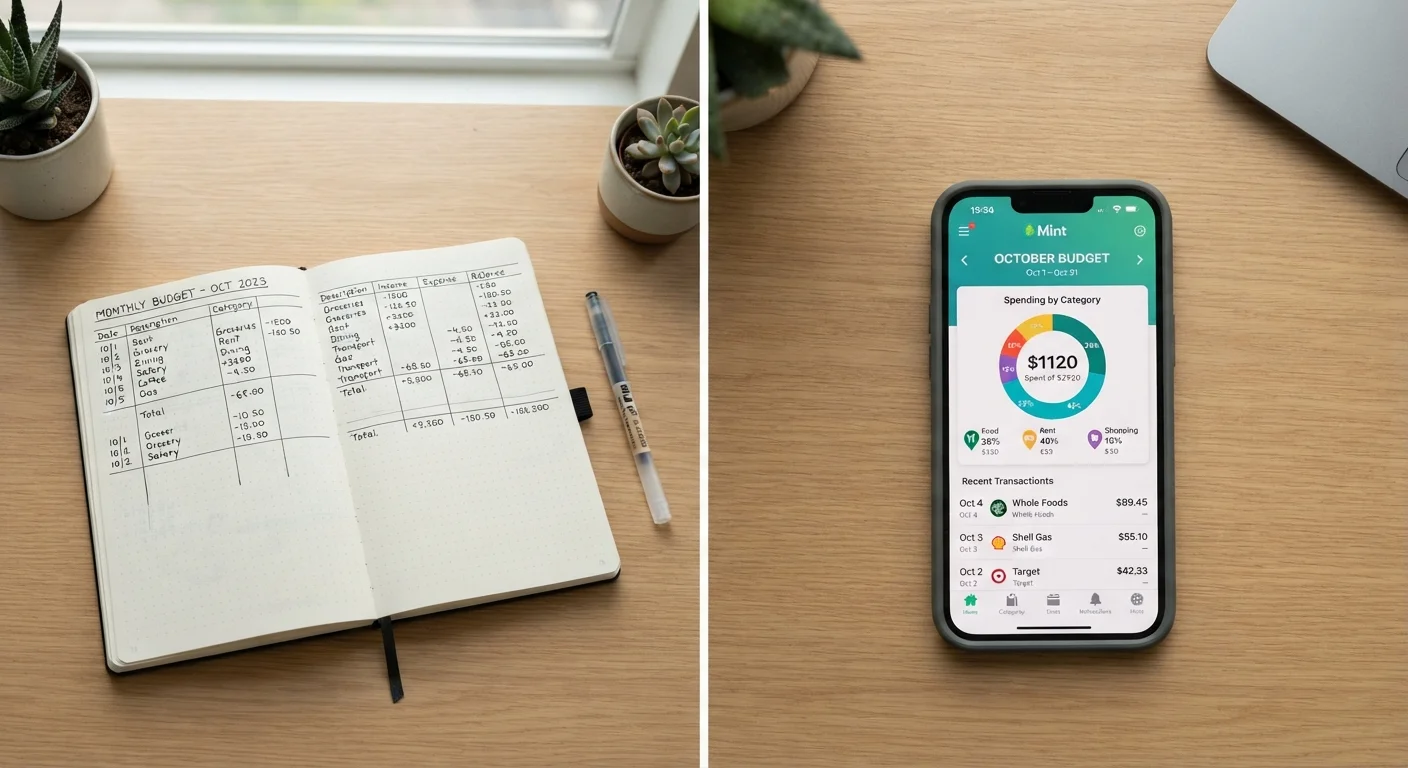
Starting simple matters more than starting perfectly. A basic list of income and fixed expenses — even on paper — beats a sophisticated spreadsheet you never open. You can explore paper budgeting vs. budgeting apps to find which format actually fits your life.
If you're ready to act, your first budget walkthrough covers the process step by step using your real numbers. And if your income varies month to month, there's specific guidance available on budgeting on an irregular income.
Don't Wait for the Perfect Moment to Start
A common pattern is telling yourself you'll budget once you get a raise, pay off a card, or reach a certain income level. That moment rarely feels like it arrives. The value of budgeting comes from starting with your current numbers — imperfect as they may be — and building from there. Waiting for ideal conditions is itself one of the most costly budgeting myths.
Finally, be aware that even well-intentioned budgets fall apart for predictable reasons — understanding where most Americans' budgets fall apart can help you sidestep the most common pitfalls before they affect yours.
This article is for general informational and educational purposes only and does not constitute personalized financial advice. For guidance tailored to your individual circumstances, consider consulting a qualified financial professional.