
Why Budget Categories Matter
A budget without categories is little more than a good intention. Categories give structure to your spending plan — they make it possible to see exactly where each dollar is going and to spot problems before they become crises. Whether you're setting up your very first budget or fine-tuning an existing one, knowing the standard categories helps ensure nothing important slips through the cracks.
The goal isn't to track every penny obsessively — it's to assign every dollar a purpose. Understanding which expenses are fixed and which are flexible is a helpful first step before you start organizing your categories.
| Recommended housing cost ceiling | 30% of gross income (Common personal finance guideline) |
| Recommended emergency fund size | 3–6 months of essential expenses (Standard personal finance guidance) |
| Number of core budget categories | 12 (varies by household) |
| Savings treatment in a budget | Treat as a mandatory expense, not a leftover |
| Most underestimated category | Dining out and food away from home (Consistent finding in consumer spending surveys) |
The Core Budget Categories
Most household budgets share the same foundational categories. Here's what each one covers:
Housing
Your largest expense in most cases. Includes rent or mortgage payments, property taxes, homeowners or renters insurance, HOA fees, and routine maintenance. A general guideline suggests keeping housing costs at or below 30% of gross income, though this will vary by location and household size.
Transportation
Car payments, auto insurance, fuel, public transit passes, parking, tolls, and vehicle maintenance (oil changes, tires, registration). Don't forget to set aside a small monthly amount for unexpected repairs.
Food
Split this into two sub-categories: groceries (food purchased for home cooking) and dining out (restaurants, takeout, coffee shops). Many people underestimate the dining-out line — tracking it separately often reveals significant savings opportunities.
Utilities
Electricity, gas, water, trash collection, internet, and phone service. Some of these fluctuate seasonally, so averaging a few months of bills gives a more reliable monthly figure.
Insurance
Health, life, dental, and vision insurance premiums that aren't deducted from your paycheck before you see it. These are non-negotiable for most households and belong in the budget explicitly.
Healthcare
Out-of-pocket costs beyond your insurance premiums: co-pays, prescriptions, dental visits, glasses, and medical equipment. Setting aside a consistent monthly amount — even a modest one — smooths out these irregular expenses.
Debt Payments
Student loans, credit card minimum payments, personal loans, and any other recurring debt obligations. Tracking these separately from other spending keeps your repayment progress visible.
Savings and Emergency Fund
Savings should be treated as an expense, not a leftover. This category includes contributions to an emergency fund (typically three to six months of essential expenses), retirement accounts, and any other savings goals. For a deeper look at building toward specific milestones, see the Saving & Goals hub.
Personal and Household
Clothing, toiletries, cleaning supplies, haircuts, and other personal care. These costs are easy to overlook individually but add up quickly across a month.
Entertainment and Recreation
Streaming subscriptions, hobbies, gym memberships, events, and activities. This is typically a discretionary category — one of the first areas to adjust when money is tight.
Childcare and Education
Daycare, school tuition, after-school programs, tutoring, school supplies, and activity fees. For households with children, this is often one of the largest budget line items.
Miscellaneous and Irregular Expenses
Annual or irregular costs — holiday gifts, car registration, home appliance replacement, and similar one-off expenses — should be divided by 12 and saved monthly so they don't surprise you. When planning a trip, the hidden costs of travel deserve their own dedicated budget line.
Fixed expense
A cost that stays the same amount each month, such as a mortgage payment or a car loan. Fixed expenses are easy to predict and are typically the first to be entered into a budget.
Variable expense
A cost that changes in amount from month to month, such as groceries or utility bills. Variable expenses require estimates based on past spending and may need regular adjustment.
Emergency fund
A dedicated savings reserve set aside to cover unexpected essential expenses — such as a job loss or a major car repair — without going into debt. Most financial educators suggest three to six months of essential expenses as a target.
Discretionary spending
Money spent on non-essential wants, such as dining out, entertainment, or hobbies. Discretionary spending is typically the most flexible part of a budget and the first area adjusted when cutting costs.
Non-discretionary spending
Essential, unavoidable expenses such as housing, utilities, and minimum debt payments. These costs cannot easily be skipped or deferred without significant consequences.
Irregular expense
A cost that does not occur every month but is predictable over time — such as an annual car registration fee or holiday gifts. Dividing the annual total by 12 and saving that amount monthly prevents these from disrupting a budget.
How to Allocate Across Categories
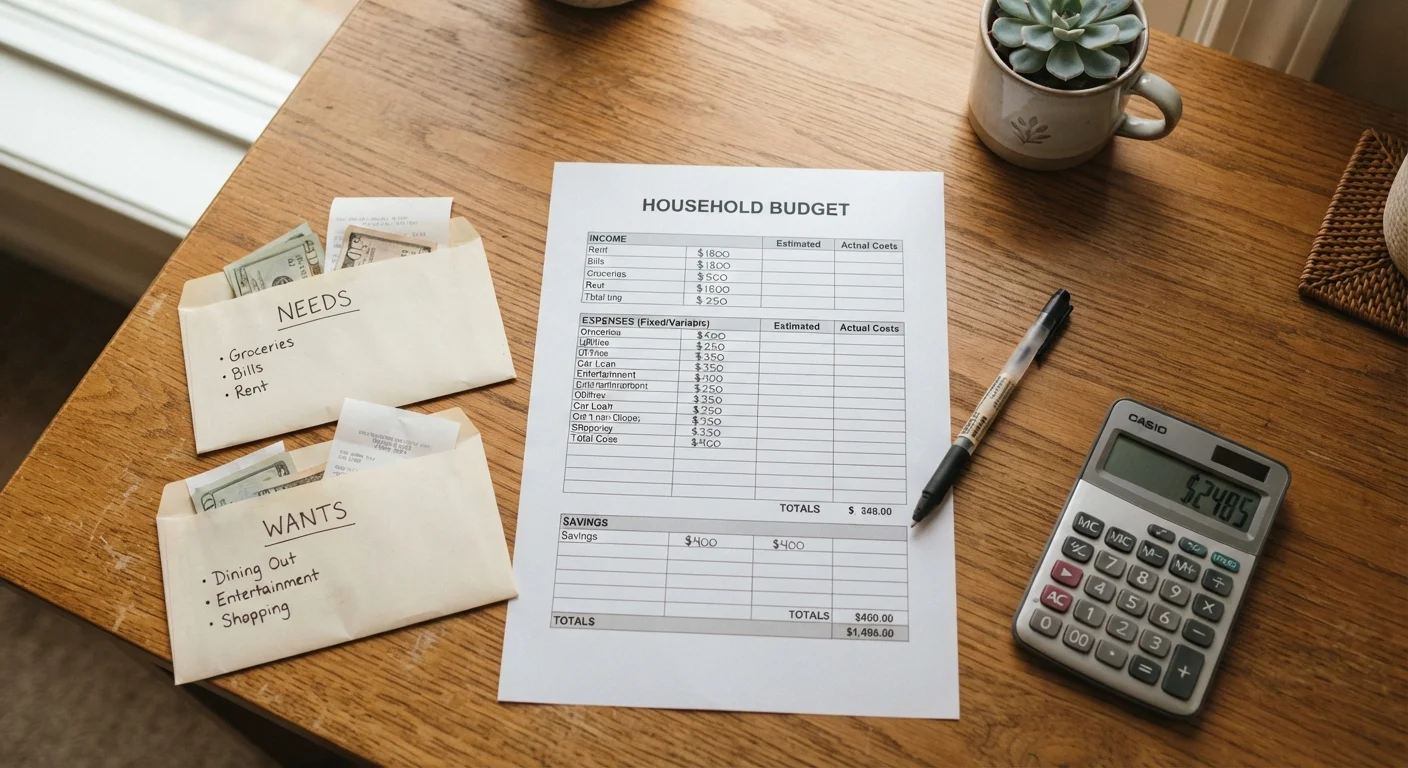
There's no single correct percentage for every category — your household's priorities, income, location, and life stage all shape what the right split looks like. That said, a structured method can help. The 50/30/20 rule and zero-based budgeting are two widely used frameworks for deciding how to divide income across needs, wants, and savings.
Start by listing your actual take-home income, then map your known fixed expenses to their categories. Add estimates for variable categories based on recent spending. If the total exceeds your income, adjust discretionary categories first before touching essentials.
Once your categories are set, run a monthly review to compare planned versus actual spending. The monthly budget review checklist is a practical tool for making that process consistent. Over time, building the habits of people who actually stick to their budget will make category management feel routine rather than burdensome.
33%
Average share of income spent on housing
According to U.S. Bureau of Labor Statistics Consumer Expenditure data, housing consistently accounts for the largest share of household spending.
~40%
Americans without $400 in emergency savings
Federal Reserve surveys have historically found that a significant portion of U.S. adults could not cover a $400 unexpected expense without borrowing or selling something.
This article is for general informational and educational purposes only and does not constitute personalized financial advice. For guidance tailored to your situation, consider consulting a qualified financial professional.