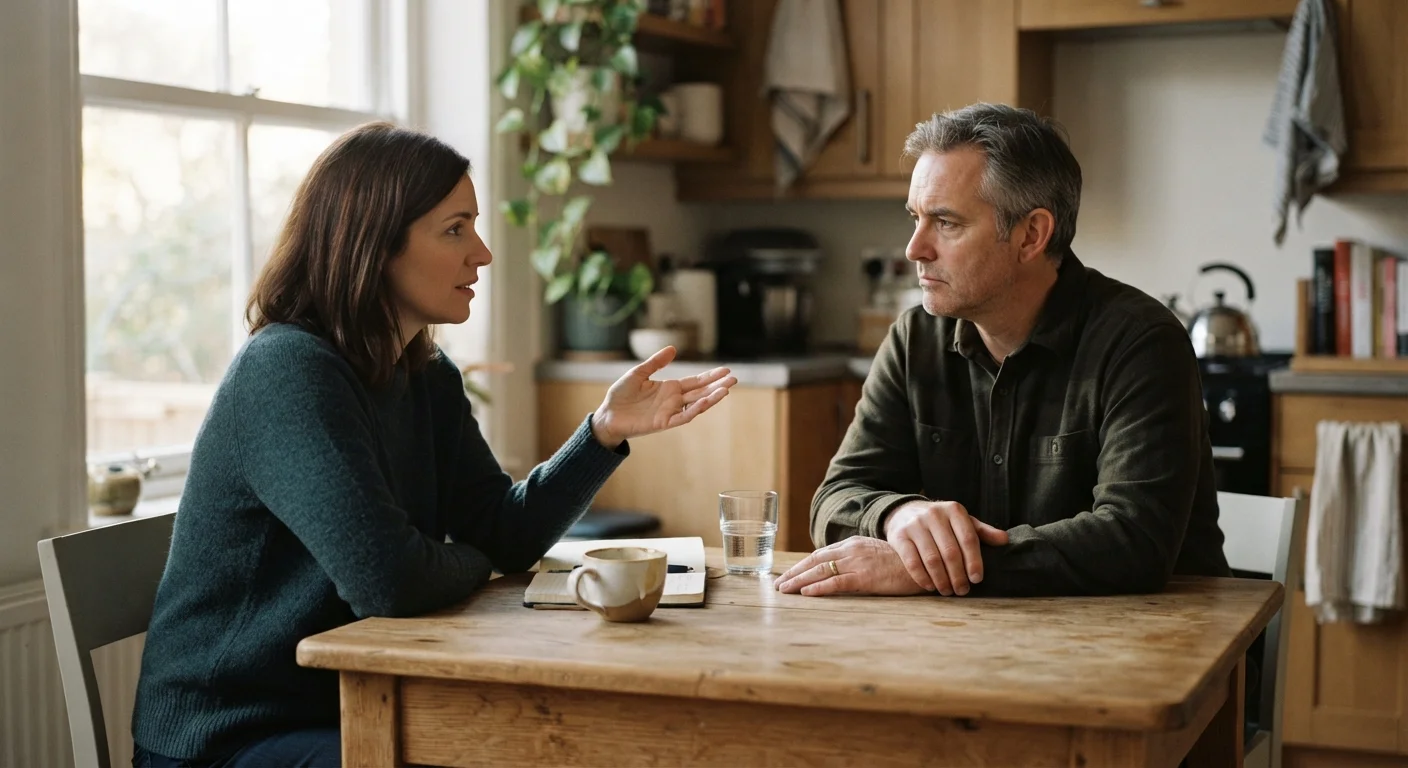

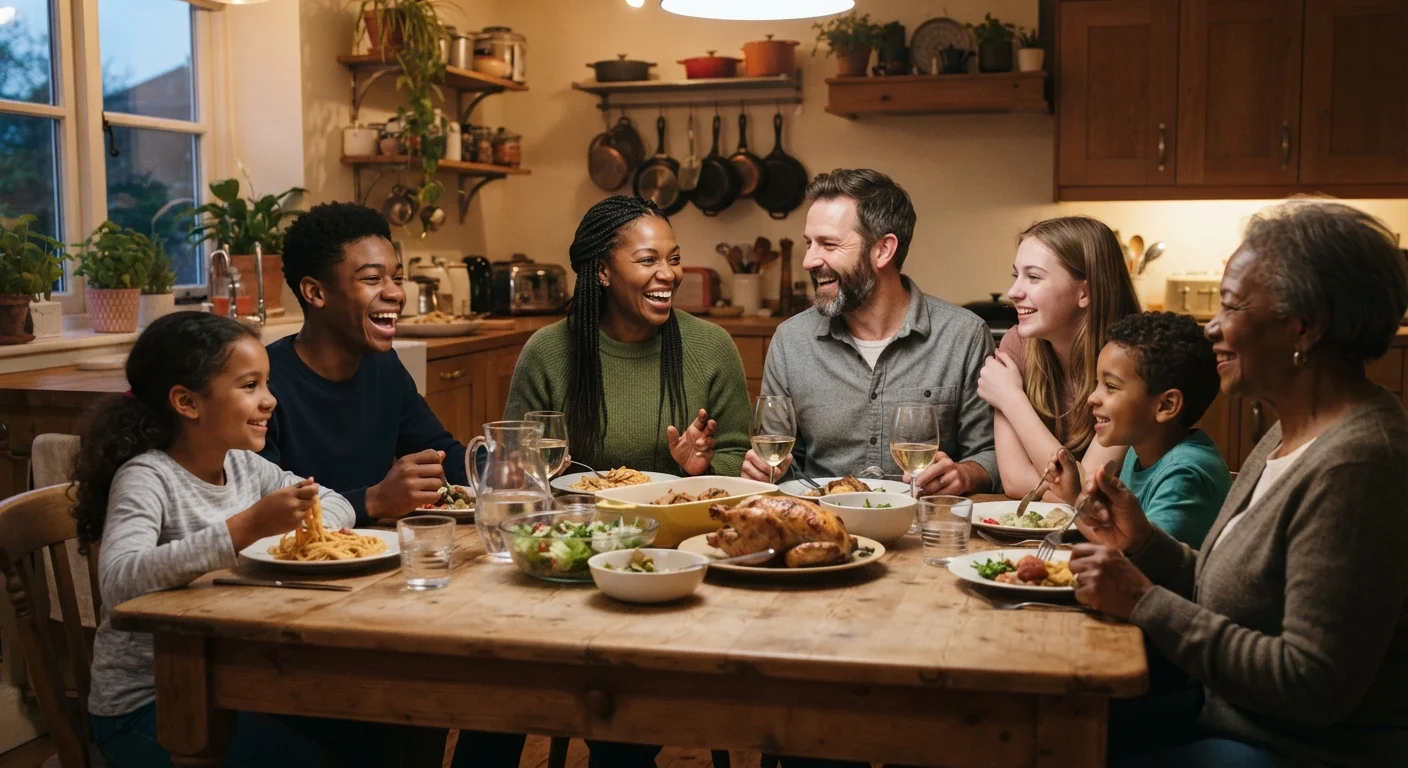
What Makes Blended Families Different
More than one in six American children lives in a blended family — a household that includes a stepparent, stepsiblings, or half-siblings. Yet despite how common they are, blended families are routinely measured against a nuclear-family ideal that simply doesn't fit their actual structure or history.
The core difference is that blended families form not from a fresh start, but from the aftermath of loss — loss through divorce, separation, or death. Every member of a new stepfamily arrives carrying that history. Adults bring unresolved grief, loyalty to prior relationships, and entrenched parenting habits. Children bring confusion, divided loyalties, and often a fierce hope that their original family might somehow be restored.
This foundation of layered histories means that ordinary family friction — disputes over chores, screen time, or holiday plans — carries far more emotional charge than it would in a household without that backstory. Understanding that context isn't pessimistic; it's the starting point for realistic, compassionate family building.
1 in 6
U.S. children living in a blended family
According to Pew Research Center data on American family structure.
4–7 years
Typical integration timeline for stepfamilies
Stepfamily researchers and clinicians commonly cite this range for developing stable family cohesion.
~40%
Of marriages involve a stepchild
Estimates from the Stepfamily Foundation suggest a significant share of American marriages create blended households.
The Emotional Weight Children Actually Carry
Children in stepfamilies are frequently asked, implicitly or explicitly, to adapt quickly — to welcome new adults, bond with new siblings, and adjust to new routines. What adults sometimes miss is that children experience these changes through a very different emotional lens.
Even when a remarriage improves a child's life in material ways, many children quietly grieve the family they once had. That grief can look like withdrawal, acting out, or refusal to engage with a stepparent — behaviors that are often misread as defiance when they're actually expressions of loss. Researchers who study stepfamily dynamics note that loyalty conflicts are among the most common and underacknowledged struggles children face: loving a stepparent can feel, to a child, like a betrayal of the absent biological parent.
Younger children may struggle to understand the permanence of changes; teenagers often resist the stepfamily structure more openly, partly because their developmental task at that stage is already about asserting identity and independence. Acknowledging these realities — rather than pushing children to feel positive before they're ready — is one of the most important things adults in blended families can do.
Resist the urge to rush a child's emotional timeline. Naming what they might be feeling — without requiring them to confirm it — tends to open more doors than pushing for resolution.
Children in stepfamilies often lack the vocabulary for loyalty conflicts. Having an adult acknowledge the complexity without demanding a response reduces shame and builds trust over time.
Create at least one low-stakes family ritual that belongs exclusively to the new household unit — a Friday movie, a Sunday breakfast, a monthly outing — and protect it consistently.
Repeated shared experiences that carry no historical weight for either household are among the most reliable ways to build a new family identity without triggering loyalty conflicts.
The Stepparent Role: Expectations vs. Reality
Stepparents often enter new families with good intentions and a genuine desire to love their partner's children. What they typically aren't warned about is how long it takes for that warmth to be reciprocated — if it is at all.
Family researchers have found that the most successful stepparent relationships tend to begin with a friendship-like dynamic rather than an authority-based one. Stepparents who step back from discipline early on — leaving that role primarily to the biological parent — and instead invest in low-pressure, shared activities tend to build trust more reliably over time. This isn't passivity; it's strategic patience.
The pressure stepparents feel to prove their value can make this restraint genuinely hard. Well-meaning stepparents may overcorrect — pushing for closeness too fast, or alternatively withdrawing when rejected — both of which can deepen relational distance. Learning to read the child's signals rather than their own anxiety is a skill that takes practice.
See our guide to setting limits with family members for practical tools that translate well to stepparent dynamics.
Avoid Pushing for 'Instant Family' Dynamics
Expecting children to immediately embrace a stepparent as a parental figure can backfire significantly. When affection is demanded rather than earned, children often become more resistant, not less. Adults who feel hurt by a child's distance should seek support from a partner or counselor rather than pressuring the child to fill an emotional gap they aren't ready to fill.
Co-Parenting Across Households
When children move between two households, the emotional stakes of every adult interaction are amplified. How a biological parent and an ex-partner communicate — or fail to — has a direct effect on children's sense of security.
Effective co-parenting doesn't require a warm friendship between ex-partners. It requires what some family therapists call a "business-like" relationship: respectful, consistent, and child-focused. This means agreeing on core rules where possible, avoiding negative commentary about the other parent in front of children, and treating transitions between homes as emotionally neutral events rather than territorial exchanges.
Stepparents are often left navigating territory where they have significant emotional investment but limited formal standing. This tension — caring deeply while having little control — is a chronic source of stress. Couples in blended families benefit from building a clear internal agreement about how the stepparent's perspective will be heard and incorporated, without positioning them as the biological parent's co-decider in front of children.
Blended families managing complex caregiving dynamics may also find resonance in the pressures described in our look at the sandwich generation.
Make Transitions Between Homes Predictable
When children know exactly what to expect at pick-up and drop-off times — the same adult, the same routine, minimal adult tension — they adjust more easily. Even small acts of consistency, like a particular snack waiting at home or a brief check-in question on arrival, can signal safety and reduce transition anxiety.
Building Trust Takes Longer Than You Think
One of the most important findings from stepfamily research is also one of the most consistently surprising to families living it: integration takes years, not months. Clinicians who specialize in stepfamily dynamics frequently cite a four-to-seven year window for a blended family to develop a stable shared identity. Most couples enter expecting the timeline to be measured in months.
That gap between expectation and reality is itself a major source of distress. Adults who assume that love, effort, and good intentions should produce a cohesive family within the first year often interpret slow progress as failure — and may make reactive decisions (more rules, forced togetherness, or conversely, giving up) that set integration back further.
What actually helps: consistent small rituals that belong to the new family unit, transparent age-appropriate conversations with children about family changes, and the patience to let trust accumulate through repeated, low-stakes positive experiences. Identity within the new family doesn't have to replace children's identity in their other household — and framing it that way often reduces resistance considerably.
For families navigating emotional complexity across generations, the mental wellness resources on this site offer accessible strategies for managing stress and emotional balance.
“Stepfamilies are not deficient nuclear families. They are a different kind of family with a different structure, different tasks, and different strengths. The sooner we stop measuring them against a model that doesn't fit, the sooner we can support them effectively.”
— Patricia Papernow, Psychologist and author specializing in stepfamily development
When to Seek Outside Support
Needing professional help navigating a blended family isn't a sign that the family is failing — it's a sign that the adults in it take the work seriously. Family therapy, and particularly therapists trained in stepfamily dynamics, can offer a structured space for members to articulate what they're experiencing without the stakes of a household confrontation.
Common signs that outside support would be valuable include: persistent conflict between a stepparent and stepchild that isn't improving over time, a child showing significant behavioral changes at school or with friends, a couple whose disagreements about parenting are straining the marriage, or a situation where a child is expressing distress about moving between households.
Individual therapy can also be valuable for children who are struggling but not ready to speak openly in a family setting. Many school counselors are a useful first point of contact, and can often provide referrals to community-based family services.
Adults navigating difficult conversations with extended family members — grandparents, for instance, who may have strong feelings about a remarriage — can find relevant guidance in our article on grandparent involvement in childcare.
Stepfamily Foundation
A longstanding organization providing education and counseling resources specifically for stepfamilies, including guidance on common dynamics and how to find specialized therapists.
American Association for Marriage and Family Therapy (AAMFT)
AAMFT maintains a therapist locator that allows families to search for licensed professionals with expertise in stepfamily and blended family issues.
Mental Wellness Strategies Hub
Accessible, research-informed approaches to managing stress and emotional balance — relevant for adults navigating the long, demanding work of blended family integration.
This article is for general informational purposes only and does not constitute professional psychological, therapeutic, or legal advice. Families navigating significant emotional or behavioral challenges should consult a qualified mental health professional.