
Why a Fall Walkthrough Matters
Cold weather doesn't give much warning. A few hours spent inspecting your home in early fall can prevent frozen pipes, steep heating bills, and emergency repair calls in December. This checklist is organized by area so you can move through your home systematically — no special expertise required for most tasks.
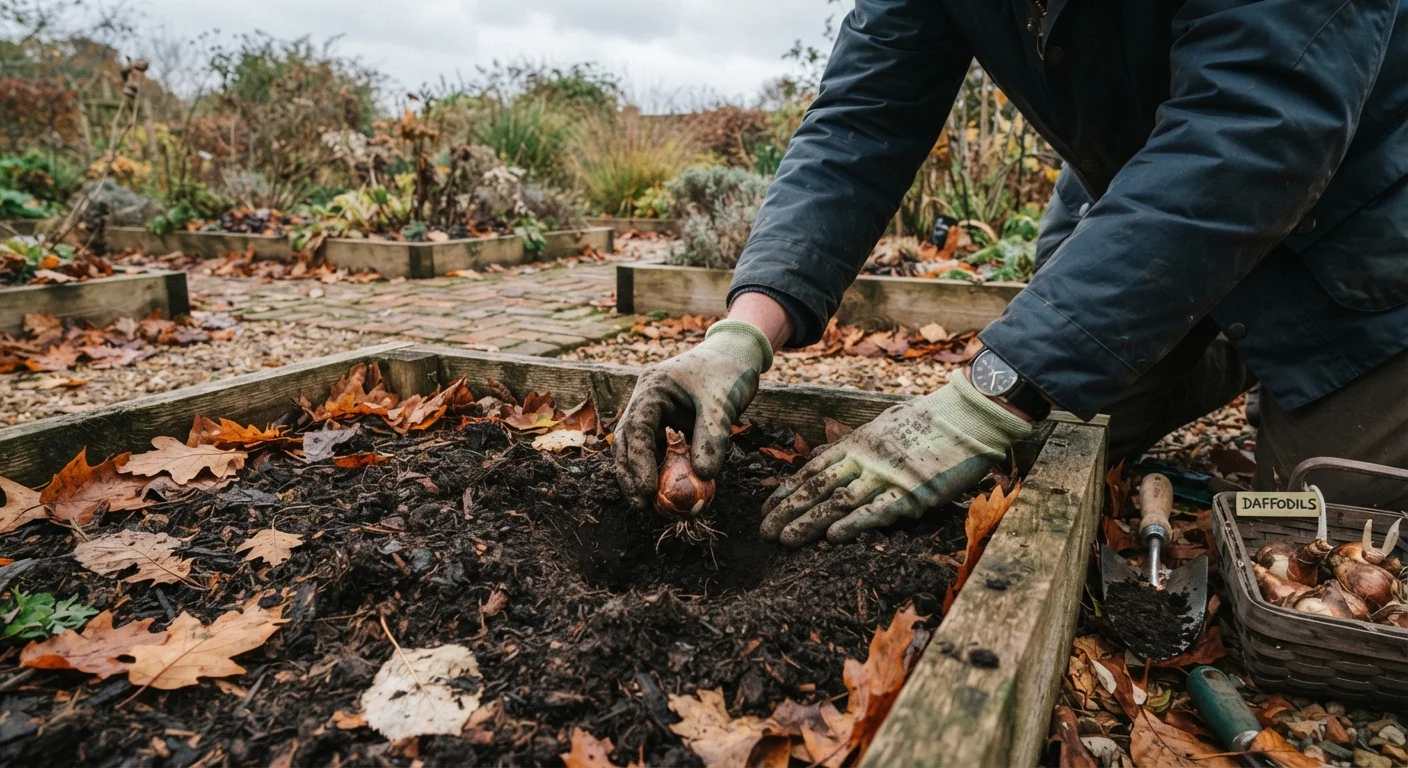
For a broader view of year-round upkeep, see our seasonal home maintenance calendar, which maps out what to do every month. If your fall prep also includes the yard, our fall garden prep checklist covers soil, bulbs, and outdoor tool storage in detail.
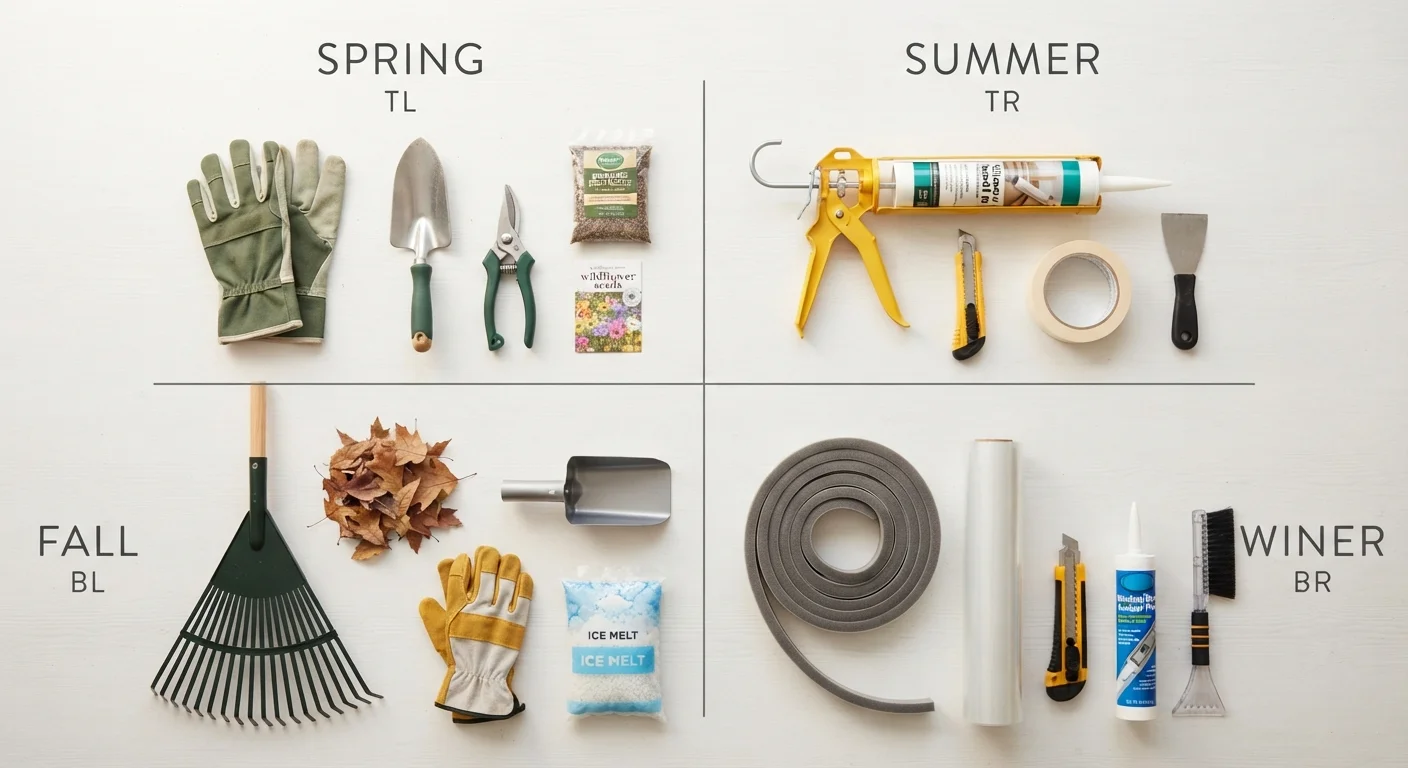
Caulk gun and exterior-grade caulk
Seal gaps around windows, door frames, and exterior penetrations to block cold air infiltration.
Weatherstripping tape or door sweep kit
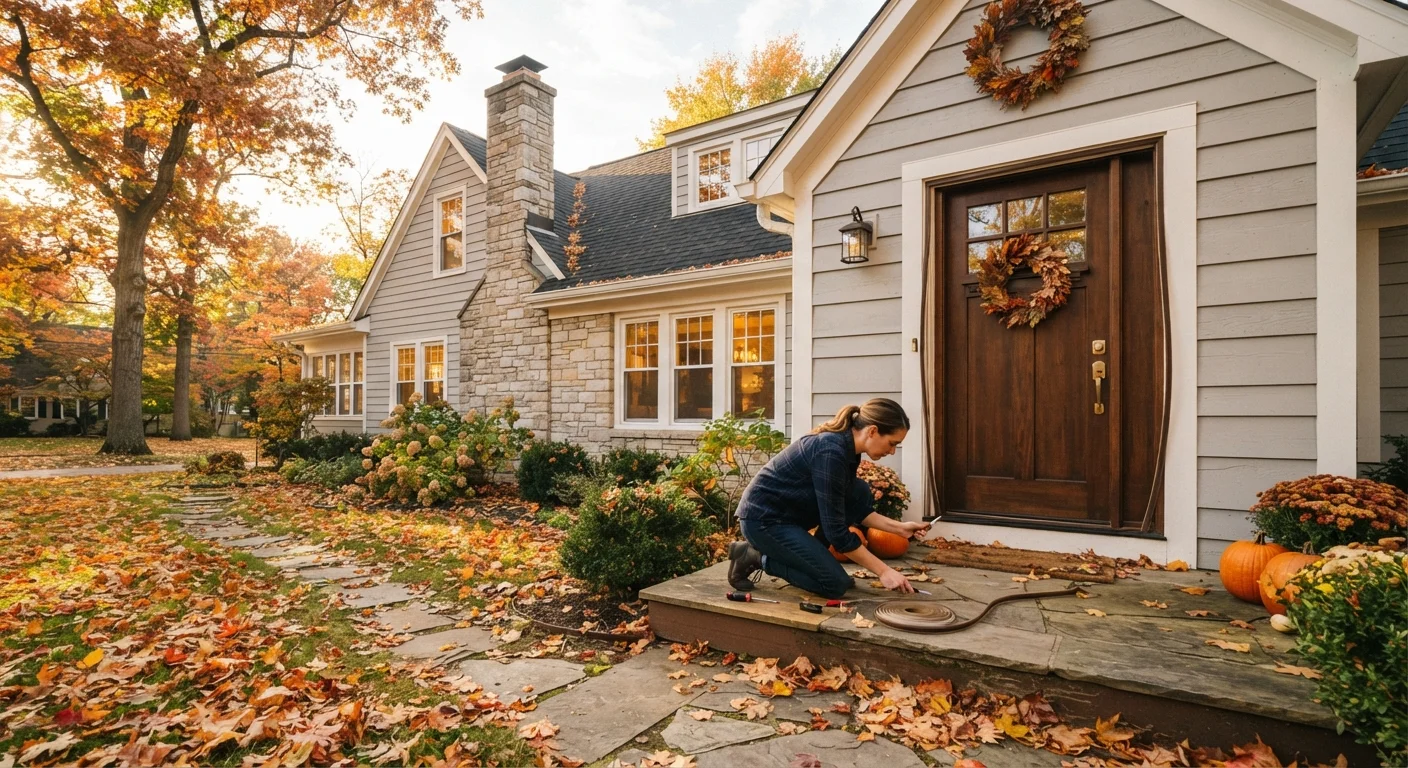
Replace worn seals on exterior doors to eliminate drafts at the door perimeter and base.
Foam pipe insulation
Wrap exposed pipes in unheated spaces to reduce freeze risk during cold snaps.
Replacement HVAC filter
Swap out the old filter to maintain heating efficiency and indoor air quality through the heating season.
Ladder (6-ft or extension)
Safely access gutters for cleaning and get a closer view of roof edges and downspouts.
Gutter scoop or garden trowel
Remove compacted leaf and debris buildup from gutters before winter rains or snow.
Battery tester or spare batteries (9V and AA)
Ensure smoke and carbon monoxide detectors have fresh, functional batteries.
Flashlight or headlamp
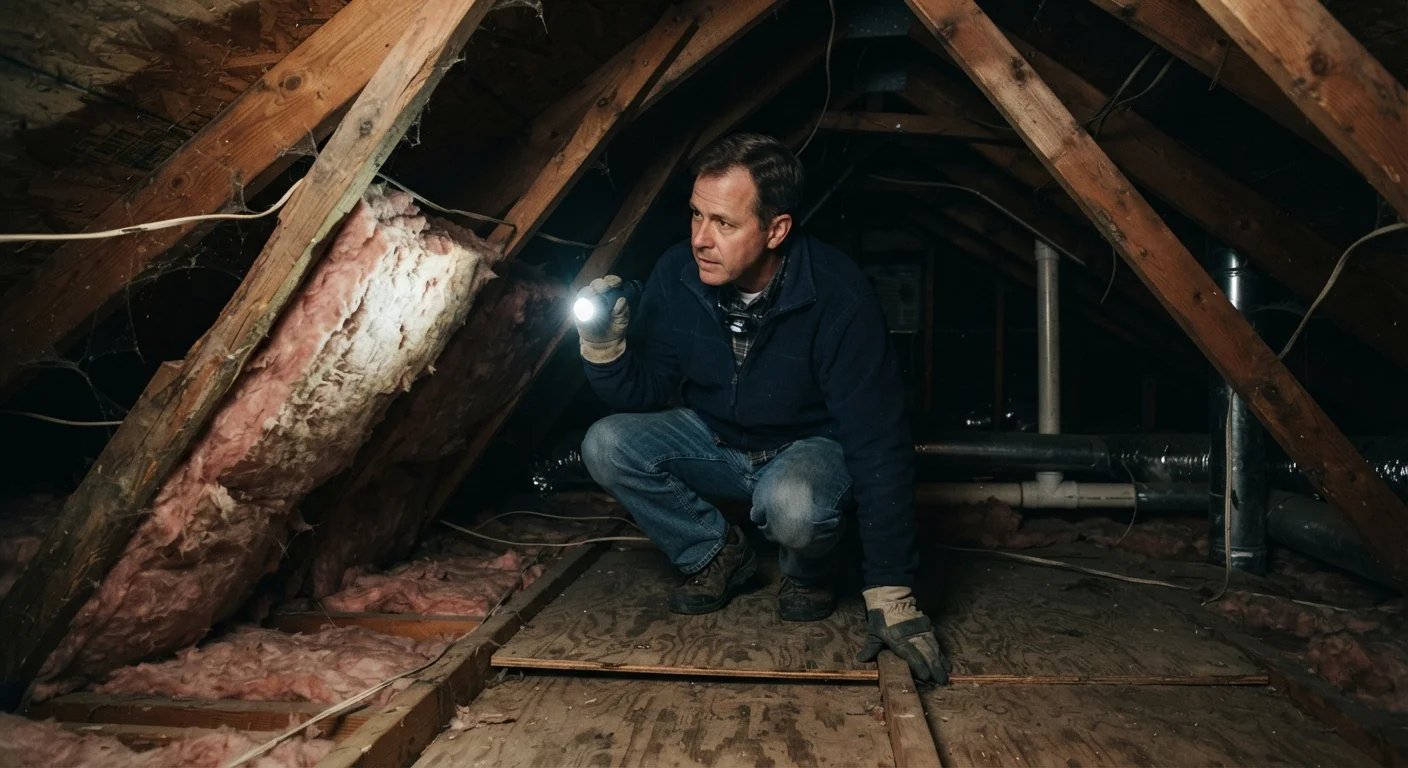
Illuminate crawl spaces, attic areas, and cabinet interiors when inspecting pipes and insulation.
The Full Fall Home Walkthrough Checklist
Work through each group below, checking items off as you go. Items marked must are non-negotiable for home safety and efficiency. Should items are strongly recommended, and nice-to-have tasks offer extra protection if time allows.
Doors, Windows & Weatherproofing
Heating System & Indoor Air
Plumbing & Pipes
Roof, Gutters & Exterior
Safety Systems
Carbon Monoxide Is a Hidden Winter Risk
As homes are sealed up for winter and heating systems run continuously, carbon monoxide (CO) risks increase. CO is odorless and colorless, so a functioning detector is your only reliable warning system. Make sure you have a working CO detector on every floor with sleeping areas, and never run gas-powered equipment indoors or in an attached garage.
A Few Areas That Deserve Extra Attention
Attic and Insulation
Heat rises, and a poorly insulated or ventilated attic can drive up heating costs significantly. Look for thin or compressed insulation, signs of moisture (dark staining, soft wood), and any gaps around light fixtures or penetrations. Our guide to the attic inspection most homeowners skip walks through a safe DIY walkthrough with what to look for.
Pipes in Unheated Spaces
Pipes in garages, crawl spaces, and exterior walls are most vulnerable to freezing. Foam pipe insulation (also called pipe lagging) is inexpensive and straightforward to install — simply measure the pipe diameter, cut the foam to length, and secure with tape. For pipes near exterior walls inside finished rooms, keep cabinet doors open during hard freezes to allow warm air to circulate.
Heating System
A furnace inspection by a licensed HVAC technician is strongly recommended before the heating season begins. A tech can identify cracked heat exchangers, faulty igniters, or carbon monoxide risks that visual checks can't catch. Change your filter at the start of fall regardless of when you last changed it — a clean filter improves efficiency and air quality throughout the season.
Roof and Electrical Work: Know Your Limits
This checklist focuses on DIY-accessible tasks. Roof repairs beyond surface observation, work involving gas lines, and any electrical upgrades near your heating system should be handled by a licensed professional. Unpermitted structural or mechanical work can create safety hazards and may affect homeowner's insurance coverage — always verify local permit requirements with your municipality before beginning significant repairs.