
The Simple Job That Quietly Becomes a Big Problem
Gutters are one of the most overlooked systems in residential homes, yet they perform a critical function: they collect rainwater from the roof and channel it safely away from the structure. When they stop working — whether from clogs, damage, or sagging — that water has to go somewhere. And it almost always ends up somewhere it shouldn't.
The frustrating part is that gutter problems develop slowly. A small clog forms, overflow begins at one spot, and for weeks or months, nothing looks dramatically wrong from the ground. But the damage chain is already underway.
The Two-Visit Rule for Gutter Checks
Make gutter inspection part of two seasonal routines: once after spring pollen and seed season, and once after fall leaves have fully dropped. A quick visual check from the ground during rain can reveal overflow points you'd otherwise miss. Pair it with a downspout flush to confirm water is draining freely to the outlet.
What Actually Happens When Gutters Clog
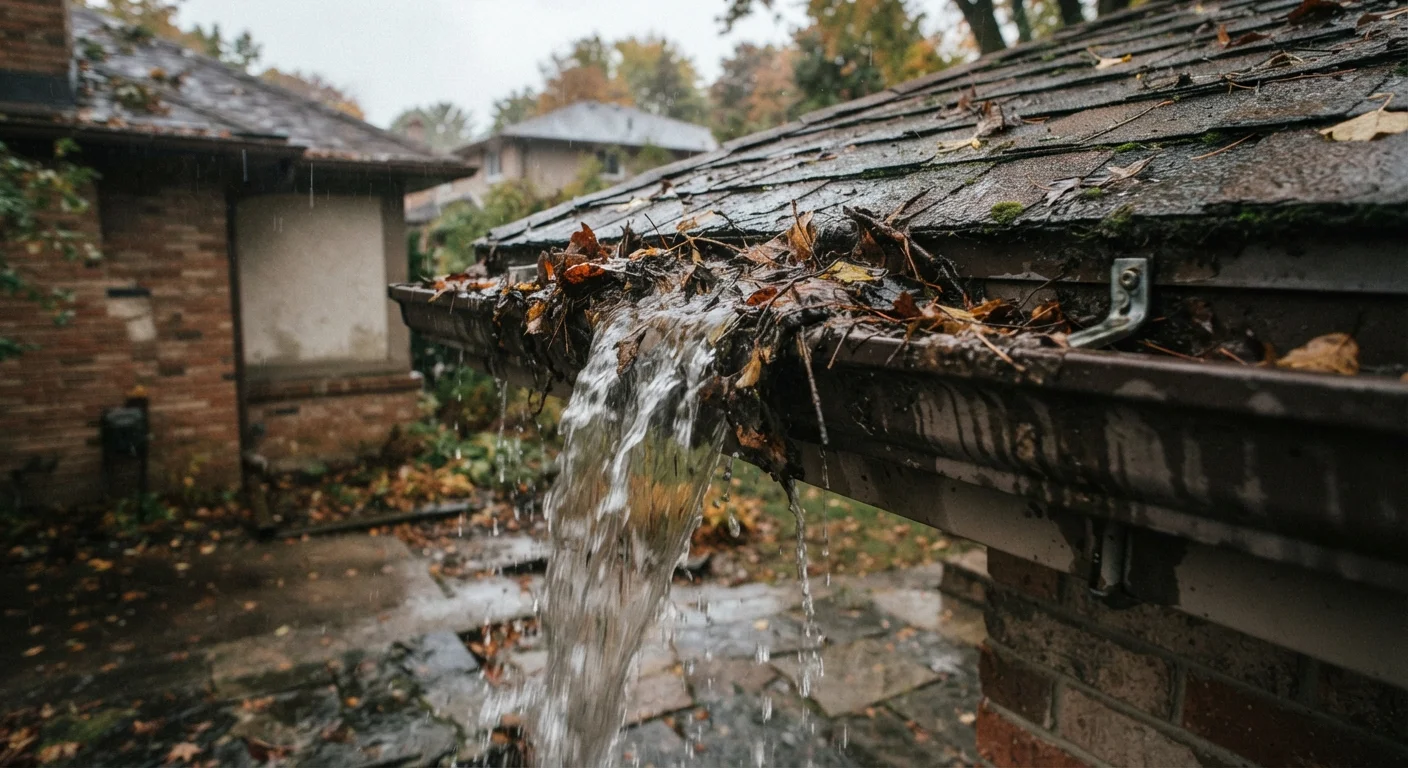
When leaves, twigs, and debris pack into a gutter channel, water backs up and spills over the edge rather than flowing toward the downspout. That overflow consistently hits the same spots — the fascia board (the wooden trim the gutter attaches to), the soffit underneath, and the siding behind it.
Repeated wetting of wood fascia causes rot. Rot weakens the attachment points, and gutters begin to sag or pull away from the roofline entirely. Once a gap opens between the gutter and the roof edge, water can infiltrate under shingles and into the roof deck, contributing to interior moisture issues you may not notice until you check your attic. See how to do a basic attic walkthrough to know what to look for up there.
$10,000+
Typical cost of foundation waterproofing repairs
According to general contractor estimates, foundation moisture remediation commonly runs from several thousand to over ten thousand dollars depending on scope.
2x/year
Recommended gutter cleaning frequency
Most home maintenance guides recommend at minimum a spring and fall cleaning to prevent seasonal debris buildup.
4–6 ft
Minimum downspout discharge distance from foundation
Building professionals generally advise directing downspout water at least four to six feet from the home's foundation to prevent soil saturation.
The Foundation and Basement Connection
Here's where gutter neglect gets expensive. When overflow water consistently falls at the base of your exterior walls, it saturates the graded soil that's designed to slope away from the foundation. Over time, that soil erodes or compacts unevenly, and water begins pooling right where it shouldn't — at the foundation line.
Water pressure against a foundation (known as hydrostatic pressure) can work its way into hairline cracks, widening them over time. In basements and crawl spaces, this shows up as moisture seeping through walls, efflorescence (white mineral deposits on concrete), or outright water intrusion after heavy rain.
If you've noticed musty odors in your basement or moisture stains near floor level, failed gutters are one of the first things worth ruling out — alongside other drainage issues. This kind of slow-building moisture problem is also why common maintenance myths that encourage homeowners to delay inspections can be so costly in the long run.
When to Call a Professional
If you find significant fascia rot, large sections of gutter pulling away, or active moisture in your basement that correlates with rain events, those problems warrant a professional assessment. A general contractor or gutter specialist can evaluate structural damage to the fascia and roof edge, while a waterproofing contractor can assess foundation concerns. Don't attempt to repair rotted structural wood or re-pitch gutter runs without professional guidance, as improper repairs can accelerate further damage.
Spotting the Warning Signs Before Damage Escalates
Fortunately, gutters telegraph their problems fairly clearly if you know what to look for:
- Overflowing water during rain — visible cascading over the gutter edge rather than from the downspout
- Sagging or separating gutters — sections drooping or pulling away from the fascia
- Water stains on siding — vertical streaks below the gutter line indicate chronic overflow
- Peeling paint on fascia boards — a sign of repeated wetting and drying cycles
- Pooling water or erosion near the foundation — especially after rain
- Vegetation growing from gutters — seeds in accumulated debris have begun to sprout
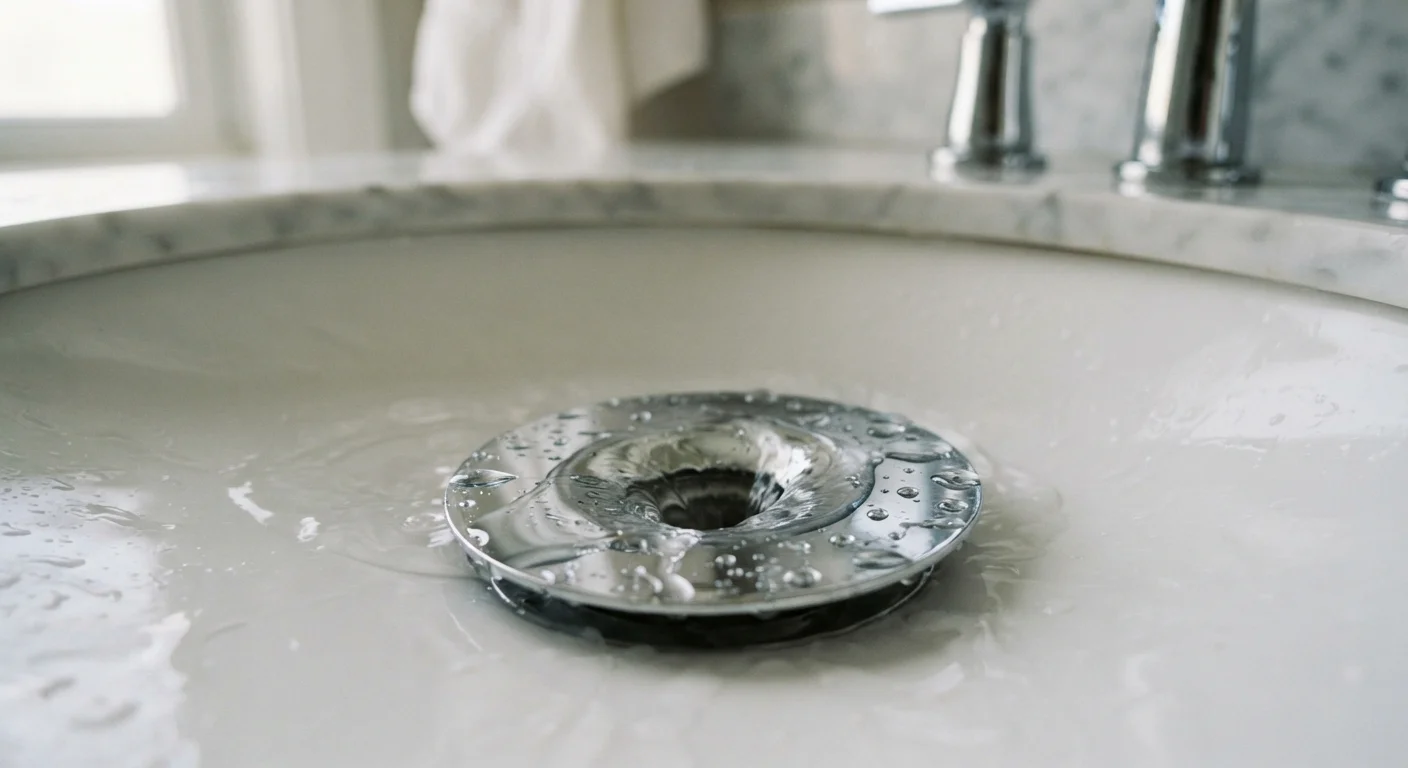
Any one of these signs warrants a closer look. Home systems are interconnected in ways that aren't always obvious — much like a slow drain that signals something larger, gutters rarely fail loudly.
What You Can Do Right Now
The good news: gutter maintenance is genuinely DIY-friendly for most single-story homes. Cleaning out debris, flushing the channel with a garden hose, and checking that water exits properly at the downspout takes under an hour and costs nothing beyond a stable ladder and a pair of gloves.
For higher rooflines or if you're uncomfortable on a ladder, a professional cleaning is inexpensive relative to what it prevents. Aim for at least twice a year — late spring and late fall are the standard benchmarks.
After cleaning, check that downspout extensions direct water at least four to six feet from the foundation. Splash blocks and extenders are inexpensive additions that make a real difference. If gutters are sagging, re-securing them with gutter screws (rather than the original spikes, which loosen over time) is a straightforward repair most homeowners can handle.
Consistent, small-scale attention to gutters is exactly the kind of proactive habit that separates manageable upkeep from avoidable repair bills — a principle explored more broadly in our look at home maintenance myths that cost real money.
“Water is the single greatest enemy of a home's structure. Everything we build is designed to keep it out — and gutters are often the first line of defense that gets forgotten.”
— Home Maintenance Extension Educators, University cooperative extension programs, general guidance on residential weatherproofing