

Why This Arrangement Is So Common
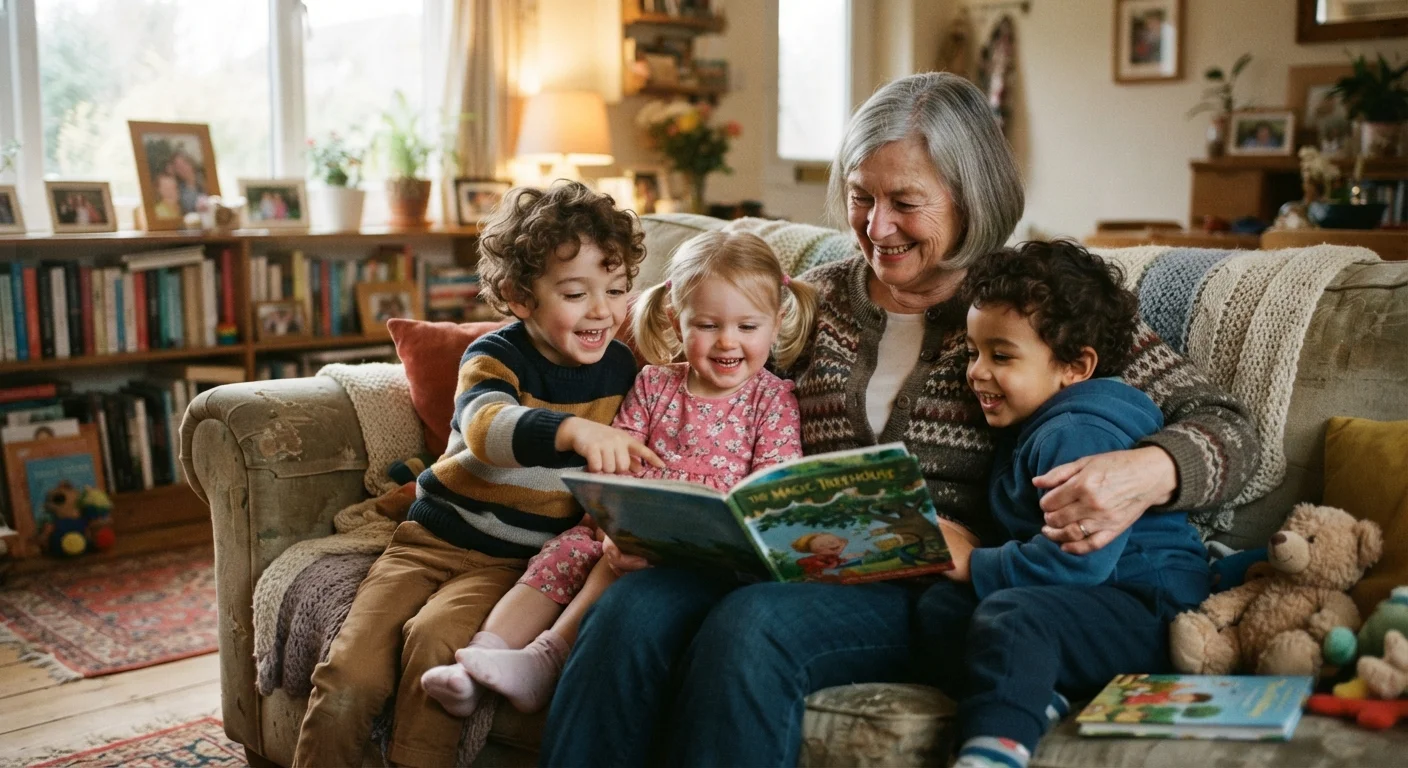
Across the United States, grandparents play a significant role in raising the next generation. According to the U.S. Census Bureau, millions of grandparents live with grandchildren, and many more provide regular childcare without living in the same home. The reasons are practical as much as emotional: childcare costs have risen sharply in many parts of the country, dual-income households are the norm, and many parents simply trust family over institutional settings.
But familiarity doesn't mean frictionless. Even the most loving grandparent-grandchild relationship can create complicated dynamics when grandparents step into a regular caregiving role. Understanding both sides honestly — the genuine gifts and the genuine challenges — helps families build arrangements that actually last.
If your family is also navigating related pressures, the realities described in The Sandwich Generation may resonate alongside this topic.
The Real Benefits
The advantages of grandparent involvement go well beyond convenience, though convenience matters too.
Trusted, loving care in a familiar environment
Children are cared for by someone who knows them deeply and is emotionally invested in their wellbeing, which many parents find reassuring in ways that formal childcare cannot replicate.
Significant reduction in childcare costs
Full-time childcare can consume a substantial portion of a household income. Grandparent care — even when grandparents are compensated — often reduces this financial burden meaningfully.
Intergenerational bonding and cultural transmission
Regular time together builds authentic relationships between grandparents and grandchildren, and allows family history, language, traditions, and values to pass naturally from one generation to the next.
Flexibility that formal childcare rarely offers
Grandparents can often accommodate irregular schedules, sick days, or last-minute needs in ways that daycare centers and most paid providers cannot.
Potential wellbeing benefits for grandparents
Studies suggest that grandparents who have regular, meaningful roles in grandchildren's lives may experience benefits to mood and cognitive engagement — though balance matters here too.
Children who spend meaningful time with grandparents often develop a stronger sense of identity and belonging. They absorb family stories, cultural traditions, and values that don't travel as easily through formal childcare settings. Research in developmental psychology has consistently noted that stable, warm relationships with non-parental adults — including grandparents — contribute positively to children's emotional security and resilience.
For grandparents themselves, active caregiving can provide structure, purpose, and deep relational reward — factors that researchers associate with healthy aging. And for parents, knowing their child is with someone who loves them unconditionally can reduce the specific anxiety that comes with leaving a young child in someone else's care.
2.7M+
Grandparents as primary caregivers in the U.S.
The U.S. Census Bureau has reported that more than 2.7 million grandparents are responsible for the basic needs of the grandchildren living with them.
Nearly 1 in 4
Children cared for regularly by a grandparent
National survey data has consistently shown that grandparents are one of the most common sources of childcare among working families in the United States.
The Tensions That Arise
None of the above erases the friction that grandparent caregiving can generate. These tensions are real, common, and worth naming clearly.
Disagreements over parenting style and rules
What grandparents consider sensible child-rearing and what today's parents practice can diverge significantly, creating ongoing low-level conflict or more serious clashes over discipline, diet, or screen time.
Difficulty setting and maintaining clear boundaries
Because the relationship is personal and the caregiving is often a favor, parents may feel unable to voice concerns directly, allowing small frustrations to accumulate into larger resentments.
Physical and emotional strain on grandparents
Caring for young children is demanding work, and older adults may underestimate or initially dismiss the toll — only to find it affecting their health, energy, or social life over time.
Risk of role confusion and overreach
When grandparents spend more time with a child than the parents do, questions about authority and decision-making can surface — sometimes in ways that undermine parental confidence or create conflict in front of the child.
Grandparents may feel taken for granted
Without intentional appreciation and realistic expectations on both sides, grandparents providing regular care can begin to feel like unpaid employees rather than cherished family members.
Potential impact on the grandparent-parent relationship
A caregiving arrangement gone wrong doesn't just affect logistics — it can strain a parent's relationship with their own parent or in-law in ways that are slow to repair.
Parenting philosophies shift across generations. Attitudes about screen time, discipline, diet, sleep schedules, and independence have changed considerably in recent decades, and grandparents may rely on approaches they raised their own children with — approaches that today's parents may have consciously moved away from. This is one of the most frequently cited sources of conflict in multigenerational caregiving arrangements.
Boundaries are another recurring challenge. When a grandparent is doing a significant favor — or sees themselves as stepping in out of necessity — it can feel ungrateful to set limits. Parents may hold back feedback they should voice; grandparents may overstep in ways they don't fully recognize. For practical guidance on navigating this, see setting limits with family members.
When Care Becomes More Than Part-Time
Families where grandparents are effectively raising grandchildren full-time — sometimes called 'grandfamilies' — face a distinct set of legal, financial, and emotional considerations beyond what this article covers. If that describes your situation, connecting with a social worker or family law professional can help clarify custody, guardianship, and support options available in your state.
Making It Work: What Helps
Families who handle grandparent caregiving well tend to share a few common practices. They talk about expectations before problems emerge — not just once, but regularly as circumstances change. They acknowledge that the grandparent is doing something genuinely significant and treat that contribution with respect, including being willing to compensate financially when the arrangement is extensive and the family can manage it.
They also accept that disagreements will happen and build in a way to resolve them without every conflict becoming a referendum on the whole relationship. If larger conversations about aging, caregiving roles, and family expectations feel daunting, the framing in talking to aging parents about sensitive topics can offer a useful starting point.
Ultimately, grandparent involvement works best when it's genuinely chosen — not assumed, not guilt-driven, and not sustained past the point where it's working for everyone involved. The goal isn't a perfect arrangement. It's an honest one.