
Where the Idea Comes From
The envelope system predates personal finance apps by decades. Before direct deposit and debit cards were common, many households managed spending by physically separating their cash after payday. Bills for rent and utilities were set aside first; the rest was divided into envelopes for groceries, gas, clothing, and discretionary spending. The method wasn't invented by any single author or guru — it emerged organically as a practical way to prevent spending money you didn't have.
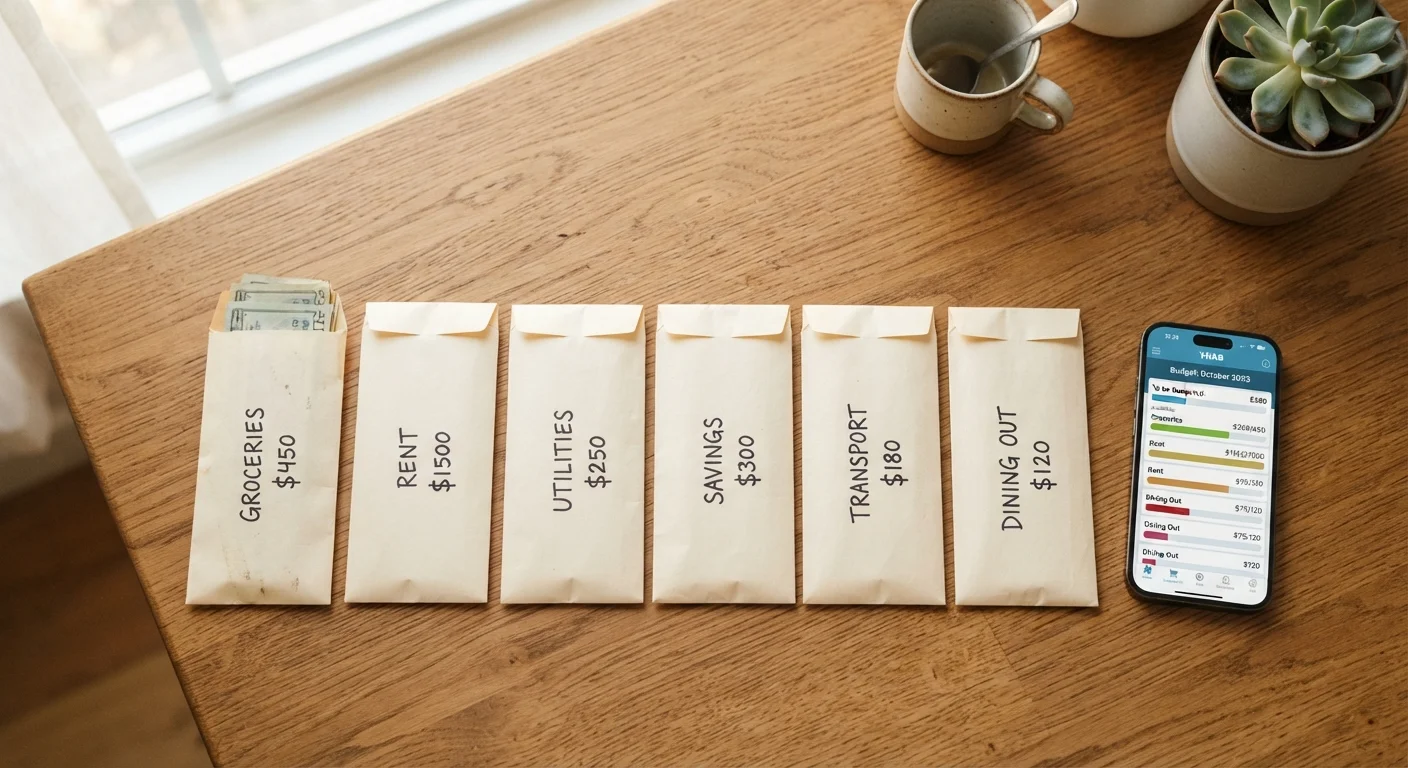
The logic is straightforward: cash is finite and countable in a way that a card balance isn't. When you hold $120 in a grocery envelope, you can see exactly what's left after each trip. A debit card, by contrast, draws from an undifferentiated pool — it doesn't tell you that you've already mentally committed that money to five other things.
“The goal of a budget isn't to restrict your life — it's to make sure your money is going where you actually want it to go, on purpose.”
— Carl Richards, Certified Financial Planner and author of 'The Behavior Gap'
How the System Actually Works
Setting up envelope budgeting involves three steps. First, you calculate your monthly take-home income. Second, you list every spending category and assign a dollar amount to each until the total matches your income — every dollar gets a job. Third, you fund those categories at the start of the month and spend only from each category's allocation.
Fixed expenses like rent, insurance, and loan payments don't typically need envelopes — they're already predetermined. The method shines brightest for variable, discretionary categories where spending tends to creep: food, entertainment, personal care, and clothing.
When one envelope runs dry, you face a clear choice: stop spending in that category, or deliberately transfer money from another envelope. That transfer is the friction the system is designed to create. It makes trade-offs conscious rather than invisible.
Start With Your Top Three Problem Categories
Rather than creating envelopes for every expense at once, identify the two or three categories where you most often overspend — dining out, groceries, and entertainment are common culprits. Building the envelope habit around a manageable number of categories first makes the system far easier to maintain consistently.
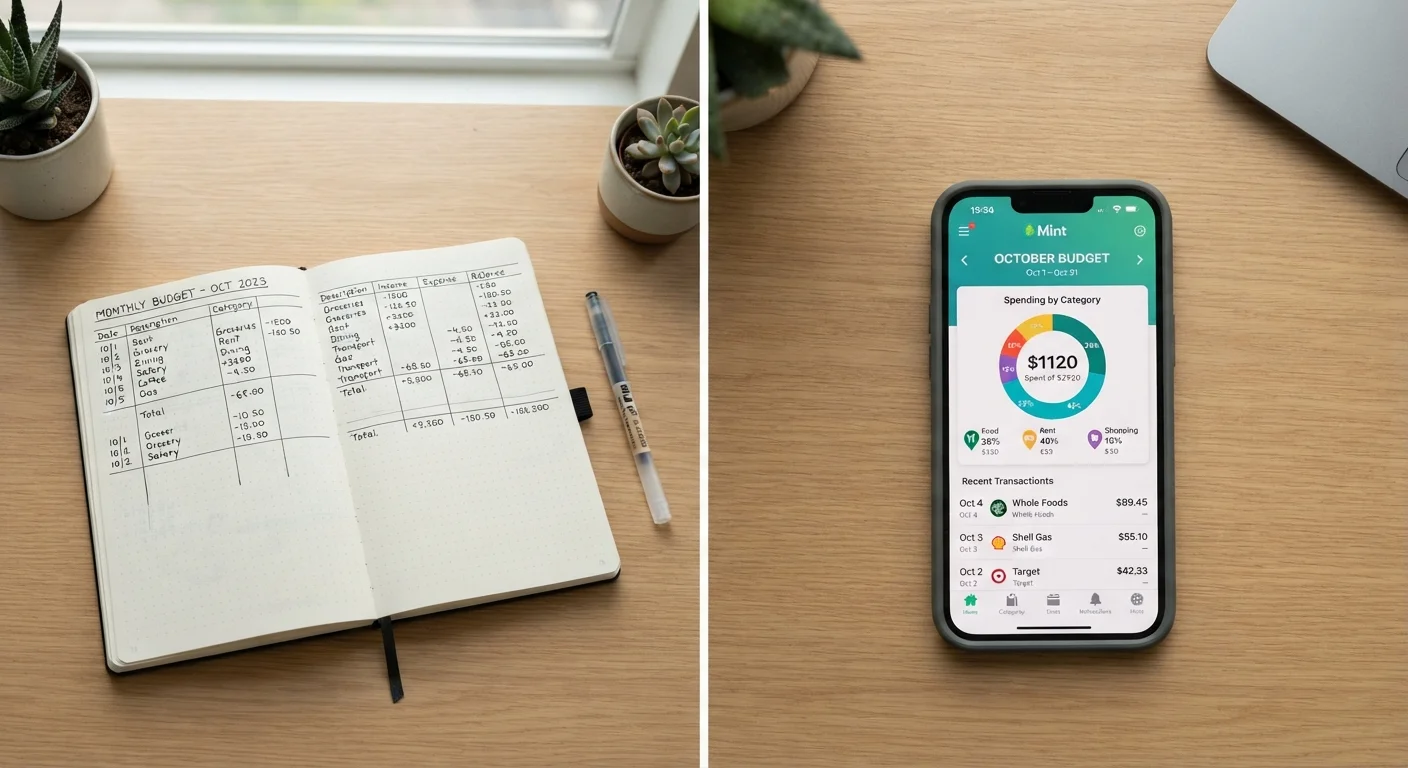
For a broader look at how this approach fits alongside other systems, see how paper and digital budgeting compare.
Adapting Envelopes to Modern Life
Few Americans carry enough cash to fund every spending category physically. That's practical reality, not a flaw in the concept. The method's logic transfers cleanly to several digital formats:
- Separate checking accounts or sub-accounts: Some banks and credit unions allow multiple accounts with individual debit cards, letting you hold a category's allocation in a dedicated account.
- Prepaid debit cards: Loading a fixed amount onto a card for a specific category — say, a dining card loaded with $150 — replicates the envelope's hard limit.
- Budgeting apps with virtual envelopes: Several apps are built explicitly around this method, letting you create digital categories and track remaining balances in real time.
Each approach involves trade-offs in terms of friction, automation, and visibility. Our article on spending tracking methods that stick can help you decide what format works for your habits.
~40%
Americans who track spending consistently
Federal Reserve surveys on household economics consistently find that fewer than half of American adults actively monitor their spending against a plan.
$200–$500
Typical monthly discretionary overspend
Personal finance research frequently finds that untracked variable spending — dining, impulse purchases, subscriptions — accounts for hundreds of dollars of monthly budget drift for average households.
What Makes It Work — and Where It Struggles
The envelope method's greatest strength is also its most demanding feature: it requires upfront planning every month, not just passive review after the fact. People who succeed with it tend to treat the monthly allocation as a non-negotiable ritual rather than a suggestion.
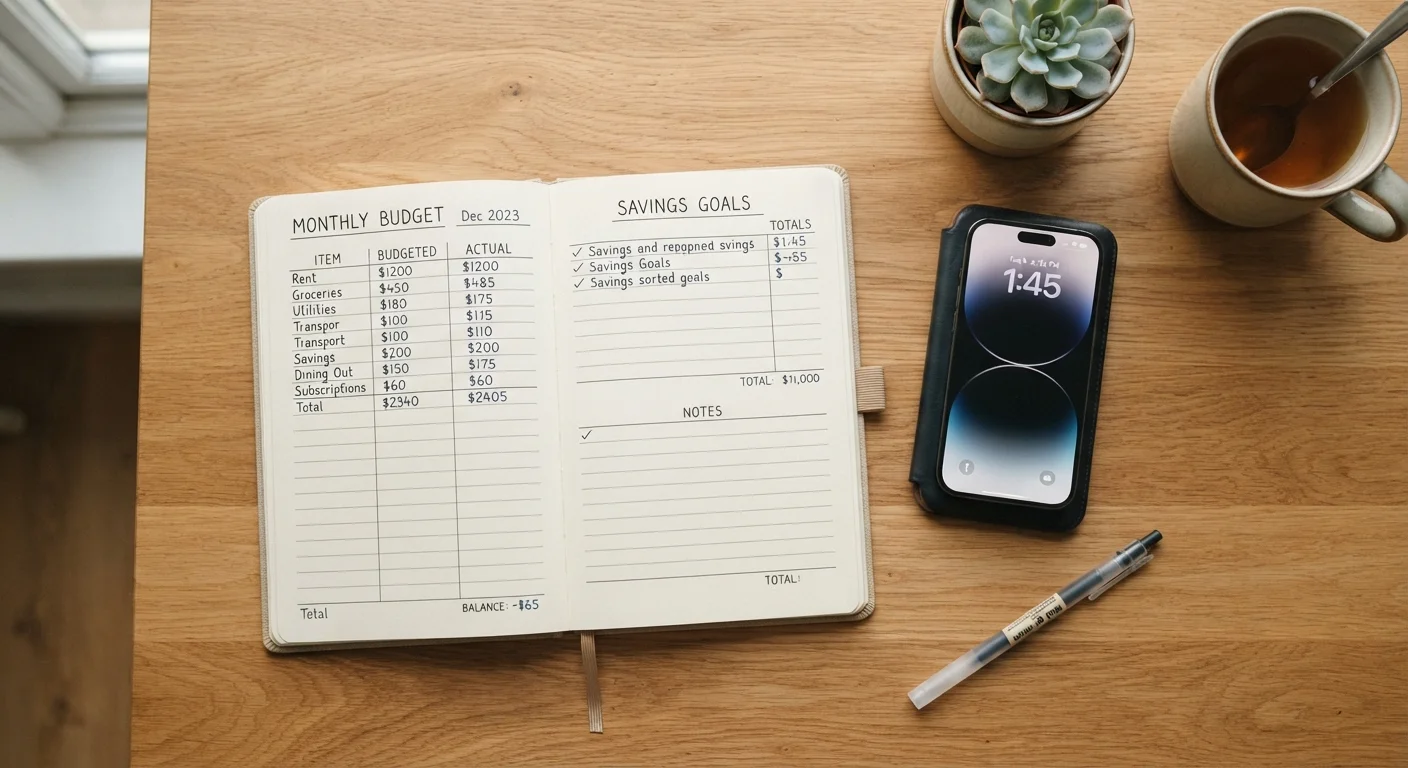
The system fits naturally alongside a monthly budget review habit. Checking in at the end of each month — seeing which envelopes ran dry early, which had money left over, and what that tells you about your real priorities — is where long-term improvement happens. Our monthly budget review checklist offers a structured way to do exactly that.
Where the method tends to struggle: online subscriptions and automatic payments don't map neatly to envelopes. Irregular income also complicates pre-allocation. And for people who find cash management anxiety-inducing, the physical version may create more stress than it relieves. In those cases, the underlying principle — category limits set in advance — can still be applied through a different format.
Ultimately, the habits built around the system matter more than the system itself. Our piece on habits that separate consistent budgeters explores what those practices look like over time.
This article is for general informational and educational purposes only and does not constitute personalized financial advice. Consider consulting a qualified financial professional regarding your specific circumstances.