
Why Most Tracking Attempts Fall Apart
Most people have tried tracking their spending at least once. Many quit within two weeks. The problem usually isn't motivation — it's friction. When a system takes too long to update, feels confusing, or doesn't match how you naturally think about money, you stop using it.
The result is the same regardless of which tool you abandoned: you're back to guessing where your paycheck went. That's why choosing the right method for your habits is more important than picking the most sophisticated one. A simple system you maintain beats a perfect one you ignore.
Understanding the strengths and limits of each approach makes it much easier to pick one that fits — or to combine two in a way that reinforces itself. For a deeper look at the daily habits that support consistent tracking, see what separates people who stick to a budget.
The Main Methods Compared
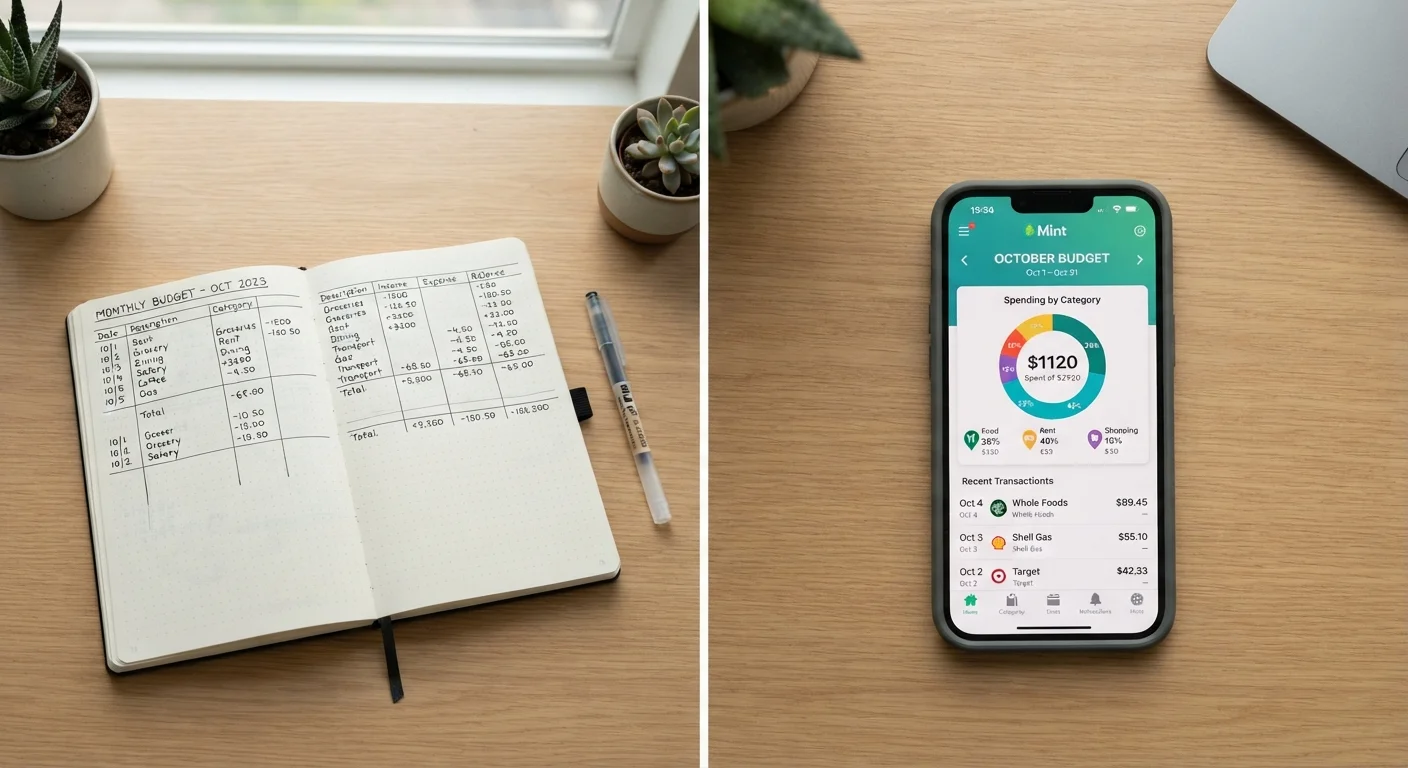
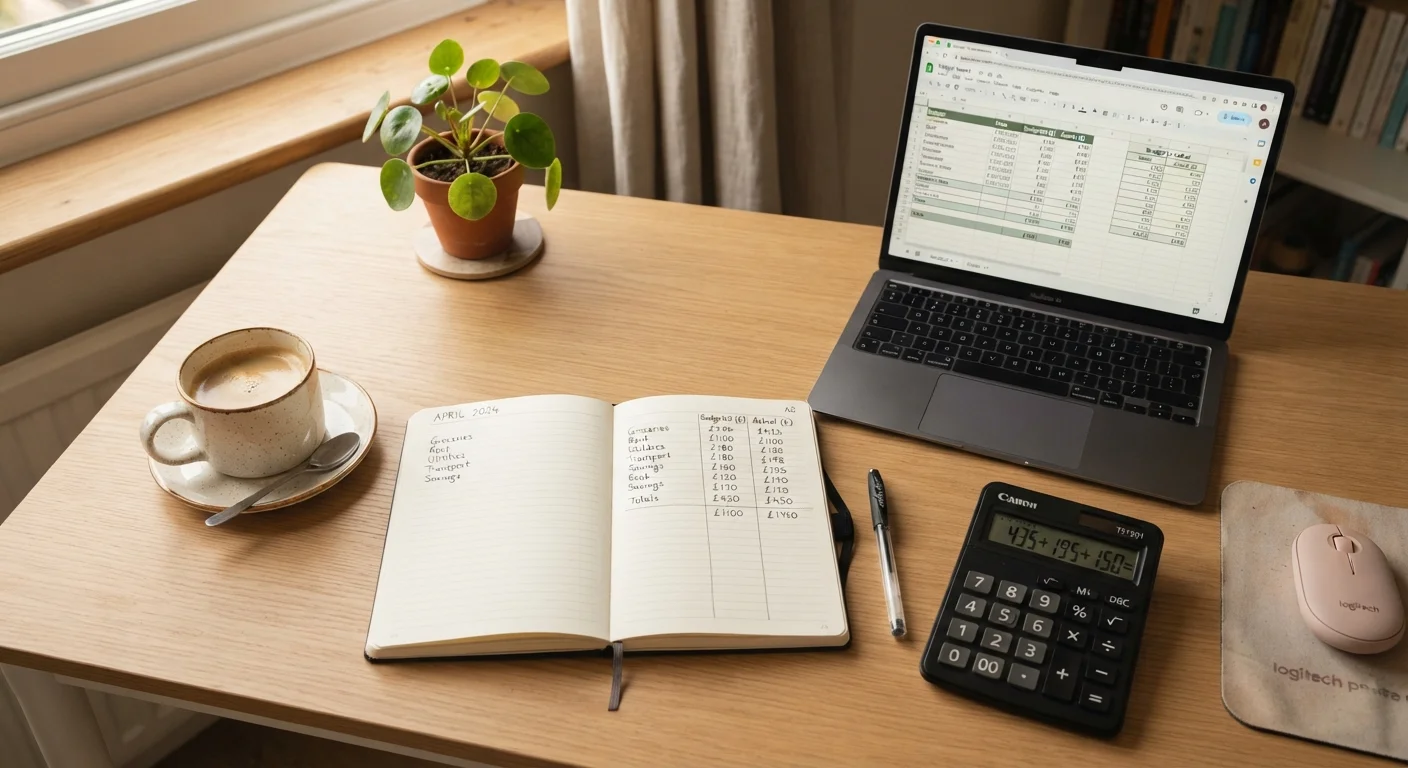
There are three primary approaches most people use: apps that sync with bank accounts, spreadsheets built or downloaded on a computer, and handwritten notebooks or paper logs. Each operates on a different tradeoff between automation, effort, and insight.
| Spending Apps | Spreadsheets | Paper Notebook | |
|---|---|---|---|
| Setup time | 15–30 minutes | 30–60 minutes | Under 5 minutes |
| Ongoing effort | Low (automated sync) | Medium (manual entry) | High (write every purchase) |
| Customization | Limited by app design | Fully customizable | Fully flexible |
| Mindfulness boost | Low | Medium | High |
| Cost | Free to paid tiers | Free (basic tools) | Near zero |
| Best for | Busy schedules | Detail-oriented planners | Impulse spending control |
Apps pull transactions automatically, which reduces daily effort — but that automation can also create a false sense of being on top of things. You might glance at a dashboard without actually absorbing what you spent. Spreadsheets demand manual entry, which slows you down in a useful way, and they can be shaped to reflect exactly how your household categorizes money. Paper tracking is the most time-intensive but consistently ranked high by people who want to curb impulse spending, since writing each purchase by hand creates a small but real moment of reflection. For more on the paper-versus-digital tradeoff, see what each approach gets right.
Making Apps Work Beyond the Setup Screen
Spending apps are easy to start and easy to ignore. After the initial sync, many users check in less and less until the app becomes another icon they swipe past. The fix is scheduling: treat your app like a weekly appointment, not a passive dashboard.
A ten-minute weekly review — categorizing any miscategorized transactions and noting any surprises — does more than daily passive scrolling. Some people also find it helpful to turn on spending alerts for specific categories where they tend to overspend. That creates a real-time nudge without requiring constant manual logging.
Schedule a Weekly Money Check-In
Pick a consistent day and time — Sunday evening works for many people — to review your transactions for the week. Even ten minutes of intentional review turns passive data into real awareness. Mark it on your calendar like any other appointment so it doesn't get skipped.
One caution: linking all your accounts to a third-party app involves sharing login credentials or read-only access through a data aggregator. Understand your app's privacy policy and check whether your bank offers its own built-in categorization tools as an alternative.
Getting More From a Spreadsheet
A spreadsheet works best when it mirrors how you already think about your finances. Generic budget templates are a starting point, but they rarely survive contact with real life. Customize the categories to match your actual recurring expenses — separate "dining out" from "groceries," or combine all utilities into a single line if that's how you process them mentally.
The most sustainable spreadsheet habit is a short daily or every-other-day update — entering three to five transactions takes under two minutes. A monthly summary tab that auto-calculates totals gives you the bigger picture without extra effort. Pair this habit with the monthly budget review checklist to close out each month systematically.
When Paper Still Wins
Writing purchases by hand seems outdated, but for people who overspend in specific categories — restaurants, online shopping, entertainment — paper tracking creates friction that's actually valuable. The act of writing "$14.50 — lunch" makes the spending feel more concrete than a number appearing in an app feed.
A pocket notebook or a simple printed template works well. The goal isn't comprehensive records; it's awareness. Many people use paper as a short-term reset — tracking for two to four weeks to recalibrate after a period of financial drift — rather than a permanent system. Pair paper tracking with the principles in keeping impulse spending in check for the strongest effect.
If you want to explore a related method that also uses tangible, deliberate tracking, envelope budgeting applies the same mindful logic to how you allocate money before spending it.
This article is for general informational and educational purposes only. It does not constitute personalized financial advice. Consider consulting a qualified financial professional for guidance specific to your situation.