
Why This Distinction Matters in a Real Budget
When you sit down to build a budget, the first challenge isn't tracking numbers — it's understanding which expenses you actually have control over. That's exactly what the discretionary versus non-discretionary framework helps you figure out.
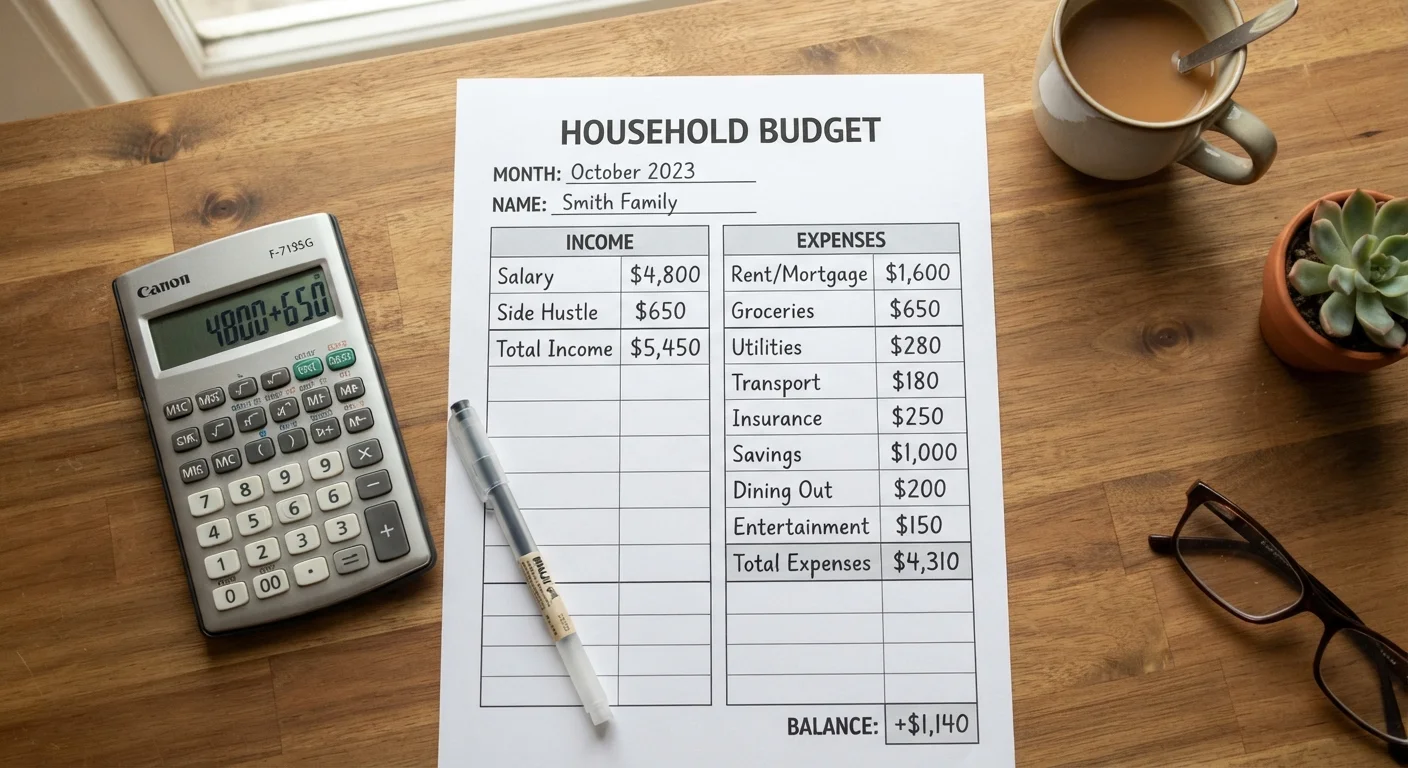
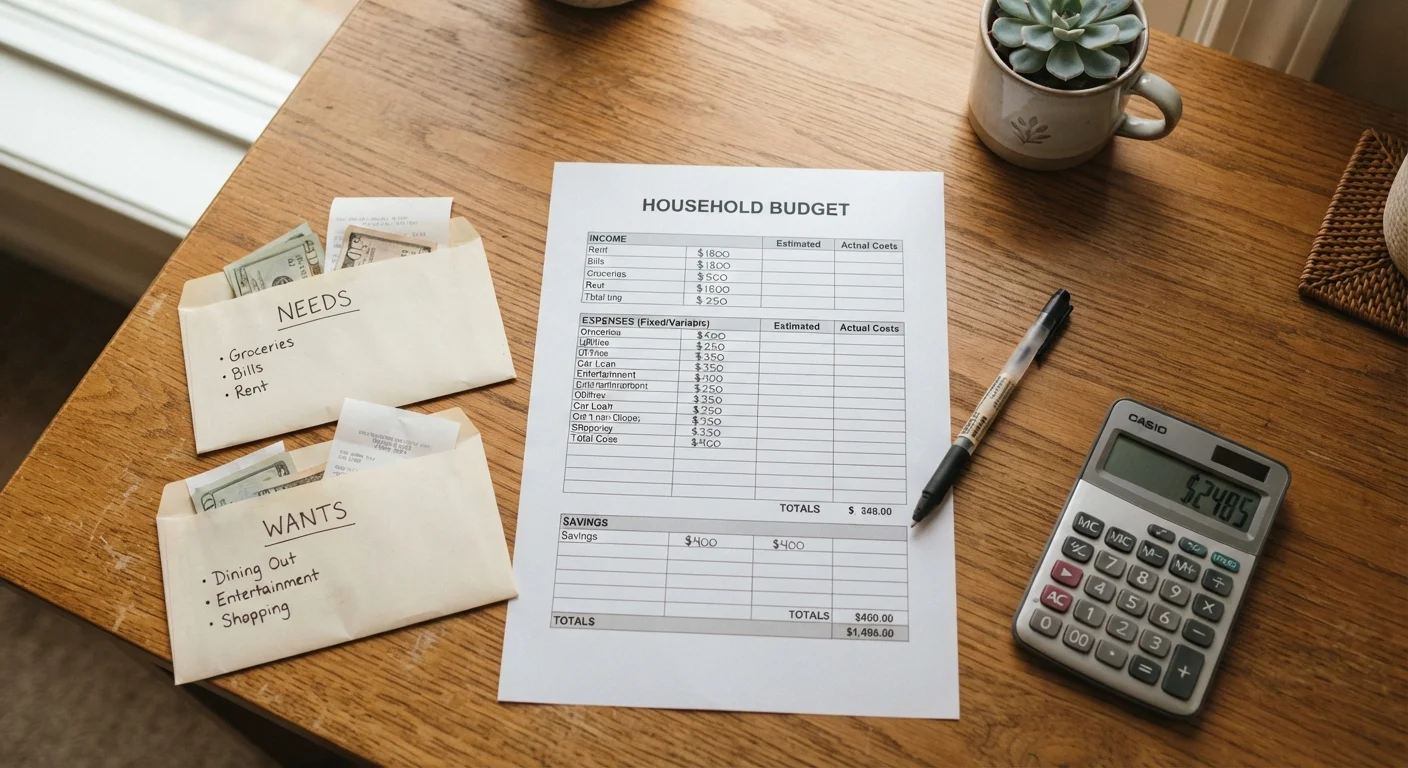
Think of your income as having two jobs. The first job is to cover your obligations — the bills and costs that will arrive whether you plan for them or not. The second job is to fund your choices — how you eat out, entertain yourself, or pursue hobbies. A budget that doesn't separate these two jobs tends to create confusion and shortfalls.
If you're building your first budget, mapping your non-discretionary expenses first gives you a clear floor — the minimum your income must cover each month. Everything above that floor is where your financial decisions actually live.
Start With Your Non-Discretionary Floor
Before assigning a dollar to any optional expense, total up everything you must pay each month — housing, utilities, insurance, minimum debt payments, and basic food. This number is your financial floor. Any budgeting decision you make only applies to what's left above it. Knowing this figure precisely prevents the most common budgeting mistake: spending discretionary money before obligations are covered.
What Counts as Non-Discretionary Spending
Non-discretionary expenses are costs tied to basic functioning — housing, healthcare, transportation to work, utilities, and minimum debt payments. They share a key feature: skipping them carries real consequences, from late fees to service disconnection to damaged credit.
Common non-discretionary expenses include:
- Rent or mortgage payments
- Electricity, gas, and water bills
- Basic groceries and household supplies
- Health and auto insurance premiums
- Minimum payments on credit cards and loans
- Childcare when required for work
These costs aren't always identical month to month — your electric bill rises in summer — but they aren't optional. This overlap with variable costs is worth understanding. For a deeper look at how expense behavior affects planning, see our guide on fixed vs. variable expenses.
~30%
Average share of income spent on housing
The U.S. Bureau of Labor Statistics Consumer Expenditure Survey consistently finds housing absorbs the largest single share of American household budgets.
$226/month
Average American spending on dining out
Federal Reserve and BLS spending data show food away from home is one of the largest discretionary categories for U.S. households.
4–5 subscriptions
Average paid subscriptions per U.S. household
Consumer spending research suggests most households underestimate how many recurring subscriptions they carry and their combined monthly cost.
What Counts as Discretionary Spending
Discretionary spending covers the choices that make life more enjoyable — dining out, streaming services, travel, clothing beyond the basics, hobbies, and gifts. None of these would cause immediate harm to your health or housing if paused.
This is also the category where spending tends to quietly grow. Individual purchases feel small — a coffee here, a subscription there — but they accumulate fast. Research consistently shows that people underestimate how much they spend on discretionary categories each month.
Discretionary doesn't mean frivolous. Spending on experiences, relationships, and personal development is a legitimate use of money. The point isn't to eliminate these expenses but to make conscious decisions about them. Our article on what a personal budget actually is challenges the misconception that budgeting means deprivation.
The Gray Area: Expenses That Are Both
Plenty of expenses don't land cleanly in either category. Groceries are necessary — but the amount you spend on them isn't fixed. You need some form of transportation, but whether that means a bus pass or a car with a monthly payment involves choice. The same logic applies to phone plans, clothing, and even healthcare (routine versus elective).
A useful approach: identify the non-discretionary floor for these hybrid categories, then treat spending above that floor as discretionary. For example, budgeting $300/month for groceries as a baseline need, with any amount above that treated as a spending choice, gives you a structured way to track both.
For a comprehensive look at how to categorize all your household spending, the essential budget categories guide offers a practical reference.
This article is for general informational and educational purposes only. It is not personalized financial advice. For guidance specific to your situation, consider consulting a qualified financial professional.