
Why a Budget Is Simply a Spending Plan
The word "budget" carries a lot of baggage — it sounds like deprivation, restriction, or spreadsheets you don't understand. In reality, a budget is nothing more than a written plan that tells your money where to go before the month begins, rather than wondering where it went afterward.
Budgeting isn't just for people in debt or financial trouble. It's a tool anyone can use to feel more in control, reduce money stress, and make deliberate choices. If you've never built one before, rest assured: the process is straightforward, and you don't need accounting skills to do it. You just need your actual numbers. Check out common budgeting myths worth setting straight if hesitation is holding you back.
Net income
The money you actually receive after taxes and other deductions are taken out of your paycheck. This is what you work with when budgeting — not your gross salary.
Fixed expense
A recurring cost that stays the same amount every month, like rent or a car loan payment. These are predictable and easy to plan for.
Variable expense
A cost that changes in amount from month to month, like groceries, gas, or dining out. These are where most budgets have room to adjust.
Emergency fund
A dedicated savings reserve meant to cover unexpected costs — like a car repair or medical bill — without disrupting your regular budget.
Zero-based budget
A budgeting approach where you assign every dollar of your income to a specific category until you have zero dollars left unaccounted for each month.
Step 1: Find Your Real Take-Home Income
Your budget starts with one number: how much money actually lands in your bank account each month after taxes and deductions. This is your net income (also called take-home pay) — not the gross salary on your offer letter.
If you're a salaried employee, check a recent pay stub for your net pay and multiply by the number of pay periods in a month (typically two). If you're paid hourly or have variable income, calculate an average using your last three months of deposits. Include all regular income sources: wages, freelance payments, side work, and any consistent government benefits.
Use Your Lowest Month as Your Baseline
If your income fluctuates — from freelance work, tips, or hourly hours — look at your last three months and use the lowest figure as your planning base. This ensures your essential expenses are always covered, and any extra income becomes a bonus you can direct intentionally. Building your budget on your worst-case income builds real financial resilience.
Step 2: List Every Expense
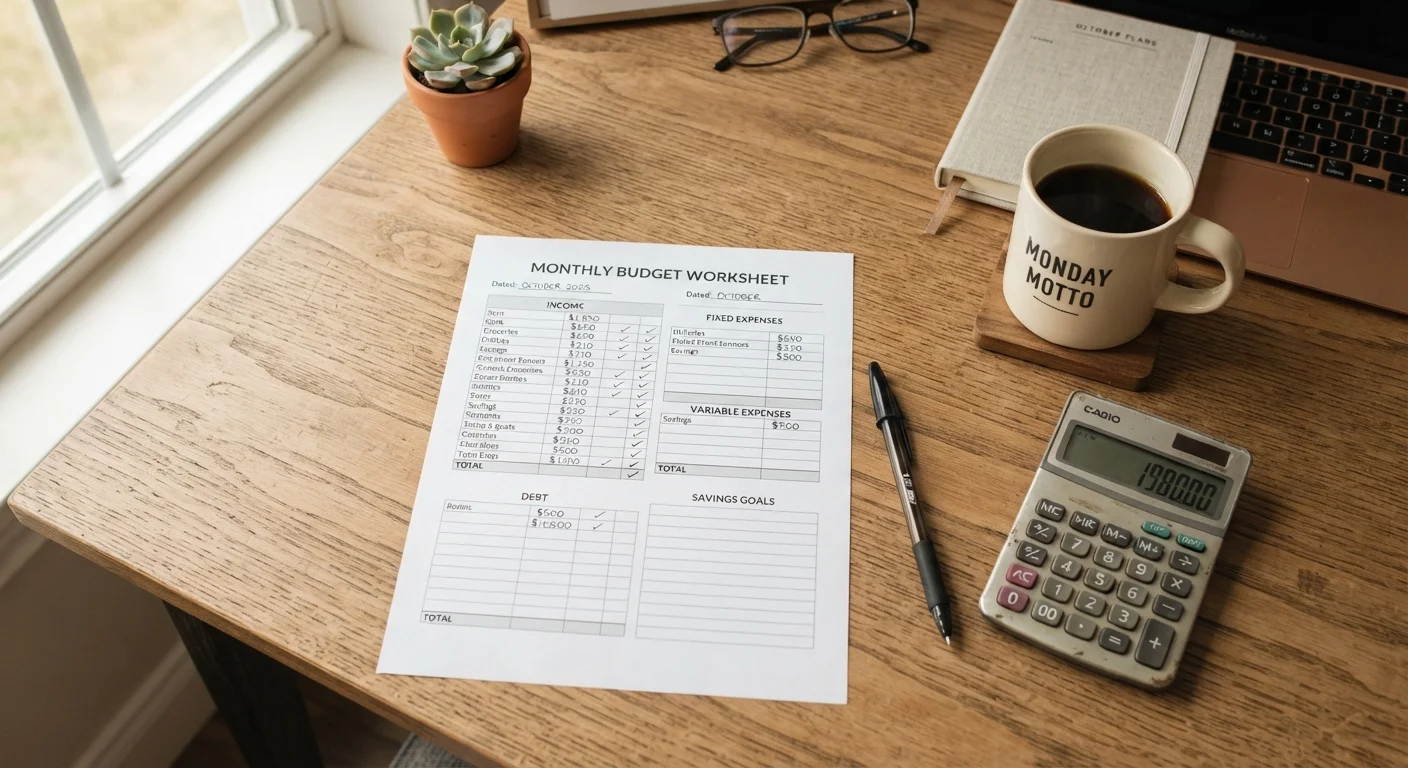
Pull up two or three months of bank statements and credit card statements. Go through every transaction and group expenses into two types:
- Fixed expenses — amounts that stay the same each month, such as rent, a car payment, or a loan minimum payment.
- Variable expenses — amounts that fluctuate, such as groceries, gas, dining out, utilities, and entertainment.
Don't forget irregular but predictable costs like annual subscriptions, car registration, or holiday spending — divide these by 12 and include that monthly slice in your plan. For a comprehensive list of standard categories, see essential budget categories every household should account for.
Don't Forget Annual and Irregular Expenses
One of the most common first-budget mistakes is only tracking monthly bills and missing costs that come once or twice a year — car registration, insurance premiums, holiday gifts, or annual subscriptions. Add up all your annual irregular costs, divide by 12, and include that monthly amount as its own budget line. Failing to do this leads to budget-busting surprises that feel unavoidable but were actually predictable.
Step 3: Assign Every Dollar a Job
Now subtract your total monthly expenses from your net income. Ideally, that number reaches exactly zero — meaning every dollar has been deliberately directed somewhere. If you have money left over, assign it to savings, an emergency fund, or debt paydown rather than leaving it unaccounted for. If expenses exceed income, this is the moment to identify what can be trimmed.
Savings should be treated like a fixed expense — set an amount and put it at the top of your list before optional spending. Even $25 or $50 a month builds the habit and the fund simultaneously. Once your savings foundation is established, explore practical saving and goal-setting strategies to take it further.
Step 4: Track, Review, and Adjust
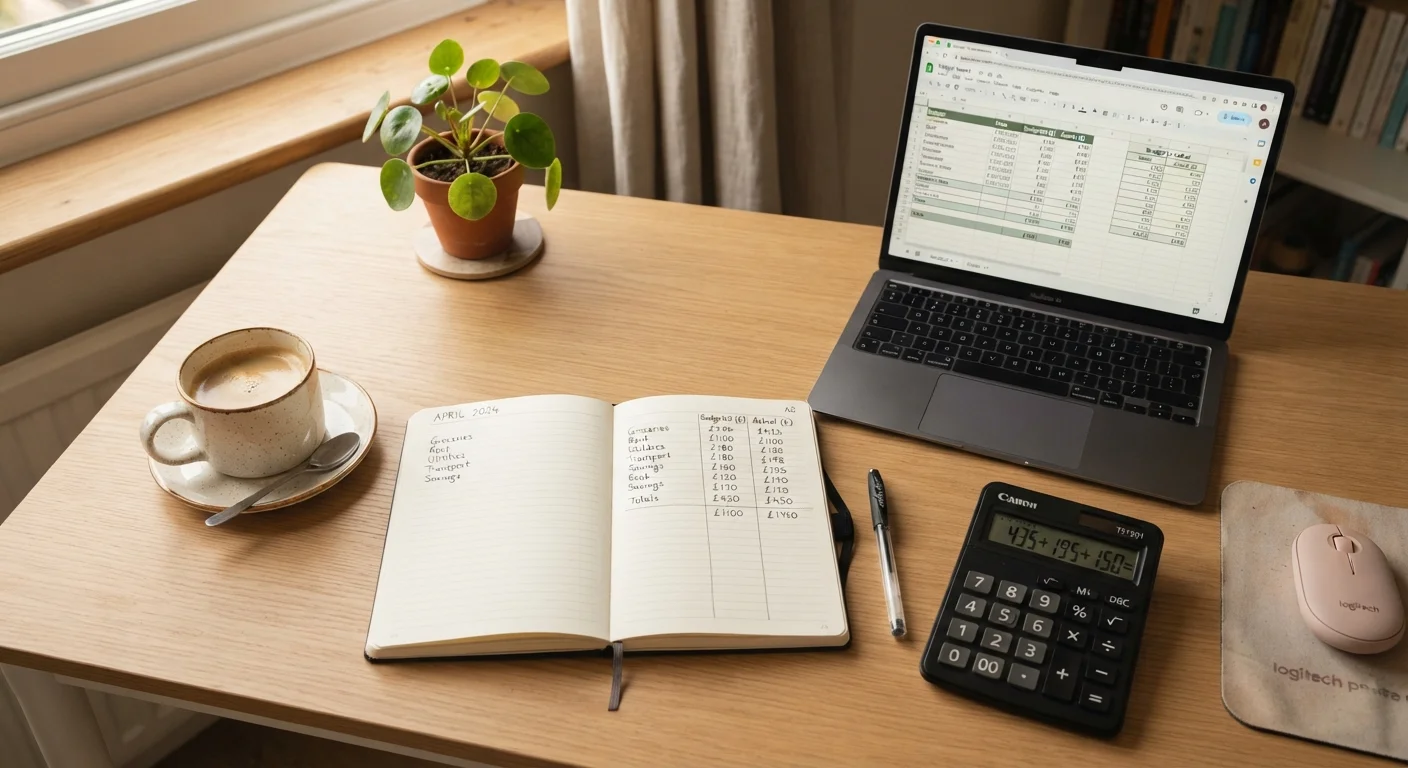
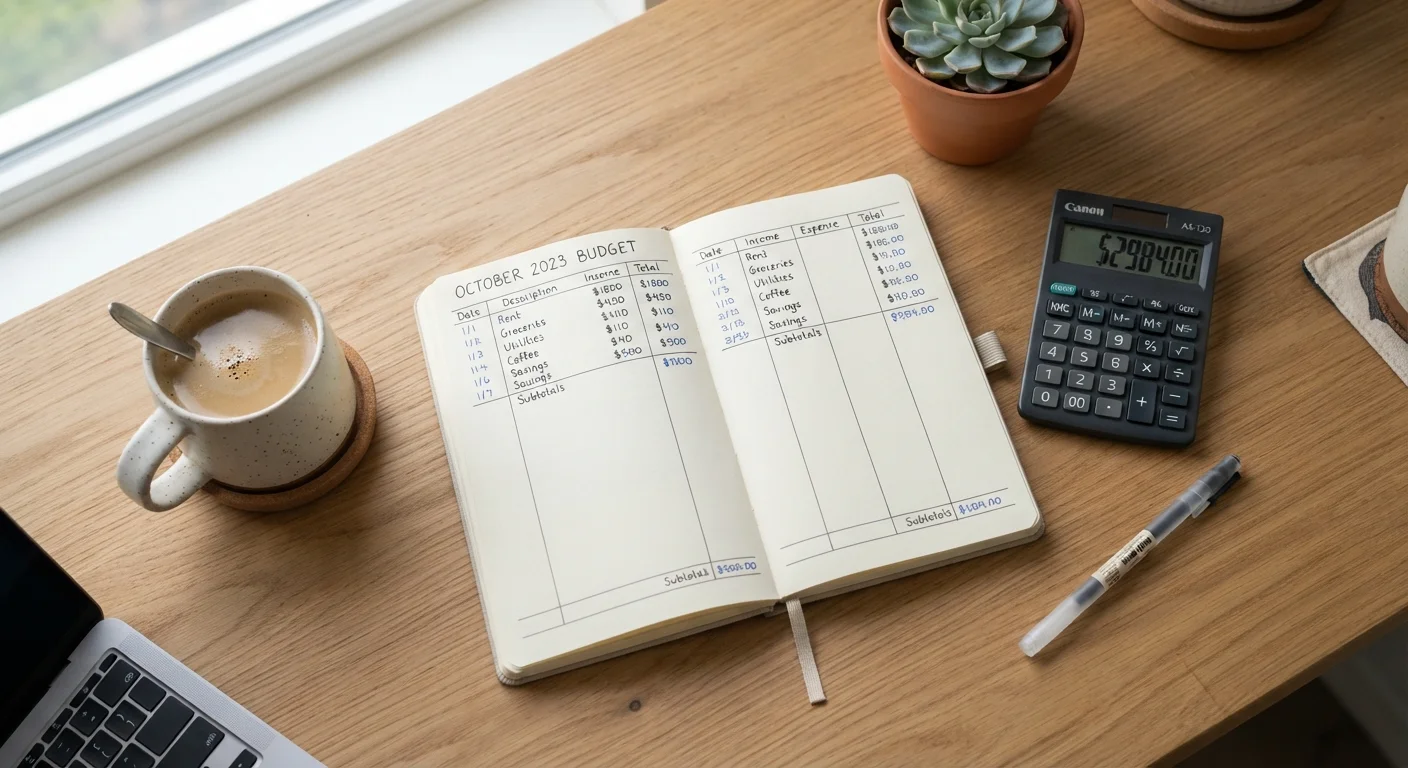
A budget written once and never checked again is just a wish list. Throughout the month, record what you actually spend in each category — a notes app, a simple spreadsheet, or a printed template all work fine. At month's end, compare what you planned versus what actually happened.
Gaps between the plan and reality aren't failures; they're data. Maybe you underestimated groceries or forgot a quarterly fee. Use that information to update next month's budget. The monthly budget review checklist can guide you through this process efficiently. Most budgets take two or three months to feel accurate and natural.
Choosing a Budgeting Method That Fits Your Life
Once you've completed your first basic budget, you may want to adopt a formal framework. Two of the most popular approaches are zero-based budgeting (where every dollar is assigned a category until you reach zero) and the 50/30/20 rule (which splits income into 50% needs, 30% wants, and 20% savings and debt repayment). Neither is universally superior — the best method is the one you'll actually use consistently.
See how zero-based and 50/30/20 budgeting compare to decide which structure suits your habits and goals. Whatever method you choose, the fundamentals remain the same: know your income, know your expenses, and give every dollar a purpose.
Monthly Budget Review Checklist
A structured end-of-month checklist to help you compare planned versus actual spending, spot patterns, and fine-tune your budget before the next month starts.
Essential Budget Categories Reference
A plain-language overview of the standard budget categories — from housing and food to insurance and savings — so you don't accidentally leave anything out of your plan.
Zero-Based vs. 50/30/20 Budgeting Comparison
Once you've built your first budget, this guide helps you choose between two of the most popular budgeting frameworks to find the structure that fits your life.
This article is for general informational and educational purposes only and does not constitute personalized financial advice. For guidance specific to your situation, consider consulting a qualified financial professional.