
How Each Method Works
Understanding a budgeting method at its core — before debating which is better — saves a lot of confusion. These two approaches aren't just stylistically different; they operate on fundamentally different logic.
Zero-Based Budgeting
The zero-based approach starts with your total monthly income and assigns every dollar to a specific purpose — groceries, rent, utilities, savings, entertainment — until you reach zero dollars left unallocated. "Zero" doesn't mean spending everything; it means every dollar has a named job, including dollars earmarked for savings or an emergency fund. You build this plan fresh each month, which is part of the method's power and its burden.
The 50/30/20 Method
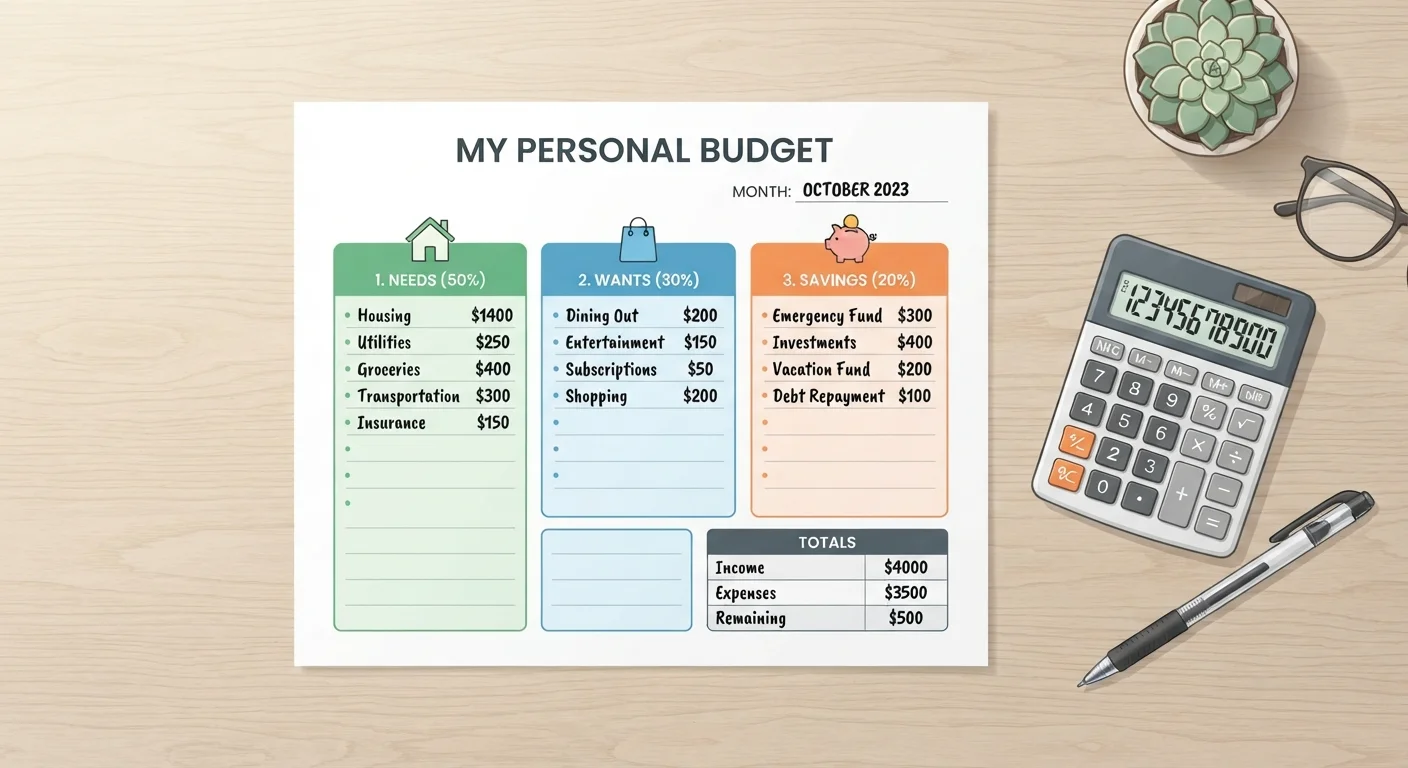
This method divides your after-tax income into three broad categories: 50% toward needs (housing, utilities, groceries, transportation), 30% toward wants (dining out, subscriptions, hobbies), and 20% toward savings and debt repayment beyond minimums. It was popularized as a straightforward rule of thumb that doesn't require tracking dozens of line items. For a deeper look at how these percentages flex in practice, see our 50/30/20 explainer.
| Criterion | Zero-Based Budgeting | 50/30/20 Method |
|---|---|---|
| Core logic | Every dollar assigned a job | Income split into three percentage buckets |
| Setup time | Higher — rebuilt each month | Low — set once, revisit occasionally |
| Ongoing maintenance | Requires regular tracking | Minimal tracking needed |
| Flexibility | High — categories are fully customizable | Moderate — fixed percentage targets |
| Best for irregular income | Yes — rebuilds around actual earnings | Less suited — percentages assume stable income |
| Granularity | Very detailed — every category defined | Broad — three categories only |
| Learning curve | Steeper for beginners | Gentle — easy to start immediately |
Trade-Offs Worth Knowing
Every budgeting method involves trade-offs between precision and ease. Neither zero-based budgeting nor 50/30/20 is objectively superior — what matters is which trade-offs you're willing to accept.
~33%
Americans with a detailed monthly budget
Gallup polling has historically found that fewer than one in three Americans maintain a detailed household budget, underscoring how common it is to manage money without a formal system.
50%
Income ceiling for 'needs' in 50/30/20
In many high cost-of-living metro areas, housing costs alone can routinely exceed this ceiling, prompting many financial educators to treat the 50/30/20 ratios as adjustable guidelines rather than rigid rules.
Where Zero-Based Budgeting Shines — and Strains
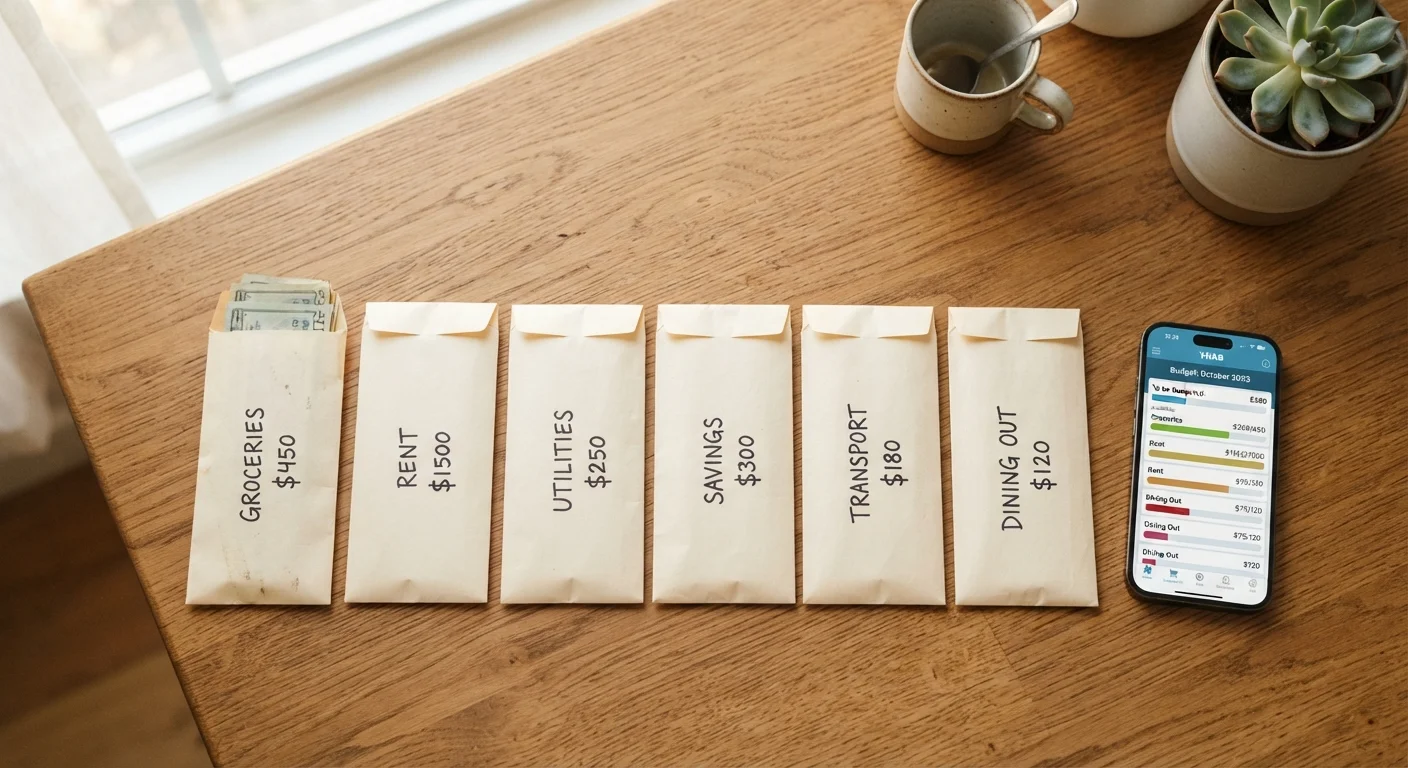
The granularity of zero-based budgeting is its greatest strength: you can't accidentally overspend a category you never defined. It tends to reveal spending patterns that broader methods obscure — like realizing your "miscellaneous" spending quietly consumes $300 a month. The downside is the time investment. Rebuilding a detailed budget from scratch monthly can feel burdensome, and a single missed tracking entry throws your numbers off. It pairs especially well with the envelope budgeting concept, which applies similar category-by-category discipline.
Where 50/30/20 Works Well — and Falls Short
The 50/30/20 method's simplicity is genuinely useful: it reduces the friction that causes most people to abandon budgeting. But the fixed percentages can feel unrealistic in high cost-of-living areas, where housing alone may consume well above 50% of income. The method also offers less guidance on how to cut spending when you're over budget in a category — it tells you the target, not the path. Common budgeting misconceptions sometimes cause people to dismiss 50/30/20 as too simplistic, but used honestly, it builds real financial awareness.
This article provides general financial education and is not personalized financial advice. Consider speaking with a licensed financial professional for guidance specific to your situation.
Choosing the Right Fit for You
The best budgeting method is the one you'll actually stick with. Research on financial behavior consistently shows that habit formation and follow-through matter more than the technical elegance of the system itself. See what separates people who stick to a budget for practical guidance on building that consistency.
You Don't Have to Pick Just One Forever
Budgeting methods aren't permanent commitments. Many people start with 50/30/20, build the habit, then switch to zero-based budgeting when they want more control — or vice versa when life gets busier. Think of your method as a tool you can change when your circumstances change. What matters most is that you're actively directing your money rather than wondering where it went.
If you've never made a budget before, starting with 50/30/20 is usually less overwhelming — it gives you a working framework in minutes. Once you've built the budgeting habit and want finer control, migrating to zero-based budgeting is a natural progression. Our plain-English guide to your first budget walks through setup step by step for complete beginners.
Some people use a hybrid approach: applying the 50/30/20 percentages at the macro level while breaking the "needs" category into detailed zero-based line items. This gives structure without requiring granular tracking across every purchase. Whatever approach you choose, revisiting your budget when income or expenses change — not just once a year — keeps it functional and relevant.