
How the Three Categories Work
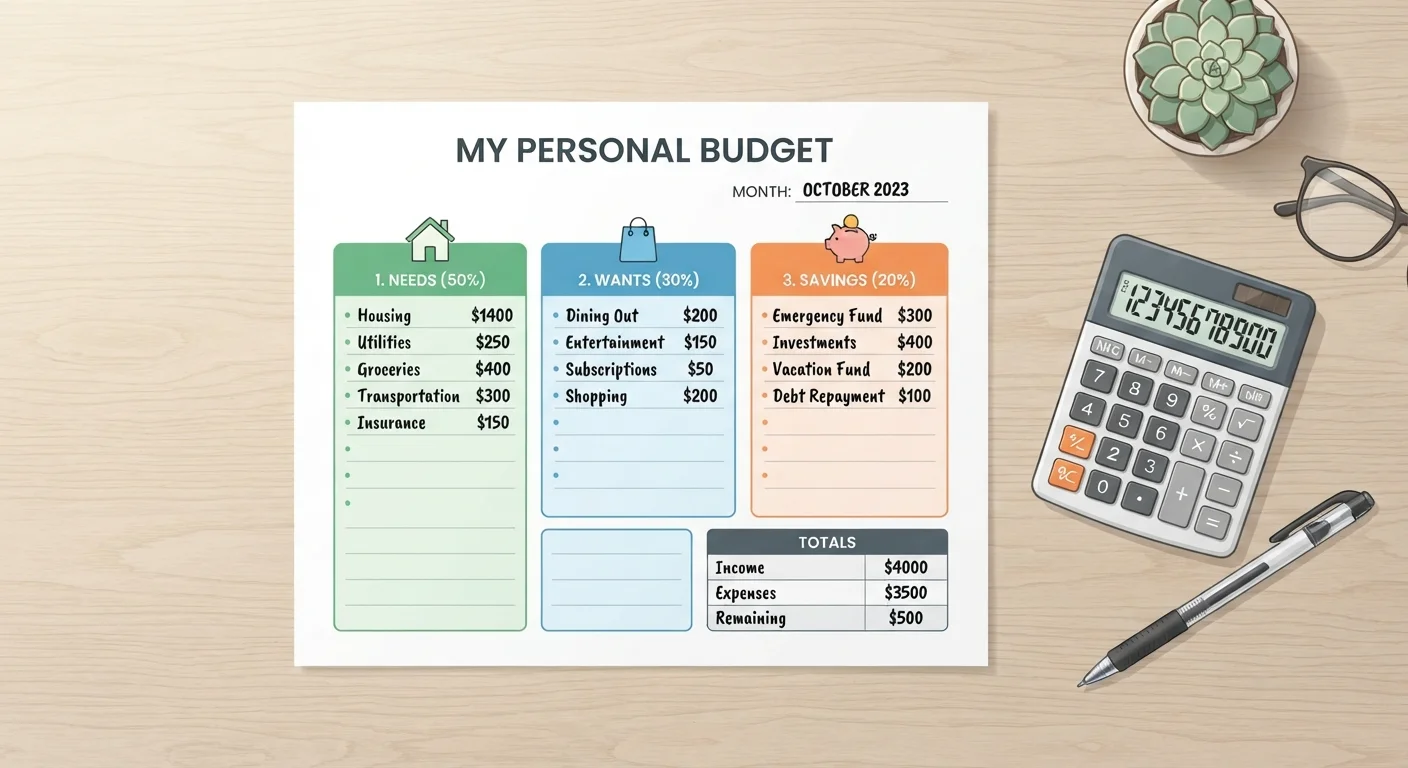
The 50/30/20 rule splits every dollar of take-home pay into three buckets. Here's what belongs in each one:
50% — Needs
Needs are non-negotiable expenses — things you must pay to maintain basic housing, health, and employment. Common examples include:
- Rent or mortgage payments
- Utilities (electricity, water, gas, internet)
- Groceries and household essentials
- Health and car insurance premiums
- Minimum loan and credit card payments
- Basic transportation costs (gas, public transit)
30% — Wants
Wants are discretionary expenses that make life more comfortable or enjoyable but aren't essential for survival. This category covers dining out, streaming services, gym memberships, hobbies, clothing beyond the basics, and leisure travel. The line between needs and wants can feel blurry — a basic cell phone plan is a need, but a premium unlimited data plan with the latest device may slide into want territory.
20% — Savings and Debt Repayment
The final 20% is directed toward building financial security. This includes contributions to an emergency fund, retirement accounts such as a 401(k) or IRA, and any debt payments above your required minimums. Paying off high-interest debt faster belongs here, as does saving for specific goals like a home down payment. See our guide on structuring short- and long-term savings goals to prioritize within this bucket.
Start by tracking before you change anything
Before adjusting your spending, spend one full month recording what you actually spend in each category. Many people are surprised to find their wants category far exceeds 30%. Knowing your real baseline makes the 50/30/20 targets meaningful rather than arbitrary.
Putting the Rule Into Practice
To apply the 50/30/20 rule, start with your monthly after-tax income. If you earn $4,000 per month after taxes, your target allocation looks like this:
| Category | Percentage | Monthly Amount |
|---|---|---|
| Needs | 50% | $2,000 |
| Wants | 30% | $1,200 |
| Savings / Debt Payoff | 20% | $800 |
Next, add up your actual monthly spending in each category and compare it to your targets. Most people find the wants category is where overages happen — subscriptions accumulate quietly and dining out adds up faster than expected. A monthly budget review checklist can help you audit each category before the next month begins.
57%
Americans living paycheck to paycheck
According to a 2023 LendingClub report, more than half of U.S. consumers reported spending all or most of their income each month, highlighting why structured frameworks like the 50/30/20 rule matter.
20%
Recommended minimum savings rate
Many financial planning guidelines suggest saving at least 15–20% of income to fund retirement and emergency reserves — which aligns directly with the 50/30/20 rule's savings bucket.
$1,500
Median monthly housing cost for renters
The U.S. Census Bureau's American Community Survey has tracked median gross rent rising steadily, making the 50% needs threshold increasingly difficult to maintain in many metro areas.
If your needs consistently exceed 50%, look for the largest fixed costs first. Refinancing a high-rate loan, switching insurance providers, or adjusting your housing situation are levers that can meaningfully shift the balance over time. Consult a licensed financial adviser before making major changes to debt or insurance arrangements.
When to Adjust the Percentages
The 50/30/20 split is a sensible default, not a universal law. Life circumstances frequently call for modified ratios — and that's acceptable, as long as all three categories remain intentional.
Irregular income requires an extra step
Freelancers, gig workers, and anyone with variable monthly income should base their percentages on an average of the past three to six months rather than a single month's earnings. In lower-earning months, prioritize needs first and reduce the wants allocation before touching savings contributions.
High cost-of-living areas: In cities where rent alone can consume 40% or more of take-home pay, a 60/20/20 or even 65/15/20 split may be more realistic. The key is protecting the savings percentage as much as possible while reducing wants rather than the savings bucket.
Aggressive debt payoff: If you're carrying high-interest debt, temporarily shifting to a 50/20/30 split — where 30% goes to savings and debt payoff — accelerates progress. Pairing this with a pay-yourself-first approach can make the savings habit more automatic.
Comparing methods: The 50/30/20 approach trades precision for simplicity. If you prefer to account for every dollar, you might find zero-based budgeting more useful. Our comparison of zero-based vs. 50/30/20 budgeting walks through the trade-offs of each method.
This article is for general informational purposes only and does not constitute personalized financial advice. For guidance specific to your financial situation, consult a qualified financial adviser or certified financial planner.