
What 'Pay Yourself First' Actually Means
The phrase sounds catchy, but the concept is genuinely simple: when your paycheck arrives, the first thing you do is move a set amount to savings — before rent, before groceries, before any discretionary spending. Whatever remains is what you live on.
This flips the default approach most households use, which is: pay all the bills, spend what feels right, and save whatever happens to be left at the end of the month. The problem with that default is that there's rarely anything left. Expenses tend to expand to fill available money.
Paying yourself first treats savings as a fixed obligation — the same way you'd treat a utility bill or a loan payment. It removes the willpower question. You don't decide each month whether to save; it simply happens first.
This is general financial information rather than personalised advice. For guidance specific to your situation, consider consulting a licensed financial professional. If you're still building your first budget from scratch, our plain-English budget walkthrough is a useful starting point.
Small Amounts Build Real Habits
Starting with $25 or $50 per paycheck matters far less than starting consistently. The habit of moving money first — before spending — is the foundation. The amount can grow over time as your budget gets more breathing room.
Setting a Realistic Savings Target
A common benchmark is saving 10–20% of take-home pay, but that figure is meaningless if it doesn't fit your actual income. A household covering rent, childcare, and car payments in a high cost-of-living city may find 5% genuinely difficult. That's a real and valid starting point.
The right amount is the largest figure you can consistently set aside without creating a shortfall that forces you to raid your savings the following week. Raiding defeats the purpose. Start conservatively and increase over time.
Don't Set a Target You Can't Sustain
Setting an ambitious savings amount that leaves you short for groceries or bills will likely cause you to abandon the strategy entirely. A smaller, consistent transfer beats a larger one you reverse every other month. It's better to save $50 reliably than $300 sporadically.
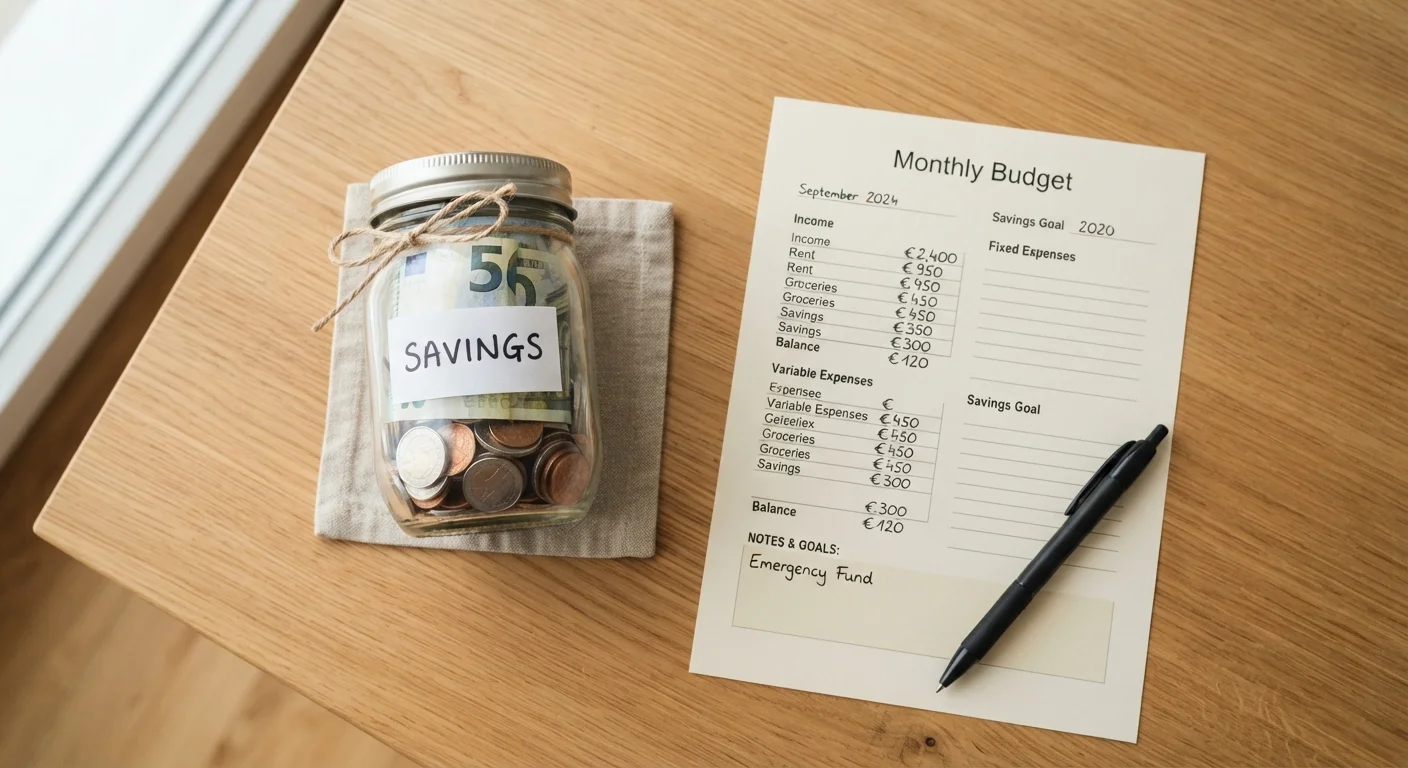
To find your number, list your fixed monthly obligations — rent or mortgage, utilities, insurance, minimum debt payments — and subtract them from your take-home income. What remains is your discretionary pool. Decide what share of that pool you're committing to savings before anything else gets spent.
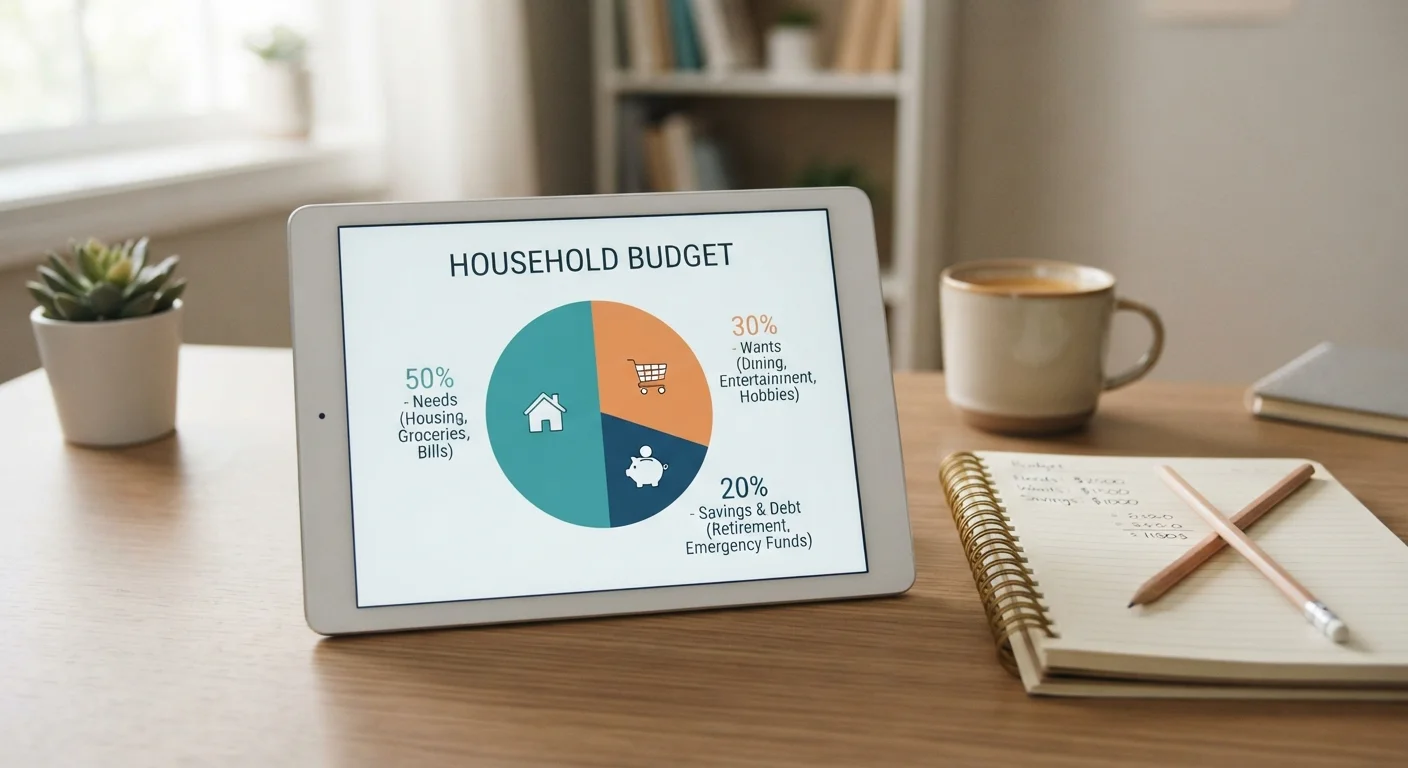
If you want a structured framework to figure out how savings fits alongside your other spending categories, the 50/30/20 rule is one widely used approach worth understanding — though it needs adjusting for many income levels.
Tools and Setup You'll Need
Getting the mechanics right reduces friction and makes the strategy much easier to sustain.
Separate savings account
Holds your saved money apart from daily spending funds, reducing the temptation to dip in.
Automatic transfer or bill-pay feature
Schedules your savings transfer on payday so it happens without any manual action.
Simple budget spreadsheet or notebook
Tracks your fixed expenses and remaining discretionary income to help determine your savings target.
Budgeting or banking app
Provides a real-time view of your account balances and spending so you can catch shortfalls early.
What you will need
How to Put It Into Practice
Once your target is set and your accounts are in place, the steps below walk you through executing the strategy. The process itself is straightforward — the work is mostly in the initial setup.
Calculate your actual take-home pay
Start with what lands in your bank account after taxes and any payroll deductions — not your gross salary. If your income varies month to month, use a conservative average based on your three most recent paychecks rather than your highest month.
List all fixed monthly obligations
Write down every expense that arrives on a set schedule and cannot easily be skipped: rent or mortgage, utilities, insurance premiums, loan minimum payments, subscriptions with real consequences for cancellation. Add them up to find your committed spending floor.
Decide on a savings amount
Subtract your fixed obligations from your take-home income. From the remaining discretionary amount, choose a savings figure that leaves enough for groceries, transportation, and reasonable everyday spending. If you're unsure, start with a modest amount — even $50–$100 per paycheck — and adjust upward over time.
Open or designate a separate savings account
Your savings should live in an account that isn't your everyday checking account. A savings account at the same institution works, but some people find a separate bank or credit union adds useful friction that discourages casual withdrawals. Either approach is fine — what matters is the separation.
Schedule an automatic transfer on payday
Log into your bank's online account and set up a recurring transfer from checking to savings for your chosen amount, timed to process on the day — or the day after — your paycheck deposits. This is the step that makes the strategy reliable. When the transfer is automatic, the money moves before you have a chance to spend it.
Review and adjust every few months
After three months, look at whether the transfer has caused any real shortfalls. If your checking account is consistently healthy at month end, consider increasing the savings amount slightly. If you've been regularly transferring money back, your target may need to come down — that's a normal adjustment, not a failure.
High-Interest Debt Changes the Equation
If you're carrying high-interest debt — particularly credit card balances — aggressively paying that down often makes more mathematical sense than directing money to a low-yield savings account. Many financial educators suggest at minimum building a small emergency fund first, then directing extra dollars toward high-interest debt before maximising savings. Speak with a licensed financial professional to weigh the trade-offs for your specific situation.
Single-income households or those with variable pay may need to adapt the timing slightly — our overview of saving on one income covers practical adjustments for that situation.
Keeping the Habit Going
The biggest risk to this strategy isn't the first month — it's month four, when an unexpected expense makes you feel like skipping a transfer. Having a small, separate emergency buffer (even $500–$1,000 to begin) makes it far easier to leave your primary savings account untouched.
Revisit your savings amount every three to six months. As income rises or fixed costs change, there may be room to increase the transfer — or a genuine need to temporarily reduce it. Either adjustment is fine. The goal is consistency over perfection.
Automation makes consistency much easier. Once a transfer is scheduled to happen on payday, you remove the monthly decision entirely. Our walkthrough on automating your savings explains the key decisions involved in setting that up thoughtfully.
This article is for general informational and educational purposes only. It does not constitute personalised financial advice. For guidance tailored to your circumstances, consult a qualified financial professional.