

Why One Income Changes the Savings Equation
A two-income household has a built-in safety net: if one earner loses a job or faces a medical setback, the other income keeps the lights on. A single-income household has no such buffer. That asymmetry shapes every savings decision you make.
This doesn't mean saving is impossible — it means the order of priorities shifts. Before worrying about investment accounts or large savings goals, the first objective for a single-income household is almost always a funded emergency reserve. Most financial educators suggest three to six months of essential expenses, though even one month of reserves dramatically reduces financial fragility.
It's also worth acknowledging that single-income households span very different situations: a high-earning professional living alone, a family of four on one salary, a recently divorced parent, or someone caring for an aging relative. See our piece on caregiving and financial pressure for context on how multiple obligations intersect. The strategies here apply broadly, but your specific numbers will vary considerably.
This article is for general informational purposes only and does not constitute personalised financial advice. Consider consulting a licensed financial professional for guidance specific to your situation.
The Real Trade-Offs: Pros and Cons of Single-Income Saving
There are genuine advantages to having one income stream — and genuine constraints. Understanding both helps you make realistic decisions rather than measuring yourself against benchmarks designed for dual-earner households.
Simpler budget with one income source
Tracking and planning is more straightforward when you have a single paycheck to work around. There's no need to reconcile two income schedules or spending styles.
Greater clarity on what you can afford
With one income, the ceiling is clear. This can reduce lifestyle inflation and prompt more deliberate spending decisions compared to households where combined income obscures individual costs.
Incentive to cut wasteful fixed costs early
Constraint is a motivator. Single-income households often identify and eliminate unnecessary recurring expenses faster than those with more financial slack.
Potential for focused, goal-driven saving
Without a second income adding noise, it can be easier to direct a consistent percentage toward a specific, defined goal — keeping momentum clearer.
No income backstop if earnings drop
A job loss, illness, or reduced hours immediately threatens the entire household budget. There's no second salary to absorb the shock, making emergency savings more critical — and harder to build quickly.
Slower progress toward large savings goals
Whether it's a down payment, retirement contributions, or a college fund, one income simply generates less surplus than two. Timelines need to be adjusted accordingly.
Higher relative impact of unexpected expenses
A $1,000 car repair hits a single-income budget proportionally harder. Without a buffer, one unplanned expense can derail months of saving progress.
Benefits and insurance coverage from one employer only
Single-income households rely on one employer's benefits package. A job change, layoff, or benefit reduction affects the entire household, not just one member.
Risk of burnout from managing finances alone
When all financial responsibility falls on one person, the mental load can be significant. This is particularly true for single parents or sole earners supporting dependents.
One underappreciated advantage: single-income budgets are often simpler. There's one set of tax withholdings, one paycheck schedule, and no need to reconcile two people's spending styles. That simplicity can make budget tracking more consistent and easier to maintain over time.
Strategies That Tend to Work
Effective single-income saving usually comes down to three levers: reducing fixed costs, automating contributions, and setting tiered goals.
Reduce Fixed Costs First
Variable spending — dining out, subscriptions, impulse purchases — gets the most attention in budgeting advice, but fixed costs (rent, insurance, loan payments) are where the real savings potential often lives. A $150/month reduction in a recurring bill saves $1,800 a year without any daily willpower required.
Automate Small Amounts
Automation removes the decision from the equation. Setting up a recurring transfer of even $25 or $50 per paycheck means saving happens before you have a chance to spend that money. Our guide on automating your savings walks through the practical setup decisions worth thinking through.
Start Small, Then Adjust
If your budget is tight, starting with $25 or even $10 per paycheck is still meaningful. The goal at first is to establish the habit and the account — not to hit a specific savings rate. As your income grows or fixed costs fall, you can increase the automated amount without rethinking your entire approach.
Set Tiered Goals
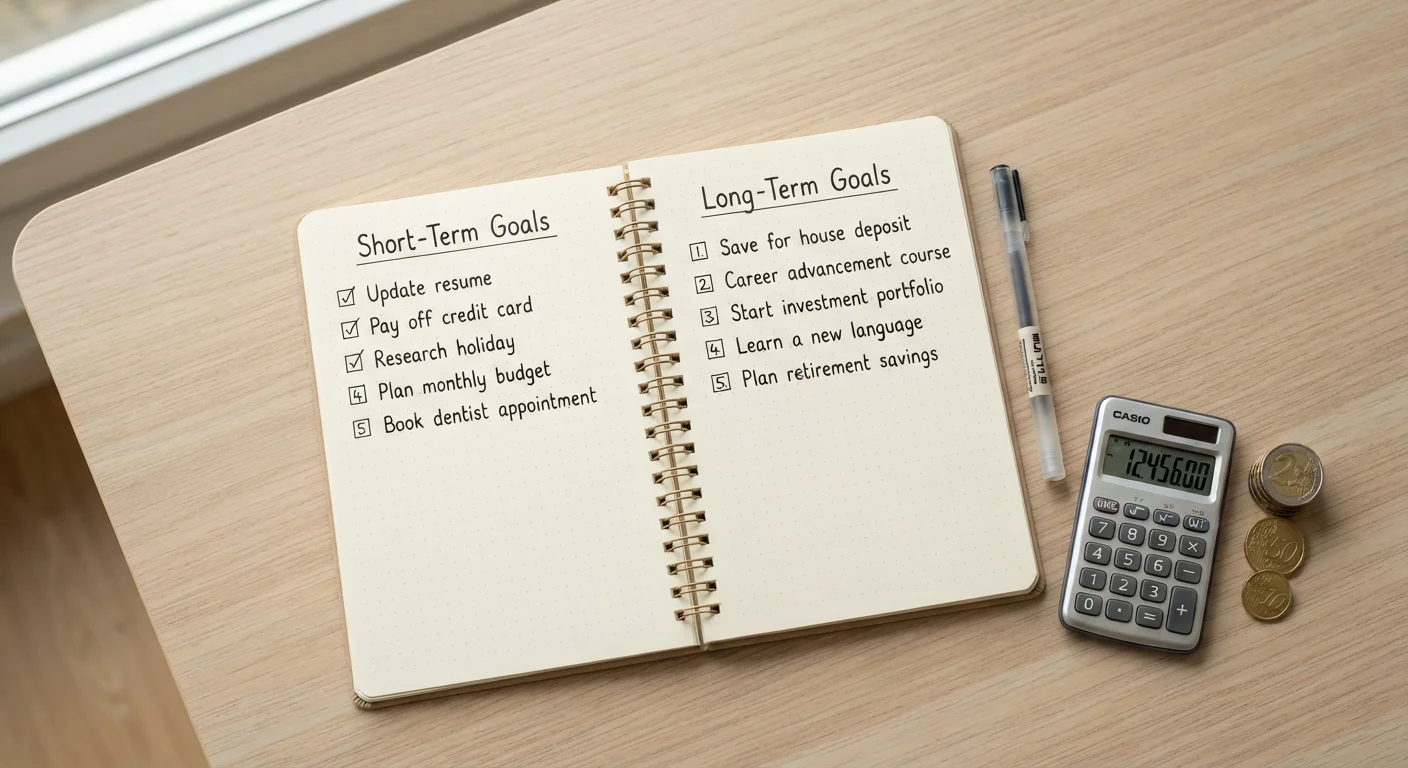
Rather than one abstract savings target, break goals into stages: first a $500 emergency buffer, then one month of expenses, then a specific medium-term goal. This approach — covered in more depth in our article on short- and long-term savings goals — keeps progress visible and motivation intact.
Setting Realistic Expectations
The most common mistake single-income savers make is adopting savings rate targets built for different circumstances. The frequently cited "save 20% of income" benchmark assumes a level of financial cushion that many one-income households simply don't have. A more useful frame: save as consistently as your budget allows, and increase the rate incrementally as your income grows or fixed costs fall.
~40%
Share of U.S. households with a single earner
According to U.S. Census Bureau data, a substantial portion of American households rely on income from one person, a figure that includes single-person and single-parent households.
3–6 months
Recommended emergency fund coverage
Most mainstream financial guidance suggests single-income households aim for the higher end of this range due to the absence of a second earner as a fallback.
If you're starting from zero, the habits matter more than the amounts. Our article on building a savings habit from scratch covers the mindset and practical steps that make consistency possible even on a tight budget. And if you encounter beliefs like "I'll start saving when I earn more," our piece on common savings myths addresses why waiting rarely produces better results.
Where you keep your savings also matters. A comparison of savings account types can help you understand which option suits your goals — particularly if you want your emergency fund earning more than a standard account offers.