

How These Three Account Types Work
All three account types are deposit accounts — you put money in, earn interest, and can withdraw funds within certain rules. The differences come down to where they're offered, how interest rates are set, and how flexibly you can access your money.
Traditional savings accounts are the most familiar. Offered by banks and credit unions with physical branches, they typically carry lower annual percentage yields (APYs) but provide in-person service, ATM access, and easy integration with checking accounts at the same institution.
High-yield savings accounts (HYSAs) are usually offered by online banks or the online divisions of larger institutions. Because they have lower overhead costs, these institutions can pass savings along as higher interest rates. The trade-off is that most are managed entirely online or by phone.
Money market accounts (MMAs) occupy a middle position. They tend to offer rates closer to HYSAs than to traditional savings accounts, but may also allow limited check-writing or come with a debit card — features traditional savings accounts rarely include. Some MMAs require higher minimum balances to earn the advertised rate or waive monthly fees.
Understanding how compound interest works is key to appreciating why even a half-percentage-point difference in APY compounds meaningfully over years.
| Traditional Savings | High-Yield Savings | Money Market Account | |
|---|---|---|---|
| Typical APY | Low (often under 0.5%) | Higher (varies, often 4–5x traditional) | Moderate to high |
| Where offered | Banks and credit unions | Primarily online banks | Banks and credit unions |
| Branch / ATM access | Usually yes | Rarely | Sometimes |
| Check-writing / debit | Rarely | Rarely | Often available |
| Minimum balance | Low or none | Often low or none | Often higher ($1,000+) |
| FDIC / NCUA insured | Yes | Yes | Yes |
| Rate variability | Variable | Variable | Variable |
| Best suited for | Convenience-focused savers | Rate-focused, online-comfortable savers | Larger balances needing some access |
Key Trade-Offs to Consider
Rate alone shouldn't drive your decision. Here are the practical factors that matter most:
- Liquidity and access: Federal rules no longer mandate a six-withdrawal-per-month limit on savings accounts, but many institutions still impose their own limits. Money market accounts may give you more flexibility if you need occasional access without fully moving funds to checking.
- Minimum balance requirements: Some HYSAs have no minimums; some MMAs require $1,000–$10,000 or more to earn the top rate. Know the terms before opening.
- Rate variability: All three account types carry variable rates — the APY can change at any time in response to monetary policy or competitive pressures. A high rate today isn't guaranteed tomorrow.
- FDIC/NCUA insurance: Deposits at FDIC-insured banks or NCUA-insured credit unions are protected up to $250,000 per depositor, per institution, per account category. This applies equally to all three types.
Consider Opening Accounts at Separate Institutions
Keeping your savings account at a different bank from your everyday checking can reduce the temptation to dip into savings impulsively. The 1–3 business day transfer window acts as a natural pause. This works especially well when paired with automatic transfers on payday, so the money moves before you have a chance to spend it.
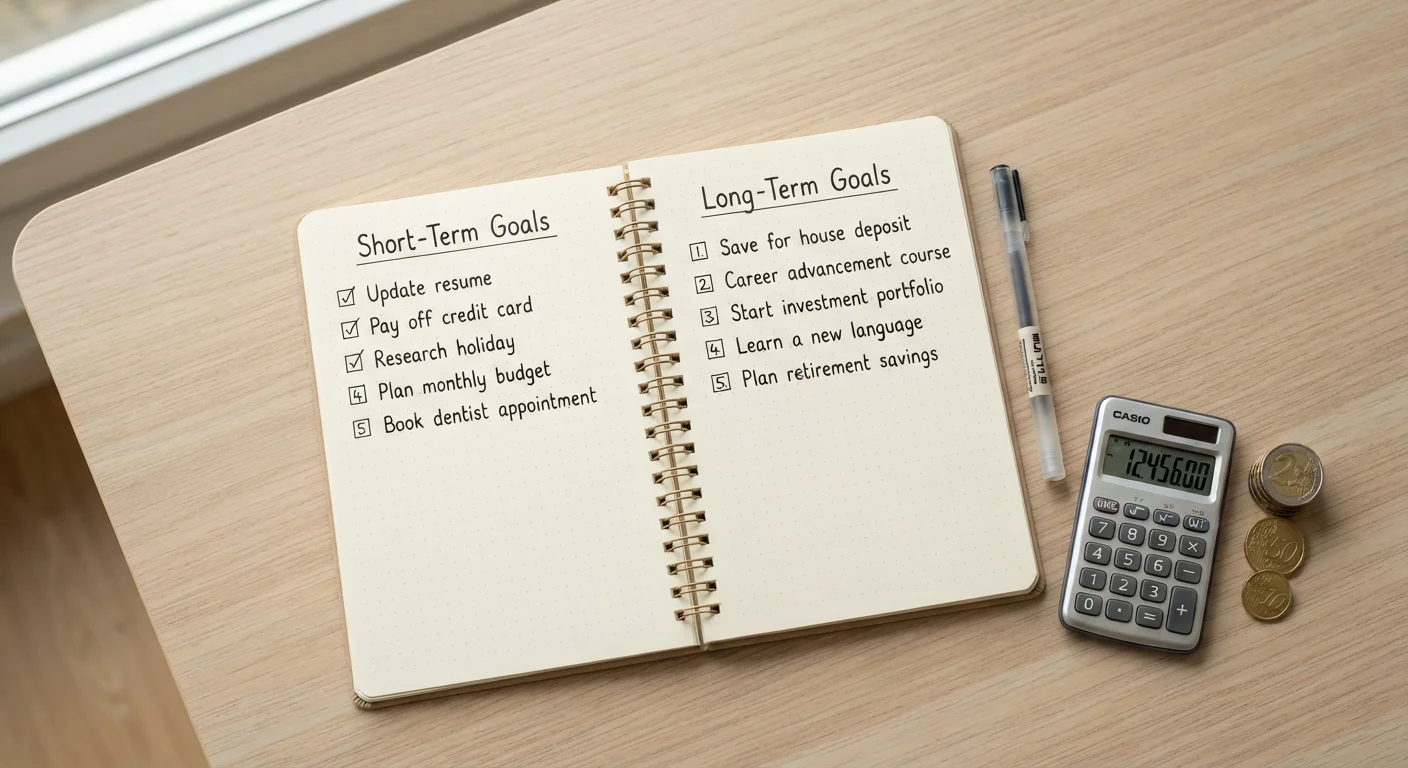
If you're structuring savings around specific goals — an emergency fund, a home down payment, a vacation — the account type should match the timeline. See our overview of short-term vs. long-term savings goals for a framework to align accounts with purpose.
Matching Account Type to Your Savings Habits
The account that earns the highest rate is only useful if you'll actually use it consistently. For many savers, the behavioral dimension matters as much as the financial one.
If you're building an emergency fund and want it separate from your checking account to avoid accidental spending, a high-yield savings account at a different institution can add a helpful psychological barrier. The minor friction of a transfer delay can actually support discipline.
If you already do most banking at a credit union or community bank and value the relationship, a traditional savings account there — even at a lower rate — may keep you more engaged and consistent. A small rate advantage means little if complexity causes you to stop contributing. Common savings myths often overemphasize the account and underemphasize the habit.
For savers with larger cash reserves — perhaps parking funds between investment decisions or holding a business reserve — a money market account's combination of rate and limited transactional access can justify the typically higher balance requirements.
One practical strategy: automate regular contributions to whichever account type you choose. Consistent deposits matter more than the account label. Our guide to automating your savings walks through how to structure that simply and effectively.
~0.45%
Average traditional savings APY (national average)
The FDIC publishes national deposit rate averages; the savings account average has historically remained well below competitive online rates.
$250,000
FDIC deposit insurance limit per depositor
The FDIC and NCUA both insure eligible deposits up to $250,000 per depositor, per insured institution, per account ownership category.
It's worth revisiting your account setup periodically. If your rate has dropped or your needs have changed, an annual savings check-up can help you spot whether a switch makes sense.
This article is for general informational and educational purposes only and does not constitute personalized financial advice. Consult a qualified financial professional for guidance tailored to your individual circumstances.