
What Makes an Expense 'Fixed' or 'Variable'?
Every dollar you spend falls into one of two behavioral categories: it either stays the same from month to month, or it changes. That's the core distinction between fixed and variable expenses — and it matters far more than most budgets acknowledge.
Fixed expenses are costs that don't change regardless of your behavior. Your rent or mortgage payment is the classic example: the same amount leaves your account on the same day each month. Other common fixed expenses include car loan payments, insurance premiums, internet service fees, and minimum debt payments. You can't easily reduce them in the short term without a major life change, like refinancing or moving.
Variable expenses shift based on how much you use or consume something. Groceries, gas, utilities, dining out, clothing, and entertainment all fall here. Spend more, pay more. Spend less, pay less. That flexibility is both the challenge and the opportunity that variable costs present.
A quick way to test any expense: if skipping it or reducing it this month would immediately lower the bill, it's variable. If the bill arrives the same regardless, it's fixed.
| Criterion | Fixed Expenses | Variable Expenses |
|---|---|---|
| Amount each month | Stays the same | Changes based on use |
| Examples | Rent, car payment, insurance | Groceries, gas, dining out |
| Short-term flexibility | Very low — locked in by contract | High — controlled by behavior |
| Budgeting approach | Use exact figures | Use realistic averages |
| Main budgeting risk | Under-estimating if poorly tracked | Overspending without tracking |
| Best savings opportunity | Refinancing or renegotiating | Reducing consumption or frequency |
Why Budgeting Them the Same Way Causes Problems
Many people build a single, undifferentiated list of monthly expenses and assign each one a number. The problem: fixed expenses demand accuracy while variable expenses demand estimation — and those are different mental tasks requiring different approaches.
If you budget $200 for groceries because that's what you spent last month, but you don't track whether you're on pace this month, you can easily overshoot by $80 without noticing until your account balance drops. Fixed expenses don't have this problem — you already know exactly what's coming.
Conversely, treating a fixed expense like a variable one can lead to under-budgeting. If you assume your insurance premium "usually runs around" a certain amount and you're wrong, the shortfall can trigger an overdraft or missed payment.
Some Expenses Blur the Line
A few costs straddle both categories. Utility bills are partly fixed (a base connection fee) and partly variable (usage-based charges). Cell phone plans with overage fees work similarly. For budgeting purposes, treat these as variable and estimate on the higher end of your typical range. That way, a lower-than-expected bill is a pleasant surprise rather than a stressful shortfall.
The solution is simple but often skipped: categorize every expense as fixed or variable before assigning dollar amounts. Then use exact figures for fixed costs and realistic averages — drawn from 2–3 months of actual spending — for variable ones. This approach is a building block of structured methods like zero-based budgeting, which you can explore in our comparison of zero-based and 50/30/20 budgeting.
How to Plan for Each Type Within One Budget
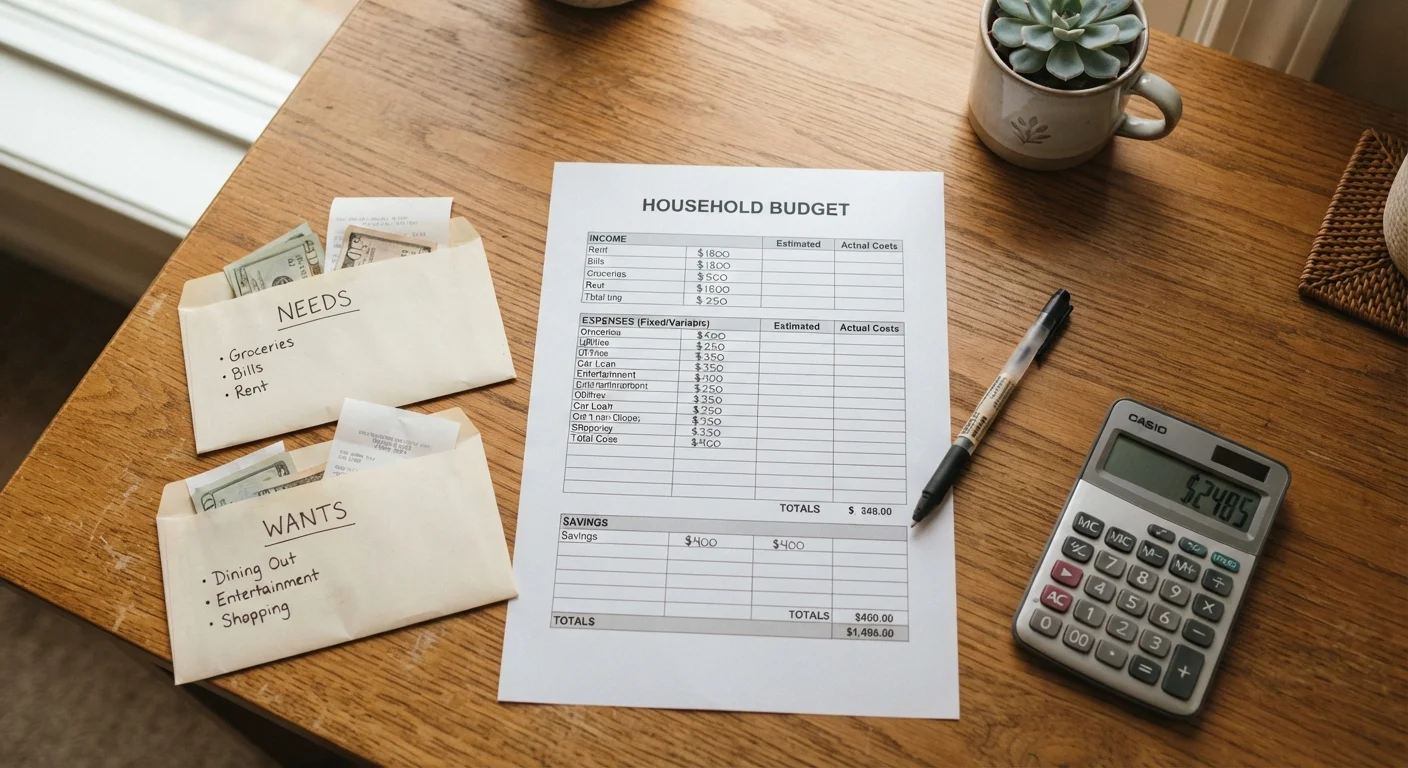
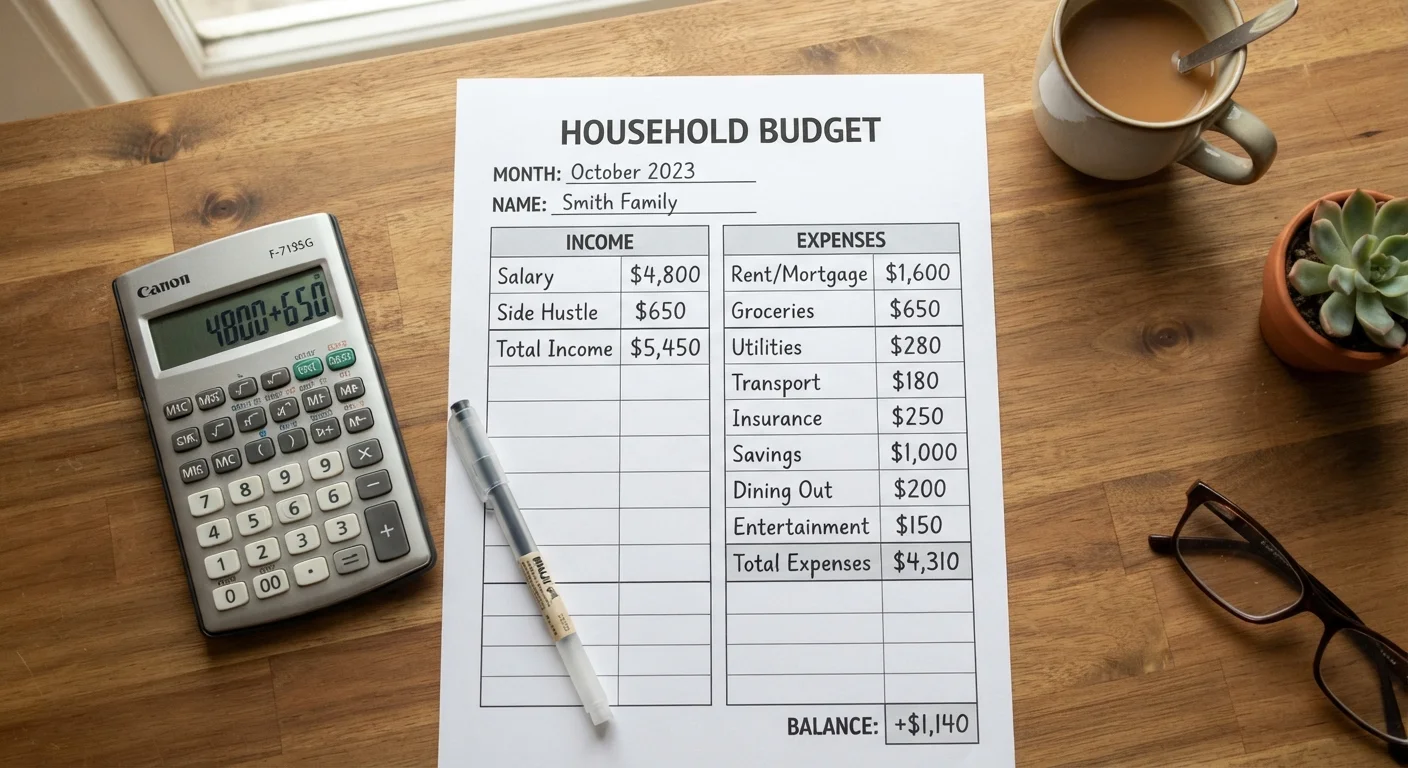
A functional budget treats fixed and variable expenses as separate planning problems that happen to live in the same document.
For fixed expenses:
- List every recurring, predictable obligation — rent, loan payments, subscriptions, insurance.
- Use the exact contracted or invoiced amount, not an estimate.
- Flag any that are annual (like car registration) and divide by 12 to set aside money monthly.
For variable expenses:
- Review bank and card statements from the past 2–3 months to find realistic averages.
- Set a spending limit for each category and track throughout the month.
- Build in a small buffer (5–10%) for categories that tend to creep, like groceries or gas.
Together, your fixed expenses define your financial floor — the minimum income you need to keep obligations met. Your variable expenses define your financial flexibility — where you have control. If you're managing an unpredictable paycheck, that flexibility becomes even more important; our guide on budgeting on an irregular income covers exactly how to navigate that.
For a deeper look at how this distinction overlaps with other spending frameworks, see our explainer on discretionary vs. non-discretionary spending. Once your expense categories are sorted, you can connect them to longer-term planning with our guide to short- and long-term savings goals.
This article is for general informational and educational purposes only and does not constitute personalized financial advice. Consult a qualified financial professional for guidance specific to your situation.