

The Real Definition — and the Common Confusion
Ask most people what a budget is, and they'll say something like "a limit on what I'm allowed to spend." That framing is understandable — but it's the core reason so many people resist making one. A budget isn't a ceiling imposed on your life. It's a plan you write for your money before you spend it.
The confusion likely comes from how budgets are discussed: in terms of cutting back, saying no, and tightening belts. But the actual mechanics of a budget have nothing to do with restriction as a default. A budget simply answers the question: Where should my money go this month? You're the one who answers it.
That shift in framing matters enormously. When you see a budget as a plan you control — one that can include restaurants, weekend trips, or a new pair of shoes — it stops feeling like a trap and starts feeling like a tool. For a deeper look at the mental blocks that prevent people from starting, see our piece on budgeting myths that keep people from starting.
Budget vs. Spending Tracker: A Key Distinction
A budget is written before you spend — it's a plan. A spending tracker records what you've already spent — it's a record. Both are valuable, but they serve different purposes. Many people combine them: plan with a budget, then track actual spending against that plan to see how closely reality matched the intention.
What a Budget Actually Contains
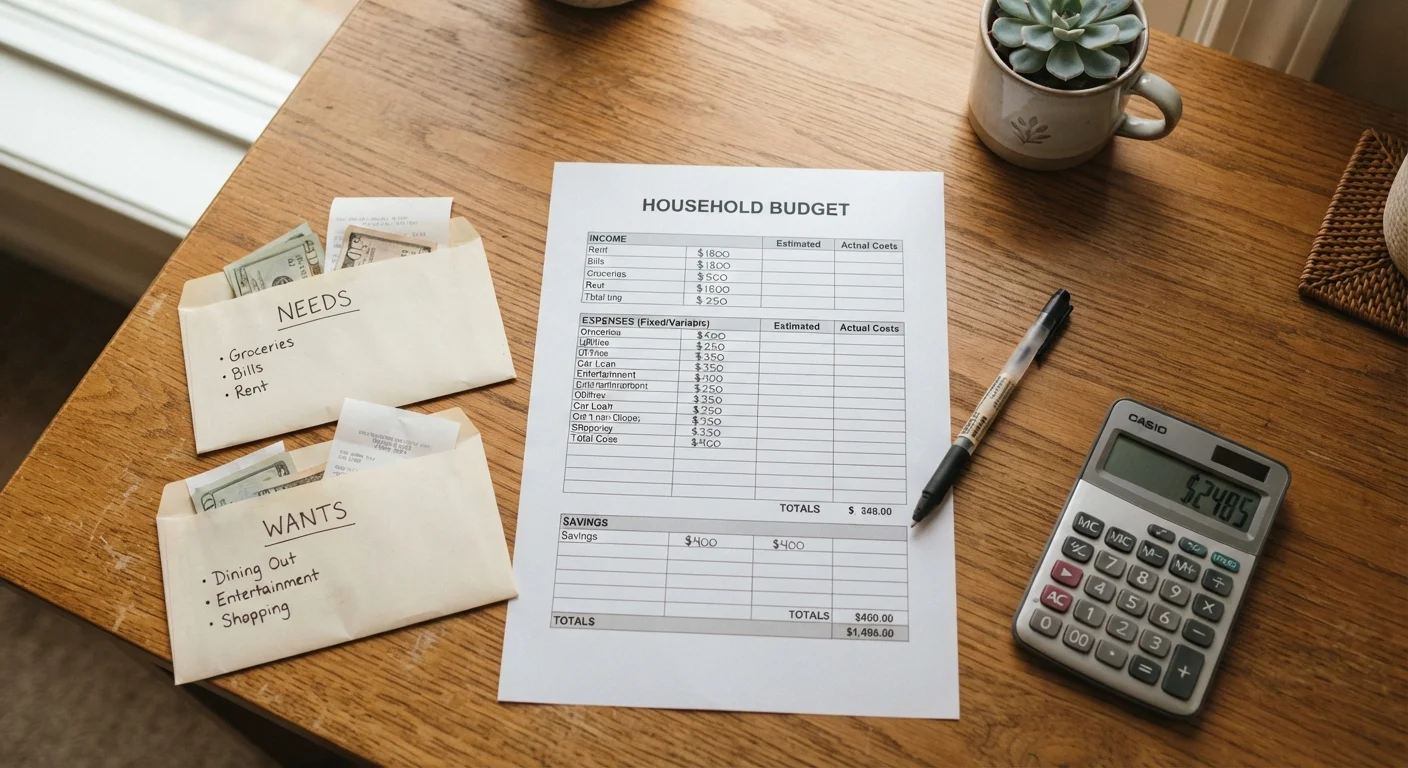
A complete personal budget has three basic ingredients: income, expenses, and what's left over (ideally directed toward savings or financial goals).
- Income is your starting point — the money coming in. For most people, this is a paycheck. For others, it may include freelance pay, rental income, or benefits. Always use your take-home pay (after taxes), not your gross salary.
- Fixed expenses are the bills that stay roughly the same each month: rent or mortgage, loan payments, insurance premiums, and subscription services.
- Variable expenses change month to month — groceries, gas, dining out, clothing. These are where most budgets require honest estimation. Understanding the difference between these categories is foundational; our plain-language guide to discretionary and non-discretionary spending explains the distinction clearly.
- Savings and goals are an expense category too — money set aside for an emergency fund, a vacation, or retirement belongs in your budget just like rent does.
~33%
Americans who maintain a detailed household budget
Gallup polling has consistently found that fewer than one in three American adults keep a detailed written or tracked budget, despite widespread awareness of its benefits.
$1,000
Emergency savings threshold many households fall below
Surveys by Bankrate have found a significant share of U.S. adults could not cover a $1,000 emergency expense from savings alone, highlighting the practical gap budgeting can help address.
Why Budgets Fail — and What That Reveals
Most budgets don't fail because the person is careless or undisciplined. They fail because they were built on assumptions that didn't match reality. A budget that assumes you'll spend $150 a month on groceries when your actual average is $340 isn't a budget — it's a wish list.
Common failure points include: underestimating variable spending, forgetting irregular expenses like car registration or annual subscriptions, and building a plan so strict that one unexpected cost breaks the whole system. A budget needs breathing room. That means including a small "miscellaneous" or buffer category for the unpredictable costs that are, in practice, entirely predictable in their existence — just not their timing.
If you want to understand the most common patterns that derail real-world budgets, our article on where most Americans' budgets fall apart walks through the key mistakes and how to avoid them.
Build In a Buffer Category from the Start
Even a modest $50–$100 "miscellaneous" line in your budget can prevent one unexpected expense from throwing everything off. Life rarely goes exactly to plan, and a buffer category acknowledges that honestly. It's not a failure of discipline — it's a sign of a realistic budget.
How to Put a Budget to Work in Real Life
A budget only has value if you actually use it. That means checking in with it throughout the month — not just setting it up once and forgetting it. Many people find a weekly five-minute review is enough to stay on track without feeling burdensome.
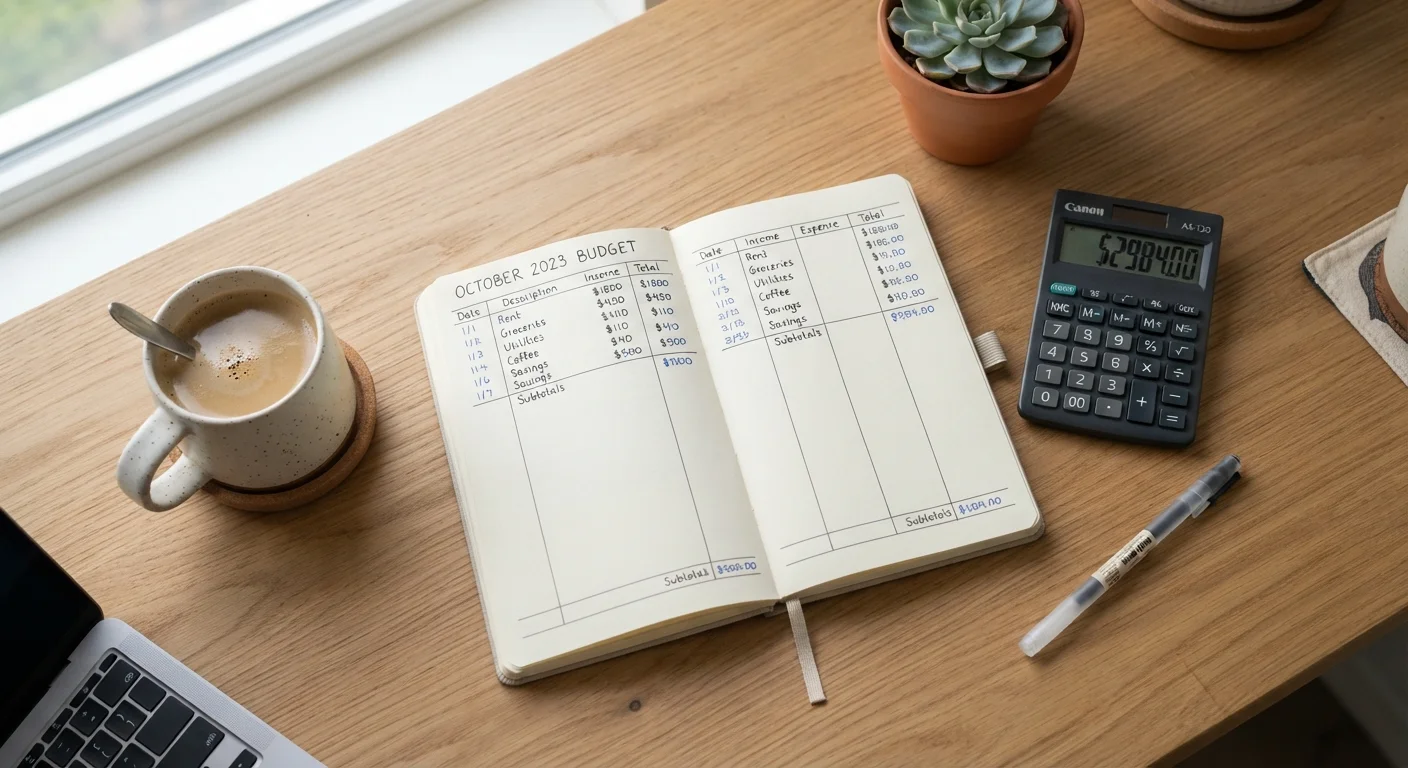
The method you use matters less than the consistency. Some people prefer a spreadsheet; others use a notebook. Digital apps offer automation and alerts, while pen and paper keeps things tactile and deliberate. Our comparison of paper budgeting vs. budgeting apps can help you decide which approach suits your habits.
Ready to build your first one? Our plain-English first budget walkthrough takes you through the entire process using your actual numbers — no financial background required.
This article is for general informational and educational purposes only and does not constitute personalized financial advice. Consider consulting a qualified financial professional for guidance specific to your situation.