
Why the Format of Your Budget Actually Matters
Choosing how to budget isn't just a matter of preference — it shapes whether the habit sticks. Research on financial behavior consistently points to one pattern: people who actively engage with their budget, rather than set it and ignore it, tend to make better spending decisions over time. The format you choose directly affects how engaged you stay.
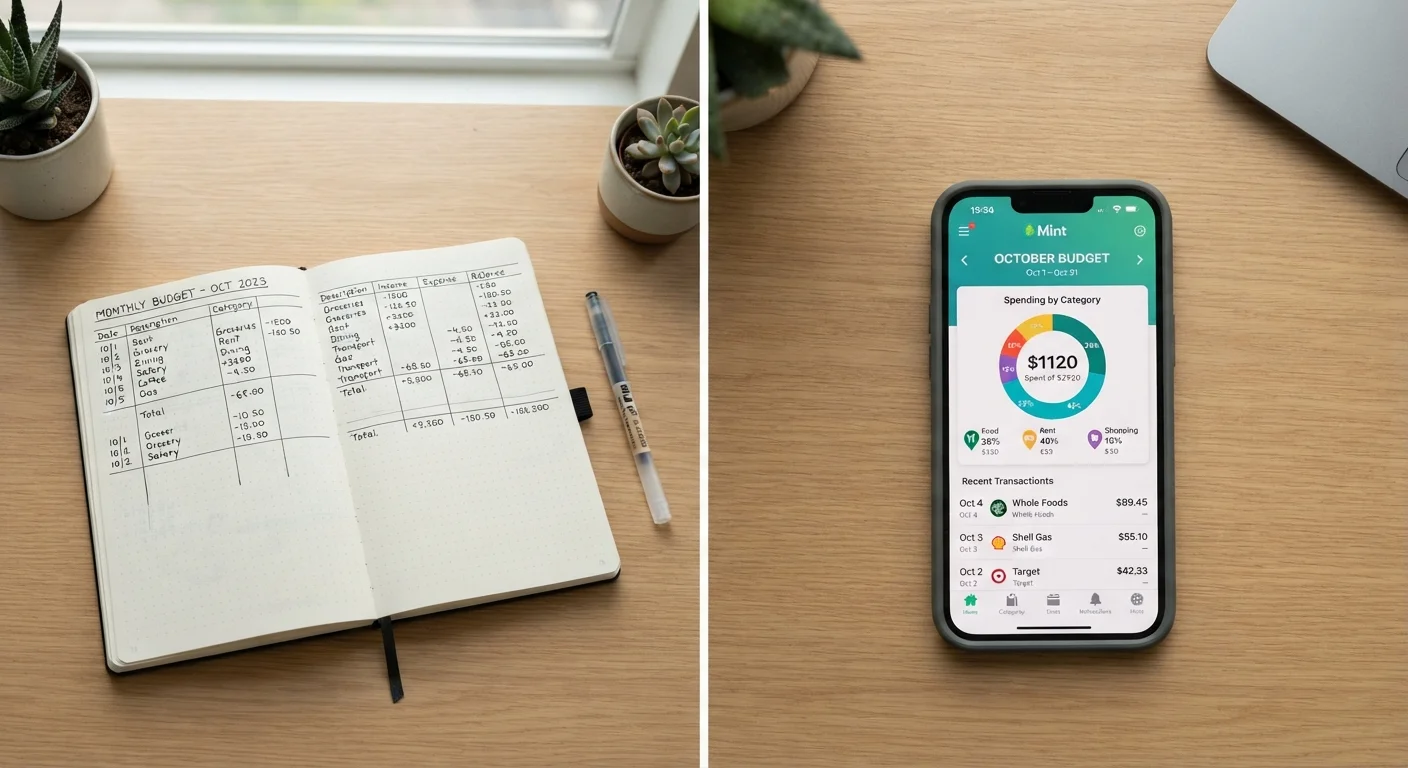
Paper budgeting and digital apps represent two genuinely different philosophies. One prioritizes intentional, deliberate record-keeping. The other prioritizes convenience and automation. Understanding what each approach does well — and where it falls short — helps you pick the right fit for your habits, not just your income. For a broader look at how different tracking systems perform in real life, see methods that actually stick.
What Paper Budgeting Gets Right
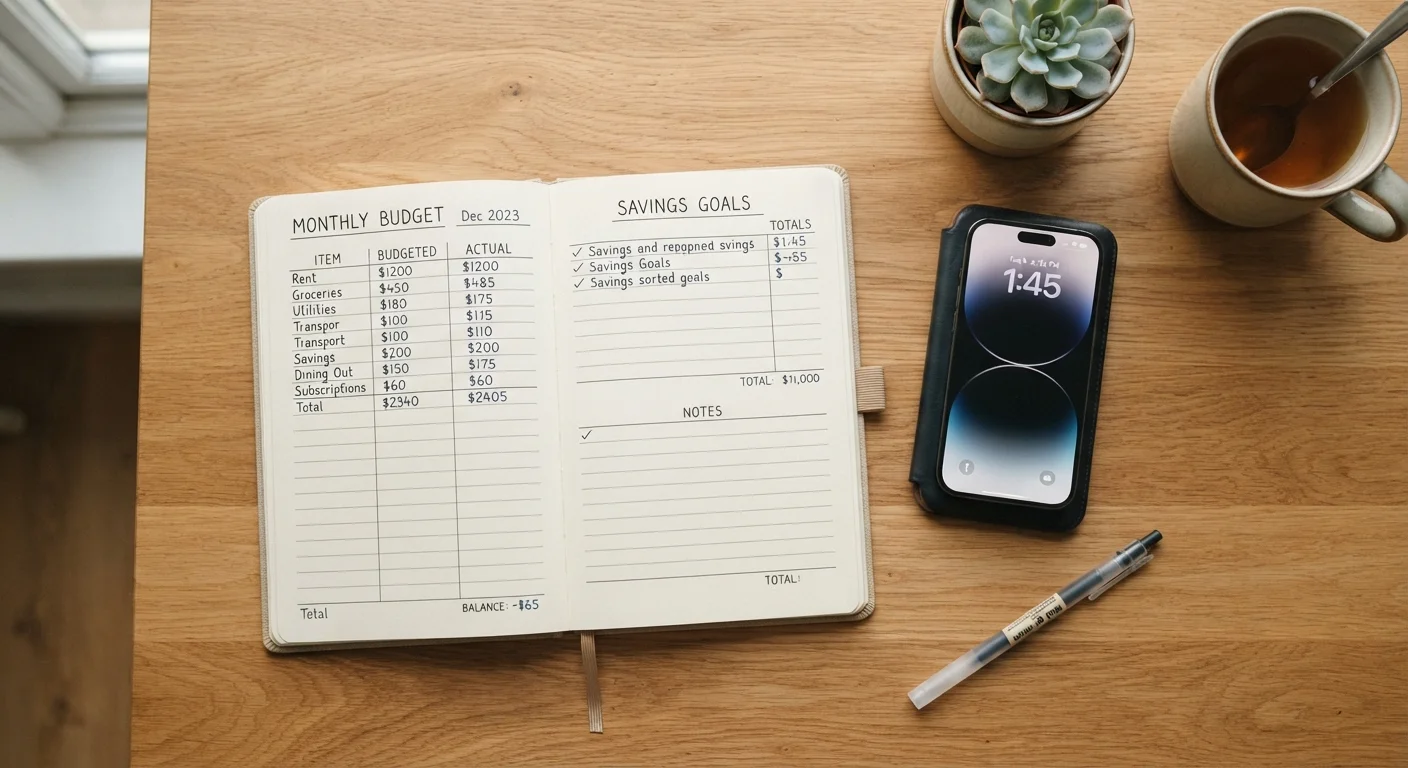
Writing numbers by hand creates a level of mindfulness that tapping a screen rarely does. When you record a $60 dinner expense in a notebook, you've processed that transaction actively — you saw it, you wrote it, and you placed it inside a category you defined yourself. That friction isn't a flaw; it's a feature.
Writing by hand builds stronger spending awareness
The physical act of recording a transaction forces conscious engagement. Studies on note-taking behavior suggest handwriting improves retention and processing compared to passive digital logging.
No technology required — fully offline and private
Paper budgets require no app accounts, no bank connections, and no subscription fees. Your financial data stays entirely in your possession.
Highly customizable to your exact categories
You design the structure from scratch, so your budget reflects your actual life — not a default template built for a generic household.
Low barrier to entry for budgeting beginners
Starting with a blank page removes the intimidation of learning new software. Many financial coaches recommend paper as a first step for people building the budgeting habit from scratch.
Paper budgeting also has near-zero setup cost. A notebook and a pen are the only tools required. There are no subscriptions, no app updates, no terms of service to accept, and no risk of your data being shared with third parties. For people who feel anxious about connecting bank accounts to outside platforms, this matters.
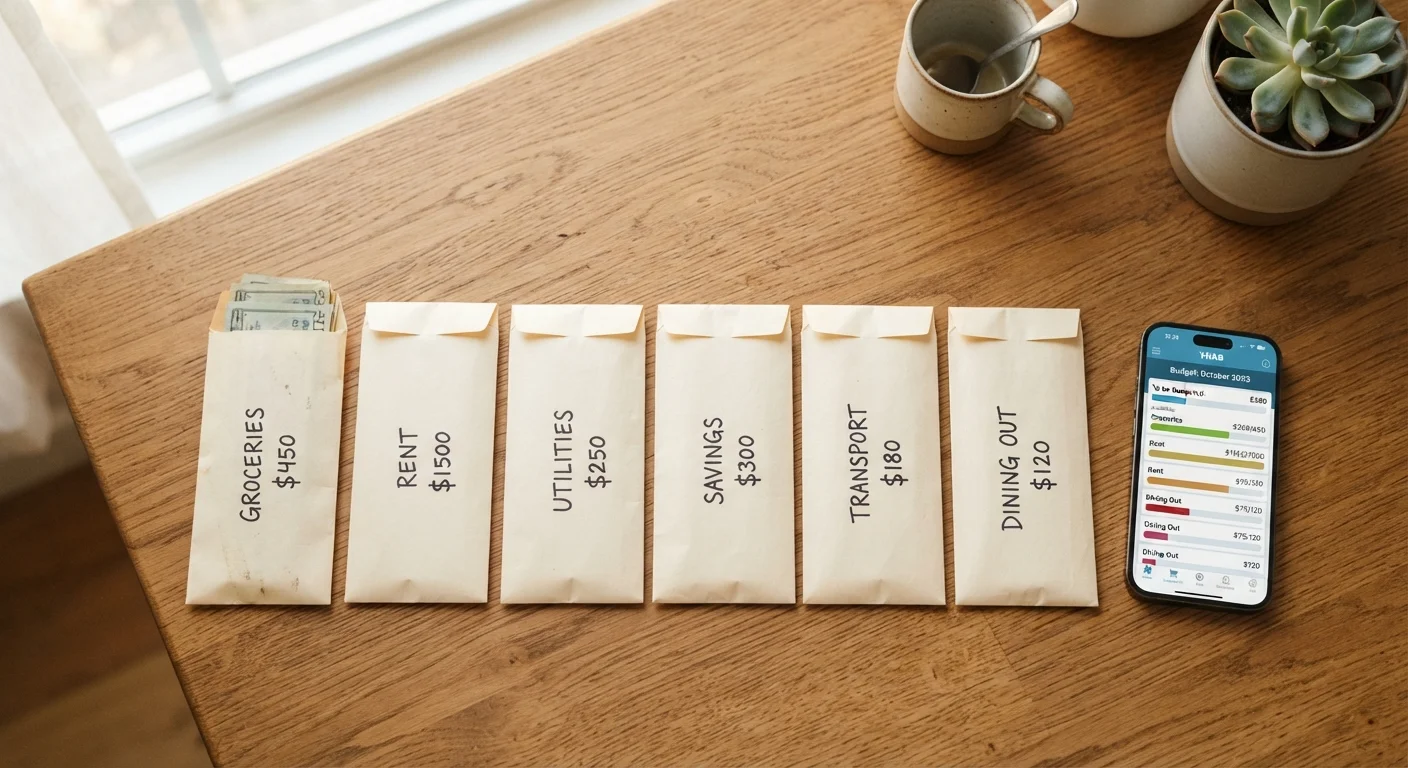
The envelope budgeting method — a classic cash-based system that shares paper budgeting's tactile logic — uses the same principle of physical awareness to control spending. If you're curious how that translates to modern spending habits, envelope budgeting in a world of debit cards and apps offers a useful parallel.
Where Paper Budgeting Falls Short
The same friction that makes paper budgeting mindful also makes it slow. Manually entering every transaction takes real time, and if you miss a few days, catching up can feel overwhelming enough to abandon the system entirely. There's no automatic sync, no reminder notification, and no dashboard showing you where you stand at a glance.
Manual entry is time-consuming and easy to skip
Recording every transaction by hand is a real time commitment. Missing even a few days can create a backlog that discourages people from continuing.
Prone to math errors without automatic calculation
A single arithmetic mistake can distort your monthly totals without you realizing it. Unlike spreadsheets or apps, paper offers no automatic error-checking.
No real-time visibility across multiple accounts
Tracking a checking account, a savings account, and a credit card simultaneously on paper requires significant discipline and creates multiple places for errors to creep in.
Limited ability to spot spending trends over time
Identifying patterns across months requires manually comparing past pages — a task most people don't do regularly, limiting the analytical value of the data collected.
Math errors are also a genuine risk. A miscalculation in one column can quietly throw off an entire month's picture. And if you manage multiple accounts — checking, savings, a credit card — keeping all of them reconciled on paper requires discipline that most people find difficult to sustain long-term.
What Budgeting Apps Get Right
The biggest advantage of a budgeting app is that it removes the manual labor from data entry. Once you link your accounts, transactions import automatically, categories populate, and your spending totals update in real time. For someone with a busy schedule, that automation is the difference between budgeting consistently and not budgeting at all.
73%
Americans who say they budget inconsistently
A survey by the National Foundation for Credit Counseling found that nearly three in four Americans do not follow a formal budget, with inconsistency cited as the primary reason for lapsing.
2x
More likely to meet savings goals with regular tracking
Research published in the Journal of Consumer Research suggests that people who actively monitor their finances are significantly more likely to meet stated savings goals than those who do not track spending.
Apps also excel at pattern recognition. Many will surface trends you'd never spot manually — like noticing that your grocery spending spikes every third week, or that subscription charges have quietly added up to $80 a month. That kind of insight is genuinely hard to replicate in a notebook.
If you're deciding between structured budgeting methods to use alongside an app, zero-based budgeting vs. the 50/30/20 method explains two of the most popular frameworks and how each one maps onto everyday spending.
A Hybrid Approach Is Completely Valid
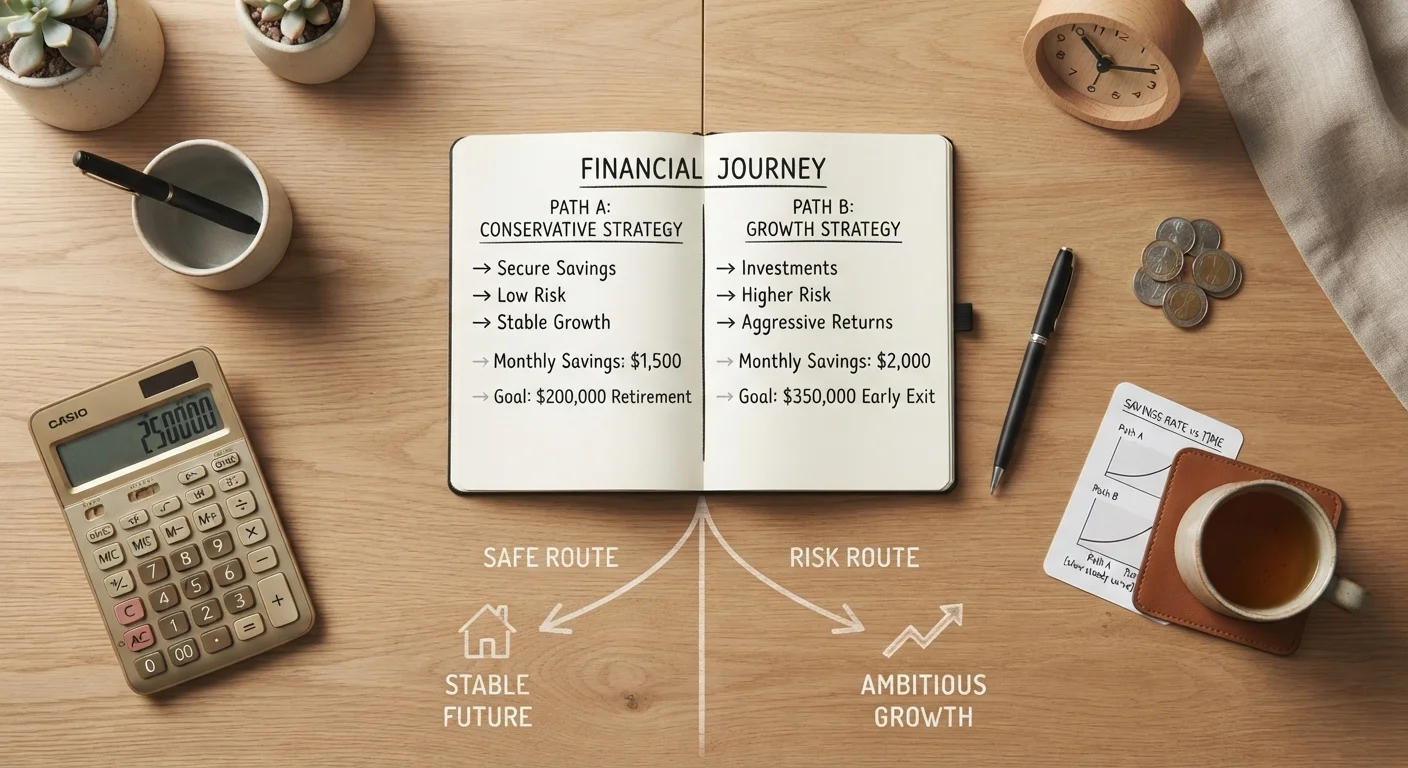
Many people find that combining both methods works better than choosing one exclusively. A common example: using an app to automatically import and categorize transactions, then transferring monthly totals into a paper planner for weekly review. The app handles the data; the notebook handles the reflection. There's no rule requiring you to pick only one tool. If you're concerned about common budgeting misconceptions, know that flexibility in your method is a strength, not a shortcut.
Where Apps Fall Short
Convenience can become a crutch. When an app handles everything automatically, it's easy to glance at a summary and feel like you're on top of your finances without truly processing what the numbers mean. Some users find that the lower-effort format leads to lower engagement — the budget exists, but it isn't really being used.
Privacy is another real consideration. Most budgeting apps require access to your bank credentials or account feeds. While reputable platforms use encryption and security protocols, connecting financial accounts to third-party services does carry risk — something worth weighing honestly rather than dismissing. Apps also typically require an ongoing subscription or carry data-monetization models that paper, obviously, does not.
Understanding the underlying structure of your finances — particularly how fixed vs. variable expenses differ — helps you use any tool more effectively, whether that's an app or a notebook.
This article is for general informational and educational purposes only and does not constitute personalized financial advice. Consult a qualified financial professional for guidance specific to your situation.