
What Self-Help Actually Offers
Self-help books, podcasts, and online resources have genuinely democratized access to psychological concepts. Ideas rooted in attachment theory, cognitive-behavioral frameworks, and nonviolent communication have reached millions of people who might never have encountered them in a therapist's office. That's meaningful.
What self-help does well is build awareness. Reading about anxious attachment styles, for instance, can help someone recognize why they react the way they do in conflict. Workbooks and guided exercises can introduce communication techniques — active listening, expressing needs clearly — that couples can practice together.
The limitation is structural: a book cannot respond to you. It presents generalized principles that may or may not fit your specific dynamic. It offers no feedback loop, no way to notice the body-language patterns or conversational habits you aren't even aware of. For many everyday relationship friction points — navigating different communication styles, adjusting after a major life transition — self-help can be a genuinely useful tool. But awareness alone rarely untangles long-standing patterns.
Self-Help Works Best as a Starting Point
If you're new to thinking about relationship dynamics, self-help resources offer an accessible, low-pressure entry point. Look for books or materials grounded in established psychological research rather than anecdote. Using them alongside open conversations with your partner can amplify their value — but be honest with yourself if deeper issues remain stuck.
What Professional Therapy Provides
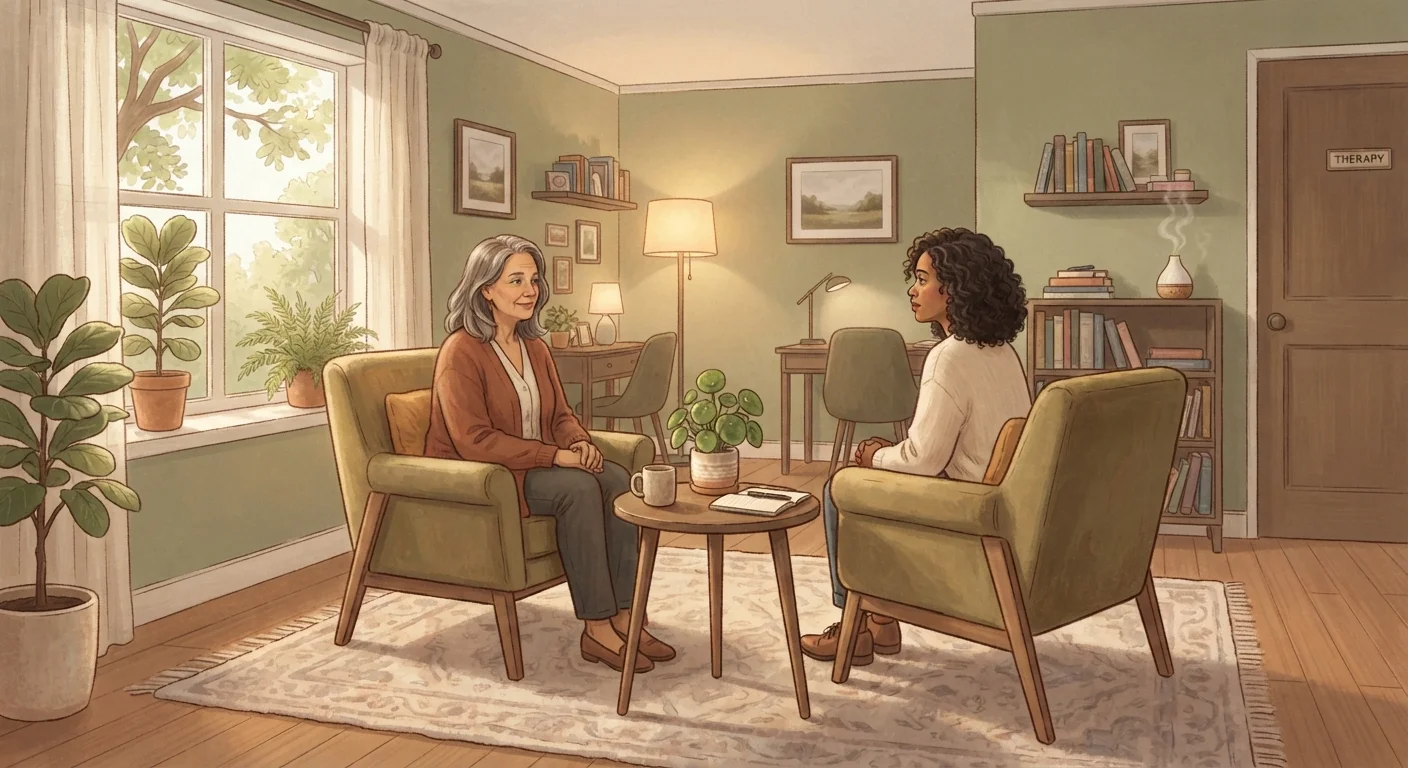
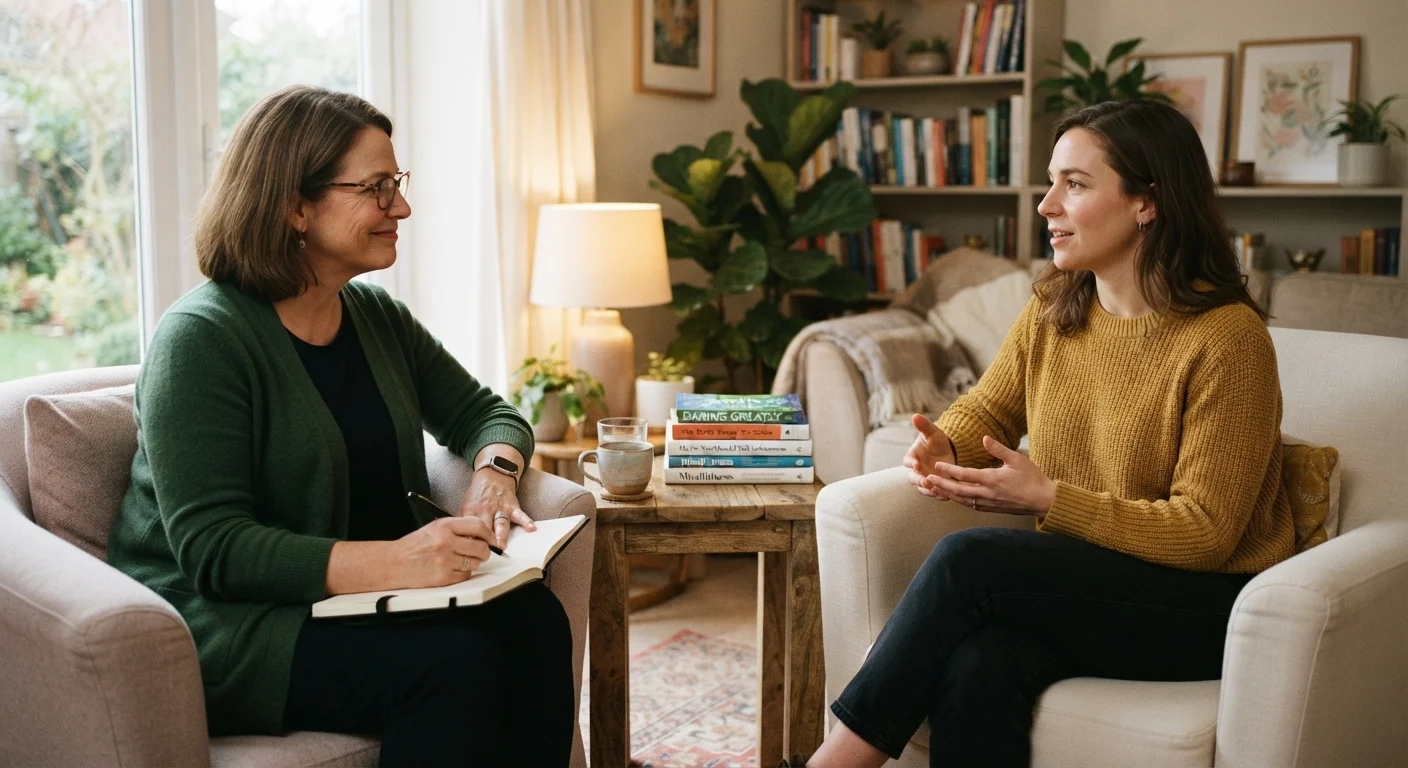
Therapy with a licensed professional — whether individual, couples, or family therapy — is a fundamentally different kind of intervention. A therapist doesn't just transmit information; they form a relationship with you, and it's that relationship itself that creates conditions for change.
Research consistently supports therapy's effectiveness for relationship difficulties. Emotionally Focused Therapy (EFT), for example, has a strong evidence base for helping couples rebuild emotional connection. A skilled therapist can identify the dynamic playing out in the room — not just what you report, but how you interact — and reflect that back in ways no book can replicate.
Therapy is particularly valuable when relationship challenges involve trauma history, mental health conditions intersecting with the relationship, chronic conflict cycles, or events like infidelity that have significantly broken trust. These aren't situations where reading more will likely break the impasse. As our related guide explores, self-care and professional treatment serve genuinely different functions — and the same logic applies here.
| Self-Help Resources | Professional Therapy | |
|---|---|---|
| Cost | Generally low (books, podcasts, apps) | Higher, though sliding-scale options exist |
| Personalization | Generalized principles | Tailored to your specific dynamic |
| Feedback loop | None — one-way information | Active, responsive, real-time |
| Best suited for | Building awareness, learning skills | Deep patterns, trauma, persistent conflict |
| Accessibility | Available anytime, anywhere | Requires scheduling, availability varies |
| Evidence base | Varies widely by resource | Strong for established modalities (e.g. EFT, CBT) |
Common Misconceptions About Both Approaches
One persistent myth is that seeking therapy signals a relationship is failing. In reality, many couples enter therapy proactively — to strengthen communication before serious cracks appear. Common misconceptions about therapy often keep people from accessing help that could genuinely benefit them.
Conversely, self-help is sometimes dismissed as shallow or ineffective. But for someone who lacks a framework for understanding their own attachment patterns or conflict responses, a well-researched book can be a meaningful first step — not a replacement for therapy, but a genuine bridge toward it.
Another assumption worth questioning: that therapy requires years of commitment. Many evidence-based models are time-limited and goal-focused, designed to address specific relational issues in a defined number of sessions. If you're curious about the broader landscape of mental health support, our overview of mental wellness for everyday life is a helpful starting point.
Self-Help Has Real Limits in Crisis Situations
If a relationship involves any form of abuse, coercion, or serious safety concerns, self-help resources are not an appropriate primary response. In these circumstances, please reach out to a qualified mental health professional or a support organization equipped to help. Couples therapy is also generally not recommended in situations involving ongoing abuse.
How to Decide Which Path Fits Your Situation
There's no universal answer, but a few honest questions can help orient your thinking:
- Have you tried addressing this issue before without lasting change? Recurring patterns that self-reflection hasn't shifted often benefit from an outside perspective.
- Is there a history of trauma, mental health struggles, or significant rupture in trust? These typically exceed what self-help resources are designed to handle.
- Is your partner willing to engage? Couples therapy requires both people's participation. Individual therapy remains valuable even if a partner won't attend.
- What are your practical constraints? Cost and availability are real. Many therapists offer sliding-scale fees, and telehealth has significantly expanded access. Community mental health centers are another option worth exploring.
Self-help and therapy aren't competing choices — they can and often do work in tandem. Many therapists recommend specific books or exercises between sessions precisely because they reinforce the work being done. The goal isn't to pick a side; it's to match the level of support to the complexity of the challenge.
This article is for general informational purposes only and does not constitute professional mental health or relationship advice. If you are experiencing significant distress or safety concerns, please consult a licensed mental health professional.