
The True Cost of Long-Term Ownership
Owning a car long-term means accepting responsibility for far more than monthly payments. The American Automobile Association (AAA) estimates the average annual cost of vehicle ownership — including fuel, maintenance, insurance, registration, and depreciation — at several thousand dollars per year depending on vehicle type and driving habits.
Depreciation typically hits hardest in the first three years of ownership. Drivers who hold a vehicle past that window often improve their overall cost-per-mile considerably. See our explanation of how depreciation works for a detailed breakdown of what drives value loss.
Understanding the full financial picture — from routine upkeep to unexpected repairs — is what separates confident long-term owners from those caught off guard.
$12,182
Average annual cost of car ownership
According to AAA's 2023 Your Driving Costs study, which includes fuel, maintenance, insurance, and depreciation for a new vehicle.
200,000+
Miles achievable with proper maintenance
Industry data consistently shows that vehicles following manufacturer service schedules routinely reach 200,000 miles or more.
47%
Of value lost in first three years
Edmunds and industry analysts estimate the average new vehicle loses approximately 40–50% of its value within the first three years of ownership.
Scheduled Maintenance: Your Vehicle's Backbone
Every vehicle comes with a manufacturer-specified maintenance schedule, typically found in the owner's manual. This schedule outlines when to change engine oil, replace filters, inspect belts and hoses, flush coolant, and service the transmission. Treating this schedule as a minimum standard — not a suggestion — is the foundation of long-term reliability.
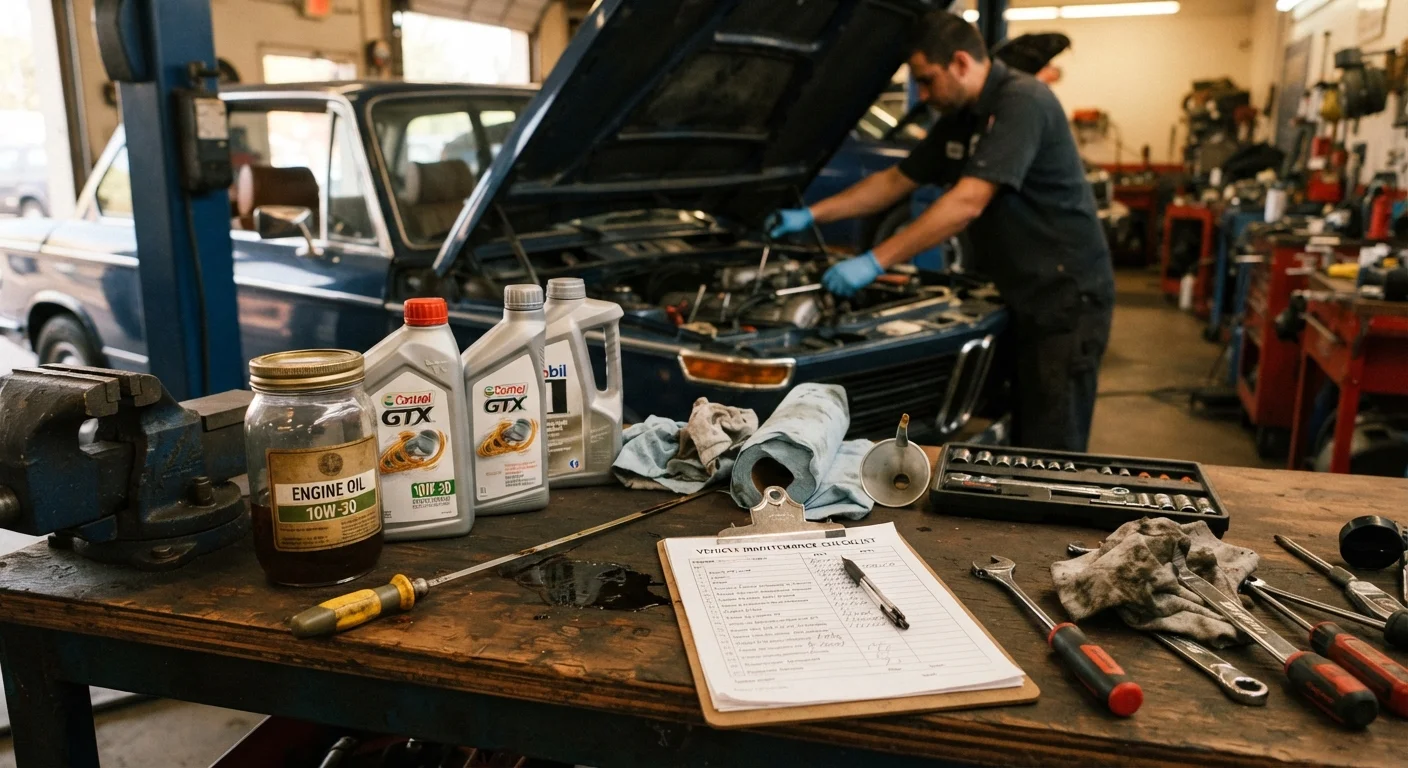
Modern engines with full-synthetic oil can often go 7,500 to 10,000 miles between oil changes, depending on the manufacturer's specification. The old "every 3,000 miles" rule has largely been overtaken by advances in engine design and oil technology. Our guide on common car maintenance myths explains which traditional rules still apply and which cost drivers unnecessary money.
Set calendar reminders tied to your odometer rather than calendar months — most maintenance intervals are mileage-based, and low-mileage drivers often over-service while high-mileage drivers under-service.
Mileage-based tracking aligns with how manufacturer maintenance schedules are actually structured, preventing both unnecessary expense and missed service windows.
Keep your owner's manual in the glove compartment and consult it before any service appointment — knowing the manufacturer's actual specifications helps you confirm that recommended services are genuinely due.
Service advisors sometimes recommend intervals shorter than the manufacturer requires; the owner's manual is the authoritative source for your specific vehicle.
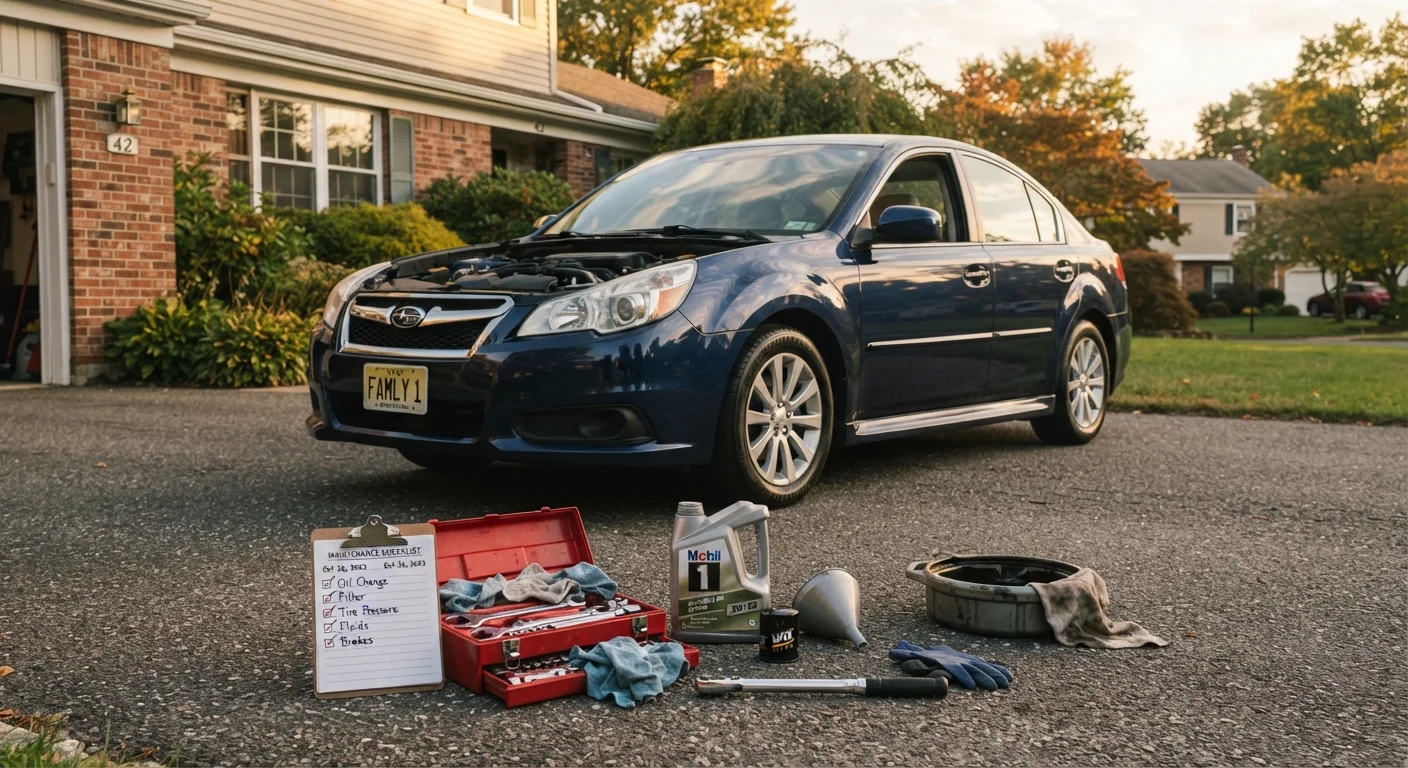
Keeping a physical or digital log of every service — oil changes, filter replacements, fluid flushes — gives you a clear record and supports resale value if you eventually sell.
Tires, Brakes, and Safety Systems
Tires and brakes are the most safety-critical components on any vehicle. Tire tread depth should be checked monthly; the penny test (inserting a penny into a tread groove with Lincoln's head down — if you can see all of his head, tread is dangerously low) is a quick field check. Most manufacturers recommend tire rotation every 5,000 to 7,500 miles to promote even wear.
Brake pads typically last between 25,000 and 65,000 miles, depending on driving style, pad material, and terrain. Squealing or grinding noises, a pulsating brake pedal, or increased stopping distances are signs the system needs immediate professional inspection. Never delay brake service — it directly affects your ability to avoid a collision.
Never Ignore Brake Warning Signs
Grinding, squealing, or a soft brake pedal are immediate red flags that require professional inspection — not a wait-and-see approach. Brakes are your primary collision-avoidance system. Delaying brake service can compromise your safety and the safety of everyone on the road around you.
Modern vehicles also include electronic safety systems — ABS, stability control, and tire pressure monitoring (TPMS). Dashboard warning lights for any of these systems should be addressed promptly. For broader guidance on safe vehicle operation, explore our safe driving resources.
High-Mileage Care and What Changes
Once a vehicle crosses 75,000 to 100,000 miles, its maintenance needs shift. Rubber seals, gaskets, and belts age and can begin to fail. Spark plugs may need replacement if not already done. Coolant, brake fluid, and transmission fluid should be tested more frequently, as older fluid degrades protective additives.
High-mileage engine oils — formulated with seal conditioners — can help reduce minor leaks in aging engines. Timing belts (where applicable) typically require replacement between 60,000 and 100,000 miles; a snapped timing belt can cause severe internal engine damage, making this one of the most consequential maintenance items on affected vehicles.
Don't Skip the Timing Belt
If your vehicle has a timing belt (rather than a timing chain), check the manufacturer's replacement interval in your owner's manual. Skipping this service is one of the most expensive mistakes a long-term owner can make. Replacement is far less costly than repairing the engine damage a failed belt can cause.
Suspension components — struts, shocks, and control arm bushings — also wear with age and mileage. Noticing increased body roll, excessive bouncing, or pulling to one side warrants a professional suspension inspection.
Insurance, Registration, and Ongoing Costs
Beyond the garage, long-term ownership involves recurring administrative costs. Auto insurance premiums vary based on driving record, location, vehicle age, and coverage levels. As a vehicle ages and its market value drops, some owners choose to reduce comprehensive and collision coverage — a decision worth evaluating with a licensed insurance professional based on individual circumstances.
Annual registration fees, emissions testing requirements, and safety inspections vary by state. Keeping registration current is both a legal requirement and a practical safeguard. For a full overview of ownership responsibilities, the Car Ownership hub covers insurance, costs, and legal obligations in one place.
State Requirements Vary Widely
Emissions testing and safety inspection requirements differ significantly by state — and sometimes by county within a state. Before your registration renewal, verify your local requirements through your state's DMV or equivalent agency. Driving with a lapsed registration or failed inspection can result in fines or voided insurance coverage.
Knowing When to Repair vs. Replace
The repair-versus-replace question becomes more frequent as a vehicle ages. A useful general framework: if the annual cost of repairs exceeds roughly one year's worth of payments on a comparable replacement vehicle, replacement may be worth considering. However, a well-maintained older vehicle with a known history can still be more economical than taking on new financing.
“The best way to keep repair costs manageable over the life of a vehicle is to treat maintenance as an investment, not an expense. Cars that are serviced consistently and attentively rarely present owners with catastrophic repair bills.”
— Mark Holthoff, Automotive Service Excellence (ASE) Certified Master Technician and industry educator
Track all repair invoices carefully. A sudden cluster of major repairs — transmission, engine, major suspension components — on an otherwise aging vehicle signals a different calculation than a single costly but isolated repair. A trusted, independent mechanic's assessment of a vehicle's overall condition is invaluable at this decision point.
This article is for general informational purposes only. Always consult a qualified mechanic for assessments specific to your vehicle's condition and circumstances.