
The Real Reason Chicken Breast Is So Unforgiving
Chicken breast has an image problem — and honestly, it's earned it. More than almost any other protein, it's prone to coming out dry, stringy, and about as appealing as packing foam. But the cut itself isn't the villain. Chicken breast is lean, which means it has very little fat to act as a buffer against heat. Overcook it by even a few degrees and the muscle fibers tighten, squeeze out moisture, and leave you with something you have to wash down with a glass of water.
The good news: this is almost entirely a technique problem, not an ingredient problem. The mistakes below are the usual culprits — and every single one has a simple fix that doesn't require special equipment or culinary school training.
Always Cook to a Safe Temperature
The USDA recommends cooking chicken to an internal temperature of 165°F (74°C) to eliminate harmful bacteria. Use an instant-read thermometer inserted into the thickest part of the breast — not near bone — to get an accurate reading. Pulling it at exactly 165°F (rather than going higher) is both safe and the key to juicy results.
Common Mistakes That Dry Out Chicken Breast
Walk through these one by one and you'll probably recognize at least two or three in your own kitchen routine. Each one compounds the others — meaning the more of them you fix, the more dramatic the improvement.
Cooking chicken straight from the refrigerator.
Why it happens: Most recipes don't mention this step, so home cooks assume cold chicken goes straight into a hot pan.
Skipping the brine or marinade.
Why it happens: Brining feels like an extra, unfamiliar step — something you might see in a restaurant kitchen but assume isn't necessary at home.
Not pounding the chicken to an even thickness.
Why it happens: Chicken breasts are naturally tapered, and it's easy to forget that the thin end will cook much faster than the thick part.
Overcooking — going well past 165°F.
Why it happens: Fear of undercooking leads many people to leave chicken on the heat too long, especially if they're cooking without a thermometer.
Cutting into the chicken immediately after cooking.
Why it happens: Hunger is real, and a finished piece of chicken looks ready to eat the moment it comes off the heat.
165°F
USDA safe internal temp for poultry
The USDA sets 165°F (74°C) as the minimum safe internal temperature for all poultry, including chicken breast.
5 min
Minimum rest time after cooking
Food scientists generally recommend resting cooked chicken at least five minutes to allow juices to redistribute before slicing.
A Few Extra Tips That Make a Real Difference
Beyond the mistakes listed above, there are a couple of broader habits worth building. First, consider the cooking method itself. High, dry heat — like blasting a breast in an oven at 425°F without any added moisture — can work well if you're careful with time and temperature, but it leaves little margin for error. Methods like poaching, baking in a covered dish, or finishing a seared breast in the oven tend to be more forgiving for beginners.
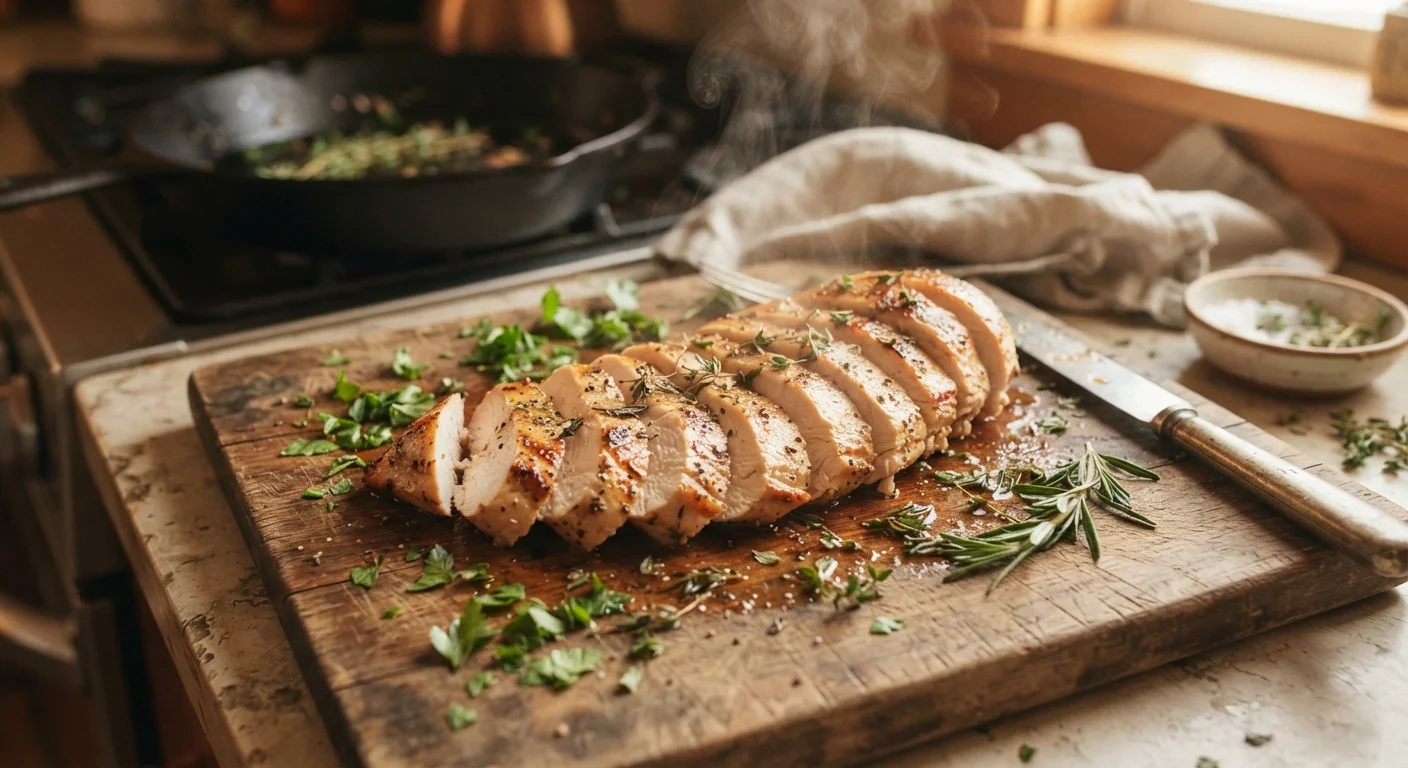
Second, don't underestimate the value of slicing against the grain. Look at a cooked chicken breast and you'll see faint lines running in one direction — those are muscle fibers. Cutting across them (rather than parallel to them) shortens each fiber in your bite, which makes the chicken feel more tender even if it's slightly overcooked.
None of this requires a kitchen overhaul. A thermometer, a few extra minutes, and a bit of salt water are genuinely all it takes to start cooking chicken breast you're actually excited to eat.
Don't Rely on Color Alone
A chicken breast that looks white and fully cooked on the outside can still be undercooked in the center — or, conversely, perfectly safe but already overcooked. Color and firmness are unreliable indicators. An instant-read thermometer is the only accurate way to know when your chicken is both safe and at its best texture.