
How Each Pan Handles Heat
Heat behavior is the single biggest difference between these two materials, and understanding it changes how you cook with each one.
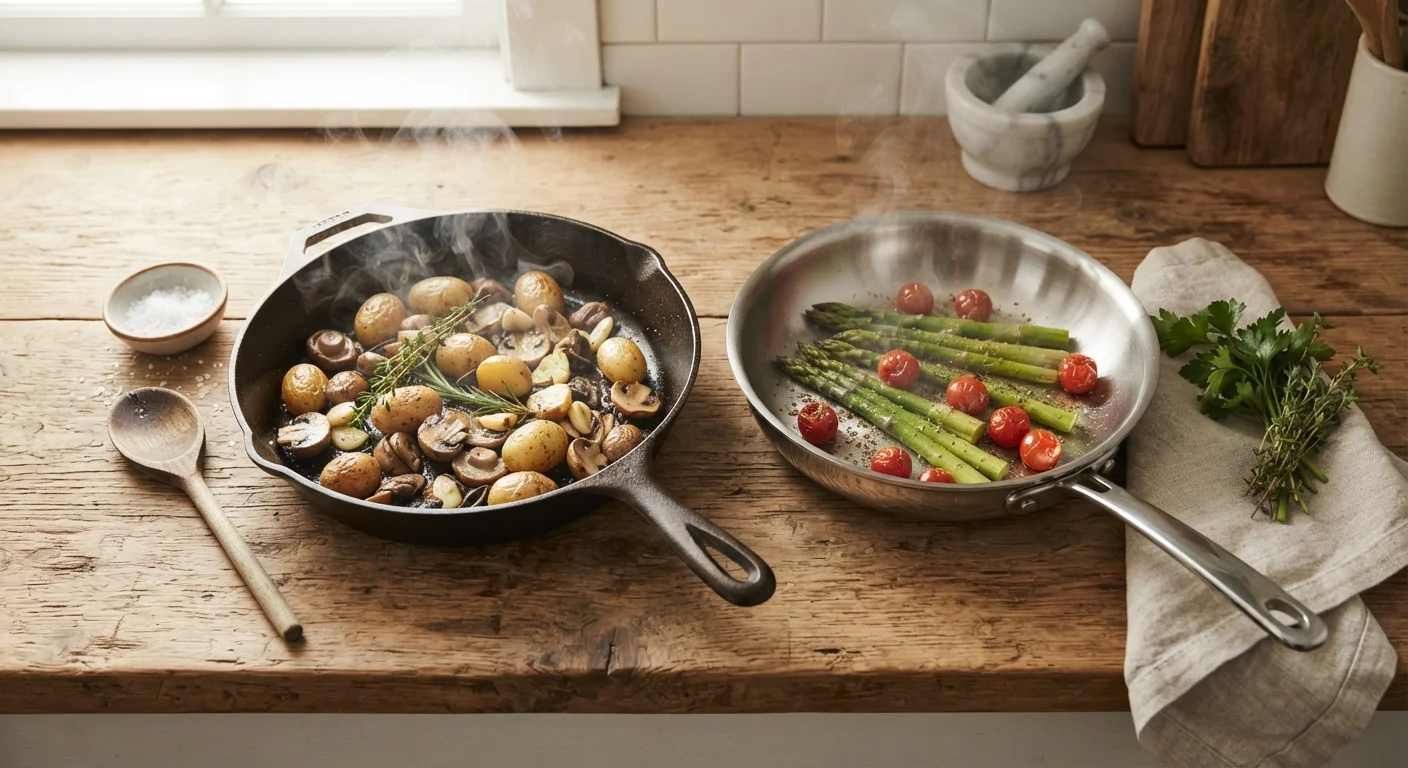
Cast iron heats slowly and unevenly — if you blast it on high from cold, the center will be hotter than the edges for a while. But once it's fully up to temperature, it holds that heat stubbornly. That's exactly what you want when searing a thick steak or baking a skillet cookie: the pan doesn't lose its heat when cold food hits the surface, so you get a consistent, deep crust.
Stainless steel heats faster and responds almost immediately when you turn the burner up or down. This makes it far easier to control delicate tasks — reducing a sauce, lightly sautéing vegetables, or keeping fish from overcooking. Professional cooks love stainless partly for this reason: it does what you tell it to, more or less right away.
| Criterion | Cast Iron | Stainless Steel |
|---|---|---|
| Heat retention | Excellent — holds heat long | Moderate — cools faster |
| Heat responsiveness | Slow to adjust | Quick, precise control |
| Oven-safe | Yes, at any temperature | Yes, typically up to 500°F |
| Reactivity with acidic foods | Can strip seasoning | Non-reactive, fully safe |
| Maintenance | Requires seasoning and drying | Low-maintenance, dishwasher-safe |
| Weight | Heavy — can be cumbersome | Lighter, easier to handle |
| Durability | Lasts generations if cared for | Very durable, resists warping |
A quick tip: with stainless, preheat the pan before adding oil. Drop a small bead of water in — if it dances and evaporates, the pan is ready. This helps prevent food from sticking, which is the most common frustration new cooks have with stainless.
Seasoning, Reactivity, and Day-to-Day Care
Cast iron's reputation for being high-maintenance is a bit overstated, but there's truth to it. The pan relies on a seasoning — a built-up layer of polymerized oil — to be non-stick and to resist rust. You'll need to dry it thoroughly after washing, avoid soaking it in water, and re-oil it occasionally. Acidic foods like tomatoes, citrus, and vinegar can break down that seasoning if cooked for long periods, so it's worth knowing that limitation.
Stainless steel has none of those concerns. It's non-reactive, meaning you can braise chicken in a lemon-wine sauce or simmer a long-cooked tomato ragù without worrying about the pan. Cleanup is simpler too: stainless is generally dishwasher-safe, though handwashing keeps it looking better longer. Stubborn stuck bits lift easily with a soak and a little Bar Keepers Friend or similar cleaner.
Can You Cook Eggs in Stainless Steel?
Yes — but technique matters. Stainless steel isn't naturally non-stick, so eggs tend to stick if the pan isn't properly preheated and lightly oiled. A well-seasoned cast iron skillet is generally easier for eggs. That said, with practice, stainless steel works fine for scrambled or fried eggs once you get a feel for the heat.
If you're building out your kitchen toolkit more broadly, a good pan is just one piece of the puzzle. See The Home Cook's Pantry for a practical guide to the staples that make weeknight cooking easier.
When to Reach for Each Pan
Neither pan is universally better — they each shine in specific situations.
Reach for cast iron when:
- You're searing proteins and want a deep, restaurant-quality crust
- You need a pan that goes directly from the stovetop into a hot oven
- You're making skillet cornbread, frittatas, or pan desserts
- You're cooking outdoors over a campfire or on a grill
Reach for stainless when:
- You're sautéing onions, mushrooms, or vegetables that need quick, responsive heat
- The recipe calls for wine, tomatoes, or other acidic ingredients
- You want to build a pan sauce by deglazing — stainless develops fond (the browned bits) beautifully
- You need a pan that's easy to clean and won't need special maintenance
~8 lbs
Typical weight of a 12-inch cast iron skillet
Cast iron's density is a key reason it retains heat so effectively, though it can make handling and storage more challenging for some cooks.
18/10
Common grade of stainless steel in cookware
The "18/10" designation refers to 18% chromium and 10% nickel content — a standard composition that resists corrosion and maintains a bright finish over time.
If you find yourself cooking mostly one-pan meals, it's worth knowing that sheet pan dinners are another great option for low-effort cooking — our guide on sheet pan dinners covers techniques that help you avoid the most common pitfalls. And if you're curious how other kitchen appliances stack up for weeknight convenience, Slow Cooker vs. Instant Pot is a useful comparison in the same spirit.