
Why the Pantry Is Your Most Important Kitchen Tool
A sharp knife matters. A reliable pan matters. But nothing shapes your weeknight cooking more consistently than what's already on your shelves when you're hungry and short on time. A well-stocked pantry is essentially a head start — it means dinner is rarely more than a few fresh ingredients away, no matter what the week throws at you.
This isn't about filling every cabinet with specialty ingredients. It's about keeping a core set of shelf-stable staples that earn their space because they're genuinely versatile. If you're just getting started in the kitchen, our first-week cooking guide pairs well with this reference — it covers the tools and techniques that bring these ingredients to life.
| Shelf life — dried pasta | 1–2 years in a sealed container (USDA Food Safety guidance) |
| Shelf life — whole spices | Up to 4 years; ground spices, 2–3 years (FDA guidance on shelf-stable foods) |
| Shelf life — canned goods | 1–5 years depending on food type (USDA FSIS) |
| Most versatile pantry acid | Red wine vinegar or apple cider vinegar |
| Recommended salt for cooking | Kosher salt (coarse grain, easier to control) |
| Frozen vegetables nutrient retention | Comparable to fresh when cooked (Journal of Food Composition and Analysis research) |
The Core Categories Every Pantry Needs
Grains and Starches
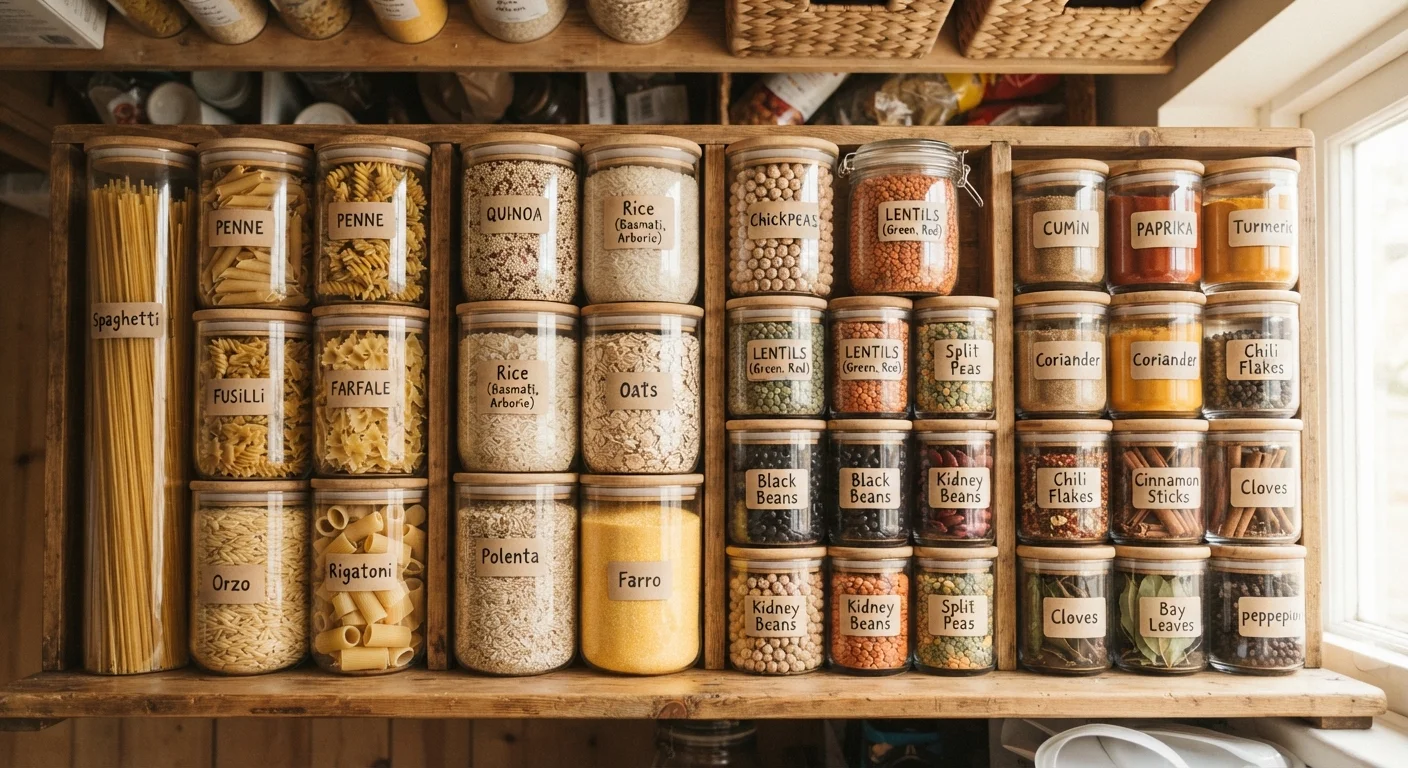
Dried pasta, white and brown rice, and rolled oats form the backbone of most home kitchens. Add a bag of all-purpose flour and you're covered for everything from pasta nights to a quick pancake batter. Lentils and canned beans — black, chickpea, kidney — are exceptional workhorses: high in protein and fiber, and ready to go straight from the can with a quick rinse.
Acids and Fats
Cooking without acid is cooking without brightness. Keep at least one vinegar (red wine or apple cider are most flexible), plus canned whole or diced tomatoes. For fat, a neutral oil (such as canola or vegetable) handles high-heat cooking, while a quality olive oil finishes dishes and dresses salads. These two fat types cover almost every technique you'll use. Our article on overlooked flavor pairings explores how acid and fat interact to deepen a dish's character.
Aromatics and Dry Seasonings
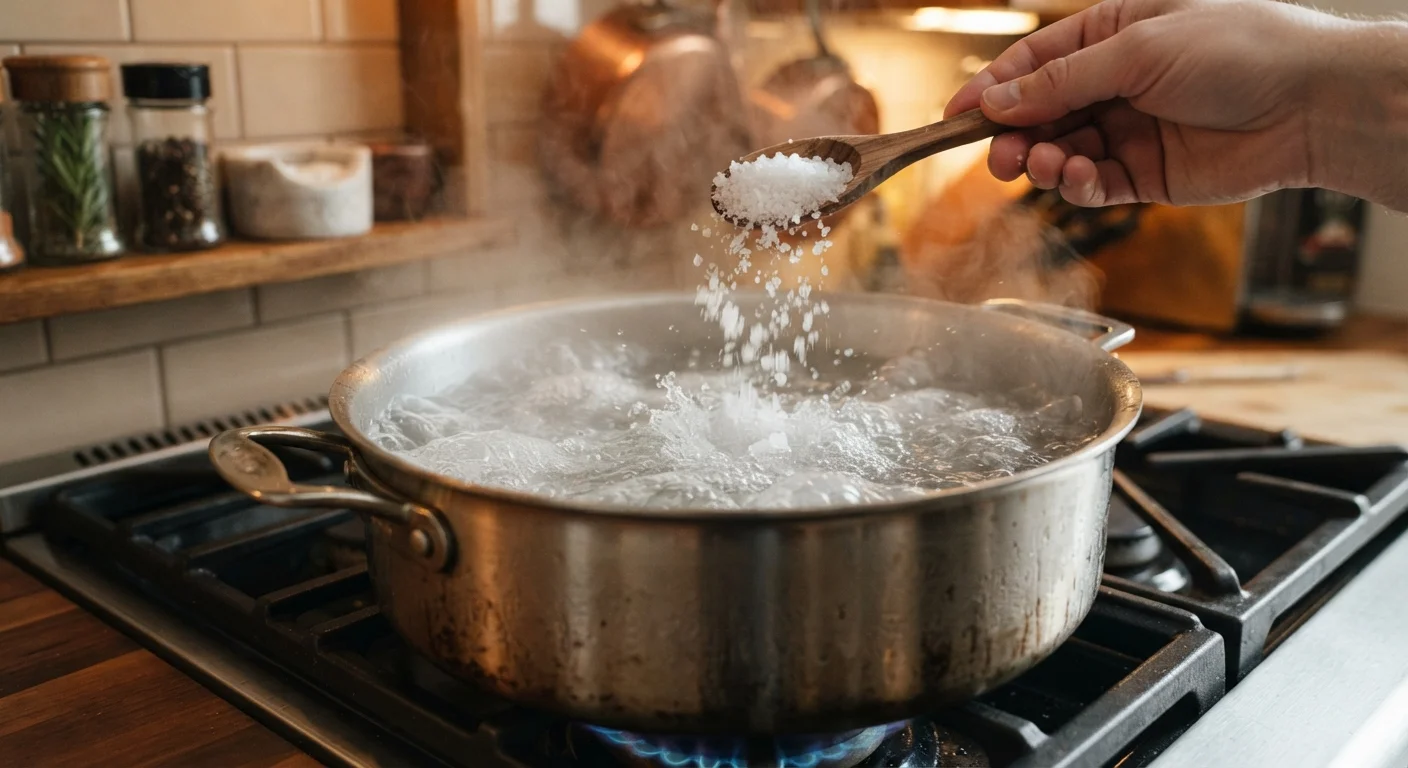
Garlic powder, onion powder, smoked paprika, cumin, dried oregano, crushed red pepper, and black pepper are the spices that appear in the widest range of recipes. Kosher salt is worth keeping separate from table salt — its coarser grain makes it easier to control by hand. If you're curious about one specific application, why pasta water should be well-salted is a fascinating deep-dive into salt's role in cooking.
Umami Boosters
Soy sauce, fish sauce (used in small amounts), and tomato paste all add depth and savoriness — what cooks often call umami — to everything from stir-fries to braises. A small tube of tomato paste lasts a long time in the fridge after opening and can transform a flat sauce into something that tastes like it simmered for hours.
Umami
Often described as the fifth basic taste alongside sweet, salty, sour, and bitter. It's a savory, deeply satisfying flavor associated with ingredients like soy sauce, aged cheese, and tomatoes.
Shelf-stable
Food that can be safely stored at room temperature for an extended period without spoiling, provided the packaging remains intact and conditions are dry and cool.
Aromatics
Ingredients — typically alliums, herbs, or spices — added early in cooking to build a flavor foundation. Common aromatics include garlic, onion, and celery.
Mise en place
A French culinary term meaning 'everything in its place.' It refers to gathering and preparing all ingredients before cooking begins, reducing errors and stress at the stove.
Refrigerator and Freezer Staples Worth Mentioning
The pantry story doesn't end at room temperature. A few fridge and freezer staples extend your range considerably. Eggs are almost certainly the most versatile single ingredient in any kitchen — our complete egg reference covers the full scope of what they can do. Butter, Dijon mustard, and a block of Parmesan (which keeps well wrapped in the fridge) round out the cold-storage side of a solid foundation.
In the freezer, keep frozen vegetables like peas, corn, and spinach — they're picked and frozen at peak ripeness and perform well in cooked applications. Frozen chicken thighs or ground meat give you a protein backup when fresh options weren't in the cards. Once you've built out your pantry, weekly meal prep strategies can help you make the most of what you've stocked. And when you're cooking those sheet pan dinners, a well-stocked pantry makes seasoning and saucing a breeze — see our sheet pan dinner guide for technique tips.
Storage Matters as Much as What You Buy
Even pantry staples have limits. Spices lose potency over time, oils can go rancid if stored near heat, and improperly sealed dry goods attract pests. Transfer items like flour, rice, and oats into airtight containers and store oils away from the stovetop. For a deeper look at what commonly goes wrong with ingredient storage, see our article on food storage myths — some of the most common assumptions turn out to be wrong.