
Why Flavor Pairings Matter More Than You Think
Most home cooks season as they go — a pinch of this, a dash of that — and end up with food that's fine but somehow flat. The missing piece is usually not a specific spice but an understanding of why certain ingredients make each other taste better. Flavor pairing isn't a chef trick reserved for fancy restaurants; it's a practical skill that changes what you can do on a Tuesday night with whatever's in your fridge.
If you're just building your kitchen confidence, our beginner's guide to cooking at home is a great place to start. And once you've got these pairings in your back pocket, you'll find it much easier to cook without leaning on a recipe every single time.
Below are seven pairings that consistently surprise home cooks — and the straightforward reasons they work.
Miso and butter
Miso — the fermented soybean paste used throughout Japanese cooking — is one of the most underused ingredients in American home kitchens. Stirred into softened butter, it creates a savory, slightly funky compound butter that's extraordinary on roasted vegetables, corn, or a simple pan sauce. The fermentation adds layers of umami that plain salt simply can't replicate. Start with a ratio of roughly one part miso to three parts butter and adjust from there.
Miso stirred into butter creates a savory depth that plain salt can't replicate.
Lemon and olive oil
This pairing sounds almost too basic, but the specific chemistry is worth understanding. Olive oil is fat, and fat is a carrier for fat-soluble flavor compounds. Lemon juice, meanwhile, is acid — and acid brightens flavor by balancing richness and cutting through heaviness. Together they form a foundation that elevates everything from grilled fish to a simple salad to a bowl of white beans. The trick is adding the lemon at the end, not during cooking, so the brightness doesn't cook off.
Add lemon after cooking — heat destroys the brightness that makes this pairing work.
Dark chocolate and chili
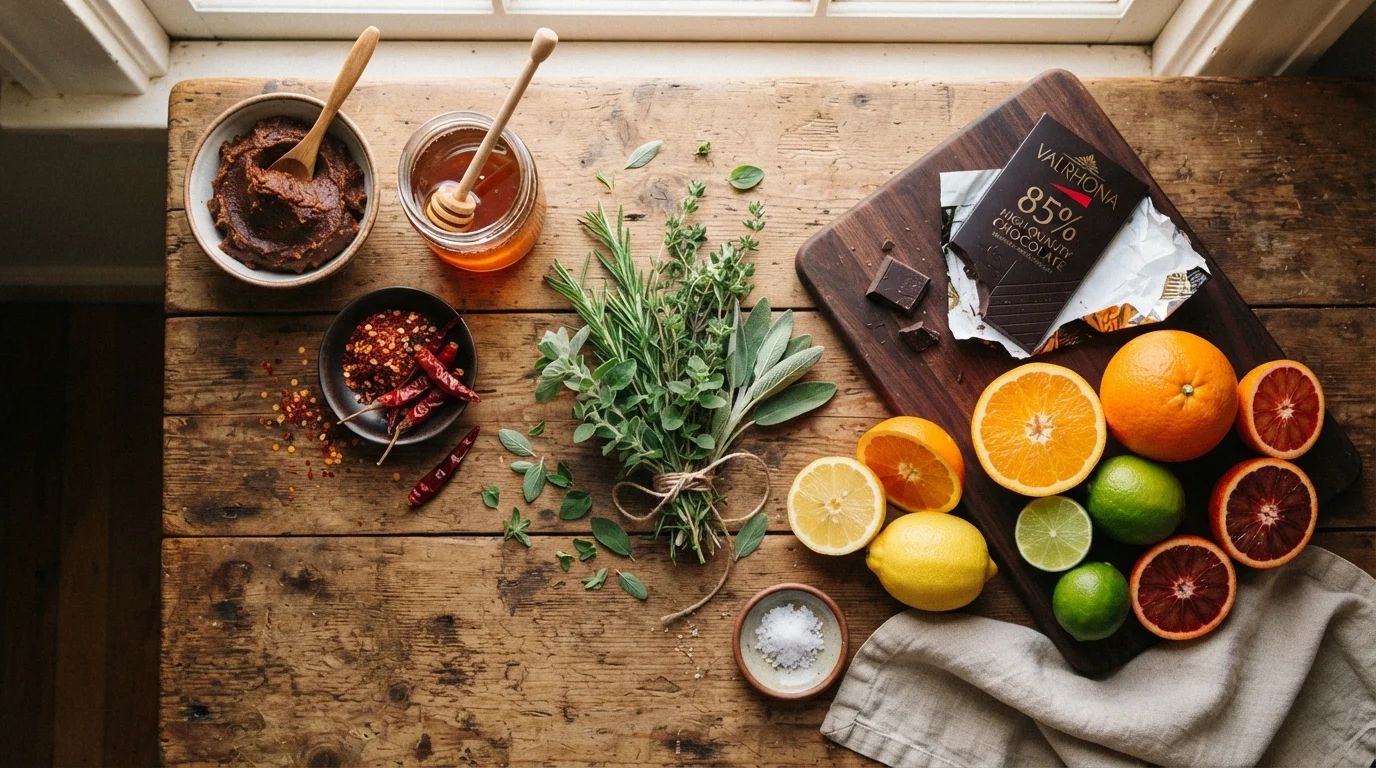
Spice and bitterness are natural companions because both cut through sweetness and richness. Dark chocolate's bitterness and a small amount of dried chili or cayenne create a contrast that makes both flavors more vivid. This pairing shows up in traditional Mexican mole sauces and works equally well stirred into a slow-cooked beef chili or a braised lamb dish. You need very little chili — the goal is warmth in the background, not heat up front.
A pinch of chili in dark chocolate desserts or savory braises adds vivid, unexpected depth.
Honey and strong cheese
Sweet and salty is a well-known combination, but honey paired specifically with pungent, aged cheeses — blue cheese, aged cheddar, pecorino — does something more nuanced. The sweetness of honey softens the sharpness of the cheese without masking it, letting the savory complexity come forward more clearly. This is why a cheese board with a drizzle of honey feels so satisfying. The same logic applies in cooking: a small spoonful of honey can balance a dressing or glaze built around a salty or acidic base.
Honey softens sharp cheese without masking it — a pairing built on productive contrast.
Garlic and anchovy
Many home cooks avoid anchovies because of their strong, fishy reputation. But when gently cooked in olive oil alongside garlic, anchovies dissolve completely and leave behind a deep, savory backbone that doesn't taste fishy at all. This is the foundation of classic Italian sauces and pasta dishes for a reason. One or two anchovy fillets in a pan with garlic before you add tomatoes or greens transforms the entire dish. Even committed fish-avoiders are often surprised when you reveal what's in it.
Cooked anchovies dissolve into a savory base that doesn't taste fishy — even skeptics are won over.
Coffee and red meat
A small amount of finely ground coffee in a dry rub for steak or short ribs adds bitterness and earthiness that intensifies the Maillard reaction — the browning that happens when meat hits high heat. It also deepens color and creates a more complex crust. You're not making the meat taste like coffee; you're using coffee's bitter, roasty compounds to amplify meaty savoriness. A tablespoon of grounds combined with smoked paprika, salt, and black pepper is a reliable starting point.
Ground coffee in a dry rub deepens a meat's crust and amplifies savory flavor without tasting like coffee.
Vinegar and cooked greens
If you've ever found braised or sautéed greens — kale, collards, spinach — a little flat or muddy-tasting, a splash of vinegar at the end is the fix. Acid lifts and clarifies flavors that get dulled by heat. Apple cider vinegar, red wine vinegar, or even a squeeze of lemon all work. The acidity doesn't make the greens taste sour; it makes them taste more like themselves. This is especially effective with greens that have a slight bitterness, since acid helps balance that edge.
A splash of vinegar at the end of cooking makes greens taste brighter and more like themselves.
Putting These Pairings to Work
You don't need to memorize every combination above — just pick one or two that match what you already cook and try them this week. Miso into your next butter sauce, a squeeze of citrus over a braised dish before serving, a small square of dark chocolate stirred into your chili. These are low-stakes experiments with a high payoff.
Test One Pairing at a Time
Resist the urge to try everything at once. Pick one pairing from this list and apply it to a dish you already make regularly. That way you'll actually taste the difference — and remember it. Gradual experimentation builds real intuition far faster than overhauling your cooking all at once.
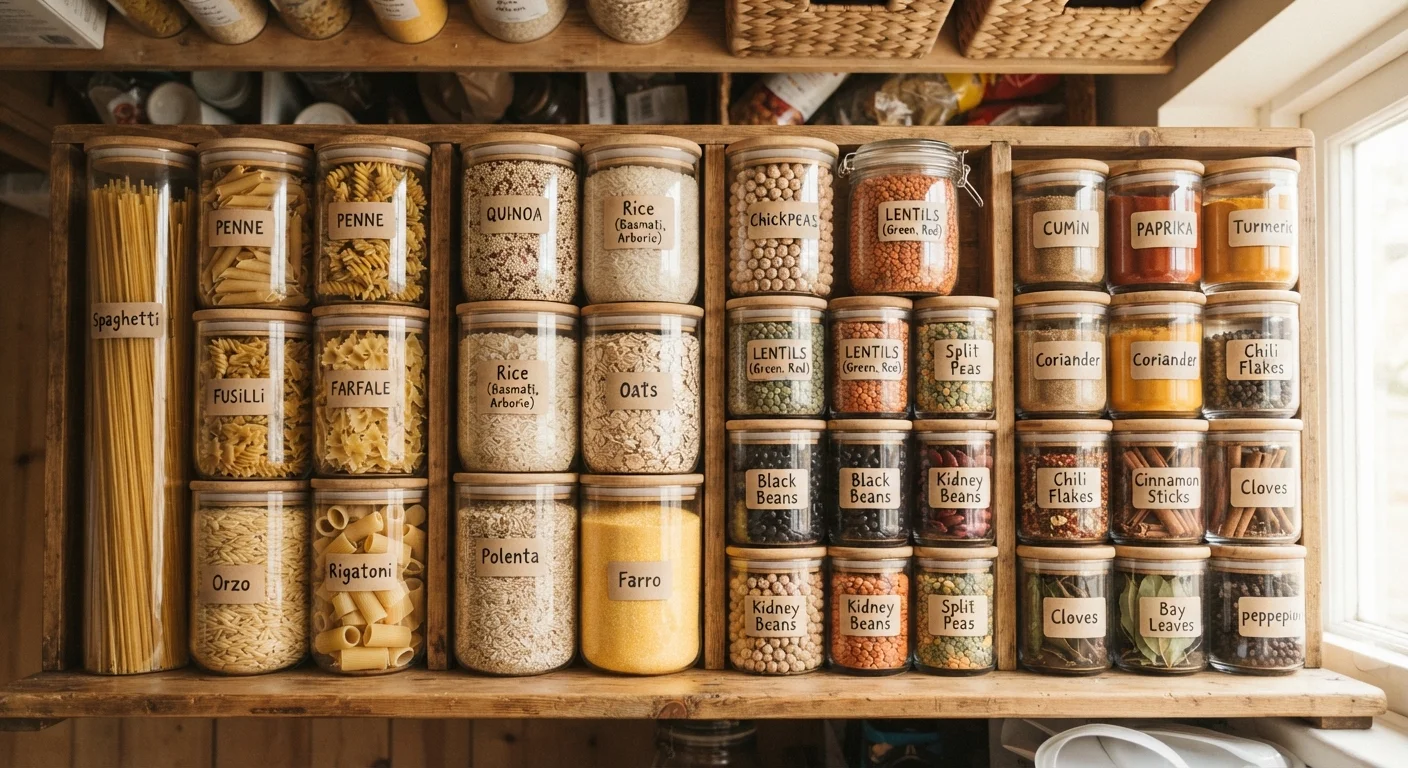
For the pairings that rely on pantry staples, it helps to have those ingredients consistently on hand. Our home cook's pantry guide covers exactly what earns a permanent spot on your shelves. And if you want to go deeper on the science of seasoning, don't miss our piece on why salting pasta water actually matters.
Great flavor isn't about complexity — it's about knowing which simple combinations do the heavy lifting. Start there, and the cooking gets a whole lot more interesting.