
Why Cooking Without a Recipe Feels Scary (And Why It Doesn't Have to)
Most of us learned to cook by following instructions exactly — a cup of this, 350°F for that long — which makes the idea of winging it feel reckless. But recipes are really just one application of a smaller set of underlying principles. Once you understand those principles, you stop needing the script.
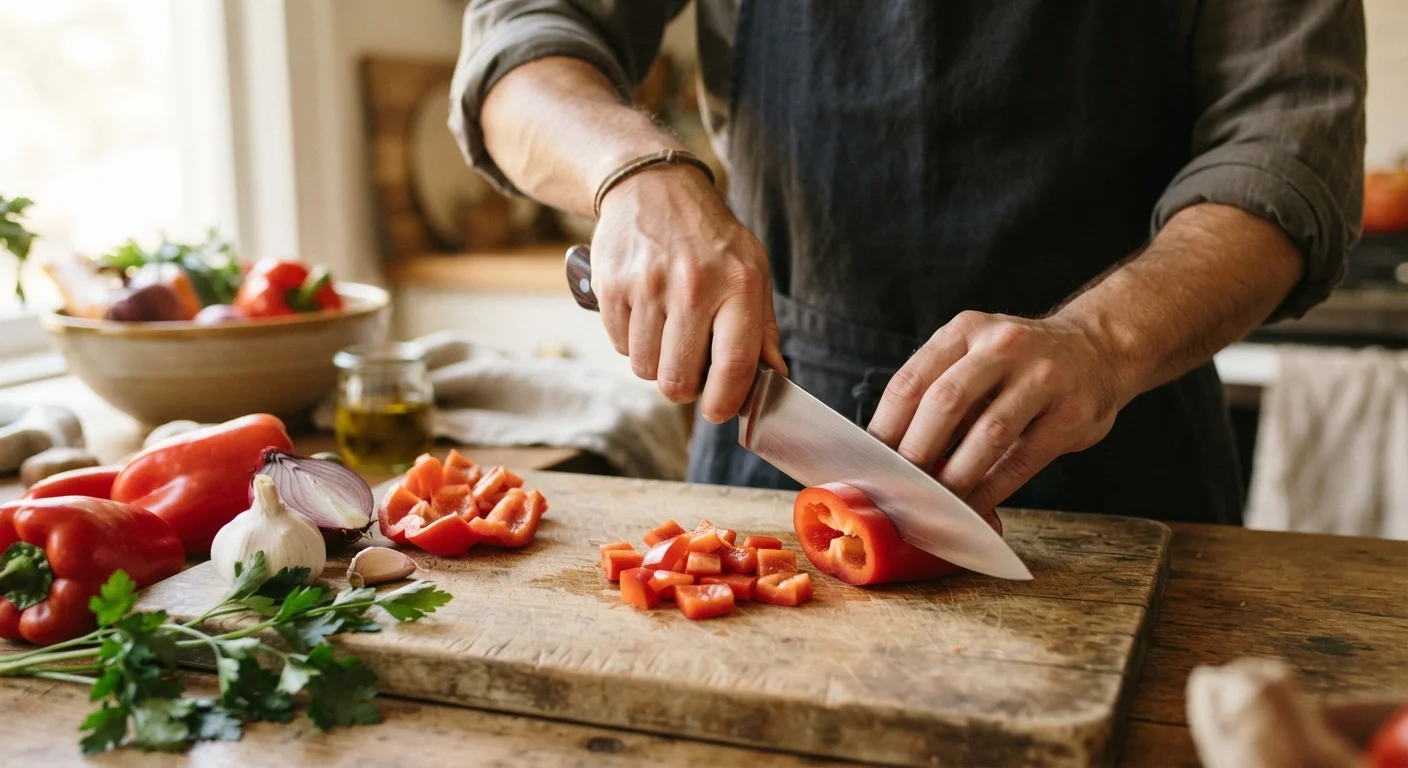
The shift isn't about memorizing a hundred dishes. It's about recognizing patterns: acid balances richness, salt amplifies everything, fat carries flavor, heat creates texture. When you internalize those ideas, even a half-empty fridge starts to look like dinner. Sharp knife skills help too — if prep feels slow or frustrating, it's harder to cook freely. Our guide to basic knife skills is a good place to start if that's a sticking point.
Chef's knife
Cuts and preps vegetables, proteins, and aromatics quickly and safely.
Heavy-bottomed skillet or sauté pan
Provides even heat distribution for sautéing, searing, and building sauces.
Wooden spoon or silicone spatula
Stirs ingredients and scrapes up flavorful browned bits from the pan.
Tasting spoon
Lets you sample and adjust seasoning throughout cooking.
Microplane or box grater
Zests citrus or grates hard cheese for finishing touches.
How to Actually Do It: Step by Step
The steps below walk you through a repeatable approach to improvised cooking. It's designed for everyday weeknight conditions — limited time, incomplete ingredients, and a low appetite for complicated cleanup. Before you dive in, do a quick check of your setup; our kitchen readiness checklist is a handy reference for catching prep gaps early.
What you will need
Take stock of what you have
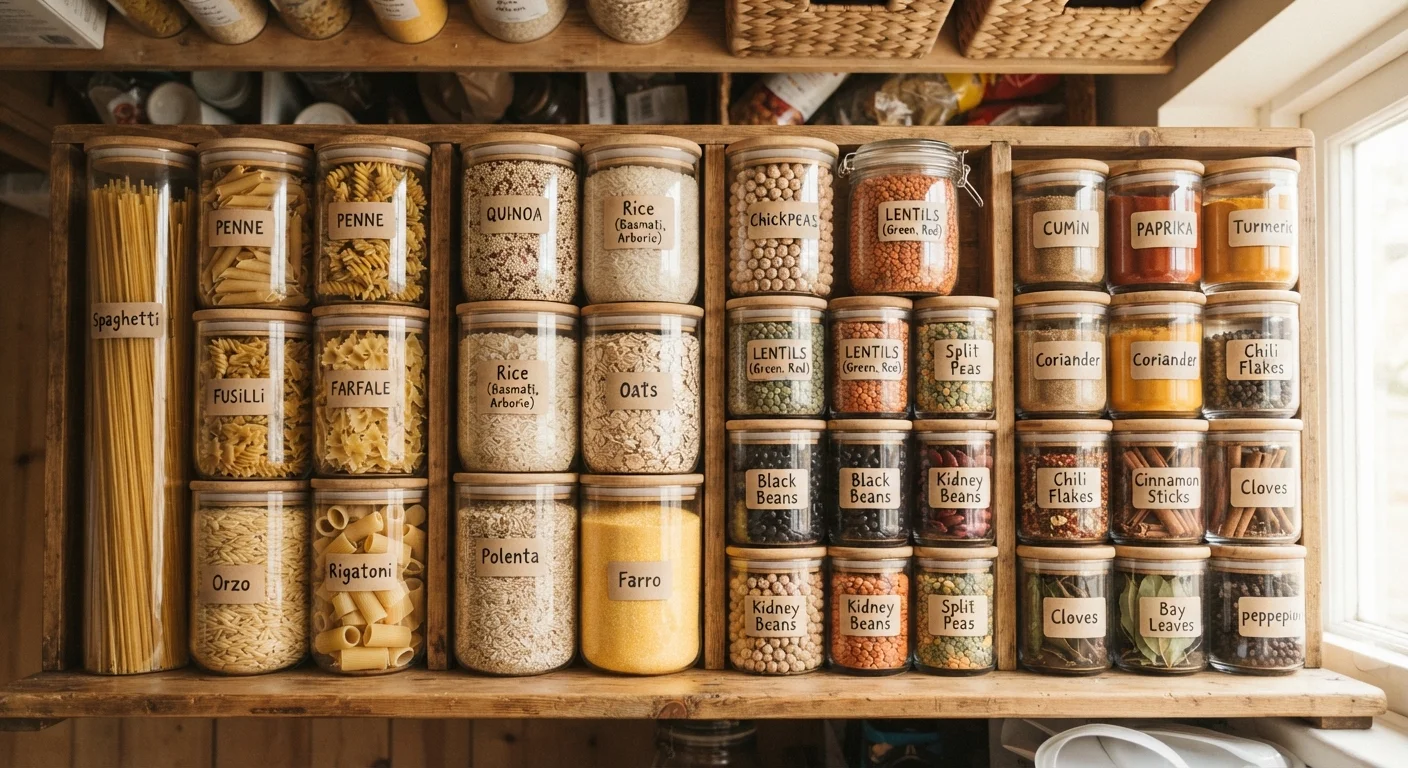
Open your fridge, freezer, and pantry and do a quick mental inventory. Look for a protein or plant-based anchor (eggs, beans, chicken thighs, tofu), a vegetable or two, an aromatic like onion or garlic, and a fat like olive oil or butter. You don't need much — many satisfying meals come from four or five ingredients. A well-stocked pantry dramatically expands your options here.
Pick a simple structure to follow
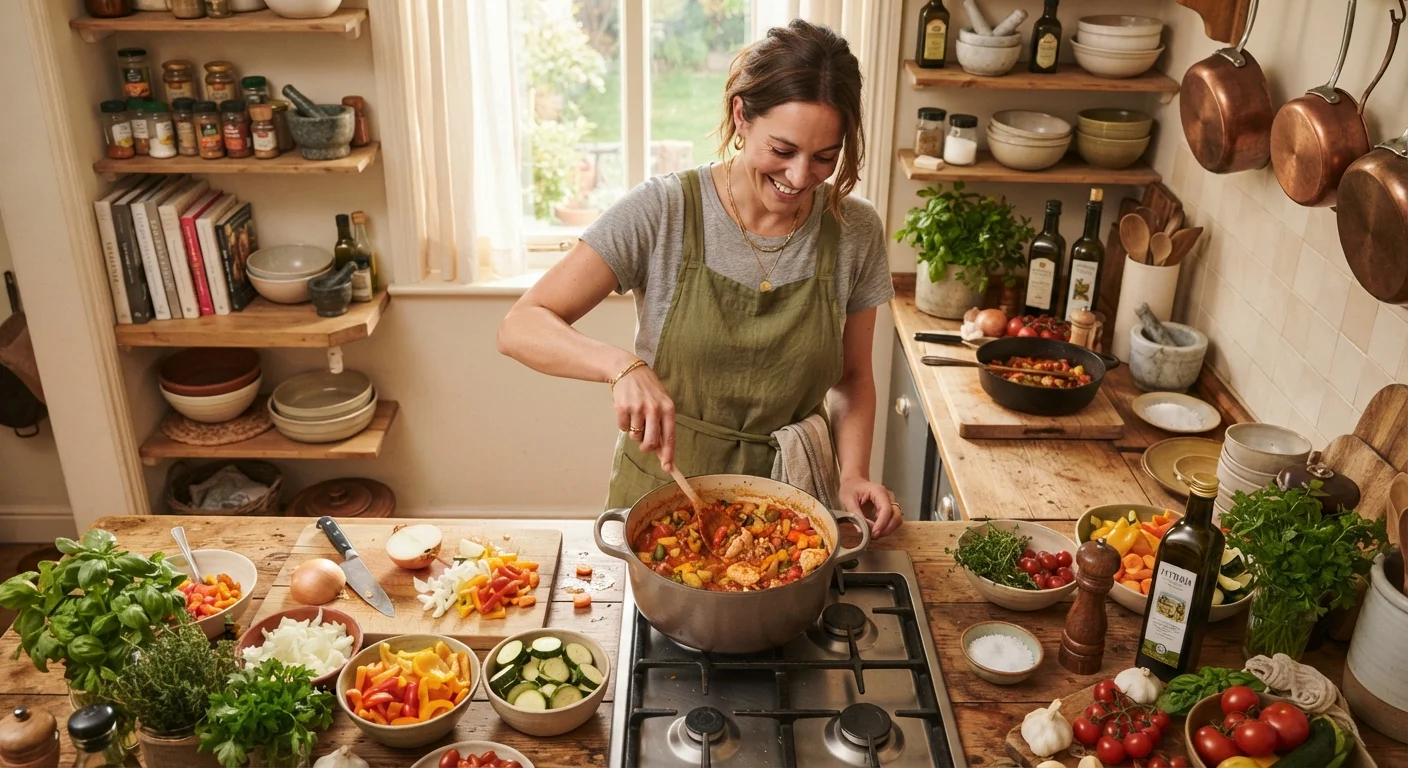
Improvised cooking isn't random — it follows loose formulas. A reliable one: heat fat → cook aromatics → add protein or vegetables → deglaze with liquid → season and finish. This structure works for stir-fries, pasta sauces, grain bowls, soups, and more. Think of it less like a recipe and more like a reliable path through the kitchen.
Build flavor in layers
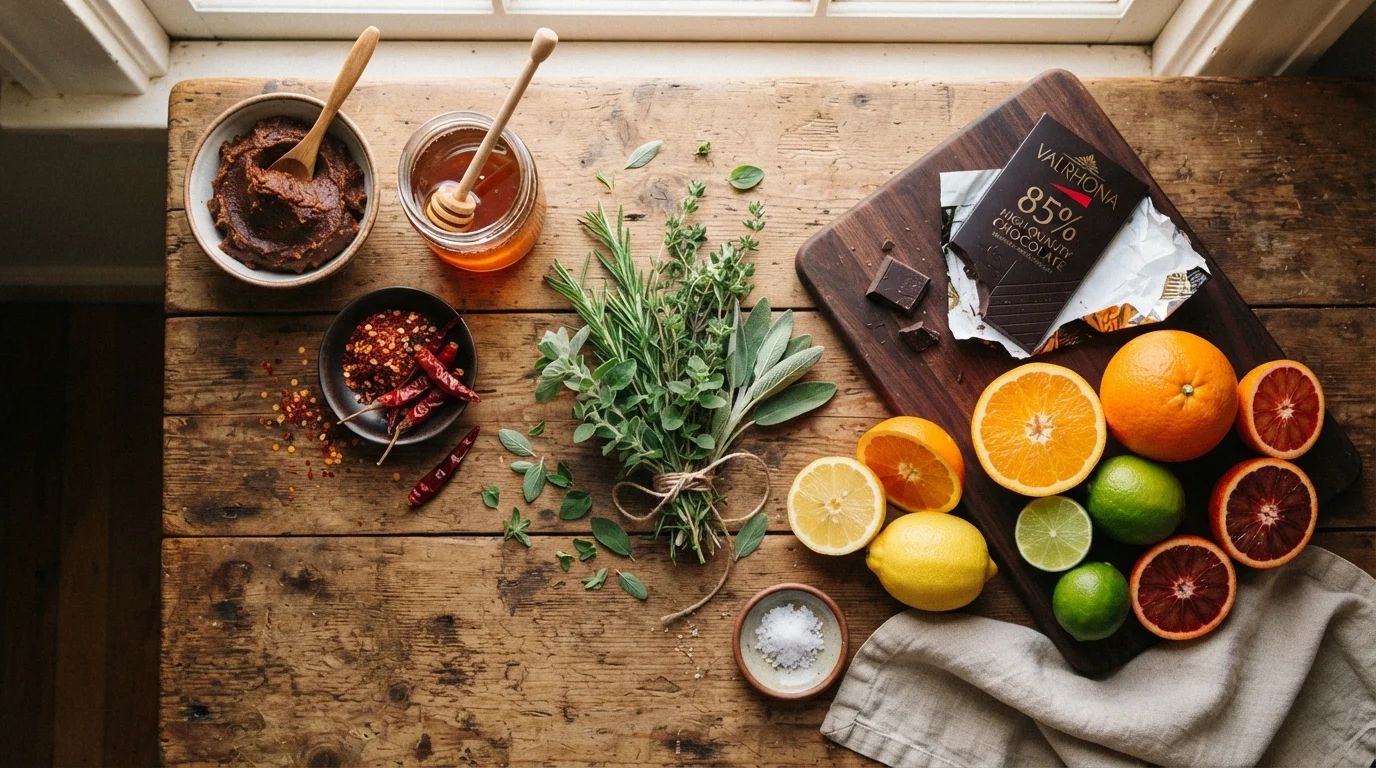
Start with your aromatics — onion, garlic, ginger, shallots — and give them time to soften and sweeten before adding anything else. Add spices to the hot fat early so they bloom and release their oils. Each addition should be building on the last, not just occupying the pan. For a deeper dive into unexpected combinations worth trying, see our guide to flavor pairings home cooks often overlook.
Taste constantly and adjust
This is the step most home cooks skip, and it's the most important one. Taste your dish at every stage: after the aromatics soften, after the protein cooks, after you add liquid. Ask yourself: Does it need salt? Is it flat — could it use acid like a squeeze of lemon or a splash of vinegar? Does it feel rich enough, or does it need a drizzle of good oil or a knob of butter at the end?
Finish with intention
The last thirty seconds of cooking matter more than most people realize. A squeeze of citrus, a handful of fresh herbs, a pinch of red pepper flakes, or a grating of Parmesan can transform something serviceable into something genuinely good. Think of the finish as your signature — the note you're sending the dish out on.
Common Pitfalls and How to Recover
Even experienced cooks end up with dishes that need rescuing. Here's a quick reference for the most common situations:
- Too salty: Add bulk — more unsalted vegetables, a starch, or a squeeze of citrus to distract from the salt.
- Too bland: Try salt first, then acid, then a fat finish. One of the three almost always helps.
- Too spicy: Dairy (yogurt, cream, cheese) or starch (rice, bread) can temper heat effectively.
- Watery sauce: Remove the lid and let it reduce over medium heat, stirring occasionally.
The goal isn't perfection — it's building intuition. Every imperfect meal teaches you something a recipe never could. If you're curious about how different cooking methods affect your results, it's worth exploring how tools like a slow cooker or Instant Pot handle everyday meals differently.
Start With One Familiar Dish
The easiest way to build confidence is to take a meal you already know by heart and deliberately vary one element — swap the protein, change the spice profile, use a different acid. This keeps the structure familiar while training your instincts. Over time, these small experiments compound into real fluency.
Don't Practice on High-Stakes Meals
Cooking for a dinner party or a special occasion is not the time to freestyle for the first time. Start with low-pressure weeknight meals where an imperfect result is just dinner, not a disaster. Confidence in the kitchen is built incrementally, not all at once.