
What You Actually Need to Get Started
The single biggest obstacle for new home cooks isn't skill — it's the mistaken belief that cooking requires a fully outfitted kitchen before you can begin. It doesn't. A short list of reliable tools is genuinely all you need to produce good food.
Your core kit should include:
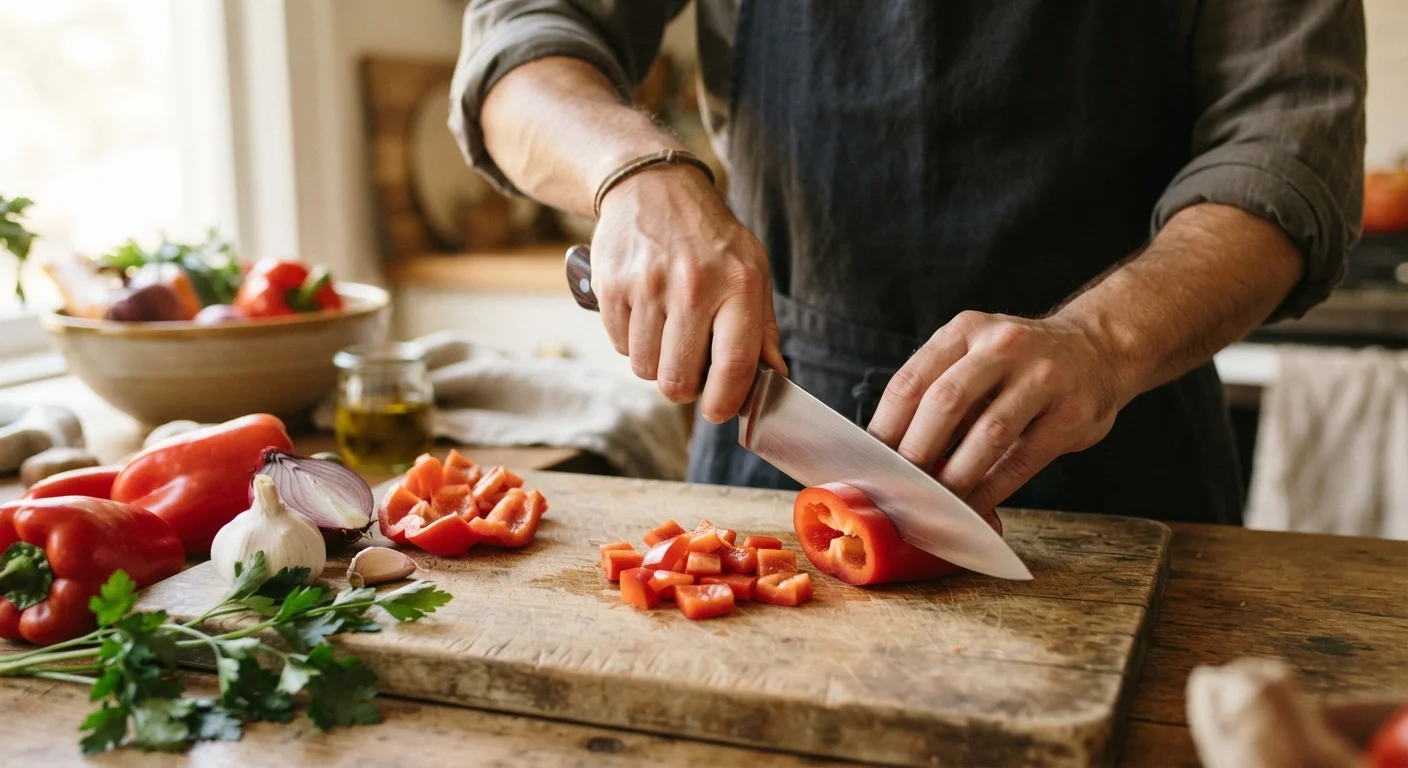
- A chef's knife — your most-used tool, bar none. See our guide to basic knife skills before you start.
- A sturdy cutting board — wood or plastic both work; just keep it stable.
- A 10- or 12-inch skillet — stainless or nonstick, either is fine for beginners.
- A medium saucepan — for grains, soups, pasta, and sauces.
- A rimmed sheet pan — roasting vegetables and proteins with minimal cleanup.
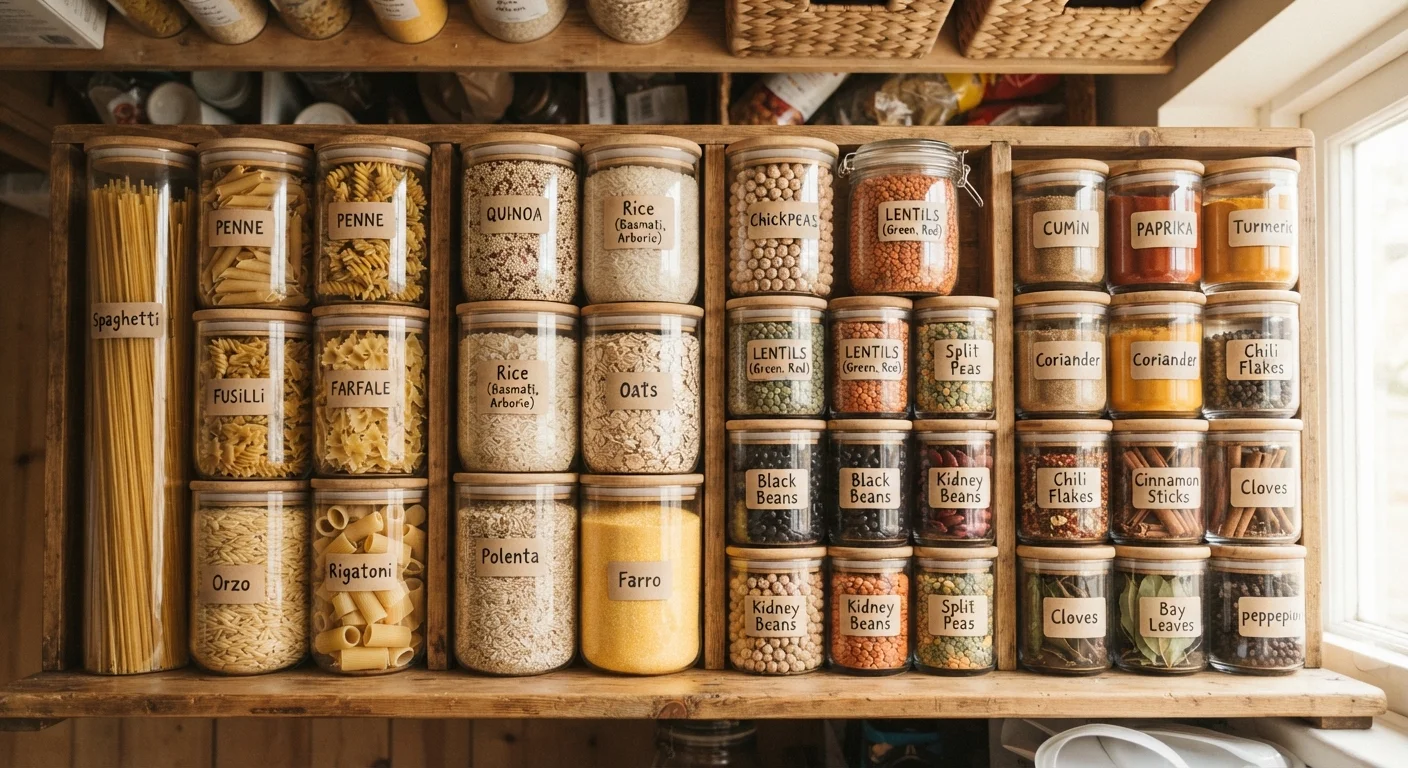
Beyond equipment, a well-stocked pantry dramatically reduces the friction of cooking regularly. Our pantry staples guide covers exactly what earns shelf space and why.
Mise en place
A French culinary term meaning 'everything in its place.' It refers to prepping and organizing all your ingredients before you start cooking, so nothing gets rushed or forgotten mid-recipe.
Sauté
To cook food quickly in a small amount of fat over relatively high heat, stirring or tossing frequently. It's one of the most common stovetop techniques.
Simmer
To cook liquid at a temperature just below boiling, where small, gentle bubbles occasionally break the surface. Ideal for soups, sauces, and grains that need time to develop flavor.
Roasting
Cooking food uncovered in a dry oven, usually at moderate to high heat. The dry heat caramelizes the surface and concentrates flavors — ideal for vegetables and proteins.
Seasoning
Adding salt, pepper, herbs, or spices to food to enhance its natural flavor. Good seasoning happens in layers throughout cooking, not just at the very end.
Four Techniques Worth Learning First
Recipes are essentially instructions built from a small set of repeating techniques. Learn these four and you'll be able to follow the majority of beginner recipes with confidence.
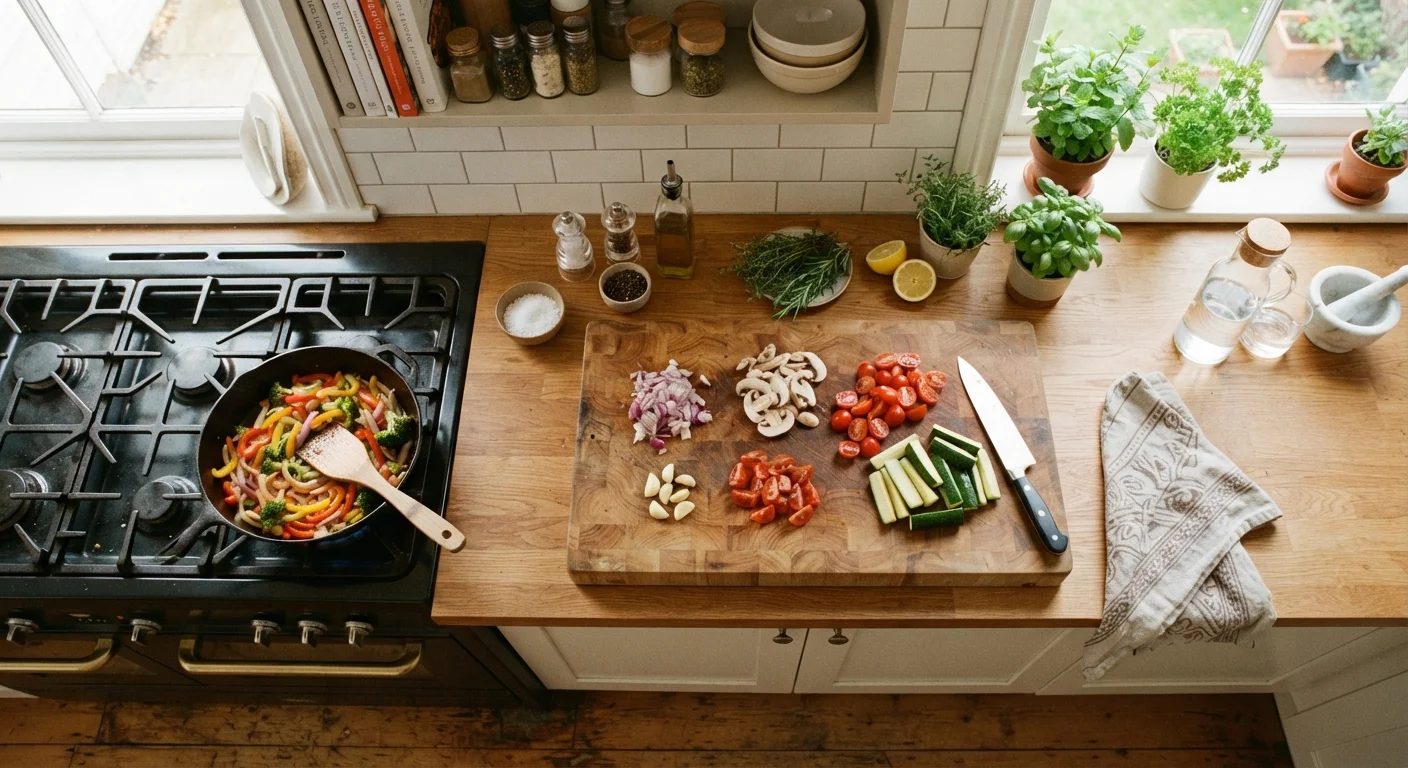
1. Sautéing
Cooking food quickly in a small amount of fat over medium to medium-high heat. This is how you build flavor at the base of countless dishes — aromatics like onion and garlic go in first, then proteins or vegetables.
2. Boiling and simmering
A full boil (rapidly bubbling) is used for pasta and blanching vegetables. A simmer (gentle, occasional bubbles) is used for soups, sauces, and grains. Knowing the difference prevents rubbery pasta and scorched sauces.
3. Roasting
Dry oven heat caramelizes the surface of vegetables and proteins, building deep flavor with very little active effort. Toss ingredients in oil and seasoning, spread them in a single layer on a sheet pan, and let the oven do the work.
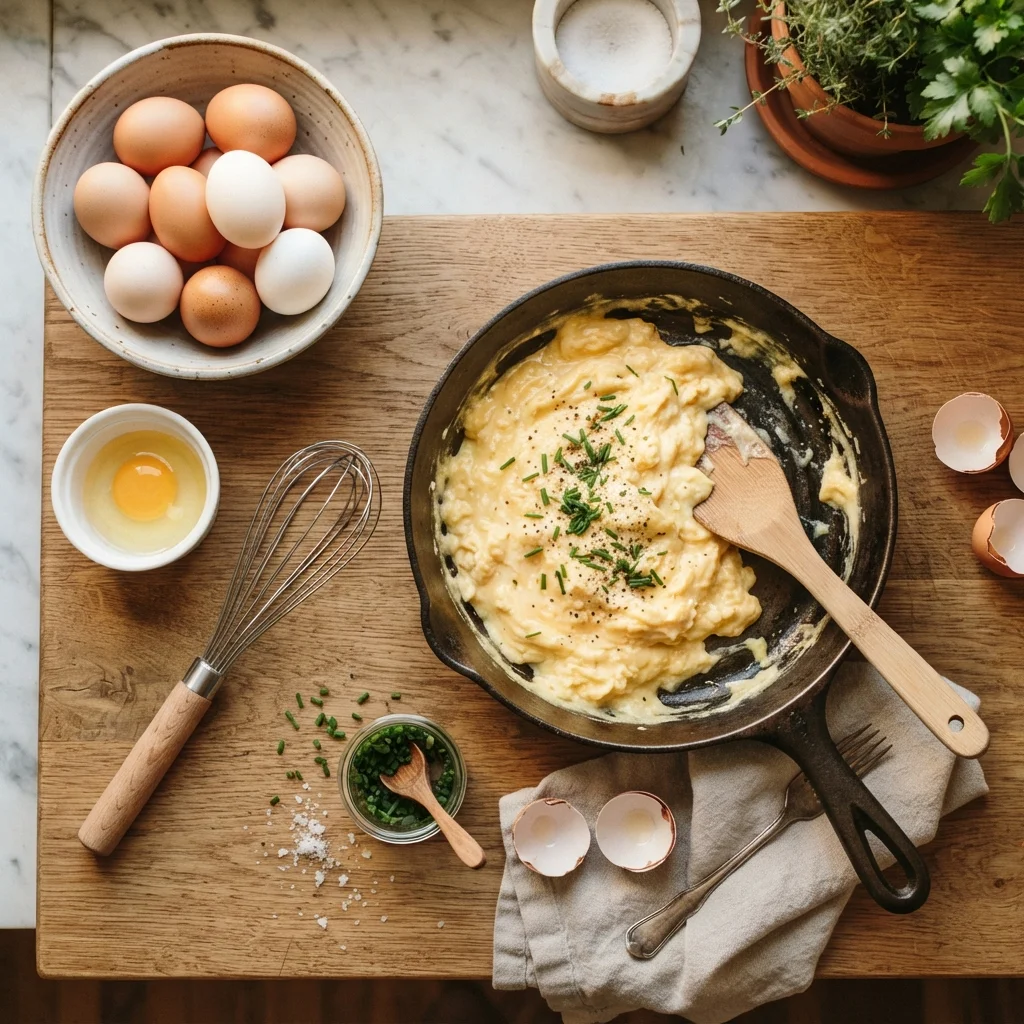
4. Scrambling and frying eggs
Eggs are the most versatile ingredient in the kitchen, and mastering them builds transferable skills around heat control and timing. Our complete egg reference covers every method in accessible detail.
Practice One Technique Per Meal
Rather than trying to master everything at once, focus on one technique per cooking session. If you're making pasta, pay close attention to the difference between a boil and a simmer. If you're sautéing vegetables, watch how color and texture change with heat. Deliberate attention makes repetition stick much faster.
A Simple Meal Plan for Your First Week
Planning four to five meals before your first grocery trip keeps you focused, reduces waste, and gives you a sense of direction. The goal isn't variety — it's repetition and confidence.
| Day | Meal | Technique practiced |
|---|---|---|
| Monday | Scrambled eggs with toast | Heat control, egg cookery |
| Tuesday | Pasta with garlic and olive oil | Boiling, sautéing |
| Wednesday | Sheet-pan roasted vegetables and chicken thighs | Roasting |
| Thursday | Vegetable stir-fry with rice | High-heat sautéing |
| Friday | Simple tomato soup with grilled cheese | Simmering, stovetop browning |
These meals overlap on ingredients — garlic, olive oil, onion, eggs — which means less shopping and less waste. As your comfort with improvising grows, you can start swapping in whatever looks good at the store.
Common Beginner Mistakes and How to Sidestep Them
Almost every beginner struggle traces back to a handful of predictable missteps. Knowing them in advance makes a real difference.
- Skipping mise en place: This French phrase means "everything in its place" — prepping and measuring ingredients before cooking begins. Scrambling to chop an onion while garlic burns is avoidable. Our kitchen readiness checklist walks through the full prep process.
- Cooking on heat that's too low: A timid flame produces pale, steamed food rather than golden, flavorful results. Most sautéing happens over medium to medium-high heat.
- Overcrowding the pan: Too much food at once drops the pan temperature and causes steaming instead of browning. Cook in batches if needed.
- Not tasting as you go: Seasoning at the end often means uneven, flat flavor. Taste throughout and adjust gradually.
Always Check Protein for Safe Doneness
Undercooked chicken, pork, and ground beef carry real food safety risks. An instant-read thermometer is the only reliable way to confirm safe internal temperatures — visual cues like color alone aren't sufficient. The USDA publishes recommended safe internal temperatures for all common proteins and is a trustworthy free reference.
Building Confidence Beyond Week One
After your first week, something useful happens: the physical actions start to feel familiar. You stop worrying about whether the pan is ready and start noticing whether the food smells right. That shift — from following steps to reading your food — is where real cooking begins.
A few ways to keep building from here:
- Repeat two or three meals from week one before adding new ones. Repetition is how technique actually sticks.
- Explore nutrition basics to understand how to build balanced meals, not just cook individual dishes.
- Try flavor combinations you haven't considered before — our piece on overlooked flavor pairings is a good next read.
- If you have outdoor space, growing your own vegetables can make fresh produce more accessible and surprisingly motivating.
Cooking well isn't about producing restaurant-quality food on week two. It's about building habits that make you reach for the skillet instead of the takeout menu — and feeling good about what ends up on the table.