
What Meal Prep Actually Involves
Meal prepping — setting aside a block of time, usually over the weekend, to cook or partially prepare food for the coming week — sounds straightforward enough. In practice, it ranges from batch-cooking full dinners to simply washing and chopping vegetables so weeknight cooking feels less daunting.
The approach has genuinely helped a lot of home cooks eat more consistently at home. If you're building broader healthy eating habits over time, having ready-to-use food in the fridge removes one of the biggest daily obstacles: starting from scratch when you're already tired.
That said, meal prep isn't a magic fix. It requires upfront time, some planning, and a realistic sense of what you'll actually want to eat on Wednesday evening. Getting familiar with the tradeoffs before you dive in means fewer abandoned containers and less wasted food.
Dramatically reduces weeknight cooking time
Having proteins cooked, vegetables roasted, and grains ready cuts active dinner prep from 45 minutes to under 15. That time savings adds up significantly across a week.
Helps curb impulsive food spending
When a ready meal is already in the fridge, the temptation to order takeout diminishes. For households watching their food budget, this is one of the most tangible benefits.
Reduces food waste meaningfully
Buying ingredients with a specific plan means less produce going soft at the back of the crisper. Prep sessions also use up odds and ends before they spoil.
Supports more consistent home eating
People who prep regularly tend to eat out less by default — not through discipline, but because the friction of cooking a meal is already removed. That consistency supports broader nutritional goals over time.
Scales well for budget cooking
Cooking staples like beans, lentils, and whole grains in bulk is one of the most cost-effective things a home cook can do, as covered in guides to eating well on a budget.
Where Meal Prep Falls Short
The biggest complaint from people who try meal prep and quit? Food that doesn't hold up. Leafy salads wilt, cooked fish smells stronger by day three, and some dishes — anything with a crispy texture, for instance — just aren't the same reheated. Understanding which foods travel well through the week (roasted root vegetables, cooked grains, legumes, hard-boiled eggs) and which don't (delicate greens, anything fried) saves a lot of disappointment.
There's also the monotony factor. Eating the same lunch four days in a row works for some people and drives others to the nearest sandwich shop by Tuesday. If variety matters to you, prepping components — a batch of farro, roasted chicken thighs, a jar of tahini dressing — rather than complete assembled meals gives you more flexibility to mix things up.
Significant upfront time commitment each week
A thorough prep session can take two to three hours — a real ask for busy weekends. Without a manageable scope, the habit tends to collapse after a few weeks.
Not all foods hold up well after storage
Crispy textures, delicate greens, and certain fish deteriorate noticeably within a day or two. Choosing the wrong foods to prep leads to disappointing meals and wasted effort.
Meal fatigue sets in quickly without variety
Prepping identical full meals rather than flexible components can make eating feel like a chore by mid-week — undermining the habit entirely.
Requires real planning and fridge organization
Without a clear plan, prep sessions become inefficient and prepped food gets overlooked. Poor container systems or crowded fridges accelerate this problem.
Finally, the upfront time investment is real. A thorough prep session can run two to three hours. If weekends are already packed, that commitment can feel unsustainable. A lighter approach — just prepping grains and proteins, for example — often works better than trying to do everything at once. Appliances like slow cookers and Instant Pots can take some of that hands-on time off your plate.
How to Set Yourself Up for Success
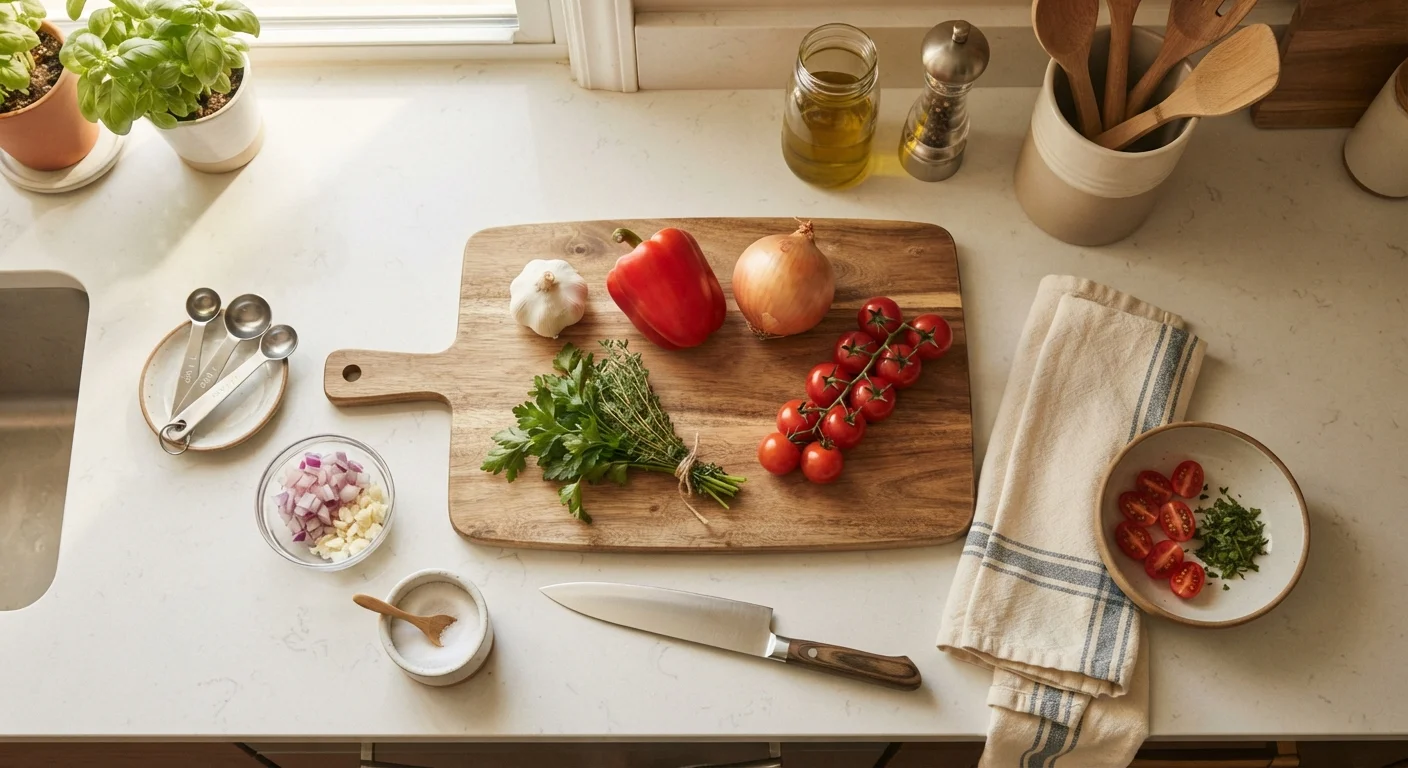
Treat your first few prep sessions as experiments, not commitments. Start with two or three things you already cook confidently — a pot of grains, one roasted vegetable, a simple protein — rather than attempting five new recipes at once. The mise en place mindset applies here: having everything organized before you start cooking dramatically reduces the chaos.
Keep Your First Session Simple
Many people abandon meal prep after one overwhelming Sunday session. A realistic starting point: one grain, one protein, two vegetables. That combination alone covers most meals for the week and takes far less time than a full recipe lineup. As the habit solidifies, you can expand scope. Check our kitchen readiness checklist before you start to catch any gaps before they slow you down.
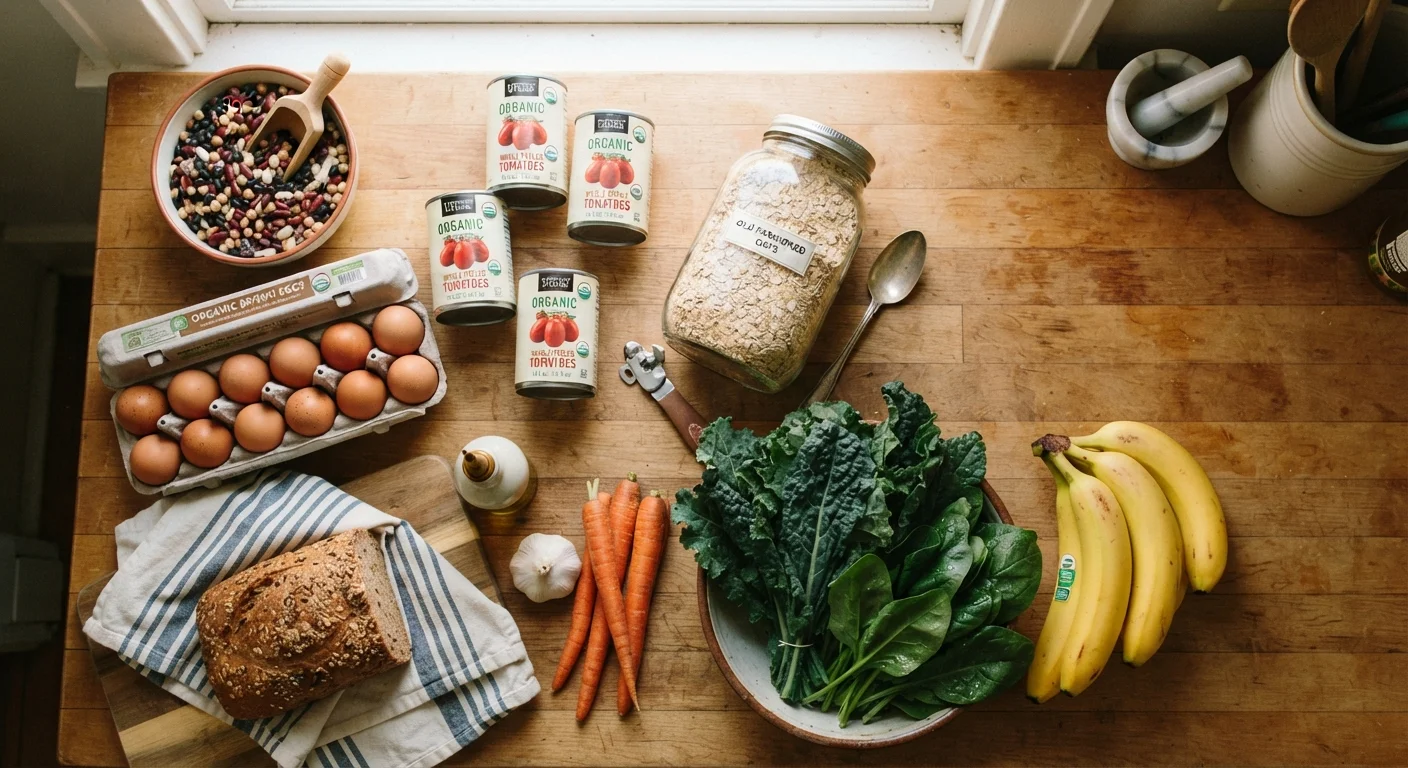
A well-stocked pantry is also foundational. Shelf-stable staples — dried lentils, canned tomatoes, olive oil, good vinegars — turn prepped proteins and vegetables into a variety of meals without extra shopping. Our guide to stocking a home cook's pantry covers exactly what earns shelf space.
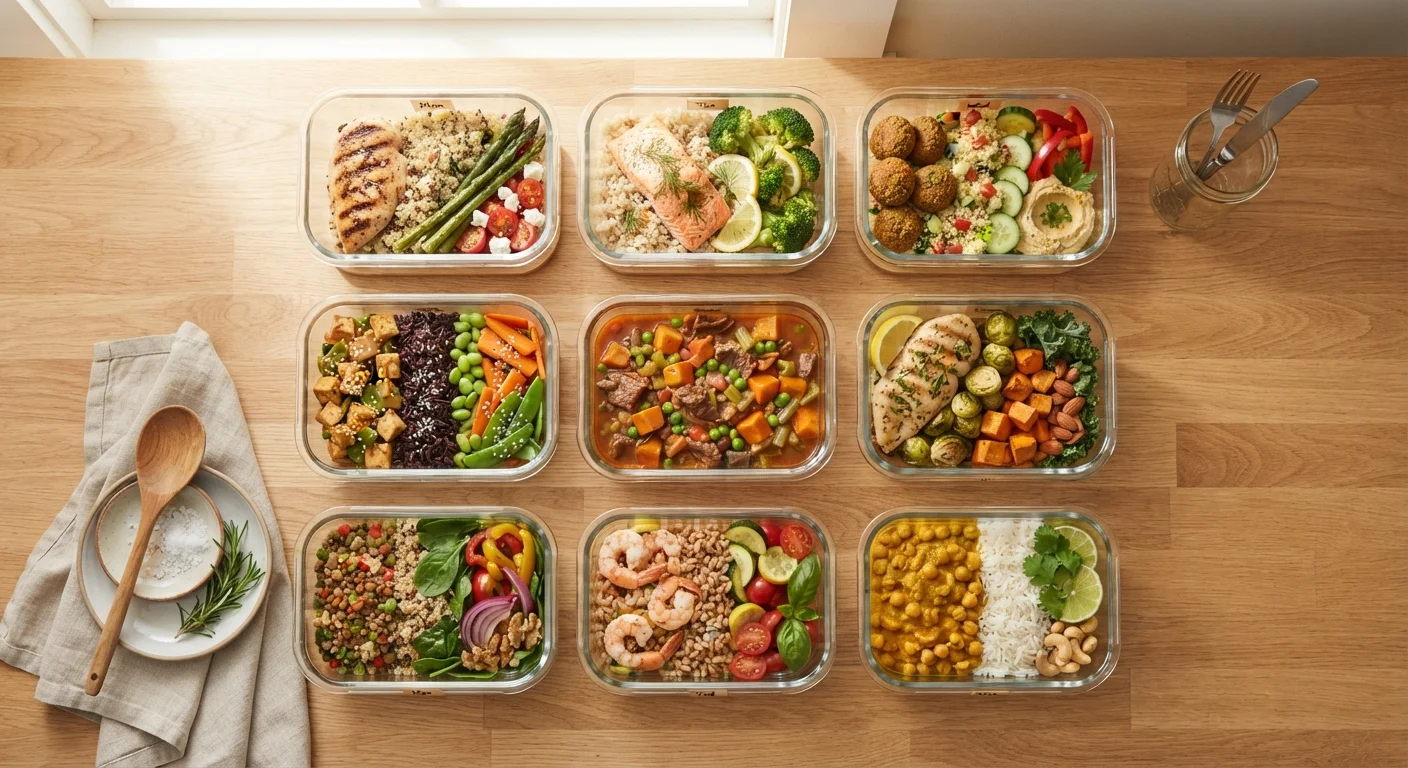
Container quality matters more than most people expect. Airtight glass containers keep food fresher longer and make it easy to see what you have, which reduces the "mystery fridge" problem where prepped food gets forgotten. Label containers with the date — anything cooked should generally be used within three to four days, per standard food safety guidance.
3–4 days
Safe fridge storage for most cooked foods
The USDA recommends consuming most cooked leftovers within three to four days when stored at or below 40°F.
~2–3 hrs
Typical weekly prep session length
Home cooks who prep regularly report spending roughly two to three hours on a dedicated session, though lighter component-only prep can take under an hour.
If your goal is also eating more nutritiously, pairing meal prep with an understanding of whole foods versus processed foods helps you make ingredient choices that hold up both nutritionally and texturally through the week.