

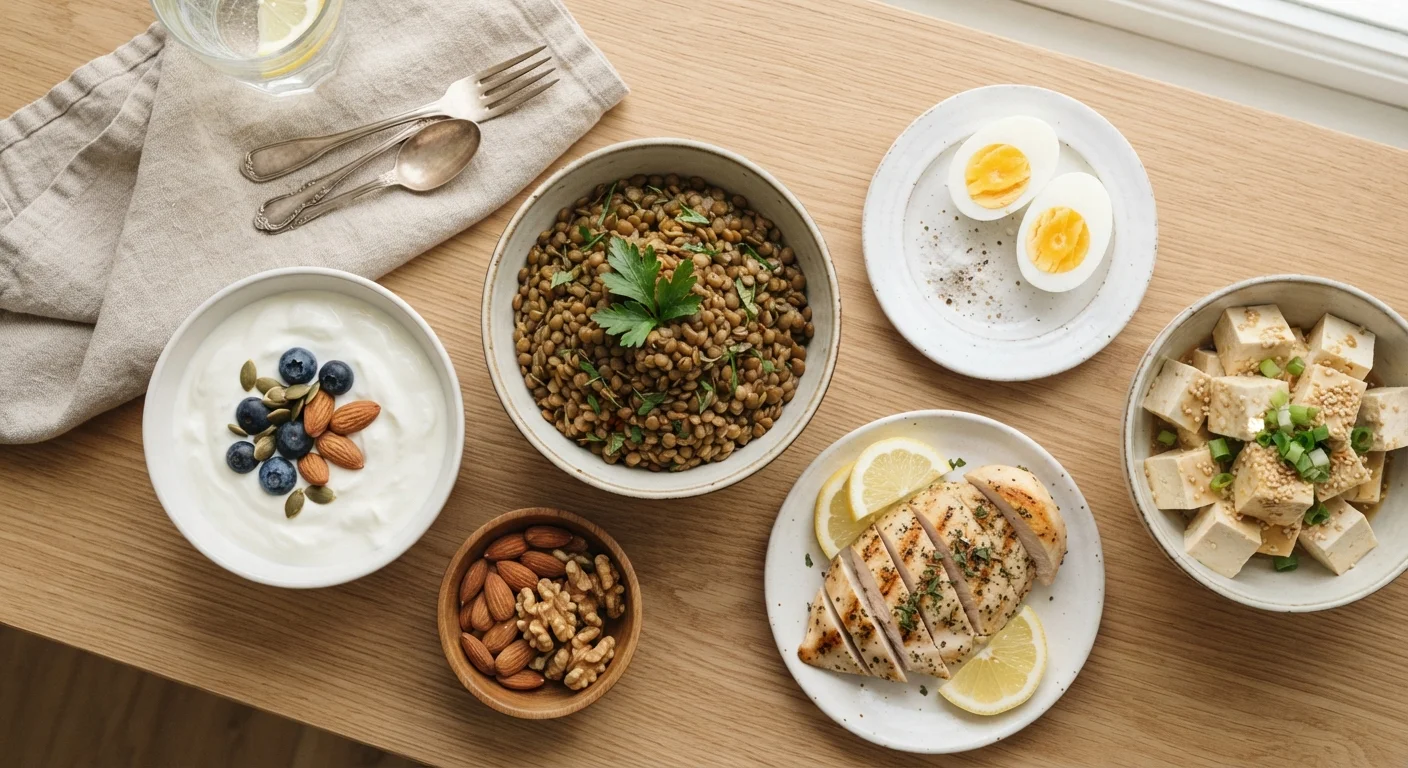
What Protein Actually Does in Your Body
Protein is one of three macronutrients your body requires in meaningful amounts — alongside carbohydrates and fats. It serves as the structural material for muscle, skin, hair, nails, and organs. Beyond structure, proteins act as enzymes that drive chemical reactions, hormones that regulate bodily functions, and antibodies that support immune defense.
Every protein is assembled from smaller units called amino acids. Of the 20 amino acids your body works with, nine are considered essential — meaning your body cannot make them on its own and must obtain them through food. This is why diet quality, not just quantity, matters when thinking about protein intake.
For a broader introduction to how protein fits alongside other nutrients, see our beginner's nutrition guide.
Amino acids
The building blocks of protein. There are 20 in total; nine are 'essential,' meaning the body cannot synthesize them and they must come from food.
Complete protein
A protein source that contains all nine essential amino acids in sufficient quantities. Examples include eggs, fish, meat, dairy, soy, and quinoa.
RDA (Recommended Dietary Allowance)
The average daily intake level sufficient to meet the nutritional requirements of nearly all healthy individuals in a given age and sex group, as established by the National Academies.
Sarcopenia
The gradual, age-related loss of muscle mass and strength. Adequate protein intake and resistance exercise are two factors associated with slowing this process.
Macronutrient
A nutrient required by the body in large amounts for energy and structural functions. The three macronutrients are protein, carbohydrates, and fat.
How Much Protein Do Most Adults Need?
The most widely cited benchmark comes from the Dietary Reference Intakes established by the National Academies of Sciences, Engineering, and Medicine. The Recommended Dietary Allowance (RDA) for protein is 0.8 grams per kilogram of body weight per day for sedentary adults. This figure represents the minimum needed to meet the nutritional requirements of most healthy people — not necessarily an optimal target for everyone.
Needs shift based on several factors:
- Physical activity level: People who exercise regularly — especially those doing resistance or endurance training — generally require more protein to support muscle repair and adaptation.
- Age: Older adults often need higher relative protein intake to offset age-related muscle loss, a process called sarcopenia.
- Pregnancy and breastfeeding: Protein requirements increase during these stages. Individuals in these groups should consult a healthcare provider for personalized guidance.
- Health conditions: Kidney disease, for example, can affect how much protein is appropriate. Always follow medical advice if you have a diagnosed condition.
| Standard RDA for adults | 0.8 g per kg of body weight/day (National Academies of Sciences, Engineering, and Medicine) |
| Essential amino acids | 9 (must come from food) |
| Complete plant protein examples | Soy, quinoa |
| Groups with elevated needs | Active adults, older adults, pregnant/breastfeeding individuals |
| Protein's primary roles | Muscle repair, enzyme function, immune support, hormone production |
Most everyday adults eating a varied diet meet their RDA without tracking grams. The concern tends to arise at the extremes — very low calorie diets or highly restrictive eating patterns.
Protein Sources: Does Quality Matter?
Yes — and the distinction is worth understanding. Complete proteins supply all nine essential amino acids in adequate proportions. Animal-based foods (meat, poultry, fish, eggs, dairy) are typically complete. Most plant foods are incomplete — they lack or are low in one or more essential amino acids — though soy and quinoa are notable plant-based exceptions.
This doesn't mean plant-based eaters are at a disadvantage. Eating a variety of plant proteins throughout the day — legumes, whole grains, nuts, seeds — allows the body to obtain all essential amino acids even without a single complete source at every meal. The old idea that plant proteins must be "combined" at each sitting has largely been revised by nutrition research; daily variety is what matters.
For a side-by-side look at animal, plant, and hybrid protein options, see Protein Sources Across Every Eating Style. If you're also thinking about food costs, Eating Well on a Budget covers how to get solid nutritional value from affordable everyday foods.
0.8 g/kg
Minimum daily protein RDA for sedentary adults
Established by the National Academies of Sciences, Engineering, and Medicine as the baseline for healthy adult maintenance.
~10–35%
Acceptable Macronutrient Distribution Range for protein
The National Academies define this range as appropriate for total daily calorie intake from protein for adults.
This article is for general informational purposes only and does not constitute medical or dietary advice. Consult a registered dietitian or qualified healthcare provider before making significant changes to your diet.