
What Makes These Two Lumber Types Different
Pressure-treated lumber is standard dimensional wood — most commonly southern yellow pine — that has been infused with chemical preservatives under high pressure. The process forces preservatives deep into the wood fibers, protecting against rot, fungal decay, and insect damage. Modern pressure-treated lumber typically uses copper-based preservatives, such as alkaline copper quaternary (ACQ) or copper azole (CA), which replaced the older arsenic-based treatments phased out in the early 2000s.
Cedar, most often western red cedar in the U.S. market, is a naturally rot-resistant species. Its heartwood contains oils and tannins that deter moisture absorption, fungal growth, and insect activity without any chemical treatment. This natural resistance is genuine, though it does diminish over time as the wood weathers and the protective oils dissipate.
Both materials are widely available at lumber yards and home improvement stores, though availability and pricing can vary significantly by region.
A Note on Pressure-Treated Grades
Pressure-treated lumber comes in different retention levels rated for specific uses — above-ground, ground-contact, and freshwater or saltwater contact. Using the wrong retention level for your application can lead to premature failure. Always check the label stamp on treated lumber to confirm it's rated for your intended use, especially for any posts or framing that will contact soil or concrete.
Cost, Lifespan, and Maintenance Compared
For most U.S. markets, pressure-treated lumber runs noticeably cheaper per board foot than cedar. On a large deck or fence project, that difference adds up quickly. However, cost comparisons should factor in long-term maintenance as well.
| Criterion | Pressure-Treated Lumber | Cedar |
|---|---|---|
| Upfront Cost | Lower cost per board foot | Typically 2–3x more expensive |
| Natural Rot Resistance | Chemical treatment required | Naturally rot-resistant heartwood |
| Appearance | Greenish tint; rough texture | Warm reddish tones; smooth finish |
| Dimensional Stability | Prone to warping as it dries | More stable; less warping |
| Best Structural Use | Posts, beams, joists | Deck boards, pickets, railings |
| Chemical Concerns | Copper-based preservatives present | No chemical treatment needed |
| Maintenance Frequency | Seal every 2–3 years | Seal every 2–3 years |
| Expected Lifespan (maintained) | 25–40+ years | 15–30 years |
Both materials benefit from regular sealing or staining — generally every two to three years — to slow moisture penetration and UV degradation. Pressure-treated wood should be allowed to dry thoroughly after installation (often 60–90 days) before applying any sealant, as wet boards repel finishes. Cedar can typically be sealed sooner, though letting it weather briefly before staining often produces better adhesion.
Pressure-treated lumber is more prone to warping, cracking, and checking as it dries, which can affect the final appearance of deck boards. Cedar tends to be more dimensionally stable, making it easier to work with and more consistent-looking over time.
Safety, Handling, and Environmental Considerations
Working with pressure-treated lumber requires some precautions. The copper-based preservatives in modern treated wood are far safer than older formulations, but sawdust should not be inhaled and scraps should not be burned. Always wear a dust mask when cutting, and wash hands thoroughly after handling. Wear gloves when working with freshly treated boards.
The copper in modern treatments can accelerate corrosion of some metals, so use fasteners, connectors, and hardware rated for use with treated lumber — typically hot-dipped galvanized or stainless steel. Using the wrong hardware can cause premature failure of connections.
Cedar raises far fewer handling concerns. Its sawdust can irritate eyes and airways, so respiratory protection is still sensible, but there are no chemical preservative considerations. Cedar scraps can be composted or disposed of normally.
25–40 yrs
Typical lifespan of maintained pressure-treated decking
The American Wood Protection Association notes that properly maintained pressure-treated lumber can last decades in above-ground applications.
15–30 yrs
Typical lifespan of maintained cedar decking
Cedar's natural oils provide initial protection, but regular sealing is key to achieving the upper range of its service life.
2–3x
Approximate cost premium of cedar over pressure-treated
Pricing varies by region and lumber market conditions; always get current quotes from local suppliers before budgeting a project.
From a sustainability standpoint, both options have trade-offs. Look for cedar certified by the Forest Stewardship Council (FSC) if sourcing responsibly matters to your project. Pressure-treated lumber certification programs also exist to verify proper treatment standards.
Which Wood to Use Where on Your Project
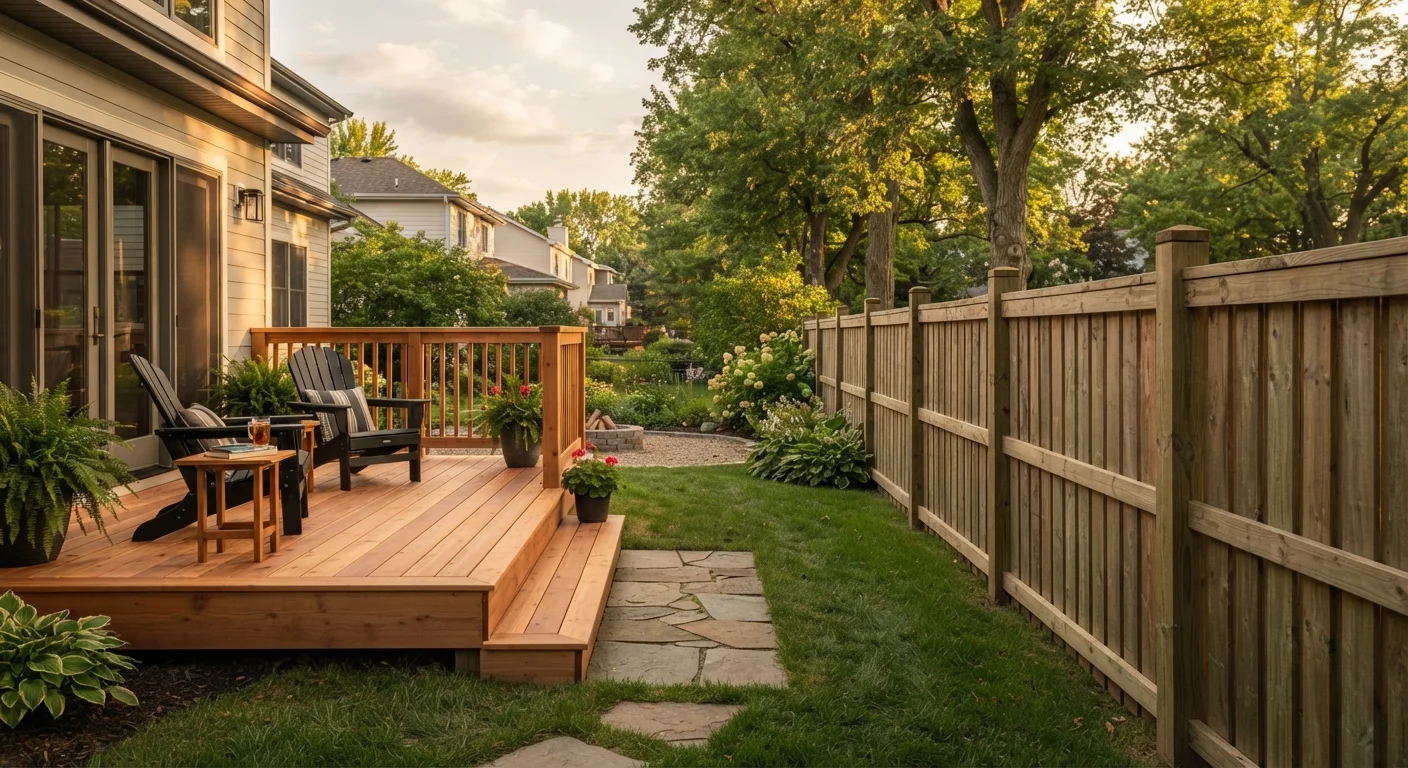
Many experienced builders mix both materials strategically. Pressure-treated lumber is the standard — and in many local building codes, the required — choice for structural components: posts set in or near the ground, beams, joists, and ledger boards. Its superior resistance to ground moisture and insects makes it the safer structural bet.
Cedar shines in visible applications: deck boards, railings, and fence pickets. Its natural appearance and stability make it worth the premium for surfaces that define how your finished project looks and feels underfoot.
Before beginning any deck build, check your local building codes. Many jurisdictions have specific requirements for lumber grades, post sizes, and fastener types. Permits are often required for decks above a certain height or square footage, and inspections ensure the structure is built safely. When in doubt, consult a licensed contractor or your local building department.
This article is for general informational purposes only. Building codes, permit requirements, and lumber standards vary by location. Always verify local requirements with your municipality and consult a qualified professional for structural or safety-critical decisions.