
How Retail Environments Are Built to Influence You
Shopping feels like a series of personal choices. In reality, many of those choices are shaped long before you reach for a product. Retailers — both physical and online — invest heavily in environmental design, pricing psychology, and behavioral research to nudge spending upward. Understanding the mechanics involved is not about distrust; it is about making genuinely informed decisions.
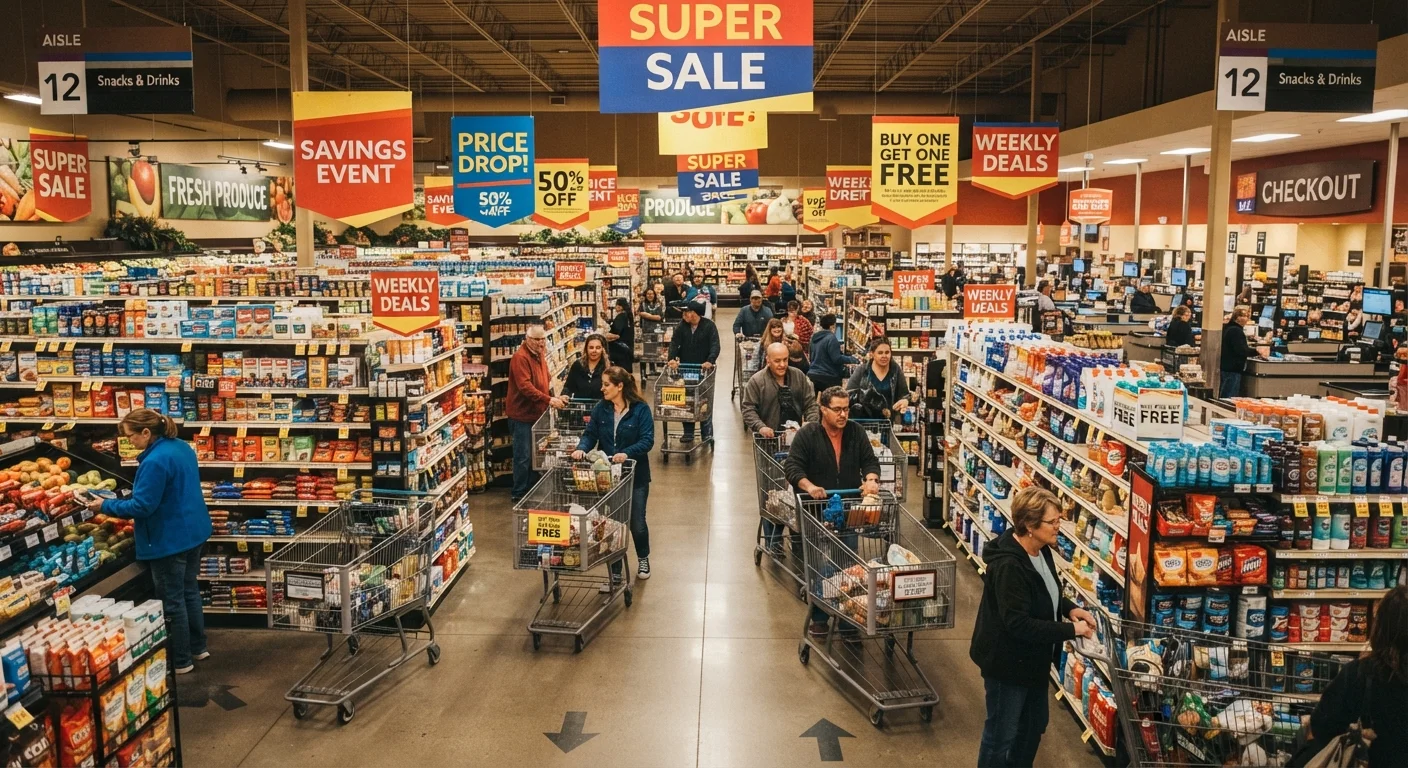
Research in consumer psychology consistently shows that people make a large share of in-store purchase decisions on the spot, influenced by layout, signage, lighting, and product placement rather than pre-formed intent. Knowing which specific tactics are in play helps you recognize the moment you are being guided — and decide whether to follow.
For a broader look at the cognitive patterns that shape financial behavior, see our piece on why saving money feels so hard.
Responding to artificial scarcity cues as though urgency is real.
Why it happens: Phrases like 'Only 3 left' or countdown timers trigger loss aversion — the well-documented tendency to weight potential losses more heavily than equivalent gains. Retailers apply these cues broadly, including in cases where inventory is not genuinely limited.
Using a high anchor price as the reference point for evaluating a deal.
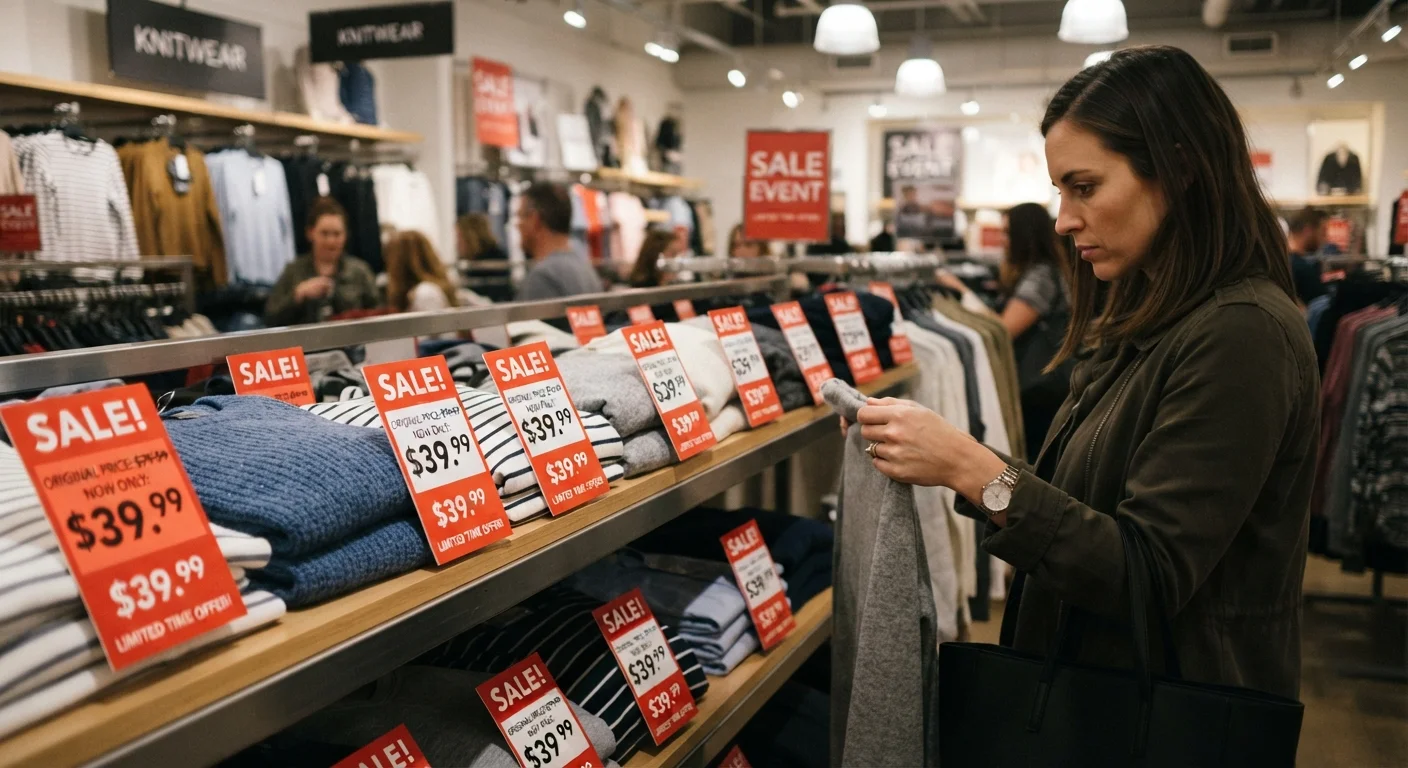
Why it happens: Anchor pricing — showing a crossed-out 'original' price next to a sale price — exploits anchoring bias. The first number encountered sets expectations, making any lower number feel like a gain regardless of whether the anchor was ever a fair or common price.
Buying more than needed because a bundle or multi-buy looks efficient.
Why it happens: Bundling and 'buy more, save more' structures make larger quantities feel economically rational. However, the savings only materialize if you actually use everything purchased, accounting for storage cost, spoilage, or the opportunity cost of the extra spending.
Browsing without a specific purpose, especially online.
Why it happens: Open-ended browsing — scrolling a feed, clicking through 'recommended' items, or walking through a store without a list — exposes you to a high volume of purchase prompts in a low-accountability state. Retailers design both physical and digital paths to maximize this exposure.
Treating 'free shipping thresholds' as a natural spending target.
Why it happens: Minimum-spend thresholds for free shipping are calibrated to add meaningful revenue per transaction. Shoppers frequently add low-priority items to reach a threshold, spending more than the shipping cost would have been.
Shopping More Intentionally: Practical Starting Points
Recognizing these tactics is genuinely useful, but awareness alone does not fully neutralize them. Pairing knowledge with a few structural habits makes a measurable difference.
~60–70%
In-store purchases made on impulse
Multiple consumer research surveys over the years have estimated that a majority of grocery and general merchandise purchases are unplanned at the time of store entry.
3–5x
Impact of anchor pricing on perceived value
Behavioral economists have documented that reference prices can shift willingness to pay substantially, even when the anchor has no reliable basis in actual prior pricing.
Use a list as a decision boundary. Commit to it before you enter a store or open a retail app. A list transforms shopping from an open-ended browsing session into a defined task. Items that are not on it require a deliberate decision to add — which is exactly the friction that slows impulse spending.
Separate discovery from buying. When you encounter an appealing item not on your list, write it down rather than buying immediately. Revisiting it 24–48 hours later often reveals that the urgency was situational, not genuine need.
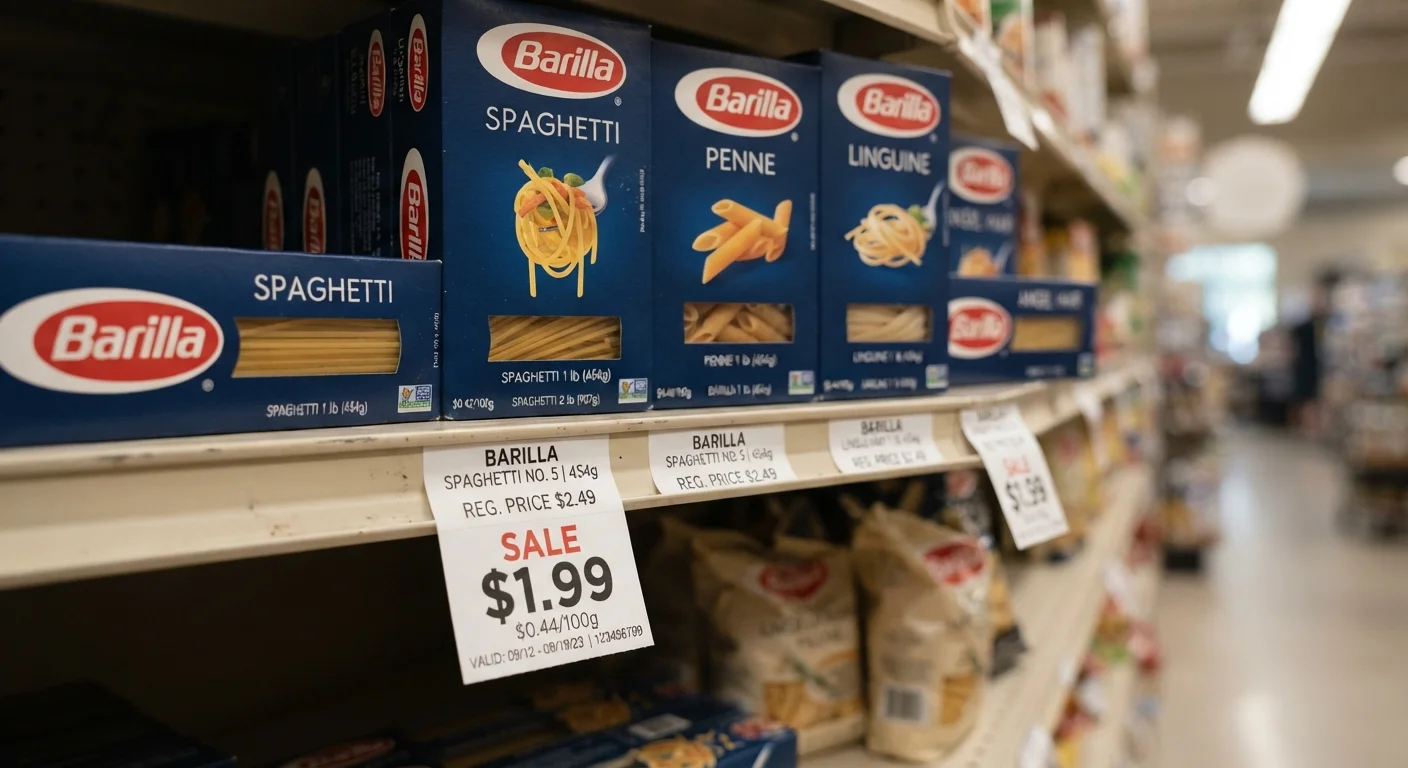
Check unit prices, not just package prices. Bundled or bulk offers frequently appear to offer savings but may not. Unit price math — the cost per ounce, count, or pound on shelf tags — is the most reliable comparison tool available.
Pricing promotions deserve particular scrutiny as well. Sale pricing is often more complicated than it looks, and understanding anchor pricing and reference prices helps you evaluate what a discount actually represents.
Loyalty Programs Can Encourage Overspending
Points and reward tiers are designed to increase visit frequency and spending per trip, not primarily to save you money. Before treating a loyalty reward as a reason to buy something, it is worth asking whether you would have purchased it otherwise. Our breakdown of loyalty program mechanics covers what to watch for, including expiration rules and varying point values.
For ongoing habits that make deliberate shopping easier over time, our guide to keeping impulse spending in check offers practical, evidence-informed approaches that do not rely on willpower alone.
This article is for general informational and educational purposes only. It does not constitute financial, legal, or professional advice. For guidance specific to your financial situation, consult a qualified financial professional.