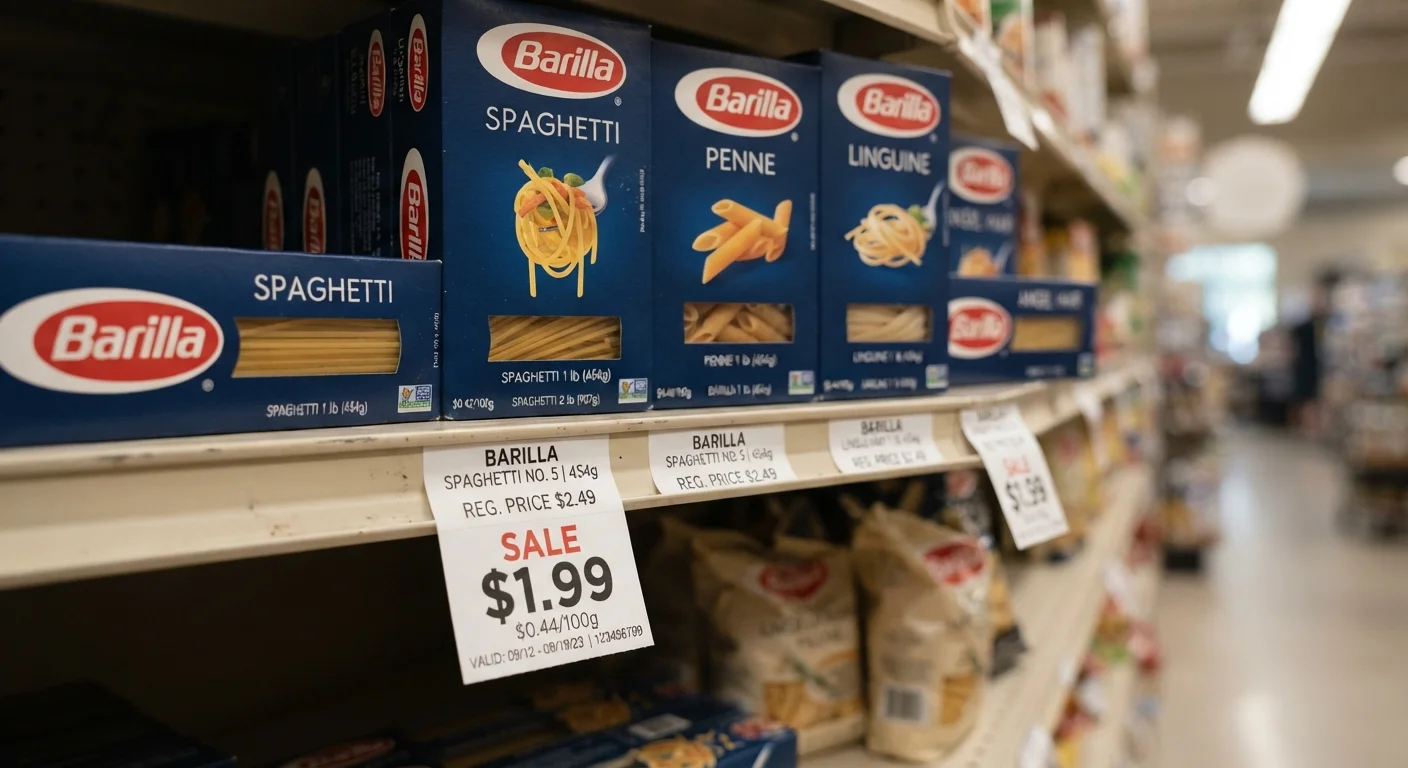


The 'Original Price' Problem
Walk through any department store and you'll see rows of price tags with a number crossed out in red, replaced by a lower one. The implication is clear: this item was worth more, and now it's marked down just for you. But the crossed-out number — known in retail as a reference price or anchor price — doesn't always reflect what anyone ever paid for that item.
Anchor pricing works by giving shoppers a mental benchmark. Research in consumer psychology has consistently shown that people evaluate a price not in isolation, but relative to a reference point. When a jacket is labeled $200 marked down to $79, the $200 figure does psychological work even if the jacket was never consistently sold at that price. The "savings" feel concrete even when they aren't.
This isn't a fringe practice. Retailers have used inflated suggested retail prices and brief token sales to establish high anchors before running longer promotions. Some states have laws requiring that a reference price reflect genuine prior selling prices, but definitions, time windows, and enforcement vary significantly. As a shopper, you generally cannot tell from the tag alone whether the original price was real.
For a deeper look at how retail environments are designed to shape decisions, see our guide to common retail psychology tactics.
Common Misconceptions About Sale Pricing
Shoppers carry a lot of assumptions about what a sale means — and many of those assumptions are incomplete or simply wrong. Here are the most important ones to reconsider.
Myth
A higher percentage off always means a better deal.
Fact
The percentage only matters relative to a reliable starting price — a 60% discount on an inflated anchor can cost more than a 20% discount on a fair market price.
Percentage discounts are only informative when the reference price is credible. If a retailer sets a suggested retail price well above the going market rate, a steep percentage off that figure can still leave you paying more than you would elsewhere at full price. Comparing the final dollar amount against prices at competing stores — or against the item's tracked price history — gives you a more grounded measure of value than the discount percentage alone.
Myth
If something is on sale, now is the best time to buy it.
Fact
Many items go on sale repeatedly throughout the year, and some products are almost never sold at their stated 'regular' price.
Certain product categories — mattresses, furniture, and jewelry among them — are frequently cited by consumer advocates as having permanent or near-permanent promotional pricing. The "regular" price exists primarily to make the sale price look significant. If you see the same item on sale every time you walk into the store, the sale price is effectively the real price. For categories with genuine seasonal cycles, waiting for a predictable markdown window is often more rewarding than acting on a current promotion that may not be the lowest of the year.
Myth
Stacking a coupon on a sale price always multiplies your savings.
Fact
How a coupon is applied — whether to the sale price or the original price — determines its actual value, and some promotions explicitly exclude sale items.
Coupon mechanics vary by retailer and promotion. Some coupons apply a percentage to the item's current selling price; others apply to the "regular" price, which may be the inflated anchor. Many promotional coupons explicitly exclude items already marked as clearance or sale. Reading the coupon terms carefully — rather than assuming additive discounts — is essential before calculating your expected total. A coupon that sounds generous may deliver far less than expected depending on how the retailer applies it at checkout.
Myth
Online flash sales offer prices unavailable elsewhere.
Fact
Flash sale prices are sometimes matched or beaten by standard retail pricing at other outlets, or by the same retailer at other times of year.
Flash sales create urgency by design — limited time and limited stock are the stated conditions, and both trigger psychological pressure to act quickly. But a number of investigative consumer reports have found that flash sale prices on major platforms frequently match prices available at mainstream retailers without the countdown clock. Checking a price comparison tool before committing to a flash purchase takes less than a minute and can confirm whether the urgency is warranted or manufactured. Understanding scarcity cues and urgency tactics can help you recognize when time pressure is a selling tool rather than a genuine constraint.
Myth
Clearance items are always deeply discounted from a fair original price.
Fact
Clearance tags reflect inventory management decisions, not necessarily dramatic reductions from a historically accurate price.
Clearance pricing means a retailer wants to move remaining stock, which can produce real bargains — but not automatically. If the item entered inventory at an inflated original price, a clearance markdown may still leave the final price above comparable alternatives. Clearance is most reliably valuable when you know the product category well enough to judge whether the final price is genuinely low, or when you've tracked the item's price over time. Otherwise, the "clearance" label signals a retailer's need to clear space rather than a guarantee of exceptional value for you.
~40%
Apparel sold at full price in the U.S.
Industry estimates have long suggested that a substantial majority of clothing in the U.S. is sold on promotion, meaning the 'regular' price is rarely what shoppers actually pay.
3–4x
Typical anchor-to-sale price ratio in furniture retail
Consumer advocacy research has noted that some furniture categories routinely carry suggested retail prices several times higher than actual transaction prices, making percentage discounts appear dramatic.
How to Actually Verify a Deal
Once you understand how reference pricing works, a few practical habits can help you cut through the noise.
- Track prices over time. Many browser extensions and third-party tools log price histories for online retailers, showing you whether a "sale" price is genuinely lower or just the item's standard going rate with a crossed-out number added. Checking a price history graph before buying is one of the most reliable sanity checks available.
- Calculate the unit price. A "buy two, get one 50% off" promotion sounds appealing, but whether it's actually a good deal depends on the per-unit cost. Unit price math is the clearest way to compare promotional bundles against standard purchases or competing products.
- Know seasonal patterns. Genuine markdowns often follow predictable retail calendars — appliances after holidays, winter apparel in January, outdoor furniture in late summer. Seasonal shopping patterns can help you identify when a category discount is likely to be real and when it's routine promotion.
- Read the fine print on stacked promotions. Coupons, loyalty points, and clearance tags interact in ways that aren't always obvious. Before assuming you're getting every discount simultaneously, check whether promotions can be combined and whether the base price used to calculate your coupon is already inflated.
Final Sale and Non-Returnable Items
Heavily discounted items — especially those marked 'final sale' or 'clearance' — often come with strict no-return policies. If the product turns out to be the wrong size, damaged, or not as described, your options may be limited. Reading the return policy before purchasing is especially important when a low price makes an item feel low-risk.
For context on how loyalty-program discounts interact with sale pricing, understanding how points and tiers work is worth reviewing before your next rewards redemption.