
Why Seasonal Patterns Matter for Everyday Shoppers
Most consumer goods follow annual inventory rhythms that retailers plan months in advance. These cycles are driven by manufacturer model-year releases, warehouse turnover needs, and predictable surges in demand — not arbitrary generosity. Understanding how these patterns work doesn't guarantee you'll pay less, but it does put the logic of retail timing on your side rather than working against you.
As our look at how retail sale math works explains, promotional pricing is often more structured than it appears. Knowing the seasonal context behind markdowns helps you read those signals more clearly.
The categories below each follow their own rhythms. Some shift by model year, others by weather-driven demand, and a few by the retail calendar's hard resets at season's end.
Major Home Appliances
Large appliances — refrigerators, dishwashers, ranges, and washing machines — tend to follow a model-year cycle where manufacturers release updated versions in the spring. As new inventory arrives, retailers need to clear out prior-year models, which often means genuine reductions on perfectly functional units. Late winter (roughly January through March) is historically when that clearance pressure is highest.
Holiday weekends like Labor Day and Memorial Day are also conventional windows for appliance promotions, though it's worth keeping in mind that promotional framing doesn't always reflect the deepest actual price movement in the year.
New appliance models typically arrive in spring, making late winter a natural window for prior-year inventory.
Outdoor and Lawn Equipment
Lawnmowers, pressure washers, patio furniture, and garden tools follow a straightforward seasonal demand curve: prices trend highest when spring arrives and consumers need them immediately, and lowest in late summer and fall when retailers are clearing floor space for holiday merchandise.
If you can plan ahead and have storage space, purchasing a lawnmower or patio set in September or October rather than April or May typically means buying at the tail end of the demand cycle. The seasonal yard care reference can help you anticipate what equipment you'll actually need across the year.
Outdoor equipment priced highest in spring typically sees its steepest markdowns by late summer.
Apparel and Footwear
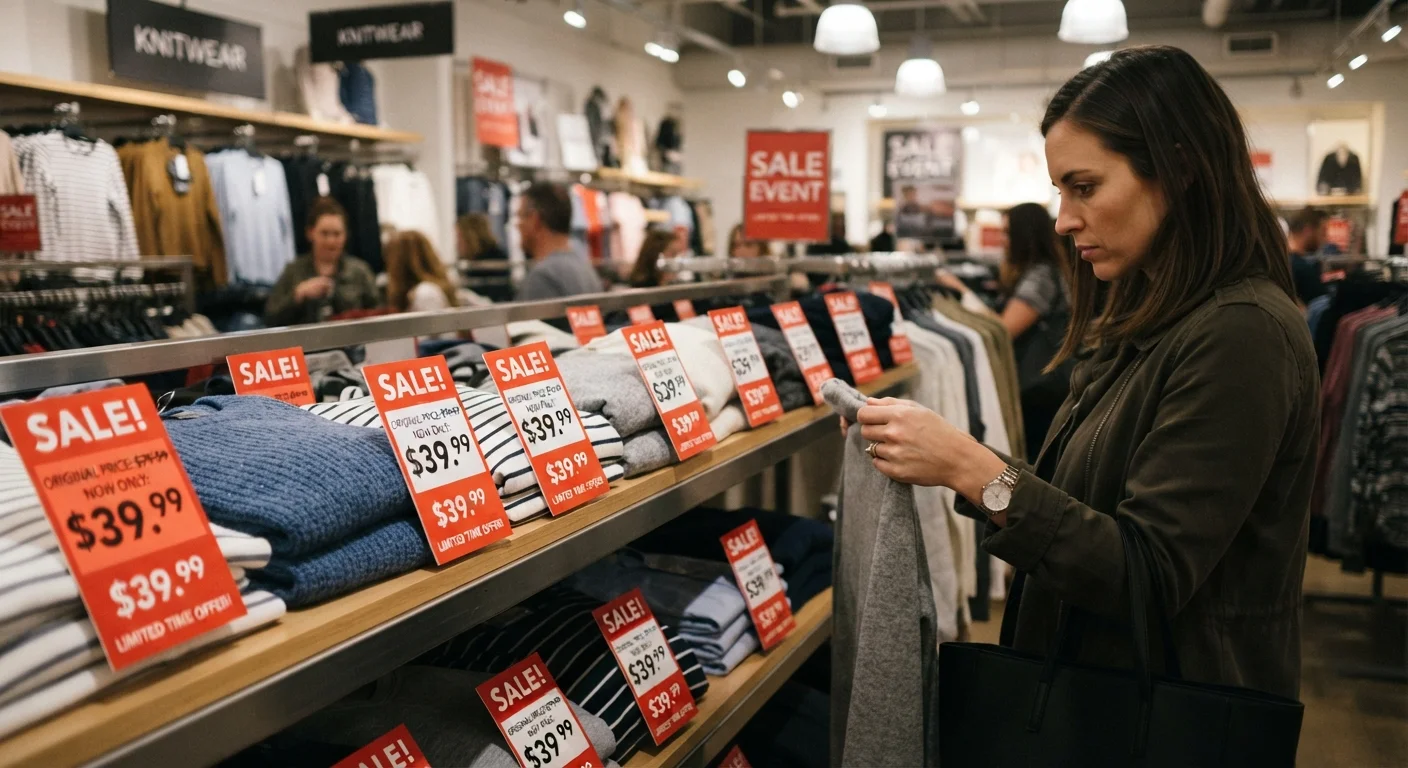
The retail apparel calendar runs on two main clearance windows: end-of-winter (late January through February) and end-of-summer (August through September). These are the moments when retailers reset floor space for the incoming season, and remaining inventory from the prior season is marked down to move.
The trade-off is selection — by the time clearance pricing kicks in, popular sizes and styles may already be picked over. The seasonal pattern is most useful for basics and wardrobe staples where fit matters more than specific style, rather than for trend-driven pieces with limited runs.
End-of-season clearance windows in late January and late August offer genuine apparel markdowns as retailers reset.
Fitness Equipment
Consumer demand for home fitness equipment spikes sharply in January, driven by New Year's resolutions. Retailers and manufacturers anticipate this surge, which means January is typically not the most favorable time to buy — inventory moves fast and prices reflect peak demand.
Late spring (April through June) tends to be a quieter window for fitness equipment, as the resolution cycle has faded and retailers haven't yet hit holiday promotional mode. For anyone planning a home gym setup, building the purchase into late spring rather than early January often means better availability and less demand-driven pricing pressure.
January demand spikes for fitness gear typically ease by late spring, when conditions are more favorable for buyers.
Consumer Electronics
Consumer electronics — televisions, laptops, tablets, and audio equipment — follow a pattern shaped by both model-year releases and two concentrated retail windows: the period around Black Friday and Cyber Monday in late November, and back-to-school season in July and August.
New television models from major manufacturers typically debut at the Consumer Electronics Show in January, which means prior-year models often see price movement in the months that follow. For laptops, the back-to-school window in late summer is one of the more active periods for promotional pricing on standard configurations. Understanding this cycle is separate from evaluating whether a specific deal is genuinely favorable — for that, see our guide to how retail sale pricing actually works.
Prior-year electronics models often see price movement in late winter as new models introduced in January reach shelves.
Vehicles and Auto-Related Gear
New vehicle model years typically begin arriving at dealerships in late summer and early fall, which has historically created some negotiating context around prior-model-year inventory. This is a well-established pattern in auto retail, though individual pricing depends on many factors beyond calendar timing.
For auto accessories and seasonal gear — winter tires, roof racks, cargo carriers — the same end-of-season logic applies as with outdoor equipment. Winter tires purchased in spring rather than October carry less urgency pricing. If you're also planning seasonal vehicle maintenance, the seasonal car care checklist can help you identify what you'll need before demand peaks.
Auto accessories follow end-of-season logic — winter gear bought in spring typically carries less urgency pricing.
Getting the Most From This Knowledge
Retail timing is one tool among several for shopping with more intention. It pairs well with understanding common retail tactics designed to influence decisions, and it's worth combining with a look at secondhand channels for categories where off-season timing still leaves prices higher than you'd like.
Build a simple purchase calendar
For any non-urgent purchase over a certain dollar threshold you set for yourself, try noting it down with the category and the month you plan to buy. Checking that list against seasonal patterns a few times a year is a low-effort way to avoid buying at peak demand timing. It also helps reduce impulse spending driven by in-store urgency cues.
One practical habit: before making a significant purchase, take a moment to ask where that product category sits in its annual cycle. Is demand at a seasonal peak? Are new models due soon? Those two questions alone can sharpen your timing without requiring deep research. For home-related purchases, the seasonal home maintenance calendar can help you anticipate what you'll need before the demand spike hits.
Seasonal shopping knowledge is most useful when it's matched to your actual needs. Buying a lawnmower in October makes sense if you'll store it properly — but not if your yard needs it now. Timing is a factor, not the only factor.
Seasonal timing has real limits
Seasonal patterns describe general tendencies in retail inventory and demand cycles — they're not guarantees of lower prices or better availability in any given year. Supply chain conditions, inflationary pressures, and individual retailer strategies can all disrupt typical cycles. Use timing as one input among several, and always evaluate specific purchases on their own merits rather than assuming a calendar window alone justifies a purchase.