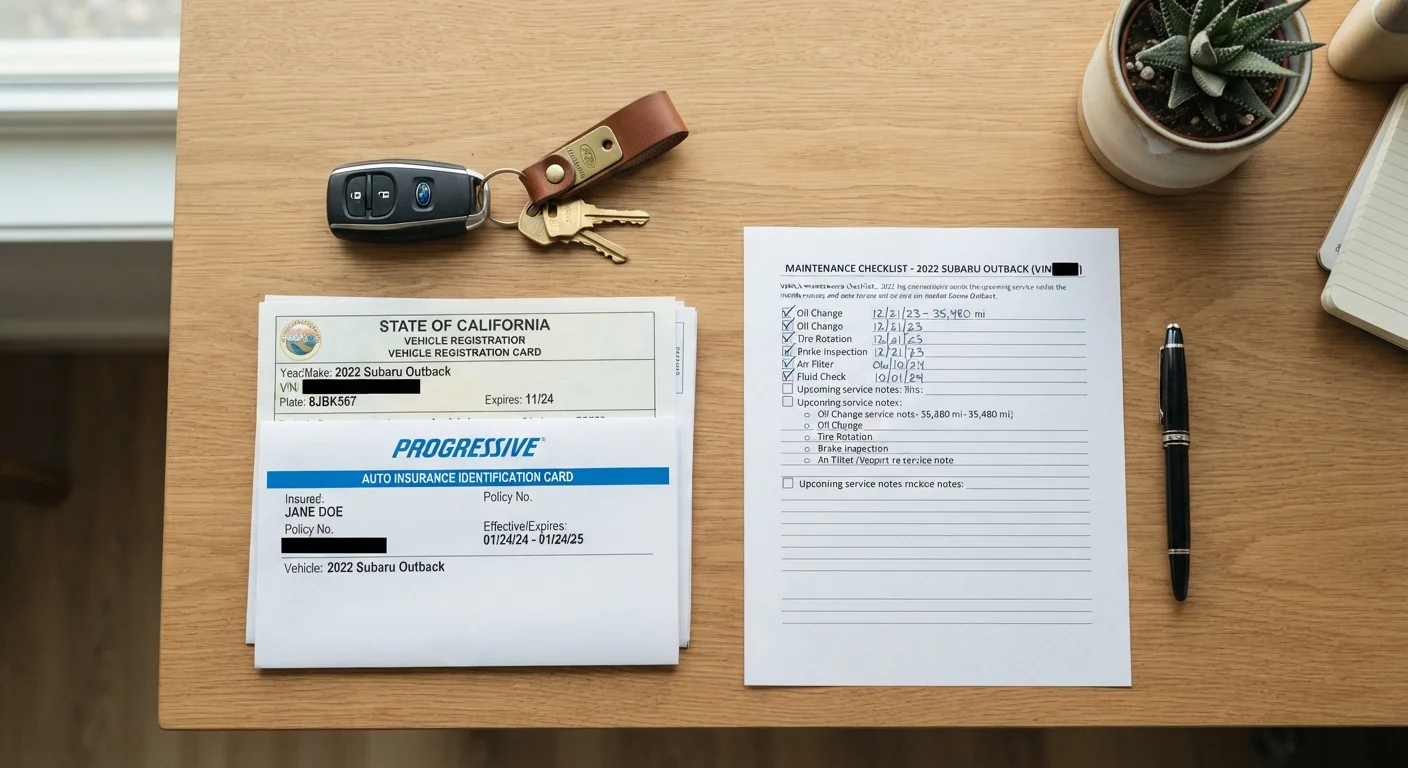


Why Car Insurance Exists — and Why It's Required
Car insurance is a financial safety net — a contract between you and an insurance company in which you pay regular premiums and the insurer agrees to cover certain costs if something goes wrong. Those costs can include damage to vehicles, medical bills, legal fees, and compensation to others you injure in an accident.
Nearly every U.S. state mandates at least a minimum level of coverage because a single serious crash can generate costs that most individuals cannot absorb on their own. Without insurance, an at-fault driver could face lawsuits and financial ruin. Insurance spreads that risk across a pool of policyholders, making the system manageable for everyone.
Understanding what your policy actually does — and does not — cover is essential before you need to use it. For a broader look at the recurring responsibilities of owning a vehicle, see the annual car ownership checklist.
The Core Coverage Types Explained
Most auto insurance policies are built from several distinct coverage types. Each addresses a different kind of risk.
Premium
The amount you pay — typically monthly or semi-annually — to keep your insurance policy active.
Deductible
The out-of-pocket amount you pay toward a covered claim before your insurer pays the remaining costs.
Coverage limit
The maximum dollar amount your insurer will pay for a covered loss; you are responsible for any costs above this amount.
At-fault accident
A crash in which you are determined to be responsible for causing the damage or injuries — relevant to which coverages apply.
No-fault state
A state where your own insurance pays your medical costs after an accident regardless of who caused it, up to your policy's limits.
Declarations page
The summary page of your insurance policy that lists your coverage types, limits, deductibles, and premium amounts at a glance.
Liability Coverage
Liability is the foundation of nearly every auto policy and the coverage required by law in most states. It has two components: bodily injury liability, which pays for injuries you cause to others, and property damage liability, which pays for damage you cause to other people's vehicles or property. Critically, liability coverage does not pay for your own injuries or your own vehicle's damage.
Collision Coverage
Collision coverage pays to repair or replace your vehicle after it is damaged in a crash — whether with another car, a pothole, or a guardrail. It applies regardless of who caused the accident. If you finance or lease your vehicle, your lender will typically require this coverage.
Comprehensive Coverage
Comprehensive coverage handles damage that isn't the result of a collision. This includes theft, vandalism, fire, flooding, hail, and animal strikes. Like collision, it is optional under state law but often required by lenders. Together, collision and comprehensive are sometimes called full coverage, though that term has no universal legal definition.
Optional Coverages Worth Knowing
Beyond the core types, insurers offer additional coverages that address specific gaps. These are generally not required by state law but can be valuable depending on your situation.
- Uninsured/Underinsured Motorist (UM/UIM): Covers your injuries and, in some states, vehicle damage when the at-fault driver has no insurance or not enough to pay your costs. Some states require it; others make it optional.
- Medical Payments (MedPay) / Personal Injury Protection (PIP): Pays medical expenses for you and your passengers after an accident, regardless of fault. PIP, required in no-fault states, may also cover lost wages and related costs.
- Rental Reimbursement: Covers the cost of a rental car while your vehicle is being repaired after a covered claim.
- Roadside Assistance: Provides towing, battery jump-starts, and similar services when your vehicle breaks down.
Review Optional Coverages at Renewal
Your coverage needs change as your vehicle ages, your financial situation shifts, or your driving habits evolve. Use each policy renewal as an opportunity to reassess whether your optional coverages still make sense. A car that has depreciated significantly may warrant adjusting or dropping collision coverage.
Keep in mind that car insurance is distinct from other vehicle-related protections. For example, extended vehicle warranties cover mechanical breakdowns — a category insurance policies specifically exclude.
Deductibles and Limits: What They Mean for You
Two numbers define how much financial protection your policy actually provides: your deductible and your coverage limits.
A deductible is what you pay out of pocket before your insurer pays the rest of a covered claim. A $1,000 deductible on a $4,000 repair means you pay $1,000 and your insurer covers $3,000. Choosing a higher deductible typically lowers your premium but increases your financial exposure after a loss.
Coverage limits cap how much your insurer will pay per incident. Liability limits are usually expressed as three numbers — for example, 100/300/100 — meaning $100,000 per person for bodily injury, $300,000 per accident, and $100,000 for property damage. Once those limits are exhausted, you are personally responsible for any remaining costs.
State Minimums Often Leave Gaps
Carrying only the minimum liability coverage required by your state may leave you personally liable for costs that exceed those limits after a serious accident. Medical bills and vehicle replacement costs from a significant crash can quickly surpass minimum policy limits. Consider your personal financial exposure when choosing your limits.
To understand how these numbers appear in your actual policy documents, the guide to reading your auto insurance policy walks through declarations pages, exclusions, and limit structures in plain language.
How to Think About How Much Coverage You Need
State minimums set the legal floor — not the recommended level of protection. Minimum liability limits are often far lower than the actual cost of a serious accident, leaving you personally responsible for the difference. A general principle: carry liability limits that reflect what you could realistically lose in a lawsuit, including personal assets.
For collision and comprehensive, the value of your vehicle matters. On an older car worth $3,000, paying for comprehensive and collision coverage with a low deductible may cost more over time than the coverage would ever pay out. On a newer or financed vehicle, skipping these coverages usually isn't an option.
Several personal factors affect what coverage makes sense, and those same factors influence what you pay for it. To understand what drives your premium, see our breakdown of what goes into your car insurance rate.
Because insurance needs vary by state law, vehicle type, driving history, and financial situation, speaking with a licensed insurance professional is the most reliable way to evaluate your options and ensure you're adequately covered.
This article is for general informational purposes only and is not insurance or legal advice. Coverage requirements and options vary by state. Consult a licensed insurance professional to determine the appropriate coverage for your specific situation.