
Why an Annual Car Ownership Review Matters
Owning a car involves more than filling the gas tank and washing it on weekends. Every year, a set of legal, financial, and mechanical obligations comes due — and missing any of them can cost you far more than staying organized would have. As part of a broader look at the full lifecycle of vehicle ownership, this checklist zeroes in on the recurring annual tasks that keep your car road-legal, your finances in order, and your vehicle mechanically sound.
Use this checklist once a year — ideally around the same time each year, such as your registration renewal month — to work through every category in one focused session. Some items take minutes; others may prompt a service appointment or a call to your insurer. Either way, completing this review puts you firmly in control of your ownership costs and obligations.
Driving Uninsured or Unregistered Has Serious Consequences
Operating a vehicle with a lapsed insurance policy or expired registration is illegal in every U.S. state and can result in fines, license suspension, or vehicle impoundment. If you're in an accident while uninsured, you may be personally liable for all costs. Treat insurance and registration renewal as the highest-priority items on this checklist.
Tools and Records You'll Need
Before working through the checklist, gather the following. Having them on hand avoids delays and ensures you're reviewing accurate, current information.
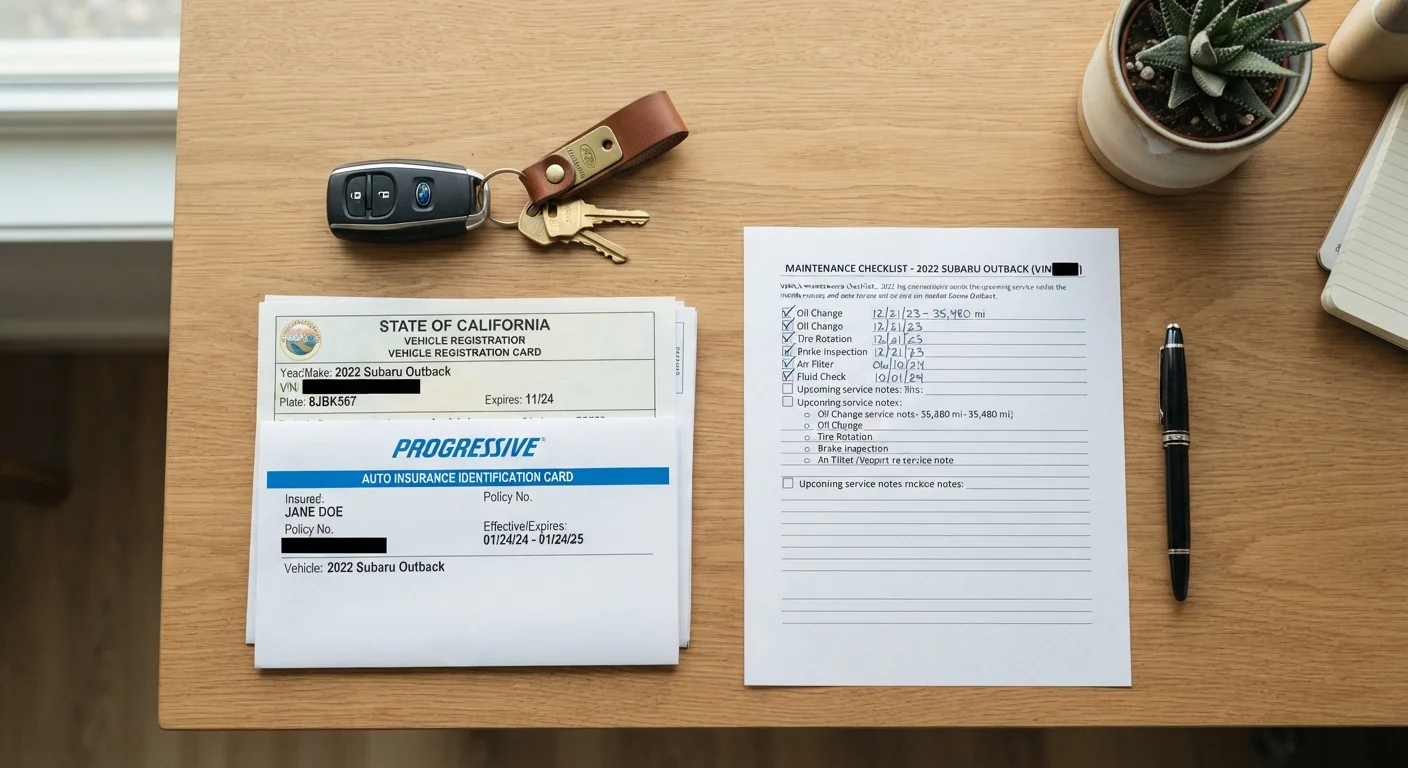
Current insurance policy and declarations page
Used to verify coverage limits, listed drivers, deductibles, and renewal dates.
Vehicle registration card and any inspection paperwork
Needed to confirm expiration dates and compliance with state requirements.
Owner's manual
Contains manufacturer-recommended maintenance intervals for your specific vehicle.
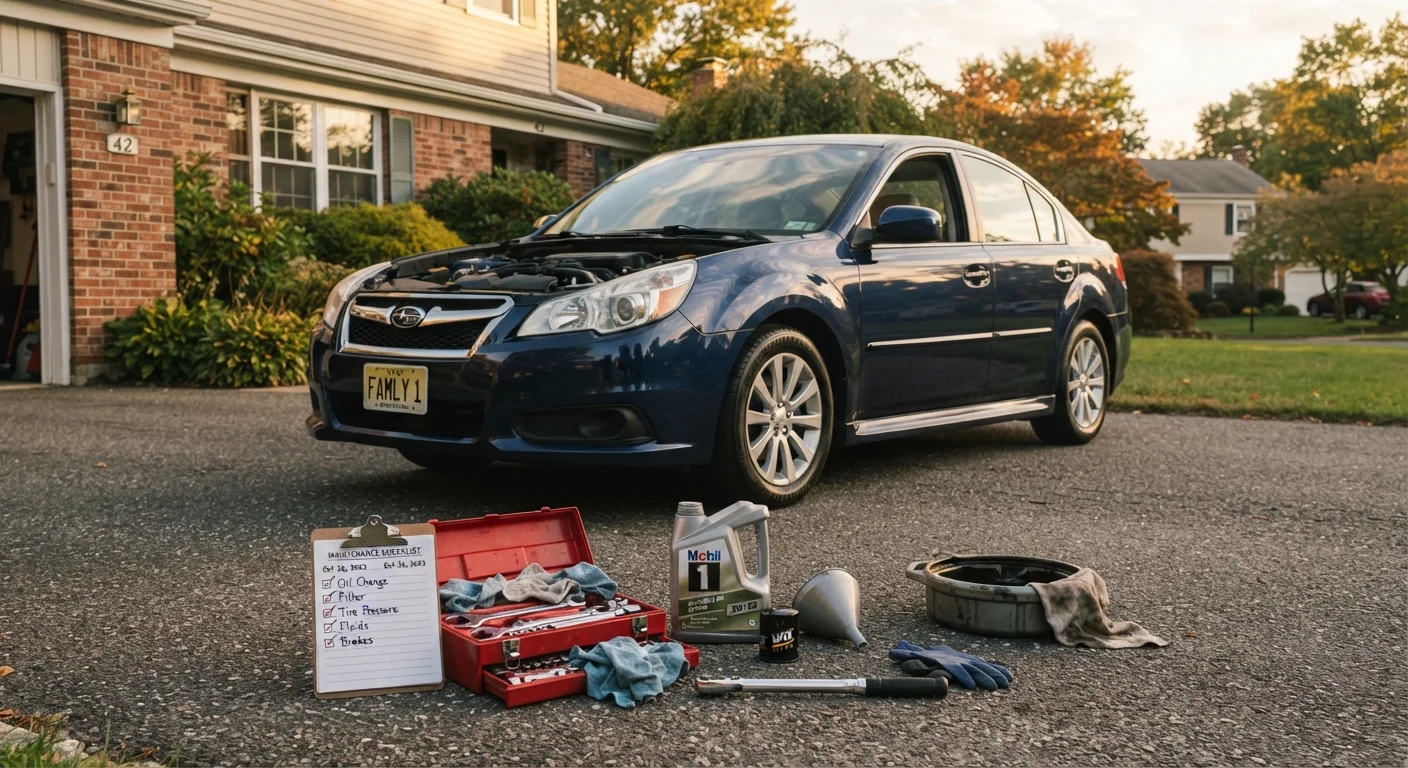
Car maintenance log or service records
Allows you to track what's been done and identify what's coming due.
Tire pressure gauge and tread-depth gauge
Used to check tire condition as part of the safety inspection portion of the checklist.
Flashlight
Helpful for inspecting under the hood, around tires, and checking lights in low-visibility conditions.
The Annual Checklist
Work through each group below, checking off items as you confirm or complete them. Items marked must are non-negotiable legal or safety requirements. Should items are strongly recommended for most drivers. Nice to have items are optional enhancements that pay off over time.
Insurance
Registration and Legal Compliance
Scheduled Maintenance
Safety and Emergency Preparedness
Financial and Records Review
For a deeper dive into what specific service milestones mean for your vehicle, see your car's maintenance schedule, explained. If your annual review falls near a season change, seasonal car care guidance is worth reviewing alongside this checklist.
Don't Skip State-Specific Requirements
Registration renewal rules, emissions testing requirements, and inspection schedules vary significantly by state. What's required in one state may not apply — or may differ — in another. Always verify your specific obligations with your state's DMV or motor vehicle authority rather than relying on general guidance alone.
Staying on Top of Costs and Records
The financial side of car ownership extends well beyond the sticker price. Insurance premiums, registration fees, scheduled maintenance, and unexpected repairs all add up — and they're easier to manage when you plan for them. For a clear picture of what vehicle ownership actually costs each year, review the true cost of owning a car beyond the sticker price.
One of the highest-value habits any car owner can build is maintaining a simple service log. A complete record of oil changes, tire rotations, repairs, and inspections protects your warranty, strengthens your case at resale, and keeps renewal dates from sneaking up on you. Learn how to start and maintain a car maintenance log if you haven't already. Finally, before any long trip that follows your annual review, run through a pre-trip vehicle safety check to confirm nothing was missed.