
How Wine Lists Are Organized
Wine lists aren't designed to confuse you — they just feel that way at first glance. Most follow one of a few logical structures once you know what to look for.
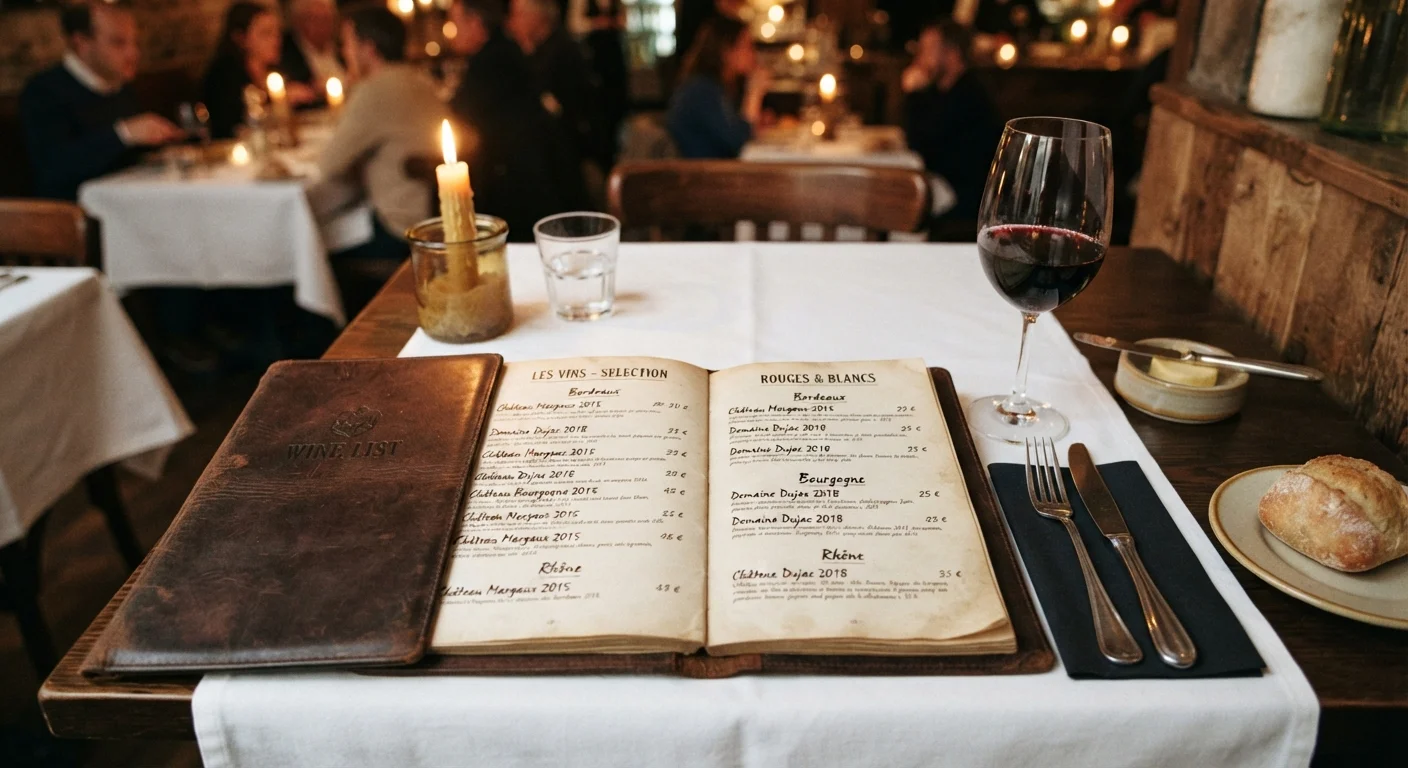
Many lists are organized by region: French wines grouped together, Italian wines in their own section, American wines elsewhere. Within each region, you'll often see further breakdowns by sub-region or wine style. Other lists organize by grape variety (also called a varietal), so all the Chardonnays are in one place regardless of where they come from.
Simpler or more casual restaurants often skip geography entirely and organize by style — light whites, full-bodied reds, sparkling — which is actually the most beginner-friendly format of all.
Once you spot the organizing logic, flip to the section that matches what you already enjoy. If you liked a Sauvignon Blanc before, head to the whites section and look for that name. That's a perfectly reasonable strategy, and it works.
For more help reading dense, unfamiliar formats, our guide on decoding restaurant menu language covers related terminology you'll encounter at the table.
Decoding the Key Terms
Wine lists use a handful of recurring terms that look technical but aren't hard to understand once you've seen them defined.
Appellation
The officially defined geographic area where the grapes were grown. Think of it as a wine's hometown — it tells you where the grapes came from.
Vintage
The year the grapes were harvested. Weather in that year can influence the wine's character, though for most everyday restaurant wines it's a minor factor.
Varietal
A wine named after the primary grape used to make it, such as Merlot or Riesling. When you see a grape name on the label, it's a varietal wine.
Sommelier
A trained wine professional who works in a restaurant. Their job includes recommending wines and helping guests navigate the wine list — questions are welcome.
Tannins
Natural compounds found in grape skins that create a drying, slightly grippy sensation in the mouth. Red wines tend to have more tannins than whites.
Dry
A wine described as dry has very little residual sugar — it doesn't taste sweet. Most table wines served in restaurants are dry.
Beyond vocabulary, pay attention to the producer name — this is the winery or estate that made the wine — and the vintage year. For most restaurant dining, a wine from any recent vintage in good condition is perfectly fine. Obsessing over years is really only relevant for aged, collectible bottles.
If a wine is labeled with only a region name (like "Burgundy" or "Rioja") rather than a grape variety, that's common in European wines. French wines especially tend to name the region rather than the grape. A quick scan of the list's descriptions, or a question to your server, can clarify what grape is actually in the bottle.
Choosing a Bottle vs. a Glass
Most wine lists offer both by-the-glass and by-the-bottle options, and choosing between them is mostly a practical decision.
By the glass works well when people at the table have different preferences, when you want to try something new without a full commitment, or when you're only having one drink. The tradeoff is that per-ounce, it's usually more expensive than splitting a bottle.
A bottle makes more sense if two or more people share the same taste and plan to have more than one glass each. A standard bottle holds about five 5-ounce pours, so the math often works in your favor for a group.
Try Before You Commit to a Bottle
If you're curious about a bottle but haven't tried that wine before, ask your server if it's available by the glass first. Ordering a taste before upgrading to a bottle is a smart way to avoid buyer's remorse — and most restaurants are happy to accommodate the request.
Some restaurants also offer a half bottle (sometimes listed as a 375ml), which is a nice middle ground — more than one glass, less than a full commitment. Not every list includes them, but they're worth looking for.
Asking for Help Without Embarrassment
This is worth saying directly: asking for help with a wine list is completely normal, and good servers and sommeliers genuinely enjoy the question. You don't need to know wine — you just need to know what you like.
A useful formula: tell them one or two things about your preferences. "I usually like something dry and not too heavy" or "I tend to prefer fruity reds" gives them enough to work with. If you have a budget in mind, it's fine to point to a price on the list and say you're looking for something in that range — they'll understand without any awkwardness.
Don't Default to Price as a Proxy for Quality
It's tempting to pick the most expensive bottle as a safe bet, but price doesn't always signal the best match for your palate or your meal. A moderately priced wine that fits your taste preferences will almost always be more enjoyable than an expensive one you don't connect with. Describe what you like and let the staff guide you.
You can also ask what the restaurant pours well, or what pairs with a dish you're already planning to order. Sommeliers are trained to guide exactly this kind of conversation, and a good one will make the process feel easy rather than intimidating.
Before your next dinner out, it helps to have the full experience set up smoothly — our guide on making a restaurant reservation work in your favor covers the practical side of getting your evening off to a good start.