
Why Reservations Go Wrong (and How to Prevent It)
A reservation is more than a name on a list — it's a brief contract between you and the restaurant. When things go sideways, it's usually because of a mismatch in information: the party size changed, an allergy wasn't communicated, or no one confirmed and the table was released. The good news is that most reservation problems are preventable with a little upfront effort.
Whether you're planning a casual birthday dinner or a more elaborate evening, the steps below walk you through what to do — and when — so the restaurant can do its best work before you even sit down. For larger celebrations, our guide on planning a special occasion dinner covers additional details worth sorting out in advance.
What you will need
Step-by-Step: Booking and Managing Your Reservation
Follow these steps from the initial booking through arrival to give yourself the best possible shot at a smooth, enjoyable evening.
Restaurant website or booking platform
Used to check availability and submit a reservation request online.
Phone
Calling directly is often the most reliable way to book at smaller or high-demand restaurants.
Confirmation email or booking reference
Keep this handy to verify your reservation details when you arrive.
Choose your timing wisely
For busy spots — think weekend dinners, holiday windows, or any place that regularly has a wait — aim to book at least one to two weeks out. Fine-dining rooms and tasting-menu restaurants may fill up a month or more in advance. If you're flexible on time, consider an early seating (before 6:30 p.m.) or a late one (after 8:30 p.m.), which tend to have more availability than the prime 7–8 p.m. window.
Decide whether to call or book online
Many restaurants now use online platforms that show real-time availability. These are convenient and create an automatic confirmation trail. That said, calling directly is worth the extra minute for complex requests — large parties, accessibility needs, or special occasions. A brief conversation with a host ensures nothing gets lost in a form field.
Share the details that matter
When booking, give the host your accurate party size, any food allergies or dietary restrictions, and whether you're celebrating a special occasion. Restaurants can often arrange small touches — a dessert card, a preferred corner table — but only if they know ahead of time. For serious food allergies, our guide on dining out with food allergies walks through how to have that conversation effectively.
Confirm your reservation the day before
A quick call or a reply to a confirmation email 24 hours ahead is good practice, especially at smaller restaurants that may not send automated reminders. It also gives you a chance to add or update any details — a guest dropped out, or you realized the table is near a noisy bar area you'd prefer to avoid. Most hosts appreciate the heads-up and will do their best to accommodate reasonable requests.
Arrive on time — or communicate if you can't
Most restaurants hold tables for 10 to 15 minutes past the reservation time. If you're running late, call the restaurant directly rather than assuming they'll wait. A brief heads-up preserves goodwill and your table. If your party is arriving in stages, let the host know so they can seat who's there and not flag the table as a no-show.
Confirm details at the table
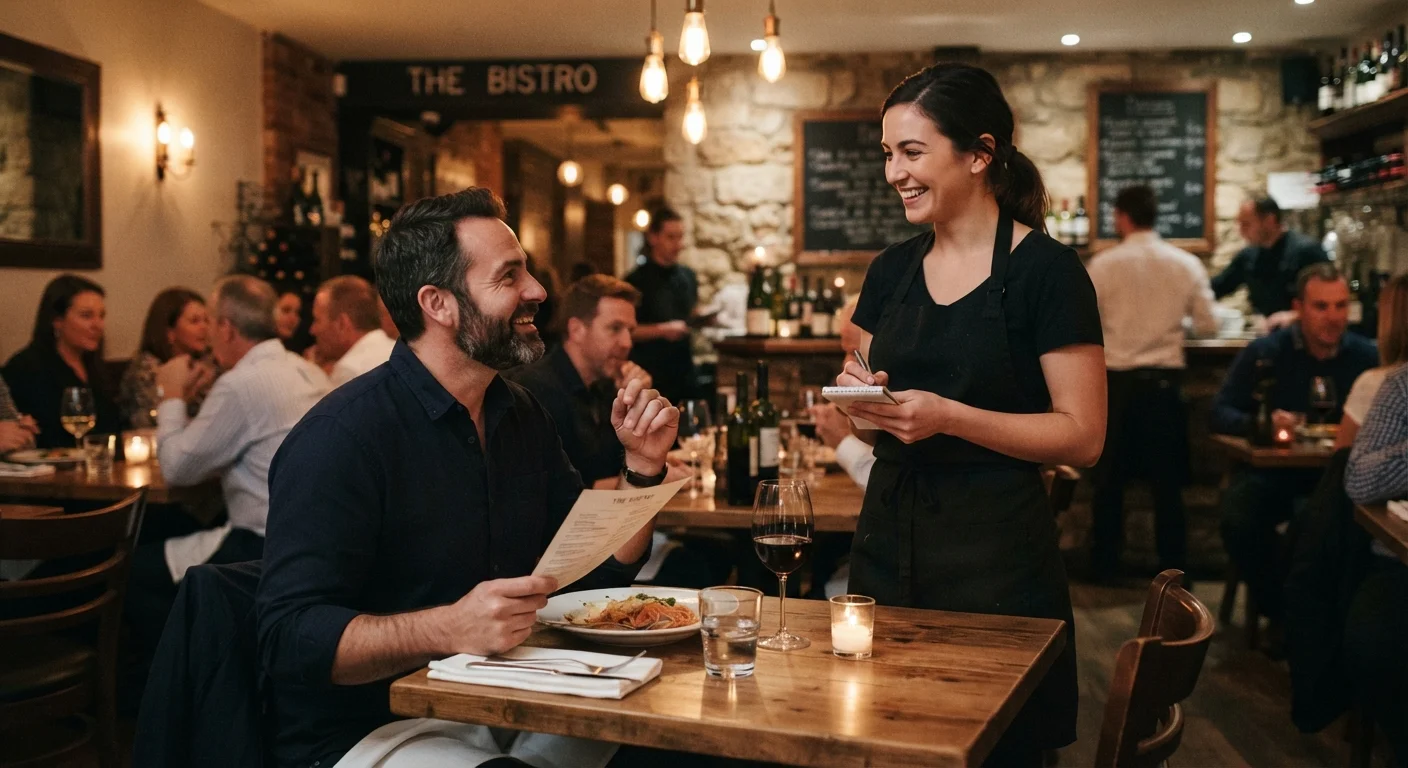
Once seated, briefly confirm with your server that any notes on your reservation — allergies, dietary restrictions, occasion details — have been passed along from the host. Kitchens are busy, and a quick verbal check costs nothing and prevents surprises mid-meal. This is especially important for anything allergy-related. See our full guide on planning a special occasion dinner for more high-stakes dinner tips.
Be Honest About Your Party Size
Booking for two when you're actually expecting five creates real problems for the kitchen and host stand. Always give your accurate headcount when reserving — it affects table assignment, pacing, and how much space the restaurant allocates. If your party grows after booking, call as soon as you know.
Avoid Over-Requesting at Booking
It's fine to mention a preference for a quieter table or a window seat, but stacking multiple requests during the initial booking can put staff in an awkward position if the restaurant is fully committed. Save secondary preferences for a polite ask when you arrive — hosts will often do their best if space allows.
Credit Card Holds Are Binding
An increasing number of restaurants — particularly higher-end ones — require a credit card to secure a reservation and charge a fee for no-shows or late cancellations. Read the cancellation policy at booking and treat the reservation as a genuine commitment. If your plans change, canceling early is both considerate and financially sensible.
Once you're seated and your details are confirmed, you can focus on the fun part. If you want to feel more confident navigating the menu once you arrive, our guide to decoding restaurant menus breaks down common culinary terms in plain language. And if you're curious about how to conduct yourself once you're at the table, the unspoken rules of dining out is a useful companion read.