
Why Dining Etiquette Still Matters
Restaurants are social spaces with their own rhythms. Staff are moving fast, tables are turning, and dozens of experiences are unfolding at once. Most dining friction — awkward moments, slow service, an unexpectedly tense bill split — comes not from bad intentions but from a mismatch between what diners expect and how restaurants actually operate.
Learning a few widely observed norms smooths all of that out. You don't need to memorize a rulebook; these are mostly common sense once you understand why they exist. See the full picture of dining out in America for a broader look at customs and culture.
Arrive on time — or call ahead if you're running late.
Restaurants hold reserved tables for a limited window, often 10–15 minutes. A no-show or a late arrival without notice can cost the restaurant revenue and bump other waiting guests.
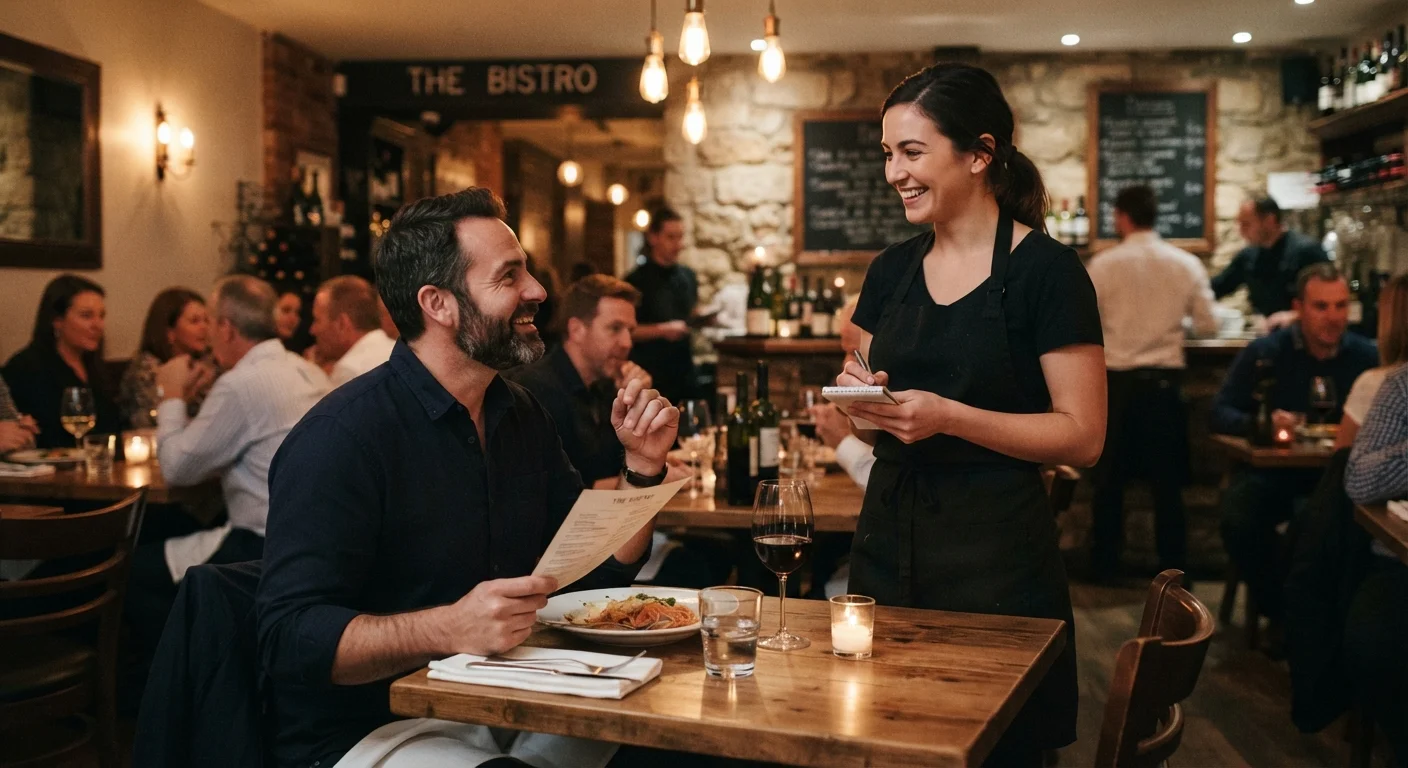
Be ready to order when your server comes to the table.
Servers are managing multiple tables simultaneously. Needing several return visits to take a single order slows the entire section and can delay food for other guests.
Stack plates and tidy up only if it genuinely helps — don't overdo it.
A small gesture like moving empty glasses to the edge can help your server clear efficiently. However, aggressively stacking plates can actually complicate a server's carrying system.
Make eye contact and use a polite signal to get your server's attention.
Snapping fingers or calling out loudly is widely considered rude in a restaurant setting and can put staff on the defensive. A calm eye-contact nod or a raised hand works in nearly every situation.
Keep phone use considerate of those around you.
Loud speakerphone calls or video content without headphones disrupts neighboring diners and is one of the most common complaints in restaurant settings.
At the Table: Habits That Help Everyone
Once you're seated, a handful of small behaviors shape the entire experience — for you, your server, and the people around you.
Signal Your Server the Right Way
If you need assistance, a calm raised hand or gentle eye contact is the most universally understood — and appreciated — way to flag your server. Avoid snapping, whistling, or calling out across the room. Servers are often managing several tables at once and will get to you as soon as they can.
One thing many diners overlook: if you have a food allergy or a serious dietary restriction, mention it when you're seated rather than waiting until you order. Kitchens need time to accommodate, and a heads-up helps. For a deeper dive, see how to communicate food allergies safely with restaurant staff.
Also worth knowing: decoding restaurant menu language before you arrive saves everyone time at the table.
60%
Diners who find split-check requests stressful
According to a survey by the National Restaurant Association, bill-splitting logistics rank among the top sources of end-of-meal friction for American diners.
18–20%
Standard tipping range for US table service
Industry guidance from hospitality organizations consistently cites this range as the baseline expectation for full-service restaurant tipping in the US.
The Bill, the Tip, and the Exit
Few things create more tension at the end of a meal than an unclear plan for the check. Agreeing on how to split before you sit down — or at least before the bill arrives — avoids the math-and-awkwardness spiral. If the group is splitting evenly, tell your server upfront; most are happy to split a check, though some busy spots have limits on how many ways they can divide it.
On tipping: in the US, gratuity is deeply embedded in how restaurant workers are compensated. A standard tip for table service is 18–20% of the pre-tax total, with many diners tipping higher for exceptional service. For the full context on why and how, tipping at restaurants explained covers everything from tip pools to service charges.
And when the meal is done, be mindful of how long you linger. There's no hard rule, but if the restaurant is full and people are waiting, wrapping up reasonably quickly is a courtesy that costs you nothing. Curious about what else shows up on your bill? here's why your restaurant bill is often higher than expected.