
Why Tipping Works the Way It Does in the US
American tipping culture didn't emerge from thin air — it's deeply tied to how restaurant workers are legally compensated. Federal law permits employers to pay tipped workers a lower base wage, creating a system in which tips aren't a bonus but a core part of take-home pay. That context matters when you're deciding what to leave at the end of a meal.
This is quite different from most other countries, where service is generally included in menu prices and tipping is modest or uncommon. If you've ever over-tipped abroad or felt confused about local customs, tipping norms abroad are worth understanding before your next international trip.
For everyday dining in the US, the short version is: at full-service restaurants, a tip is expected, and the standard is higher than many diners realize.
$2.13
Federal minimum cash wage for tipped workers
Under federal law, employers may pay tipped employees as little as $2.13/hour, with tips expected to cover the gap to standard minimum wage — though many states set higher floors.
~60%
Americans who always tip at sit-down restaurants
A Pew Research Center survey found roughly 6 in 10 Americans say they always tip when dining at sit-down restaurants, though tipping rates at other venues vary considerably.
18–20%
Standard US restaurant tip range
Industry etiquette guides and hospitality educators broadly cite 18%–20% as the current baseline expectation for satisfactory full-service restaurant dining.
The Numbers: What's Standard, What's Generous, What's Not
The generally accepted baseline for acceptable service at a sit-down restaurant is 18% to 20% of the bill. Tipping 25% signals genuine appreciation for excellent service. Going below 15% is typically read as a complaint, not a modest compliment — so if you're unhappy, a conversation with the manager is often more constructive than a very low tip.
A few quick math shortcuts:
- 20% tip: Move the decimal one place left (10% of the bill), then double it.
- 15% tip: Find 10%, then add half of that.
- 18% tip: Most payment terminals will calculate this for you automatically.
For more on reading your check clearly — including deciphering add-ons and charges — understanding restaurant menu language is a helpful companion read.
When the Terminal Does the Math
Most credit card terminals now display suggested tip amounts automatically — often 18%, 20%, and 25%. These are calculated on the post-tax total. If you prefer to tip on the pre-tax amount or enter a custom figure, look for a "custom" or "other" option on the screen. Either approach is perfectly normal.
Service Charges, Tip Pools, and Other Wrinkles
Modern restaurants have introduced a few practices that can confuse even regular diners.
Automatic Gratuity
Many restaurants add an automatic gratuity — usually 18%–20% — for larger parties. This shows as a separate line on your bill. Any additional tip prompt on a credit card terminal is above and beyond that amount, so double-check before adding more.
Service Charges
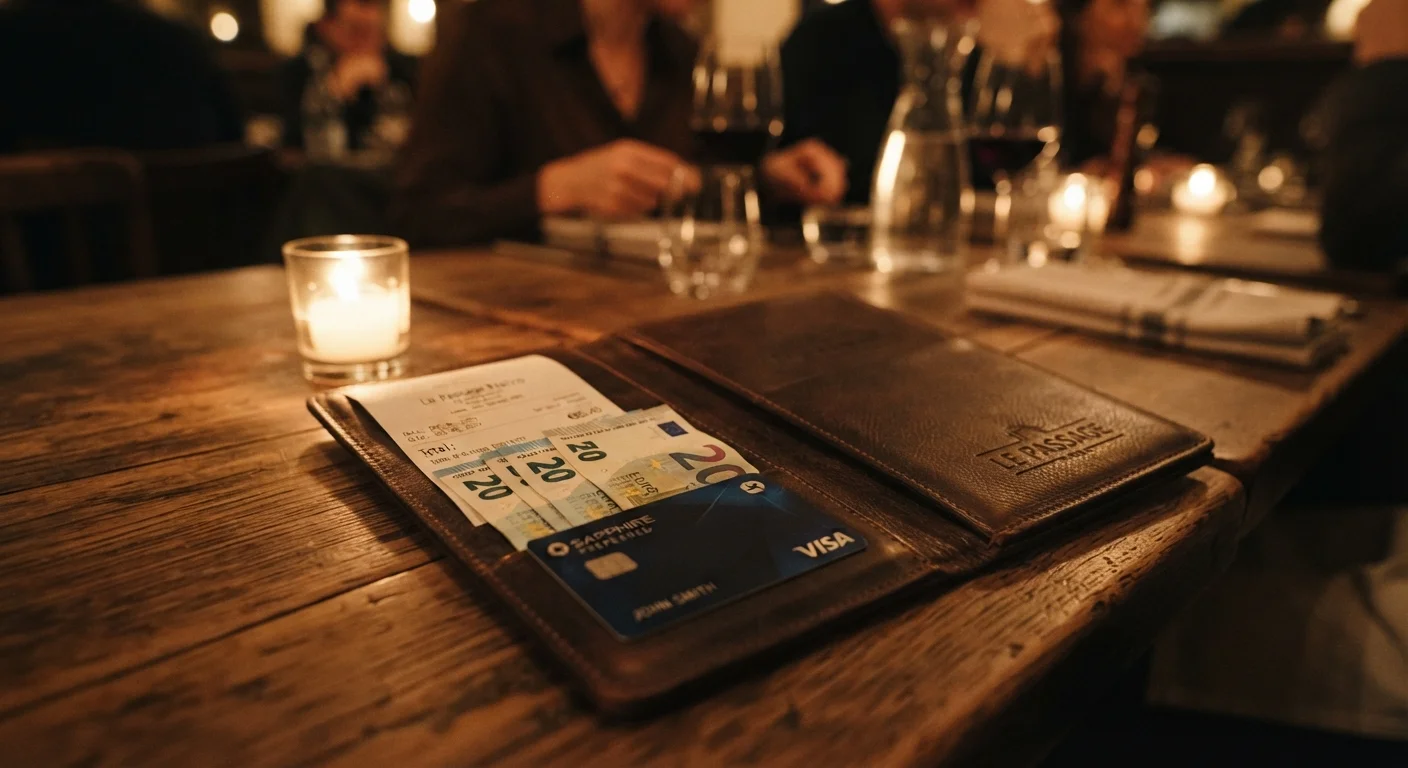
Some restaurants, particularly in cities, add a flat service charge (sometimes labeled a "hospitality fee" or "kitchen appreciation" fee). Critically, this money doesn't always go directly to your server — restaurants have legal flexibility in how they distribute it. If you want to make sure a server receives your gratuity directly, leaving cash is the most reliable method.
Tip Pools
In many restaurants, tips are pooled and shared among the team — servers, bussers, food runners, and sometimes bartenders. This is a common and legal practice. It doesn't mean your tip is wasted; it means the broader team that supported your meal benefits from it.
For a fuller picture of how dining customs fit together, the unspoken rules of dining out covers the wider etiquette landscape.
Counter Service, Casual Spots, and Tipping Fatigue
The proliferation of tip prompts on tablet payment systems at coffee shops, bakeries, and fast-casual spots has sparked genuine public debate. There's no strong social expectation to tip at counter-service establishments the way there is at full-service restaurants — but many workers in those settings also earn modest wages and genuinely benefit from gratuities.
A reasonable approach: tip at counter-service spots when staff go above and beyond, when you're a regular, or when the experience resembles full service. Skipping the tip at a self-serve kiosk carries no social stigma. The key is making a conscious choice rather than reflexively pressing "No Tip" or feeling pressured to tip regardless of context.
Dining solo brings its own tipping considerations — when one person occupies a table for an extended period, tipping on the higher end of the range is a widely observed courtesy.
This article is for general informational purposes only and does not constitute legal or financial advice. Tipping laws and wage regulations vary by state — consult official sources for specifics in your area.