
Why the Nutrition Facts Label Matters
The Nutrition Facts panel is a federally regulated tool — overseen by the U.S. Food and Drug Administration (FDA) — required on most packaged foods sold in the United States. Its purpose is to give consumers standardized, comparable information about what they're actually eating. A major update to the label format took effect between 2018 and 2020, adding the added sugars line and increasing the prominence of serving sizes and calories to better reflect how people actually eat today.
Used correctly, the label helps you compare similar products, monitor intake of specific nutrients, and make choices that align with your health goals — without requiring a degree in nutrition. The Nutrition Basics hub offers additional context for building a well-rounded understanding of everyday food choices.
Labels Are General Information, Not Personal Prescriptions
Nutrition Facts panels are based on a general 2,000-calorie daily diet. Your actual needs may differ depending on age, health status, activity level, and medical conditions. If you have a specific health concern — such as diabetes, kidney disease, or a cardiovascular condition — consult a registered dietitian or your healthcare provider before making significant dietary changes based on labels alone.
How to Read Each Section of the Label
The label is organized in a consistent order. Working through it top to bottom — rather than jumping to a single number — gives you a complete picture. The steps below walk through each section in sequence.
What you will need
Nutrition Facts Panel
The standardized label required by the FDA on most packaged foods in the US, containing all key nutrient data.
Ingredient List
Located below or beside the Nutrition Facts panel; lists all ingredients by weight in descending order.
Calculator or Smartphone
Useful for quickly multiplying per-serving values when a package contains multiple servings.
Start with serving size and servings per container
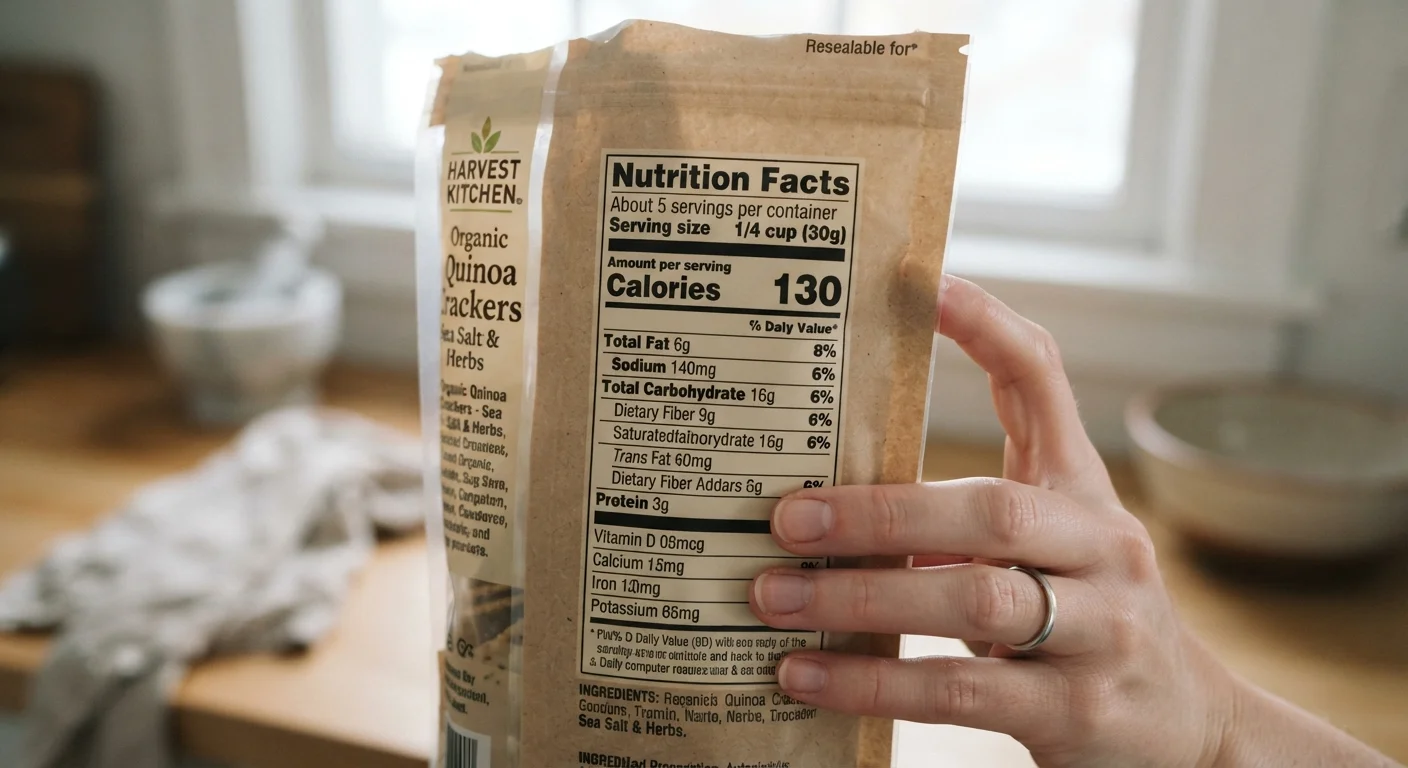
The serving size is listed at the very top of the panel, right below the bold "Nutrition Facts" header. It tells you the amount the rest of the label's numbers are based on — for example, "2/3 cup (55g)." Directly below it, you'll see how many servings are in the whole package.
This step matters because if a bag contains 3 servings and you eat the whole bag, you need to triple every number on the label to get your actual intake. Always establish this baseline before reading anything else.
Check the calorie count per serving
Calories appear in large, bold type just below the serving information. This number reflects total energy per serving from all macronutrients — fat, carbohydrate, and protein combined.
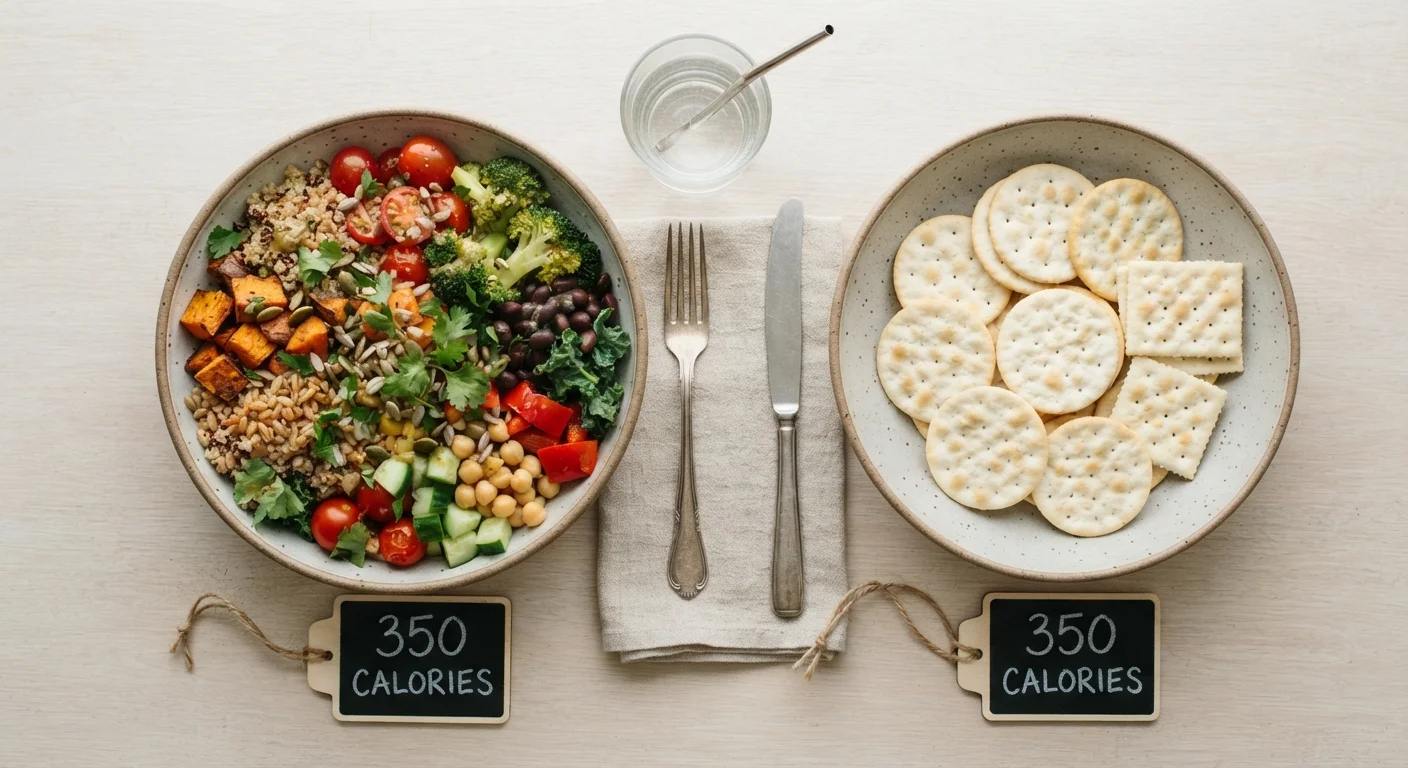
Calories are useful context, but they don't tell the full story of a food's quality. A small handful of nuts and a handful of candy may have similar calorie counts, but very different nutrient profiles. For a deeper look at this distinction, see why calorie counts tell only part of the story.
Review the nutrients to limit
The next section lists nutrients that many Americans consume in excess: total fat (broken down into saturated fat and trans fat), cholesterol, and sodium. Current dietary guidance generally supports limiting saturated fat, trans fat, and sodium to reduce risk of cardiovascular disease and high blood pressure.
Trans fat, in particular, should be as close to zero as possible — the FDA has largely phased artificial trans fats out of the food supply, but trace amounts can still appear in some products.
Look at total carbohydrates, fiber, and sugars
Total carbohydrates are broken into dietary fiber, total sugars, and — importantly — added sugars. These are three distinct figures worth reading separately.
- Dietary fiber supports digestive health; most Americans fall short of recommended amounts.
- Total sugars includes both naturally occurring sugars (from fruit or dairy) and added sugars.
- Added sugars are those incorporated during processing — syrups, cane sugar, honey, and similar ingredients. Current US dietary guidelines recommend keeping added sugars below 10% of daily calories.
To understand the difference between natural and added sugars in more depth, see sugar in your diet — natural, added, and everything in between.
Note the nutrients to get enough of
Below the sugars section, the label lists nutrients many Americans under-consume: vitamin D, calcium, iron, and potassium. These are required by the FDA because deficiencies in them are associated with health risks at a population level.
For a broader look at how vitamins and minerals function in the body, the micronutrients at a glance guide covers each essential nutrient in plain language.
Interpret the % Daily Value column
The right-hand column shows each nutrient's % Daily Value (%DV) — the share of a recommended daily amount that one serving provides, based on a 2,000-calorie diet. It applies to nearly every line on the label.
%DV is most useful for quick comparisons between products or for gauging whether a food is a meaningful source of a nutrient you need more (or less) of.
Scan the ingredient list
The ingredient list sits outside the Nutrition Facts panel but is equally informative. Ingredients are listed in descending order by weight, so the first three to five ingredients make up the bulk of what you're eating.
A short ingredient list isn't automatically better, and a long one isn't automatically worse — but looking for recognizable whole-food ingredients near the top, and noting where added sugars or refined grains appear, gives you useful context that the numbers alone don't provide.
Use the 5%/20% Rule for Quick Comparisons
A % Daily Value of 5% or less is generally considered low for a nutrient; 20% or more is considered high. Use this quick benchmark when comparing products or deciding whether a food is a good or poor source of a given nutrient. It works for both nutrients you want more of (fiber, calcium) and those you want less of (saturated fat, sodium).
Watch Out for Multiple Servings Per Container
A package that looks like a single portion often contains two or more servings. All nutrient values — calories, sodium, fat — apply per serving, not per container. Eating the whole package without checking multiplies every number accordingly. This is one of the most common ways people unintentionally underestimate their intake.
This article is for general informational purposes only and is not a substitute for personalized medical or nutritional advice. Consult a qualified healthcare provider or registered dietitian for guidance specific to your health needs.