
What Makes a Sugar 'Natural' vs. 'Added'?
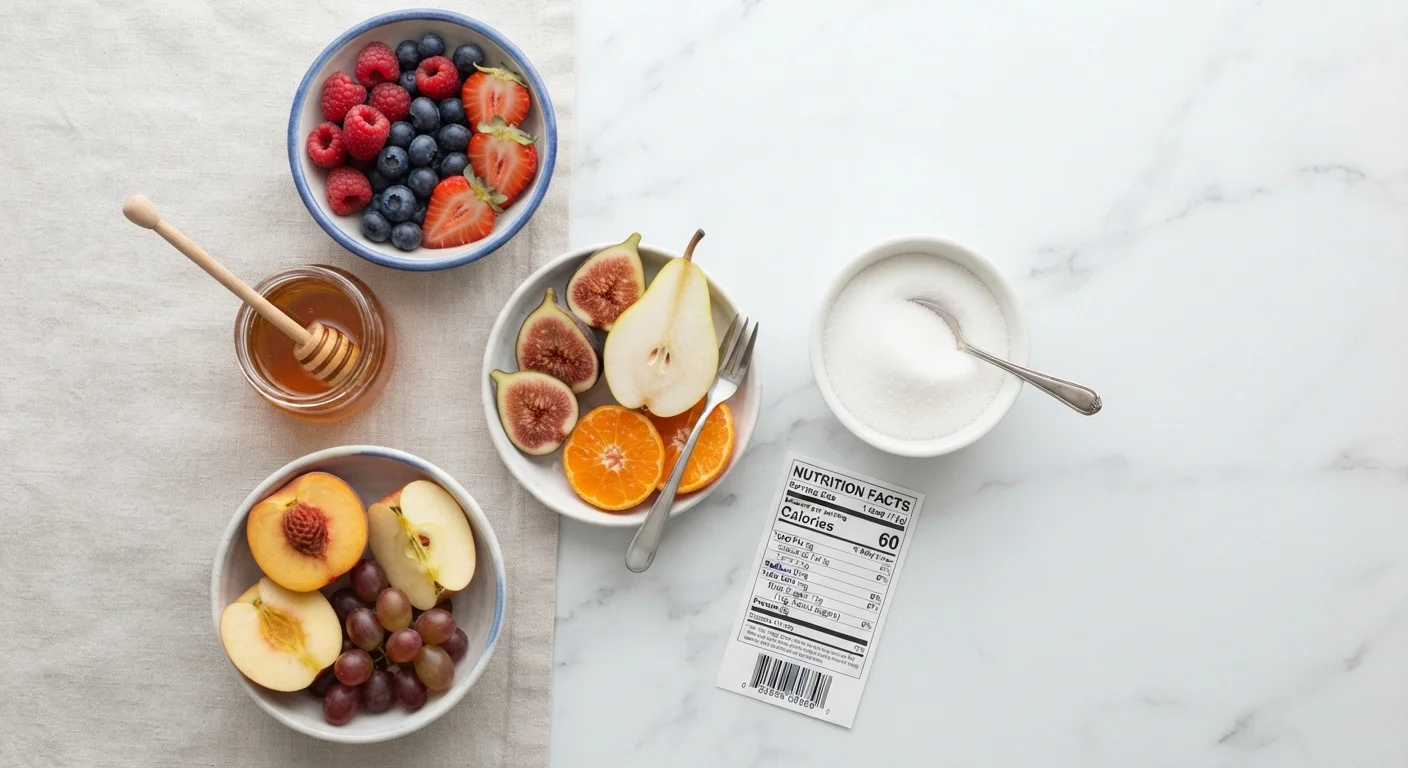
The core distinction is simple: natural sugars are found inherently in a whole food — the fructose in an apple, the lactose in milk — while added sugars are introduced during processing or preparation. Table sugar stirred into oatmeal, high-fructose corn syrup in a bottled sauce, and honey drizzled over yogurt are all added sugars, even if the source sounds wholesome.
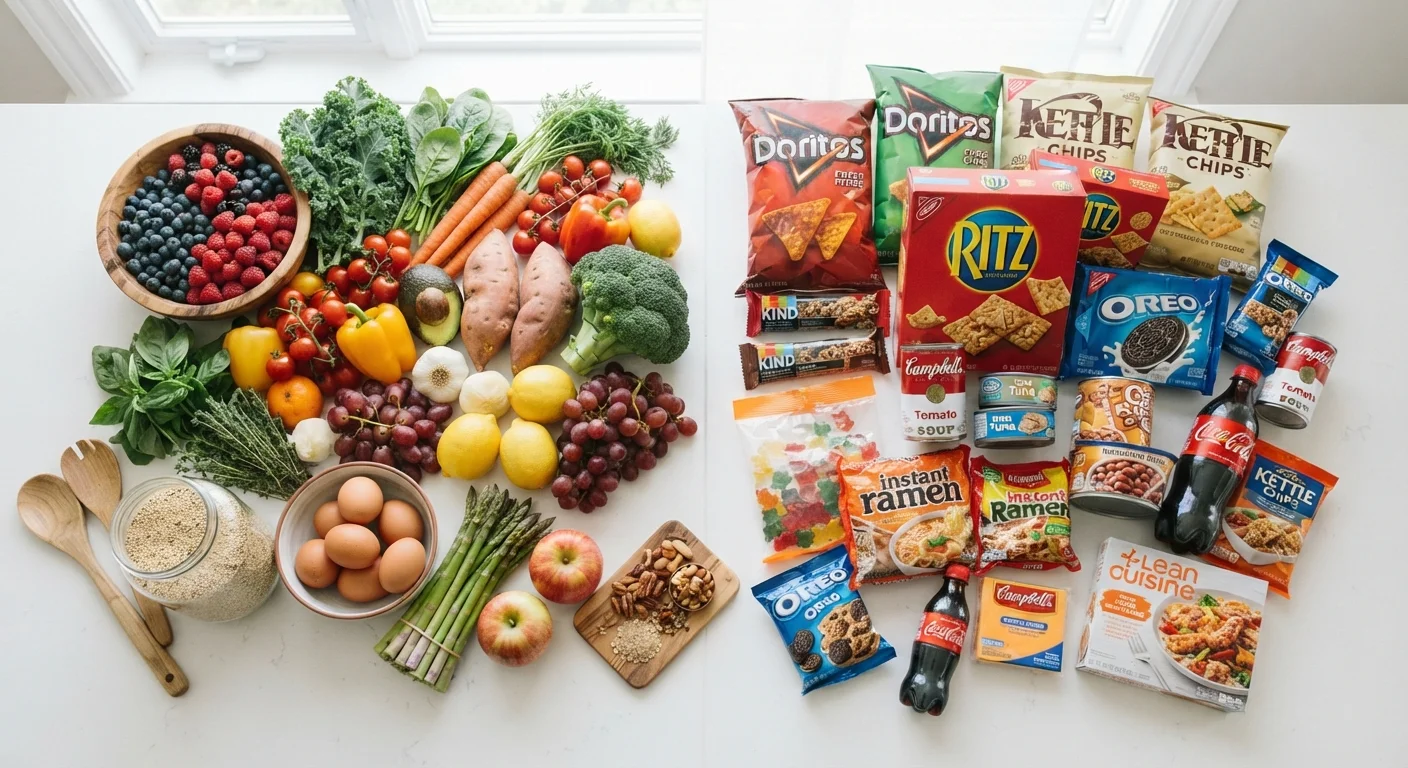
What sets natural sugars apart isn't the sugar molecule itself — fructose is fructose, chemically speaking — but what surrounds it. Whole fruit delivers fiber, water, vitamins, and antioxidants alongside its sugar. That package slows digestion and the rate at which sugar enters the bloodstream. A glass of apple juice, stripped of fiber, behaves quite differently in the body despite coming from the same fruit. For a broader look at how whole foods and processing change the nutritional picture, see our guide to whole vs. processed foods.
| Natural Sugars | Added Sugars | |
|---|---|---|
| Where they come from | Inherent in whole foods (fruit, dairy, vegetables) | Introduced during processing or cooking |
| Nutrient company | Fiber, vitamins, minerals, water | Calories with little to no additional nutrients |
| Effect on blood sugar | Slower absorption due to fiber matrix | Faster absorption, especially without fiber |
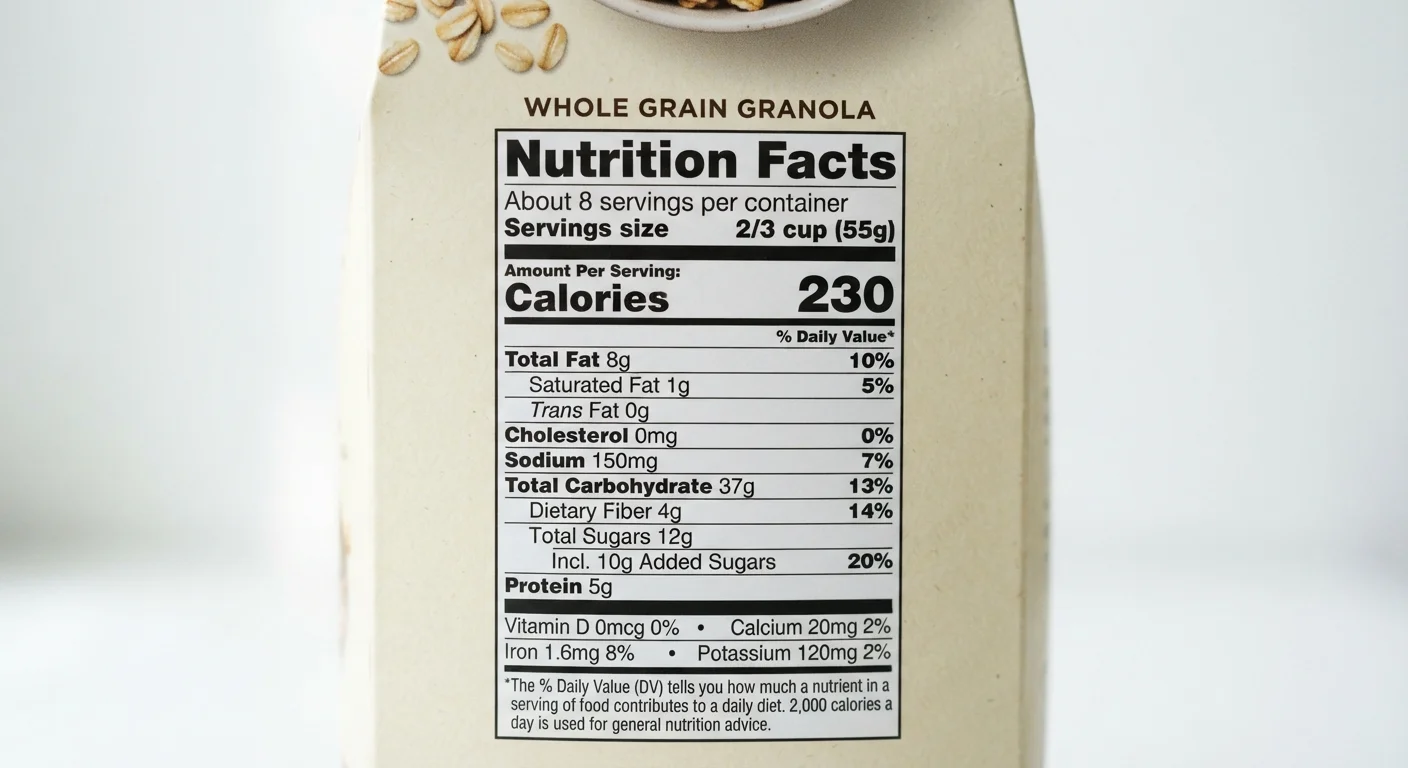
| On the nutrition label | Counted in Total Sugars only | Listed separately as Added Sugars with % DV |
| Dietary guideline target | No established limit for whole-food sources | Under 10% of total daily calories |
| Common examples | Fructose in apple, lactose in milk | Cane sugar, HFCS, honey added to product |
Spotting Added Sugars on the Label
Since 2020, the FDA has required that Nutrition Facts labels on most packaged foods break out Added Sugars as a distinct line under Total Sugars, complete with a % Daily Value. That single change made it much easier to see how much sweetener a manufacturer stirred in, versus what's naturally present. The daily reference value is 50 grams of added sugar for a 2,000-calorie diet — though current guidelines from the Dietary Guidelines for Americans suggest aiming for less than 10% of total calories, which works out to roughly that same 50-gram ceiling.
Ingredient lists are where things get trickier. Added sugars appear under more than 60 different names, including: cane juice, maltose, dextrose, agave nectar, barley malt, rice syrup, turbinado sugar, and fruit juice concentrate, among others. A good rule of thumb: if a sweetener-sounding word appears in the first three or four ingredients, that product likely carries a significant sugar load. Our walkthrough of the Nutrition Facts panel covers how to read every line, including added sugars, in plain language.
The 'Five Ingredients or Fewer' Check
When scanning a label quickly, look at where sweeteners fall on the ingredient list — ingredients are listed by weight, most to least. If any form of sugar appears among the first three or four ingredients, that product is likely a significant source of added sugar. This isn't a hard rule, but it's a fast, practical gut-check while shopping.
What Current Guidance Actually Says
The Dietary Guidelines for Americans (the federal evidence-based framework updated every five years) consistently recommends limiting added sugars to less than 10% of daily caloric intake. The American Heart Association sets a stricter target for most adults: no more than 25 grams per day for women and 36 grams for men. These are general population targets — individual needs vary, and anyone managing a specific health condition should work with a healthcare provider rather than relying on general guidelines alone.
17 tsp
Average added sugar consumed daily by US adults
According to CDC data, American adults consume roughly 17 teaspoons of added sugar per day — well above the recommended ceiling.
~50%
Share of added sugar from beverages
The Dietary Guidelines for Americans notes that sugar-sweetened beverages are the single largest source of added sugars in the American diet.
60+
Names for added sugar on ingredient labels
Nutrition researchers have catalogued more than 60 terms manufacturers use for added sugars on ingredient lists, from dextrose to rice syrup.
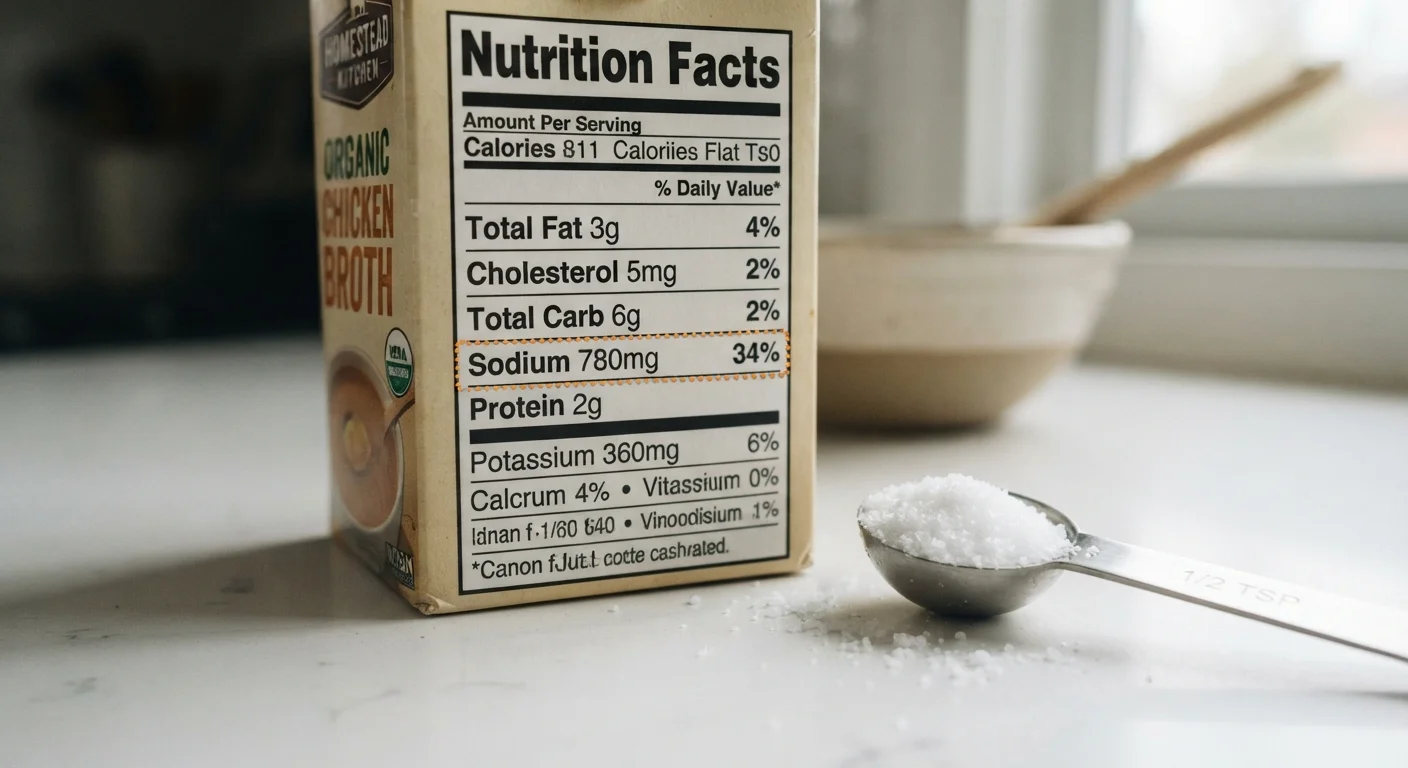
There's no established guideline to restrict naturally occurring sugars in whole foods like fruit, vegetables, and plain dairy. Whole fruit consumption is associated in research with positive health outcomes, not the concerns tied to added sugar. Context, as always, is everything — and that's why understanding the label is the most practical place to start. For a parallel look at another nutrient that hides in plain sight, our piece on sodium and what the numbers mean walks through the same kind of framework.
This article is for general informational purposes only and is not a substitute for personalized nutrition or medical advice. Consult a registered dietitian or qualified healthcare professional for guidance specific to your health needs.