
Why the Label Exists — and Why It's Worth Your Time
The Nutrition Facts panel is a federally standardized tool required on most packaged foods in the United States, regulated by the FDA. It was redesigned in 2020 to make key information easier to find — larger calorie counts, a dedicated line for added sugars, and updated serving sizes that better reflect how people actually eat.
Most people glance at calories and move on. But the label contains far more useful information than that one number. Once you know what each section is telling you, comparing two products takes about 30 seconds. It's one of the more underused tools available to everyday shoppers, and it costs nothing to learn.
What you will need
This walkthrough follows the label from top to bottom, the way it's designed to be read. If you've ever wondered how packaged foods fit into your broader eating habits, pairing this with an understanding of whole foods vs. processed foods can round out the picture.
This Is General Information, Not Medical Advice
This article explains how to read and understand a Nutrition Facts label for general educational purposes. It is not a substitute for personalized dietary guidance. If you have a health condition, food allergy, or specific nutritional needs, please consult a registered dietitian or your healthcare provider.
Step-by-Step: Reading the Label
Start with serving size — everything else depends on it
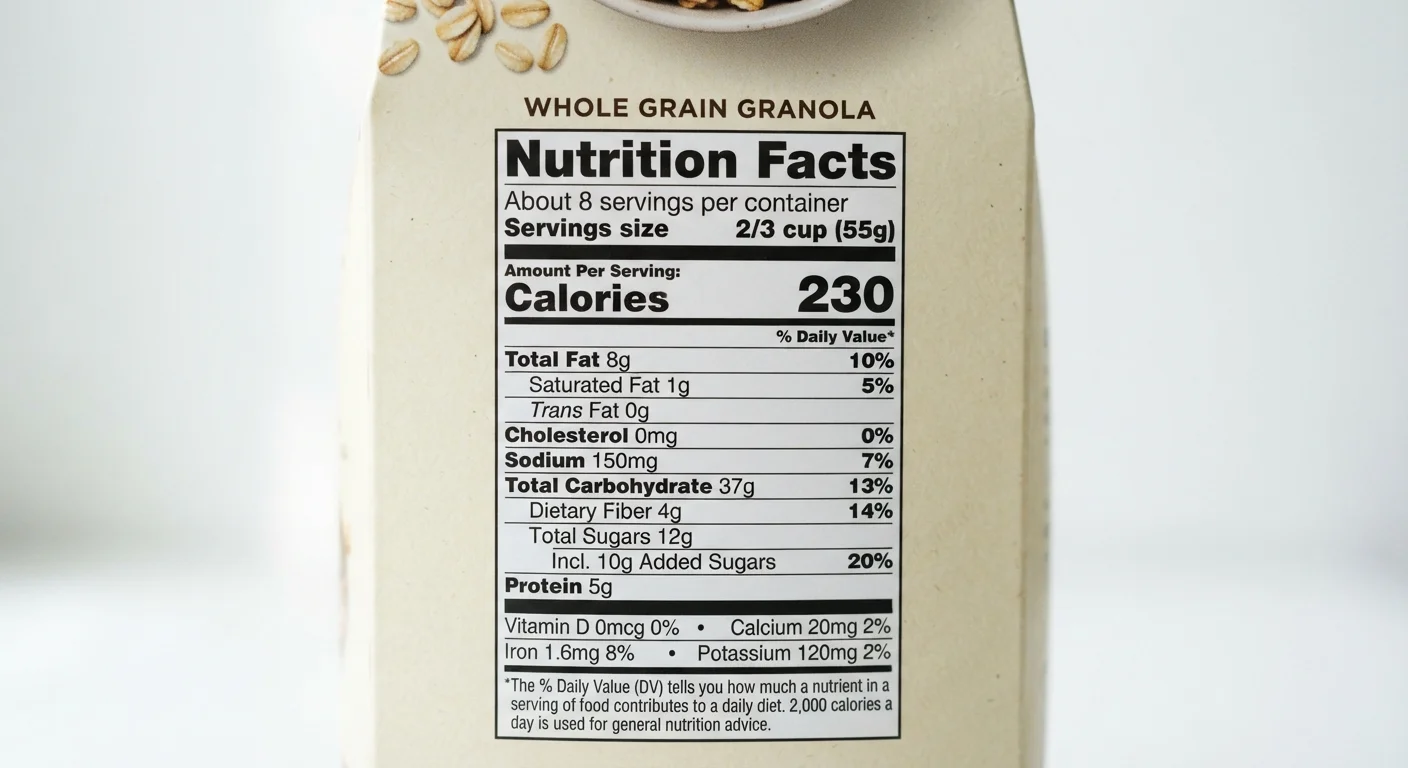
At the very top of every Nutrition Facts panel you'll find two lines: serving size and servings per container. The serving size is a standardized reference amount — it's not a recommendation of how much you should eat, just the unit all the other numbers are built around.
Check how many servings the package contains. A container might list 250 calories per serving, but if it holds three servings and you eat the whole thing, you've consumed 750 calories.
Read the calorie count in context
Calories measure the energy a food provides per serving. The number is displayed in large, bold type. A general benchmark used in dietary guidance is 2,000 calories per day for adults, though individual needs vary based on age, sex, activity level, and health status.
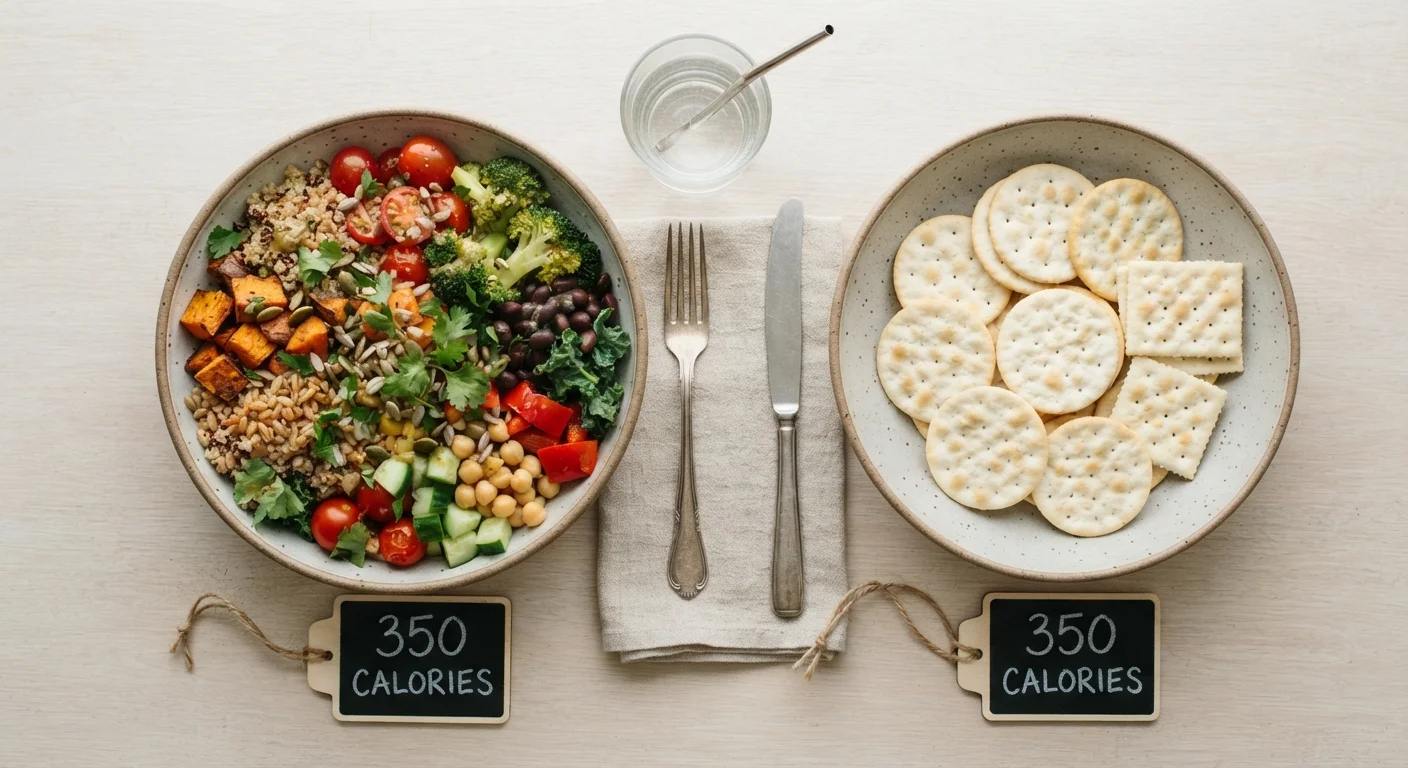
Calories matter, but they don't tell you what those calories are made of. A 200-calorie serving of nuts and a 200-calorie serving of a sugar-sweetened snack deliver very different nutrients alongside that energy. For more on this, see why calorie counts only tell part of the story.
Look at the nutrients to limit
The middle section of the label lists key nutrients. The ones grouped toward the top — saturated fat, trans fat, cholesterol, and sodium — are nutrients most Americans consume in excess. Keeping these lower is generally consistent with current dietary guidance.
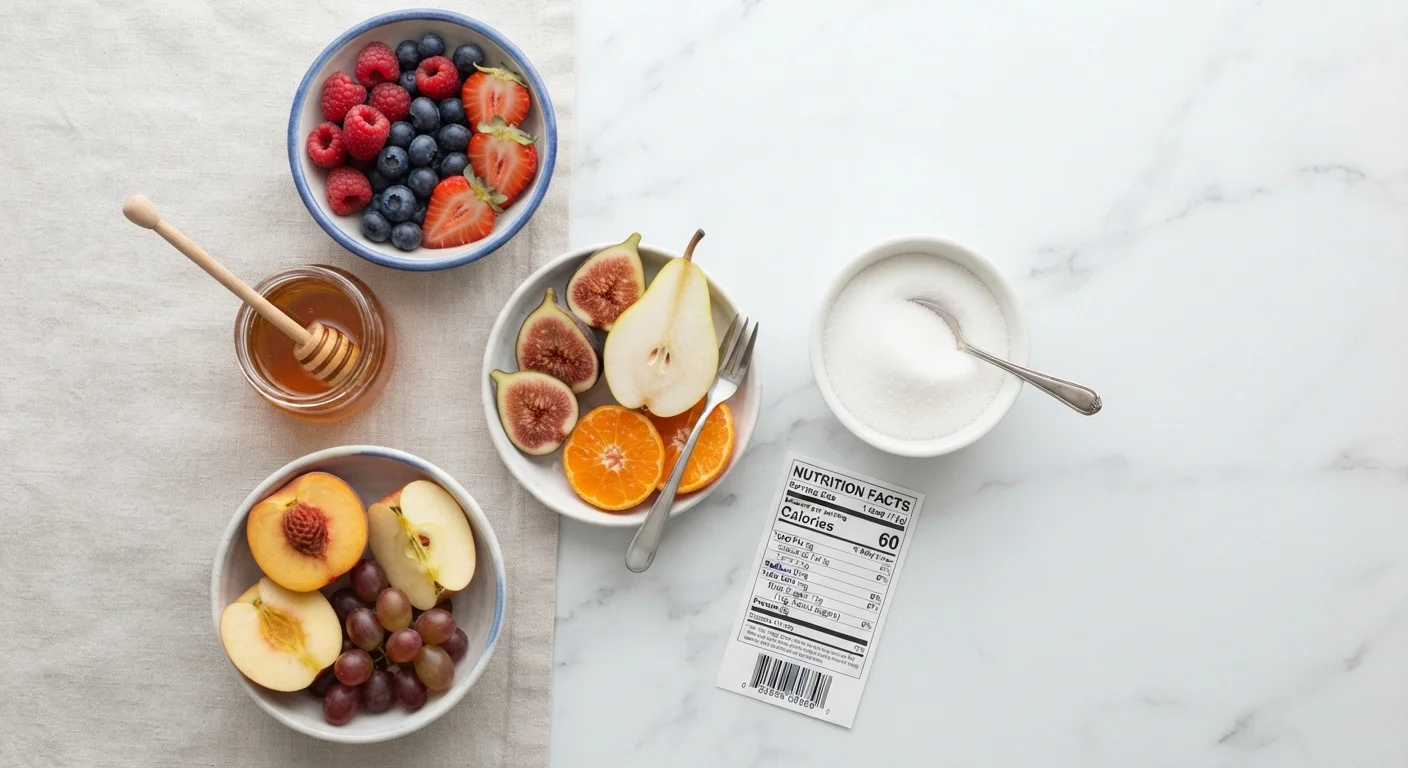
Added sugars appear as a sub-line beneath total sugars. This distinction matters: naturally occurring sugars (from fruit or dairy) behave differently in the body than sugars added during processing. For a fuller picture, see natural vs. added sugars explained.
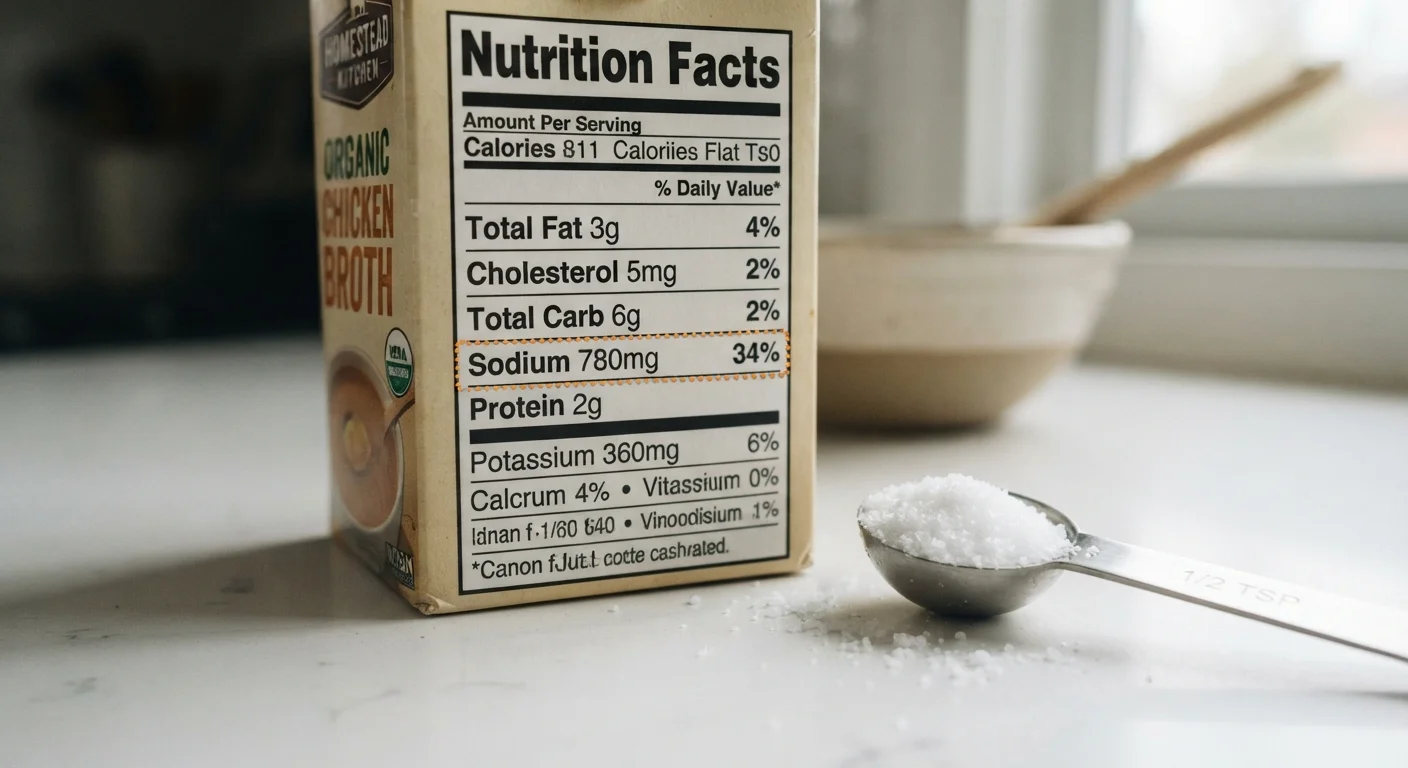
Sodium deserves particular attention. For a deeper look at what sodium figures on the label actually mean, read our sodium and health breakdown.
Identify the nutrients to get enough of
Lower on the panel you'll find nutrients many Americans fall short on: dietary fiber, vitamin D, calcium, iron, and potassium. The FDA highlights these specifically because low intake is associated with public health concerns.
Dietary fiber supports digestive health and helps you feel full. Aiming for foods with a higher % DV for fiber is a practical, label-based way to nudge your diet in a useful direction.
Use the % Daily Value column as your quick guide
The % Daily Value (%DV) column on the right tells you how much of your recommended daily intake one serving provides, based on a 2,000-calorie-per-day diet. It's not a perfect fit for everyone, but it makes comparison between products fast and intuitive.
[tip_callout]Use %DV to compare two versions of the same product — say, a regular and a reduced-sodium soup — without having to do the math yourself.
Glance at the ingredients list
The ingredients list sits below the Nutrition Facts panel and is ordered by weight — the ingredient present in the greatest amount comes first. This gives you context the numbers alone can't: a product with 'whole grain oats' as the first ingredient is different from one that leads with 'sugar' or 'enriched white flour,' even if the calorie counts look similar.
Ingredient lists also reveal things like added oils, preservatives, and artificial colors that don't have their own line on the panel. Understanding label reading as a whole is part of a bigger picture — see our beginner's guide to nutrition for broader context.
Common Missteps and How to Avoid Them
Watch Out for Multi-Serving Packages
Many items that look like single servings — a bottle of juice, a bag of chips — actually contain two or more servings. If you eat the whole thing, every number on the label doubles or triples. Always check the 'servings per container' line before doing any math.
Another common stumble: treating the %DV as the only metric. It's a useful benchmark, but it's built around a 2,000-calorie reference diet that won't match everyone's actual needs. Think of %DV as a directional signal, not a precise personal target.
Finally, don't overlook the ingredients list in favor of the numbers. A food can have modest calories and still contain ingredients you'd rather minimize. Reading both sections together — numbers and ingredients — gives you the most complete picture a label can offer.
This article is for general informational and educational purposes only and is not a substitute for personalized dietary or medical advice. Consult a registered dietitian or qualified healthcare professional for guidance specific to your health needs.