

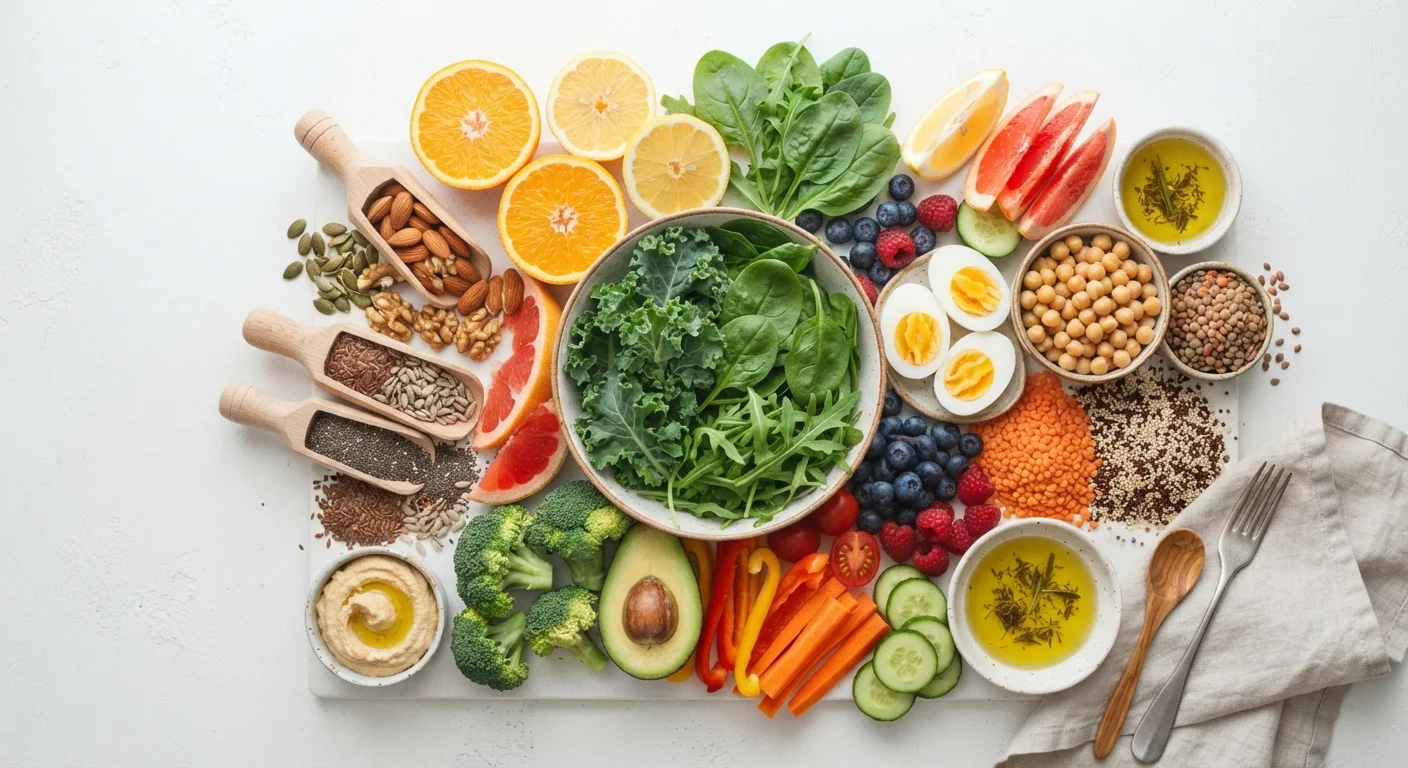
What Are Micronutrients, Exactly?
If you've ever heard the term "micronutrients" and nodded along without being totally sure what it meant, you're not alone. Put simply, micronutrients are the vitamins and minerals your body needs to function — think immune defense, energy production, bone strength, and dozens of other everyday processes. Unlike macronutrients like carbs, protein, and fat, you only need micronutrients in small amounts, but their impact is anything but small.
There are two main categories: vitamins (organic compounds from plants and animals) and minerals (inorganic elements from soil and water that end up in the foods we eat). Each one has a distinct job, and most work best in combination with others — which is one reason a varied diet tends to outperform a narrow one, even a narrow but "healthy" one.
Micronutrients
Vitamins and minerals that the body needs in small quantities to support essential functions like immunity, energy production, and cell repair.
Fat-soluble vitamins
Vitamins (A, D, E, K) that dissolve in fat and can be stored in the body's tissues. Because they accumulate, very high supplemental doses over time may cause problems.
Water-soluble vitamins
Vitamins (B-complex and C) that dissolve in water and are not stored in significant amounts, making regular dietary intake important.
Antioxidant
A compound that helps protect cells from damage caused by unstable molecules called free radicals. Vitamins C and E are well-known dietary antioxidants.
Trace minerals
Minerals needed in very small amounts — such as iron, zinc, and selenium — that are nonetheless essential to specific body functions.
Bioavailability
The proportion of a nutrient that the body can actually absorb and use. Factors like food pairing, cooking method, and gut health all influence bioavailability.
For a broader look at how all nutrients fit together, our nutrition basics guide for beginners is a good place to start.
Key Vitamins: What They Do and Where to Find Them
Vitamins split into two groups based on how your body stores them.
Fat-Soluble Vitamins (A, D, E, K)
These dissolve in fat and are stored in body tissue, so you don't need them every single day — but they can build up if taken in very large amounts over time.
- Vitamin A — supports vision (especially in low light), immune function, and skin health. Found in liver, dairy, and as beta-carotene in orange and yellow produce like carrots and sweet potatoes.
- Vitamin D — helps the body absorb calcium and supports immune and muscle function. Fatty fish, egg yolks, and fortified milk are dietary sources; your skin also makes it from sunlight exposure.
- Vitamin E — acts as an antioxidant, protecting cells from damage. Nuts, seeds, and vegetable oils are reliable sources.
- Vitamin K — essential for blood clotting and bone metabolism. Leafy greens like kale, spinach, and broccoli are among the richest sources.
Water-Soluble Vitamins (B-complex and C)
These aren't stored in large amounts, so regular intake through food matters more.
- B vitamins (B1, B2, B3, B5, B6, B7, B9, B12) — collectively involved in energy metabolism, red blood cell production, and nervous system function. Whole grains, legumes, meat, dairy, eggs, and leafy greens are strong sources. B12 is found almost exclusively in animal products, making it a key consideration for people eating plant-based diets.
- Vitamin C — supports immune function, collagen production, and helps the body absorb iron from plant foods. Citrus fruits, bell peppers, strawberries, and broccoli are excellent sources.
| Total essential vitamins | 13 (National Institutes of Health, Office of Dietary Supplements) |
| Fat-soluble vitamins | A, D, E, K |
| Water-soluble vitamins | C and 8 B vitamins |
| Vitamin B12 deficiency risk group | People eating exclusively plant-based diets (NIH Office of Dietary Supplements) |
| Iron absorption boost | Eating vitamin C alongside non-heme iron sources improves absorption (Academy of Nutrition and Dietetics) |
| Enzyme reactions involving magnesium | Over 300 (NIH Office of Dietary Supplements) |
Essential Minerals: The Structural and Functional Players
Minerals are divided into macrominerals (needed in larger amounts) and trace minerals (needed in smaller amounts, but no less critical).
Macrominerals
- Calcium — the primary mineral in bones and teeth; also involved in muscle contraction and nerve signaling. Dairy products, fortified plant milks, tofu made with calcium sulfate, and leafy greens are good sources.
- Magnesium — participates in over 300 enzyme reactions, including energy production and protein synthesis. Nuts, seeds, legumes, and whole grains provide it reliably.
- Potassium — helps regulate fluid balance, muscle contractions, and blood pressure. Bananas, potatoes, beans, and avocado are well-known sources.
Trace Minerals
- Iron — carries oxygen in the blood. Red meat and shellfish offer highly absorbable heme iron; lentils, tofu, and fortified cereals provide non-heme iron (pairing with vitamin C boosts absorption).
- Zinc — supports immune function, wound healing, and taste perception. Oysters, beef, pumpkin seeds, and chickpeas are solid sources.
- Iodine — critical for thyroid hormone production. Iodized salt, seafood, and dairy are common sources in the American diet.
- Selenium — an antioxidant mineral that supports thyroid function. Brazil nuts are exceptionally high in selenium; seafood and eggs also contribute.
More Isn't Always Better With Minerals
Fat-soluble vitamins and certain minerals like iron and selenium can accumulate to problematic levels if supplemented excessively. This is much less common from food alone, but it's a real consideration with high-dose supplements. If you're thinking about adding a mineral supplement, it's worth discussing with a healthcare provider first — especially for iron, which can interact with medications and other nutrients.
Worth noting: how well you absorb certain minerals is affected by what you eat alongside them — and by your hydration. Our article on hydration and nutrition covers how water plays into nutrient absorption in more detail.
Getting Enough Without Overthinking It
For most healthy adults, a varied diet built around whole foods — plenty of vegetables, fruit, whole grains, legumes, and a protein source of your choice — covers the majority of micronutrient needs without requiring a spreadsheet. Supplements can fill genuine gaps (B12 for people on plant-based diets, or vitamin D in low-sunlight climates, for example), but they're generally not a substitute for dietary variety.
If you want to get a clearer picture of what you're actually eating, learning to read a nutrition label is a practical starting point. And remember: individual needs can vary based on age, health status, pregnancy, and other factors. A registered dietitian is the right person to consult if you're concerned about a specific deficiency or thinking about supplementing.
42%
U.S. adults estimated to be vitamin D deficient or insufficient
According to research published in nutritional epidemiology journals, low vitamin D status is one of the more common micronutrient shortfalls in American adults.
13
Essential vitamins the human body requires
Each of the 13 vitamins has at least one function that cannot be replicated by any other nutrient, according to the National Institutes of Health.
This article is for general informational purposes only and is not a substitute for professional medical or nutritional advice. If you have questions about your specific nutrient needs or health status, please consult a qualified healthcare provider or registered dietitian.