

Why Lighting Myths Are Holding Your Home Back
Most people spend far more time choosing paint colors or furniture than thinking about lighting — yet lighting is arguably the single biggest factor shaping how a room feels. A well-furnished space can look flat and uninviting under bad lighting, while a modest room can feel warm and polished when the light is done right.
The problem is that a handful of deeply entrenched myths lead homeowners to make the same avoidable mistakes. Whether you're decorating from scratch or just trying to figure out why a room never looks quite right, understanding what's actually true about light can make an immediate, visible difference — often without spending much at all.
Just as home maintenance myths can quietly cost you money, lighting myths can quietly cost you atmosphere, comfort, and the full potential of your home's interior.
Myth
One bright overhead light is all a room needs.
Fact
A single overhead light creates flat, harsh illumination and deep shadows that make rooms feel clinical or uncomfortable.
This is probably the most widespread lighting mistake in American homes. Ceiling fixtures light from one direction — straight down — which flattens textures, casts unflattering shadows on faces, and leaves the edges and corners of a room in relative darkness.
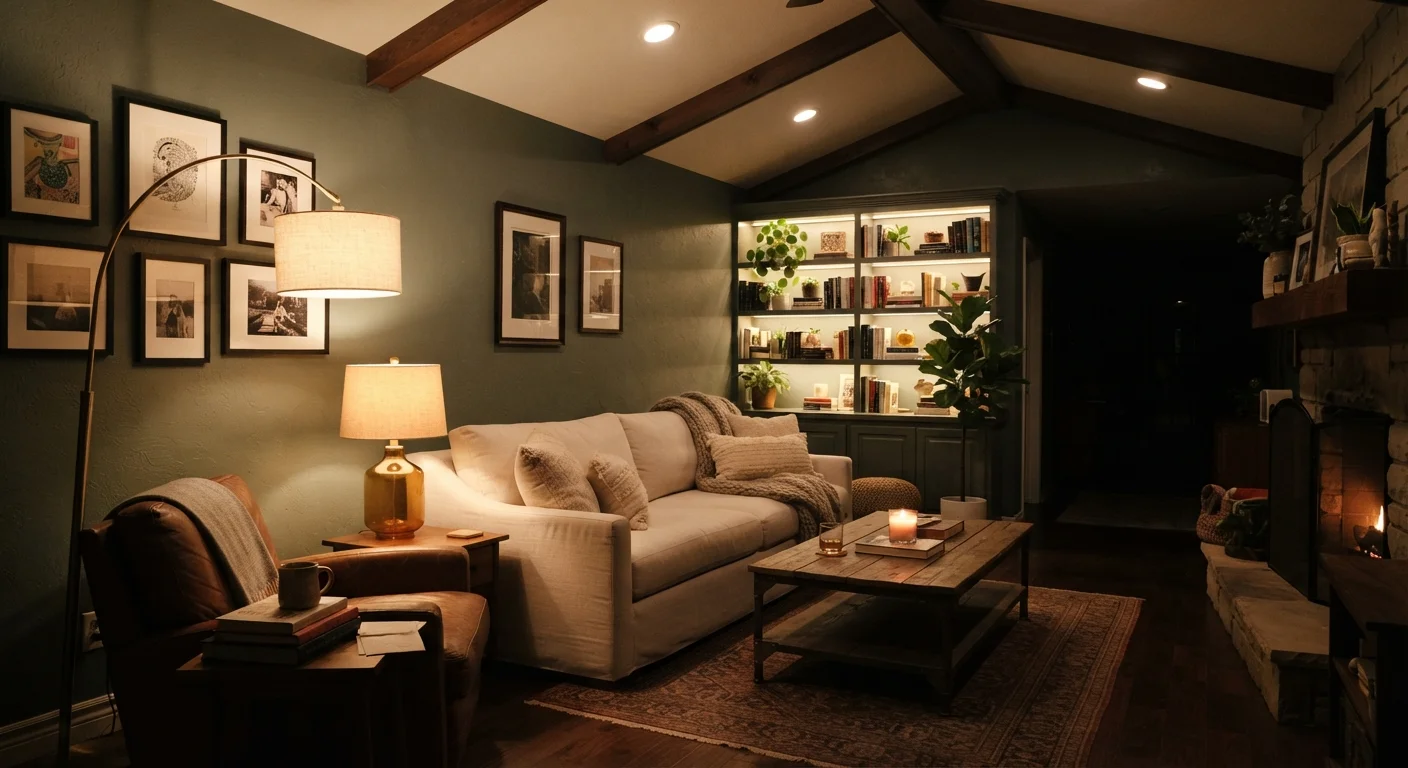
Interior designers rely on layered lighting: combining ambient light (general illumination), task light (for specific activities), and accent light (to highlight features). This doesn't require a renovation — a floor lamp and a table lamp added to an overhead-only room can transform it immediately.
Myth
Brighter light always makes a room feel bigger and better.
Fact
Excessive brightness creates glare and visual fatigue; light that suits the room's purpose and scale feels better than simply more lumens.
More light is not inherently more inviting. Oversized or overly bright fixtures in a small room create glare that's actually uncomfortable to be in for extended periods. The goal is appropriate illumination — enough to see clearly and safely without washing out the room's character.
A well-lit bedroom, for example, typically uses lower-wattage bulbs at lamp height rather than a blazing overhead fixture, because the function of the space calls for relaxation, not task performance.
Myth
All white light bulbs are basically the same.
Fact
Bulbs vary significantly in color temperature, which has a strong effect on mood, skin tone, and how colors in the room appear.
Bulb packaging uses a measurement called color temperature, expressed in Kelvin (K). A bulb labeled around 2700K emits warm, yellowish light that reads as cozy and residential. A bulb at 5000K emits a blue-white light similar to daylight — functional for a garage workshop but often harsh and cold-feeling in a living room or bedroom.
Mixing bulbs with very different color temperatures in the same room can make the space feel visually incoherent. Choosing bulbs consistently within the same range keeps rooms feeling intentional and unified.
Myth
You should light every corner of a room equally.
Fact
Deliberate contrast and shadow give rooms visual depth and character — perfectly even light removes that dimension.
Professionally styled rooms almost always include areas of relative shadow alongside highlighted focal points. A lit bookcase, a lamp casting a warm pool next to a reading chair, or an accent light above artwork all use contrast intentionally to draw the eye and create a sense of depth.
Trying to eliminate all shadows by flooding every corner with light tends to produce a flat, institutional feel — more hospital corridor than living room. Embrace purposeful shadow as a design tool, not a problem to fix.
Myth
Dimmer switches are only useful for dining rooms.
Fact
Dimmers add flexible control to virtually any room — from bedrooms to home offices — and can meaningfully extend the usable feel of a space through the day.
The ability to adjust light intensity to match the time of day or the activity at hand is genuinely useful everywhere. Bright light in the morning in a kitchen supports alertness; the same room dimmed in the evening during a casual conversation feels entirely different and more comfortable.
Many modern LED bulbs are compatible with dimmer switches, though it's important to verify compatibility on the packaging before purchasing — not all LED bulbs are dimmable. If you're unsure about replacing a switch, consult a licensed electrician rather than guessing.
Practical Steps to Fix Your Lighting Today
Once you've cleared away the myths, improving your home's lighting becomes straightforward. Here's where to start:
- Audit each room by function. Ask what activities happen there — reading, cooking, relaxing, working — and whether your current lighting supports each one.
- Add a floor or table lamp to any room that relies solely on overhead light. This single step is the most impactful change most homeowners can make.
- Check your bulb color temperatures. Bulbs are labeled in Kelvin (K). Roughly 2700K–3000K is warm and residential; 4000K–5000K is cooler and better suited to task areas like kitchens or home offices.
- Install a dimmer switch where possible. Many standard fixtures accept dimmer switches as a straightforward swap — but always confirm the fixture and bulb type are compatible, and consult a licensed electrician if you're uncertain about your wiring.
- Use mirrors and light-colored surfaces strategically. These reflect and distribute light, making a room feel brighter without adding more fixtures.
Electrical Work: Know Your Limits
Swapping a light bulb or adding a plug-in lamp is DIY-friendly for most homeowners. However, installing new fixtures, adding circuits, or replacing wiring requires knowledge of your home's electrical system and may require a permit and a licensed electrician in your area. Never attempt electrical work beyond your skill level — improper wiring is a fire and safety hazard. Always verify local code requirements before starting any electrical project.
Like garden watering habits that seem sensible but cause harm, lighting habits that feel intuitive are often the ones quietly undermining your results. A few small, informed changes go a long way.
~14%
U.S. household electricity used for lighting
According to the U.S. Energy Information Administration, lighting accounts for roughly 14% of residential electricity consumption, making bulb choices a meaningful factor in energy use.
2700K–3000K
Recommended color temperature range for living spaces
Lighting designers broadly recommend warm white bulbs in this Kelvin range for living rooms and bedrooms to create a comfortable, residential atmosphere.