
How Each System Works
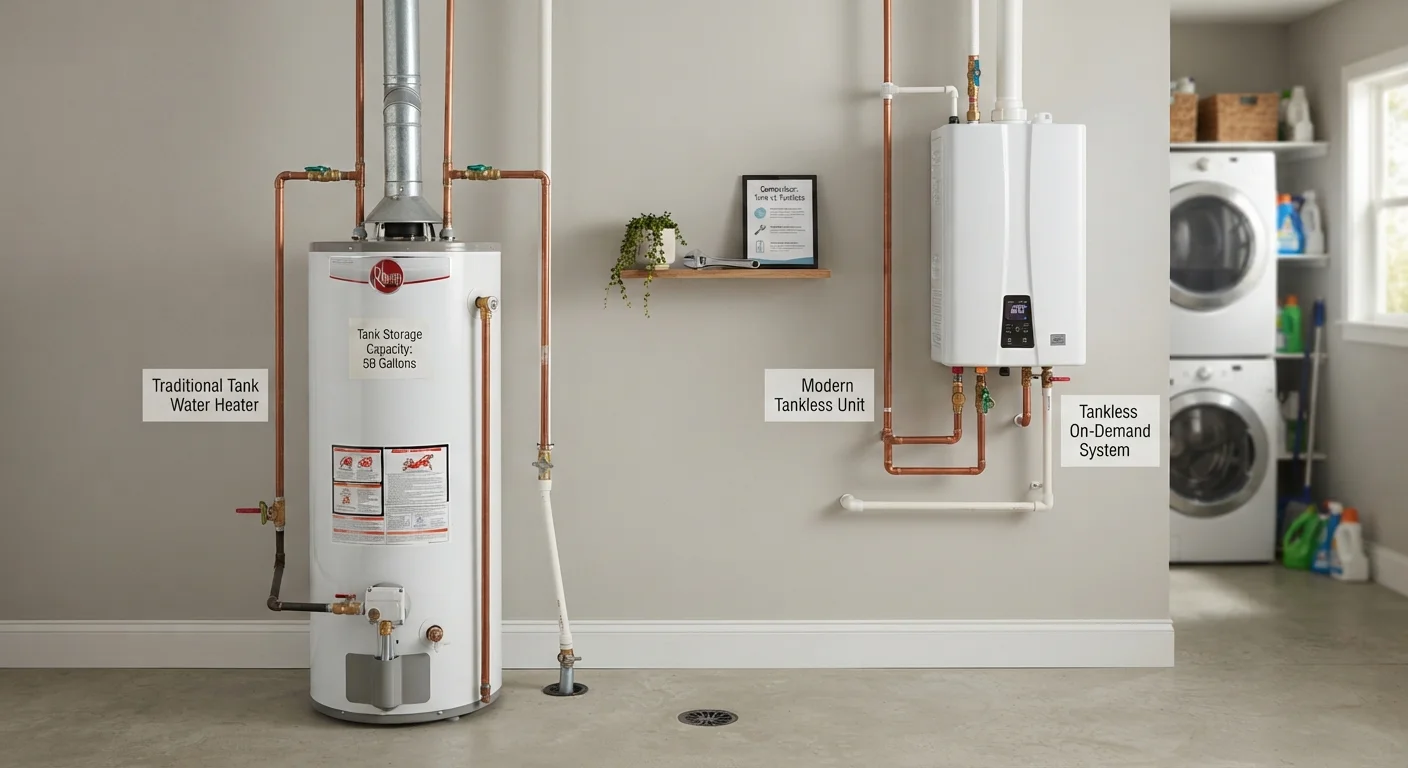
A traditional (storage) water heater holds a large reservoir — typically 40 to 80 gallons — of water that is continuously heated to a set temperature and kept ready for use. When hot water is drawn, cold water refills the tank and the heating cycle restarts.
A tankless (on-demand) water heater has no storage reservoir. When a tap opens, cold water passes through a heating element — either gas-fired or electric — and exits at the desired temperature within seconds. No standby heat loss occurs because there is no water being kept warm around the clock.
Understanding this fundamental difference explains why the two systems diverge so significantly in cost, efficiency, and performance.
Upfront Cost and Installation
Traditional tank heaters generally range from a few hundred dollars for the unit itself, with relatively straightforward installation. Most homes already have the gas line or electrical circuit sized for a standard tank unit, which keeps labor costs predictable.
Tankless units carry a higher purchase price, and installation often involves additional expenses: upgrading gas lines, increasing electrical panel capacity, or adding dedicated venting. For a whole-home gas tankless system, total installed costs can be two to three times that of a comparable tank replacement.
Don't Skip the Professional Assessment
Tankless water heater installations frequently require gas line upgrades, new venting runs, or electrical panel work — none of which should be DIY projects. These are regulated tasks in most jurisdictions, and improper gas or electrical work carries serious safety risks. Always hire a licensed professional and confirm whether a permit is required before any work begins.
It is worth factoring installation complexity into any budget estimate early. A qualified plumber or HVAC professional can assess your home's existing infrastructure before you commit to either system — this step alone can prevent costly surprises. Be sure to check whether a permit is required in your municipality, as water heater replacements often do trigger local permit and inspection requirements.
Energy Efficiency and Operating Costs
Traditional tank heaters experience standby heat loss — energy spent keeping stored water hot even when no one is using it. Modern tank units are significantly better insulated than older models, but some standby loss is inherent to the design.
Tankless heaters eliminate standby loss entirely, which can translate to meaningful energy savings, particularly in households with moderate hot-water use. However, homes that run dishwashers, showers, and laundry simultaneously may find a single tankless unit struggles to keep up, potentially requiring two units — which changes the efficiency math considerably.
8–12 yrs
Typical tank water heater lifespan
The U.S. Department of Energy notes most storage tank water heaters last between 8 and 12 years with routine maintenance.
15–20 yrs
Typical tankless water heater lifespan
Tankless units generally outlast traditional models by several years when properly descaled and serviced.
24–34%
Potential energy savings for low-demand homes
The U.S. Department of Energy estimates tankless heaters can be 24–34% more energy efficient for homes using 41 gallons or less of hot water daily.
Over a 10–15 year ownership period, the energy savings from a tankless unit may offset part or all of the higher upfront cost, though actual outcomes vary based on local utility rates, household habits, and maintenance. For a deeper look at balancing upfront investment against long-run savings, see our guide to structuring short- and long-term savings goals.
Lifespan, Maintenance, and Repairs
Traditional tank water heaters typically last 8 to 12 years. Key maintenance tasks include flushing sediment from the tank annually, inspecting the anode rod every few years, and checking the pressure-relief valve. These are manageable DIY tasks for most homeowners.
Tankless units can last 15 to 20 years with proper care, but they require their own maintenance rhythm: descaling to remove mineral buildup (especially in hard-water areas), cleaning inlet filters, and periodic professional servicing of gas components. Repairs, when needed, tend to involve more specialized parts and labor.
One common misconception is that newer appliances are maintenance-free — they are not. Skipping routine care on either system accelerates wear and voids many manufacturer warranties. For a broader look at costly home maintenance beliefs, see common home maintenance myths that cost homeowners real money.
Check Your Water Hardness Before Deciding
Hard water accelerates mineral buildup in both tank and tankless systems, but tankless units are particularly vulnerable to scale inside their heat exchangers. If your home has hard water, factor in the cost of a water softener or regular descaling service when estimating long-term ownership costs. Your local water utility can often tell you your area's water hardness level at no charge.
Side-by-Side Comparison
The table below summarizes the key differences across the criteria most homeowners care about most.
| Traditional Tank Heater | Tankless Water Heater | |
|---|---|---|
| Upfront cost | Lower — unit and installation | Higher — often needs infrastructure upgrades |
| Typical lifespan | 8–12 years | 15–20 years |
| Energy efficiency | Some standby heat loss | No standby loss; more efficient at moderate use |
| Hot water supply | Limited by tank capacity | Continuous, but limited by flow rate |
| Installation complexity | Generally straightforward | May require gas, electrical, or venting upgrades |
| Maintenance | Annual flush, anode rod check | Descaling, filter cleaning, professional service |
| Repair accessibility | Widely understood, lower labor costs | Specialized parts, higher repair costs |