
What Civic Participation Actually Means
Civic participation refers to the range of actions through which individuals engage with public life — the processes, institutions, and communities that shape how we live together. At its broadest, it encompasses anything a person does to contribute to public decision-making or community well-being, whether that's casting a ballot or simply attending a school board meeting.
Political scientists often distinguish between two overlapping categories: electoral participation (voting, campaigning, donating to candidates) and non-electoral civic engagement (volunteering, attending public hearings, joining community organizations, contacting elected officials). Both matter, and neither tells the full story alone.
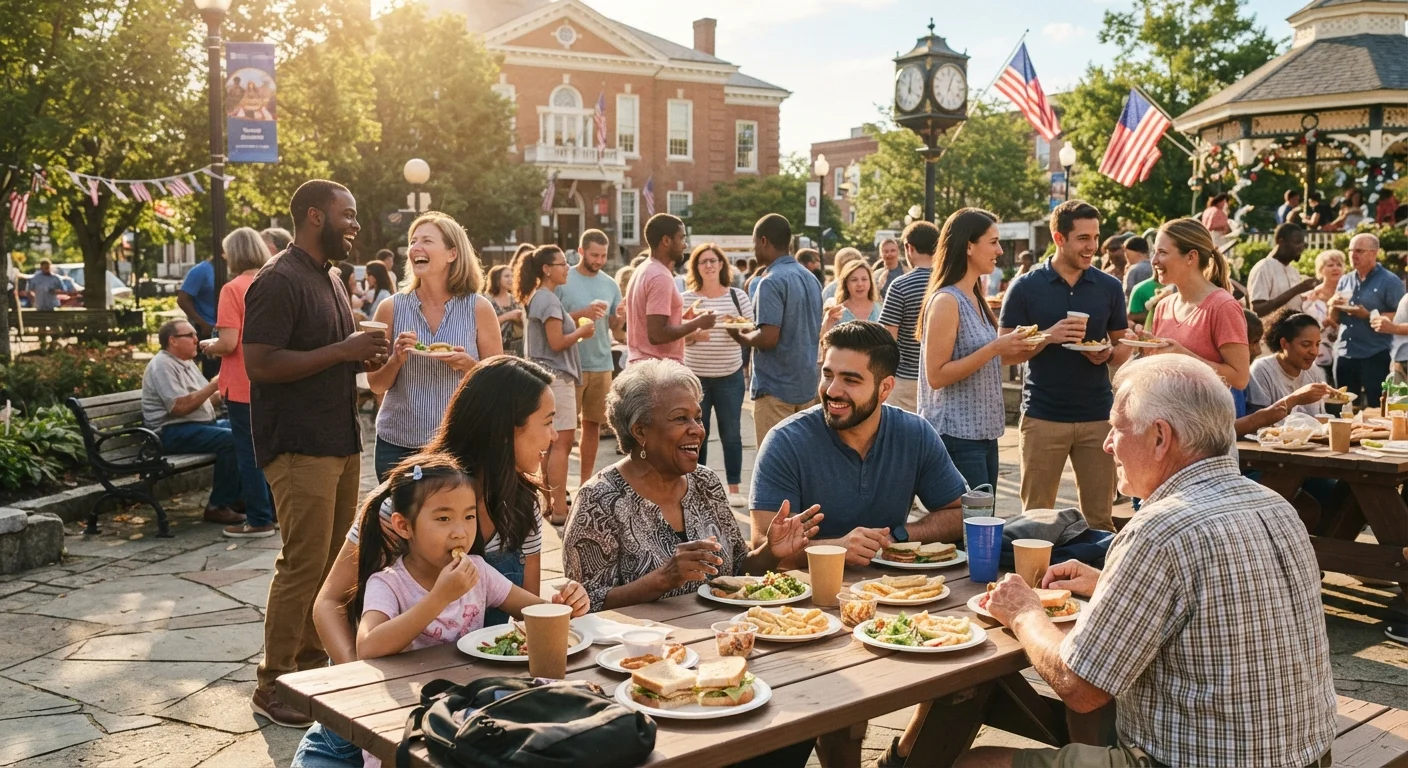
Understanding what Americans mean by community is essential context here — because civic participation is, at its core, an expression of how people relate to the communities they belong to.
~66%
U.S. voter turnout in 2020 presidential election
According to the U.S. Census Bureau, about 66% of citizen voting-age adults reported voting in the 2020 presidential election — the highest rate since 1992.
25%
Americans who volunteered formally in a given year
The Bureau of Labor Statistics has tracked formal volunteering rates generally ranging between 24–30% of U.S. adults in recent years.
2x
Participation gap by education level
Adults with a bachelor's degree are roughly twice as likely to contact a public official as those without a high school diploma, per Pew Research Center surveys.
The Many Forms It Takes
The civic landscape is far more varied than the voting booth suggests. Below are the primary modes through which Americans engage with public life:
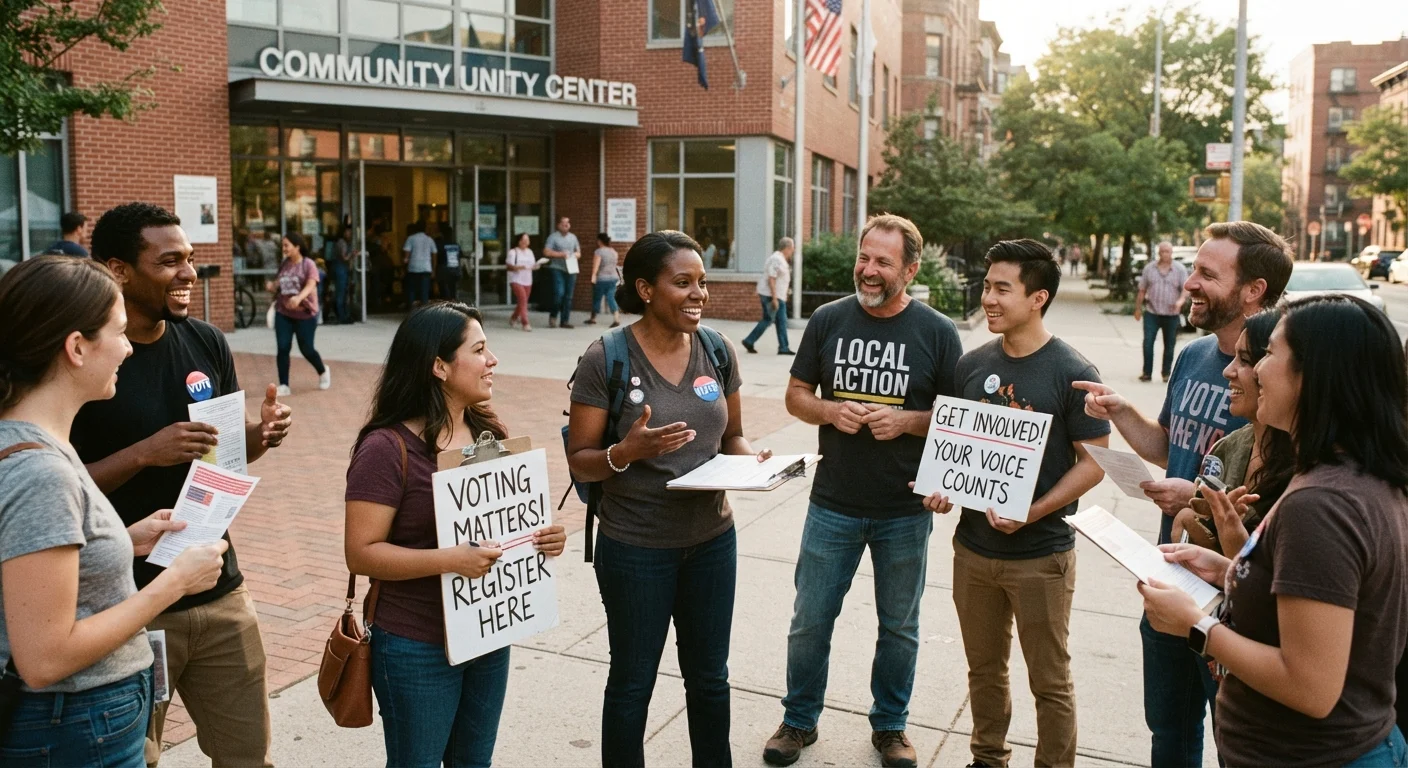
- Electoral activities: Voting, registering others to vote, canvassing, and participating in primaries or caucuses.
- Contacting government: Writing to elected officials, attending town halls, submitting public comments on proposed regulations.
- Community organizing: Joining neighborhood associations, block clubs, or issue-based coalitions.
- Volunteering: Donating time to nonprofits, faith-based organizations, schools, or disaster relief efforts.
- Civic education and advocacy: Participating in jury duty, signing petitions, attending protests, or educating others about public issues.
- Digital engagement: Following and sharing civic information, participating in online public forums, or supporting community crowdfunding.
These forms are not interchangeable — each reaches different people and produces different kinds of influence. Someone who never votes may still be deeply civically engaged through sustained neighborhood advocacy.
If you're new to civic engagement, local meetings — school boards, city councils, planning commissions — are often the most accessible entry point and have the most direct impact on daily life.
Local decisions on zoning, school budgets, and public services affect residents immediately, and these bodies often have genuine public comment periods where individual voices carry real weight.
Volunteering with a local organization is one of the fastest ways to build the social networks that sustain long-term civic participation — it's both an end in itself and a gateway.
Social science research consistently shows that organizational membership is among the strongest predictors of sustained civic engagement over time.
Who Participates — and Who Doesn't
Civic participation in America is far from evenly distributed. Research consistently shows that participation rates correlate strongly with socioeconomic status, education level, age, and geography.
Older Americans vote at significantly higher rates than younger ones. College-educated adults are more likely to contact elected officials and join civic organizations. Higher-income households donate more and participate more in formal political channels. These disparities aren't random — they reflect systemic differences in time, resources, networks, and institutional access.
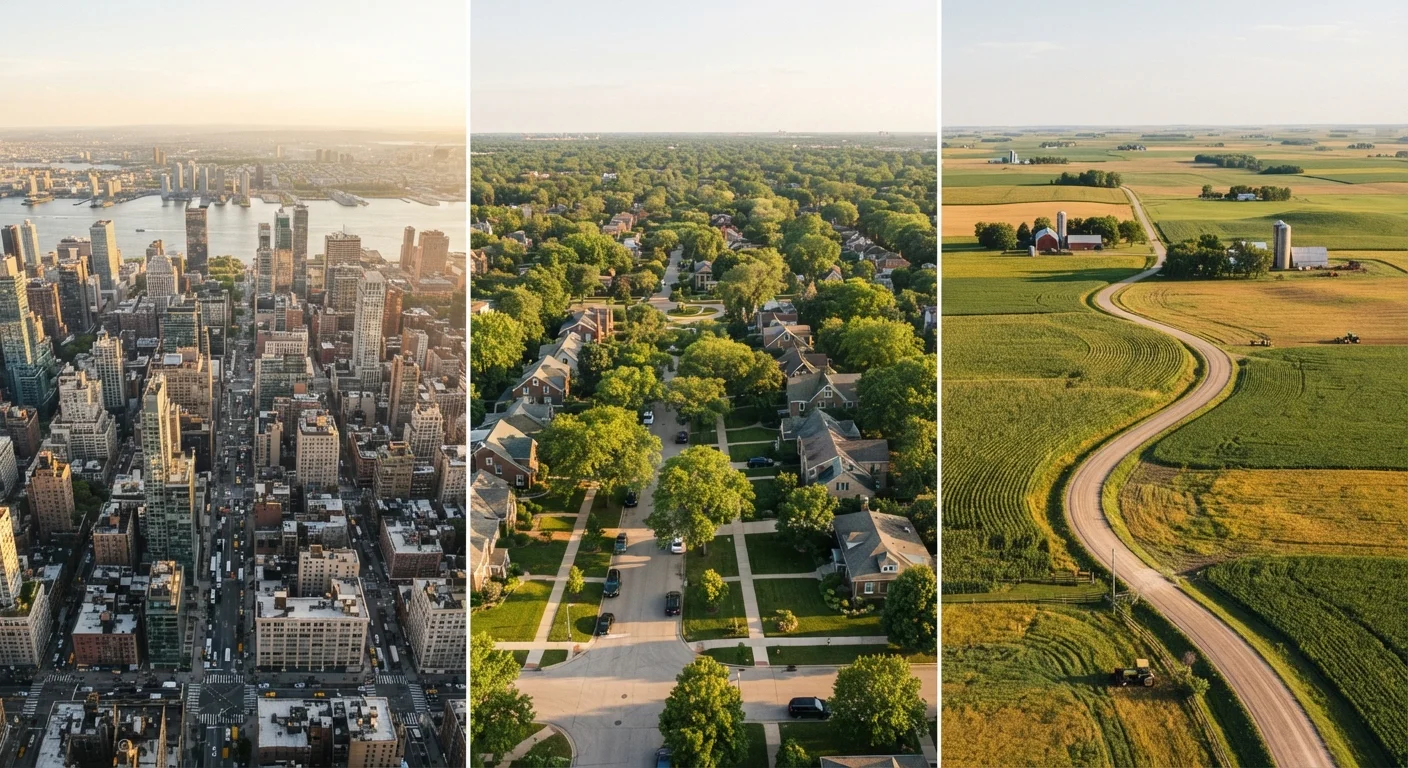
Geography also plays a substantial role. As explored in our look at how community looks different across urban, suburban, and rural America, the infrastructure of civic life — meeting spaces, transportation, local media — varies sharply by location, shaping what participation even looks like in a given place.
Participation Gaps Have Real Consequences
When civic participation is concentrated among wealthier, older, and more educated segments of the population, public policy tends to reflect those groups' priorities over time. This isn't a partisan claim — it's a structural dynamic documented by political scientists across the ideological spectrum. Recognizing the gap is the first step toward understanding why broadening participation matters.
What Shapes Civic Engagement
No single factor explains why one person becomes an engaged civic actor while another disengages entirely. Research points to a cluster of interconnected drivers:
- Social trust
- People who trust their neighbors and institutions are more likely to participate. Trust tends to build participation, and participation tends to reinforce trust — a reinforcing cycle that can run in either direction.
- Civic education
- Adults who received meaningful civics instruction in school are more likely to vote and volunteer as adults. Yet civics education quality varies widely across American school districts.
- Community networks
- Being connected to local organizations — religious congregations, unions, neighborhood groups — is one of the strongest predictors of civic activity. These networks provide information, social pressure, and practical logistics.
- Time and economic security
- People working multiple jobs or managing caregiving responsibilities have less discretionary time for civic activity. Economic precarity is a structural barrier, not a personal failing.
America's immigrant communities offer a compelling lens here: how immigrant communities have shaped American civic traditions shows that newcomers have long brought distinct forms of civic organization and mutual aid that enrich the broader public fabric.
“The health of a democratic society may be measured by the quality of functions performed by private citizens.”
— Alexis de Tocqueville, 19th-century political thinker and author of 'Democracy in America'
Why It Matters for Everyday Life
Civic participation isn't an abstract obligation — it has tangible effects on the quality of public life. Local school board decisions, zoning laws, park maintenance budgets, and public health initiatives are all shaped by who shows up and who speaks.
Research from political scientists Robert Putnam and others suggests that communities with higher levels of civic engagement tend to have better public health outcomes, stronger local economies, and lower crime rates — though these relationships are correlational and complex, not simple cause-and-effect.
For individuals, civic participation can also provide a sense of agency and belonging in an era when many Americans report feeling politically powerless or socially isolated. Even modest local engagement — attending one public meeting, joining one neighborhood group — can shift that experience meaningfully.
Start Local, Start Small
You don't need to run for office or attend every city council meeting to be civically engaged. Signing up for a neighborhood association newsletter, attending one public meeting, or volunteering a few hours a month are all meaningful starting points. Civic participation builds on itself — small actions create connections that lead to larger ones.
The barriers are real, and acknowledging them honestly is part of any genuine conversation about civic life. But so is the evidence that communities where more people are engaged tend to function better for everyone in them.