
A Nation Perpetually Shaped by Newcomers
The United States has never had a single, unified cultural origin — it has always been assembled from many. Each major wave of immigration, from Irish and German arrivals in the 19th century to Latin American and Asian communities in the 20th and 21st centuries, has left lasting marks on how Americans eat, speak, celebrate, and understand themselves.
This isn't simply a historical footnote. The shaping continues today, in neighborhoods, kitchens, schools, and places of worship across every region. Understanding how immigrant communities have contributed to American culture helps clarify what Americans mean when they talk about identity — and why that identity looks different depending on where you are. See our exploration of what 'community' means in American life for a closer look at how that word carries cultural weight.
45M+
Foreign-born residents in the U.S.
According to U.S. Census Bureau estimates, more than 45 million people living in the United States were born in another country — representing roughly 14% of the total population.
1 in 4
Americans with at least one immigrant parent
Research from the Pew Research Center has found that approximately one in four Americans is either an immigrant or the child of at least one immigrant parent.
350+
Languages spoken in U.S. homes
The U.S. Census Bureau has identified more than 350 languages spoken in American homes, reflecting the country's extraordinary linguistic diversity.
Food, Language, and Everyday Life
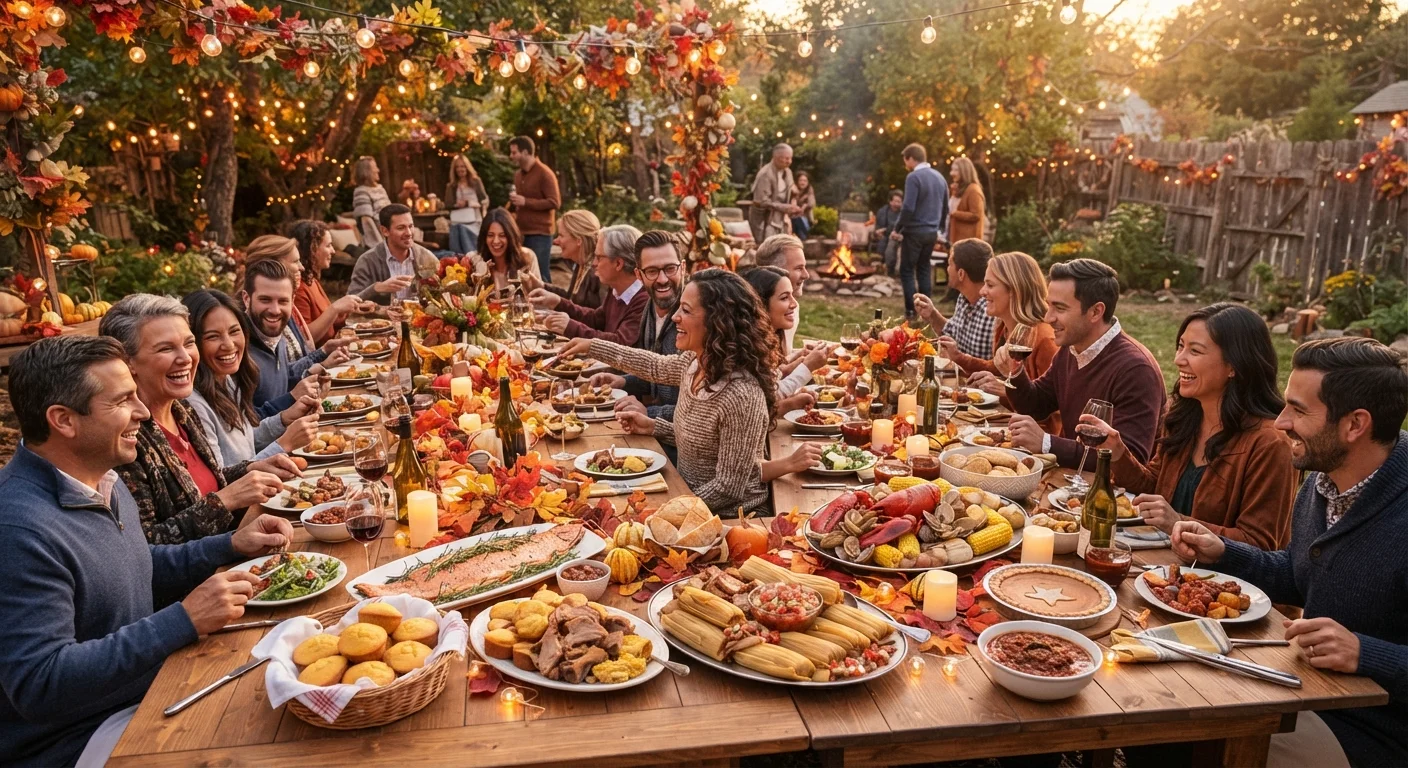
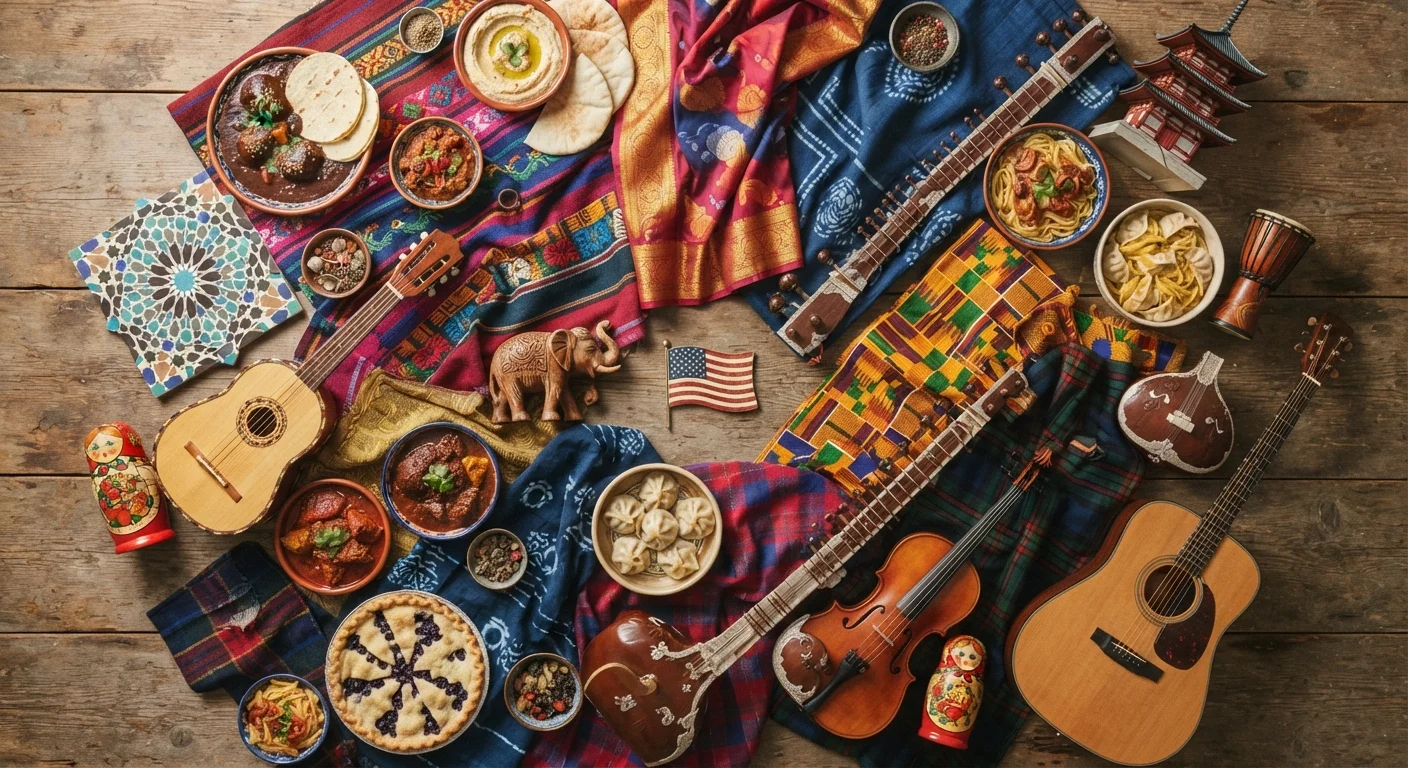
Few forces transmit culture as naturally as food. What Americans eat for breakfast, celebrate with at holidays, or grab on a lunch break is deeply tied to the culinary traditions immigrants brought with them. Italian, Chinese, Mexican, Jewish, Greek, and Vietnamese cuisines — among many others — have moved from enclave kitchens to mainstream American tables over generations.
Language follows a similar pattern. American English has absorbed words from dozens of immigrant languages so thoroughly that most speakers don't notice their origins. 'Kindergarten' came from German. 'Plaza' and 'barbecue' from Spanish. 'Schmooze' and 'chutzpah' from Yiddish. Entire regional dialects carry the acoustic fingerprints of the immigrant groups who settled there.
These everyday cultural borrowings are not incidental. They reflect a long process of contact, exchange, and mutual adaptation — one that is still ongoing. The way Americans celebrate holidays by region often reveals exactly where those immigrant influences settled deepest.
Look Closer at Your Own Neighborhood
Many everyday features of American neighborhoods — corner stores, religious institutions, certain street foods, local festivals — have roots in the immigrant communities that once settled there. Exploring your local historical society or library archives can reveal surprising cultural layers beneath familiar surroundings.
Neighborhoods, Institutions, and Civic Life
Immigrant communities have shaped not just American tastes but American institutions. Ethnic enclaves — from New York's Lower East Side to San Francisco's Mission District to Miami's Little Havana — served as incubators for civic life. Churches, mutual aid societies, ethnic newspapers, credit unions, and trade associations all emerged from the practical needs of immigrant communities trying to establish themselves.
Many of these organizational models were adopted more broadly into mainstream American civic culture. The concept of the neighborhood association, the practice of community-based fundraising, and the structure of local advocacy organizations all carry traces of immigrant community-building logic.
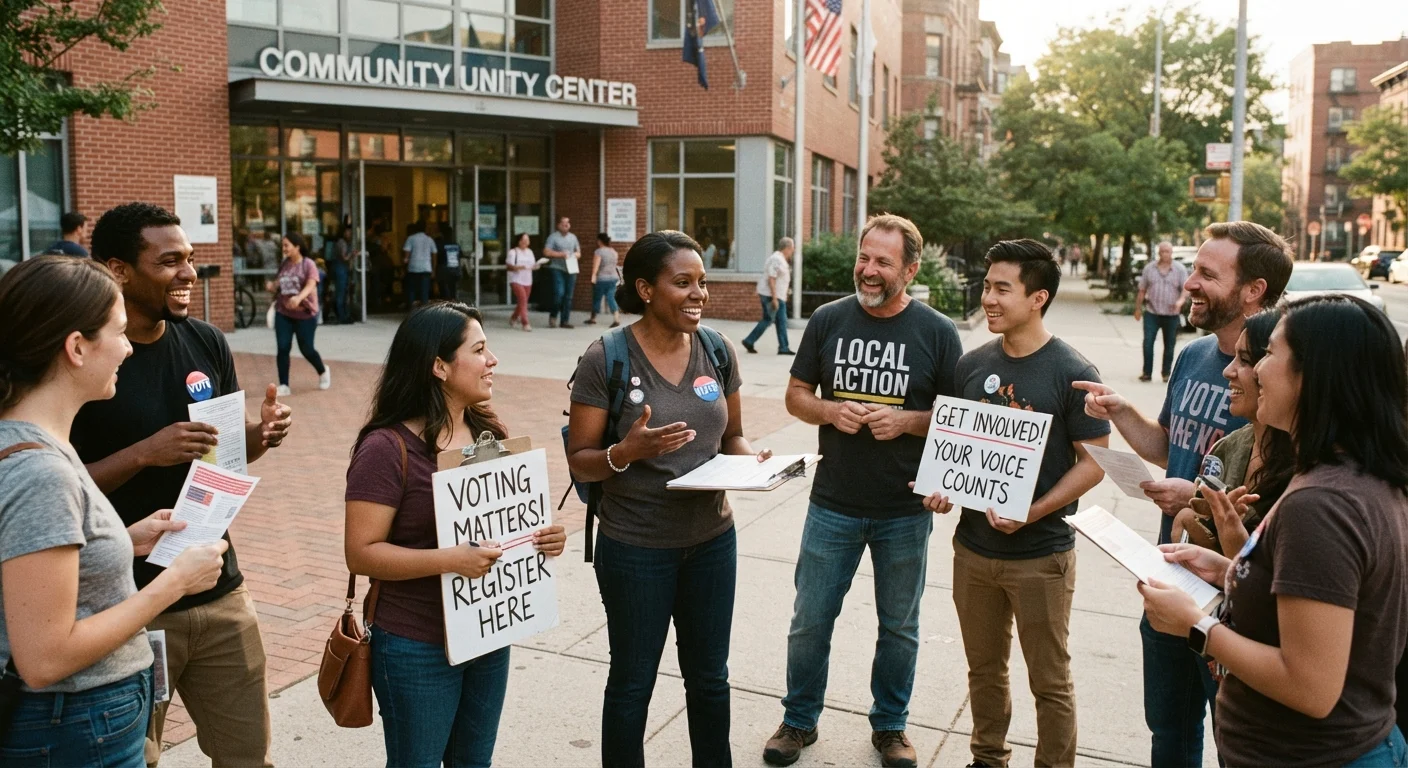
Civic participation in America varies significantly by region and community — and immigrant settlement patterns are one important reason why. Different communities brought different traditions of public engagement, collective organizing, and local governance that continue to shape how neighborhoods function today.
Cultural Exchange as an Ongoing Process
It's worth resisting any notion that immigration's cultural influence belongs only to the past. New communities continue to reshape American food, music, art, fashion, and language in real time. This is especially visible in urban areas, though the influence plays out differently across suburban, urban, and rural settings.
Cultural exchange is also rarely one-directional. Immigrant communities adapt to American life while simultaneously transforming it. Second- and third-generation Americans often serve as bridges, carrying forward elements of their heritage while participating fully in broader American culture. This layering — old traditions meeting new contexts — is precisely what gives American cultural identity its distinctive character.
“The history of the United States is, in large part, the history of immigration — and every period of immigration has transformed the country in ways that were not always anticipated but have always been profound.”
— Mae Ngai, Immigration historian, Columbia University
This article is intended for general informational and educational purposes only. It reflects broad cultural and historical patterns and does not represent the experience of any specific individual or community.