
A Word That Does a Lot of Work
Listen carefully to how Americans use the word 'community' for a single week and you'll hear it applied to an almost bewildering range of groups: the LGBTQ+ community, the farming community, the Reddit community, the local business community, a grieving neighborhood after a tragedy. The word is doing heavy lifting in all of these cases — but it isn't always doing the same job.
That flexibility is not a bug. It reflects something genuine about how Americans understand social life: as a web of overlapping allegiances, identities, and shared spaces. Understanding what someone means when they say 'community' requires paying attention to which dimension of connection they're emphasizing.
When 'Community' Gets Contested
Not everyone who belongs to a group agrees they form a 'community' — or agrees on who speaks for it. Terms like 'the Black community' or 'the evangelical community' are used routinely in media, but many members of those groups push back on the implication of a single, unified voice. Community is often more fractured and internally diverse than the word implies.
The Three Things 'Community' Usually Points To
Most uses of the word cluster around three distinct meanings, and speakers often blend them together without realizing it.
Place
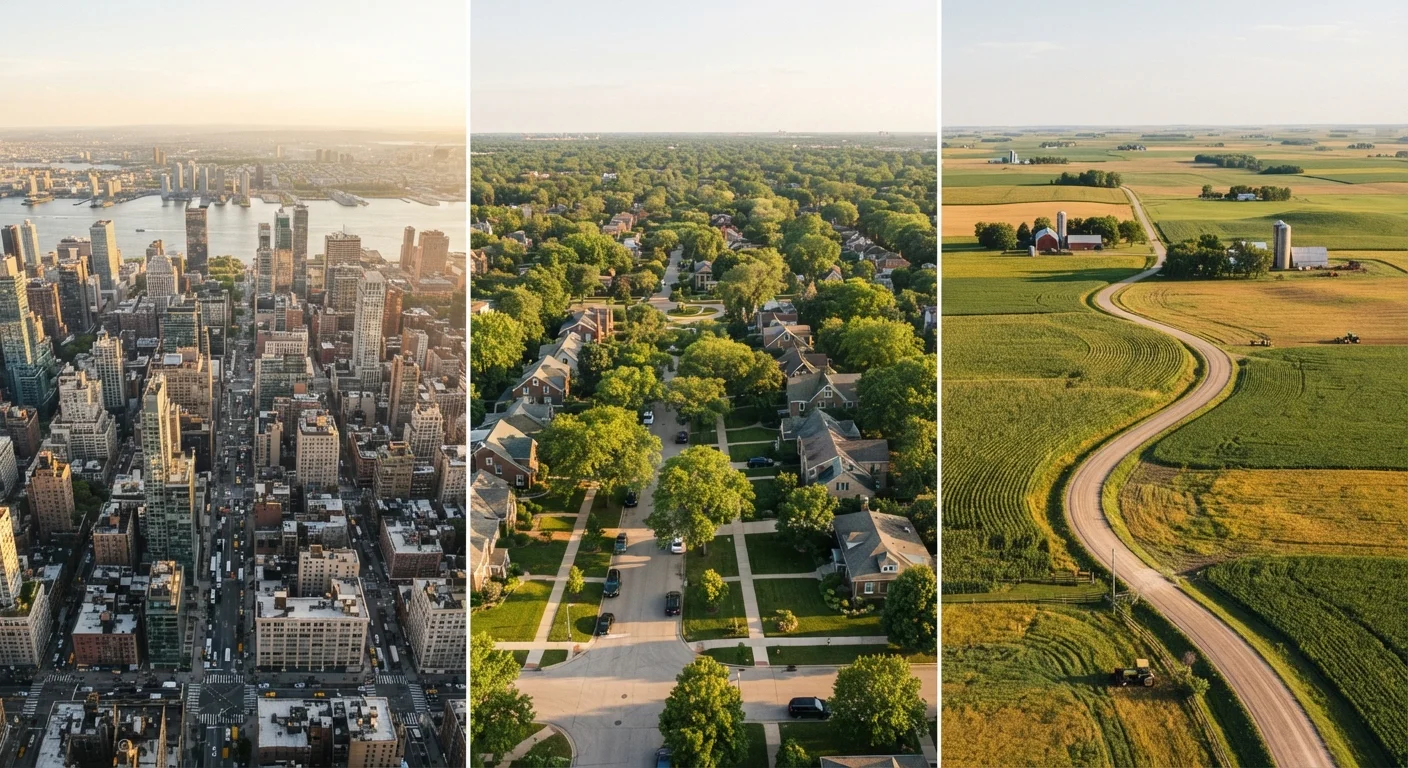
The oldest and most literal meaning ties community to geography — a neighborhood, a small town, a zip code. When someone says 'this community deserves better schools,' they almost always mean the people who live within a defined area. This is the sense that shapes local government, school districts, and zoning debates. As our related piece explores, community looks quite different across urban, suburban, and rural America.
Identity
The second meaning groups people by shared characteristics — ethnicity, religion, profession, sexuality, or disability status. 'The Latino community' or 'the deaf community' signals not just shared traits but shared experiences, cultural knowledge, and sometimes shared political interests. This use emphasizes solidarity over geography.
Interest and Practice
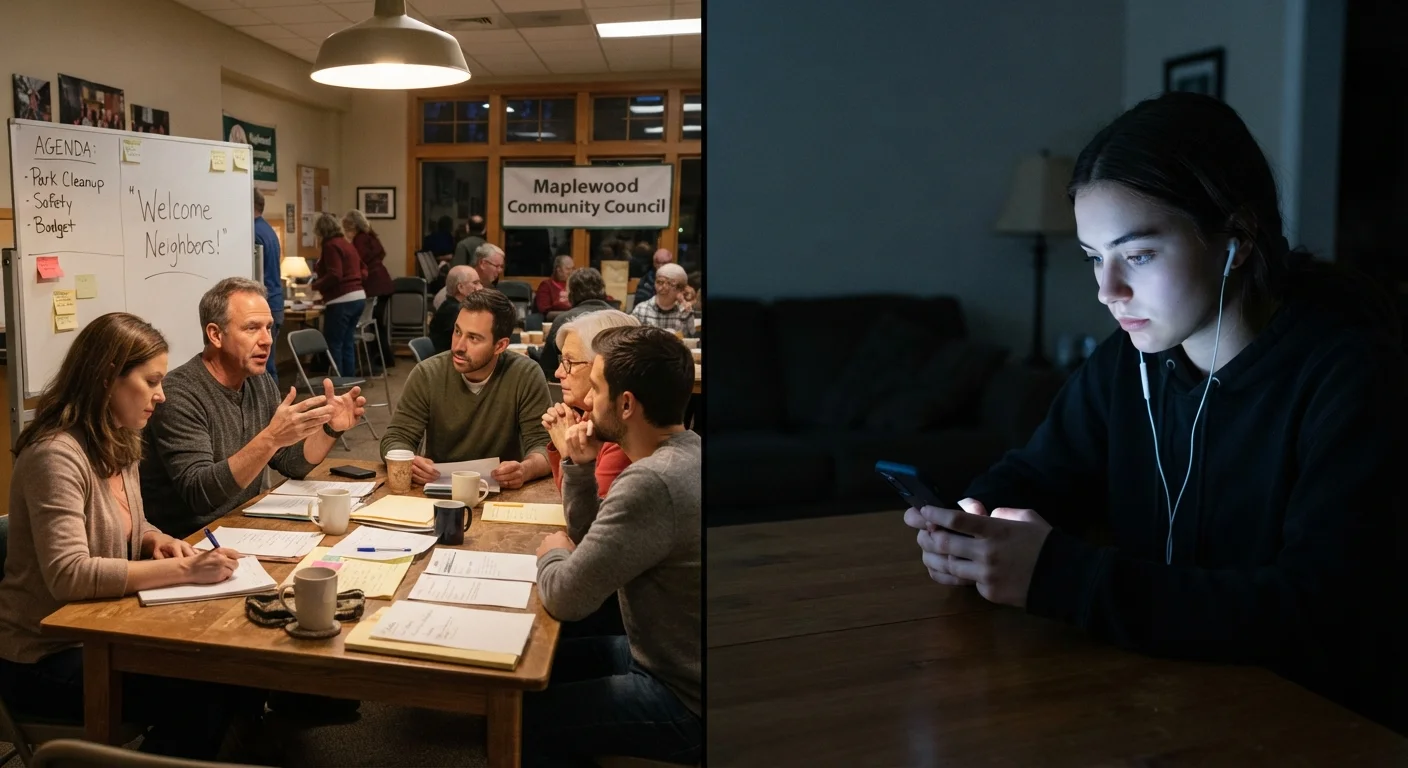
The third meaning — increasingly common in digital life — groups people around shared passions, hobbies, or goals. A gaming community, a gardening community, a true-crime podcast fandom: these are communities of choice, assembled around engagement rather than birth or location. Online communities and neighborhood associations both serve real social needs, though in different ways.
~1 in 5
Americans who move in any given year
U.S. Census Bureau data has long shown that Americans are among the most geographically mobile populations in the developed world, which shapes how community ties form and dissolve.
72%
Adults who say a sense of belonging matters greatly
A Pew Research Center survey on social connections found that a large majority of Americans consider belonging to a community an important part of their well-being.
3 in 10
Americans who report feeling lonely often
A 2023 advisory from the U.S. Surgeon General described loneliness as a public health concern, noting that many Americans lack sufficient social connection despite living in densely populated areas.
Why the Word Carries So Much Emotional Weight
Community isn't just a descriptor — it's a value claim. When Americans invoke the word, they are usually signaling that a group deserves recognition, care, and a seat at the table. Saying 'the community was not consulted' implies a moral failing. Saying 'this is for the community' frames an action as generous rather than self-serving.
This emotional charge explains why the word gets used so liberally by politicians, nonprofit leaders, marketers, and journalists. It signals inclusion and shared purpose without requiring precision. That same vagueness, however, can obscure real disagreements about who belongs, who speaks for a group, and what the group actually wants.
“The most important thing in the world is to be part of a group that is caring for the world. Community isn't just a place — it's an orientation toward others.”
— Robert Bellah, Sociologist and author of 'Habits of the Heart,' a landmark study of American individualism and community life
How American Mobility Reshapes the Concept
One of the distinctive features of American social life is how often people move. Frequent relocation means many Americans cannot rely on long-term, place-based ties the way people in less mobile societies often can. As a result, Americans have become skilled — sometimes by necessity — at building community deliberately and quickly, rather than inheriting it passively.
This is part of why identity-based and interest-based communities have grown in importance: they travel with you. Your neighborhood changes when you move; your professional community, your faith community, or your online community often does not. Frequent relocation shapes how Americans form attachments and define home in ways that are still being studied by social scientists.
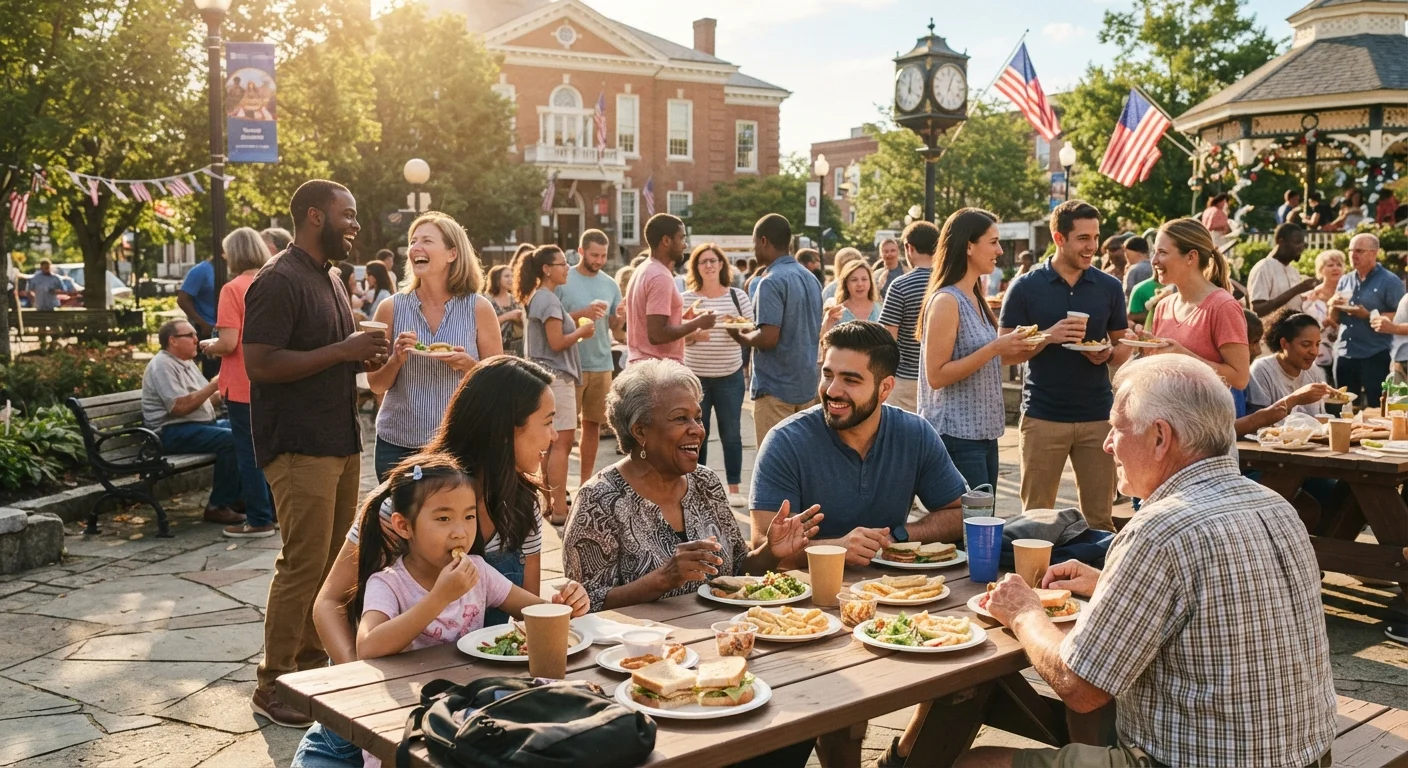
Rituals that seem mundane often carry this community-building function. Something as simple as a potluck dinner, for instance, encodes values of reciprocity and shared effort. The potluck tradition reflects deeply held American values around belonging that go well beyond the food itself.
Building Community After a Move
If you've recently relocated, social researchers suggest that showing up consistently — at a local organization, faith community, or recurring neighborhood event — matters more than any single grand gesture. Regular, low-stakes contact is how acquaintances become genuine community members over time.
Reading the Word in Context
Because 'community' can mean so many things, it helps to ask a few clarifying questions whenever you encounter it: Who counts as a member? Who decided? Is membership based on location, identity, or choice? Does the group have formal institutions — a neighborhood association, a cultural organization, a governing body — or is it entirely informal?
Those questions matter for civic participation, too. Some markers reveal whether a community is truly connected or simply uses the language of togetherness without the substance. And being a good neighbor — a small but meaningful unit of community life — has its own evolving set of expectations in an era of denser cities and digital communication.
In the end, the word 'community' persists because the underlying desire it names is real and durable: the need to feel known, to belong somewhere, and to be part of something larger than yourself.
This article is for general informational and educational purposes only and does not constitute sociological, legal, or professional advice.