
The Geography of Connection
Where you live shapes more than your commute or property taxes — it profoundly influences how you know your neighbors, whether you trust strangers, and what "community" even means to you day to day. As explored in our piece on what Americans mean when they talk about community, the word carries different weight depending on context. Geography is one of the most powerful of those contexts.
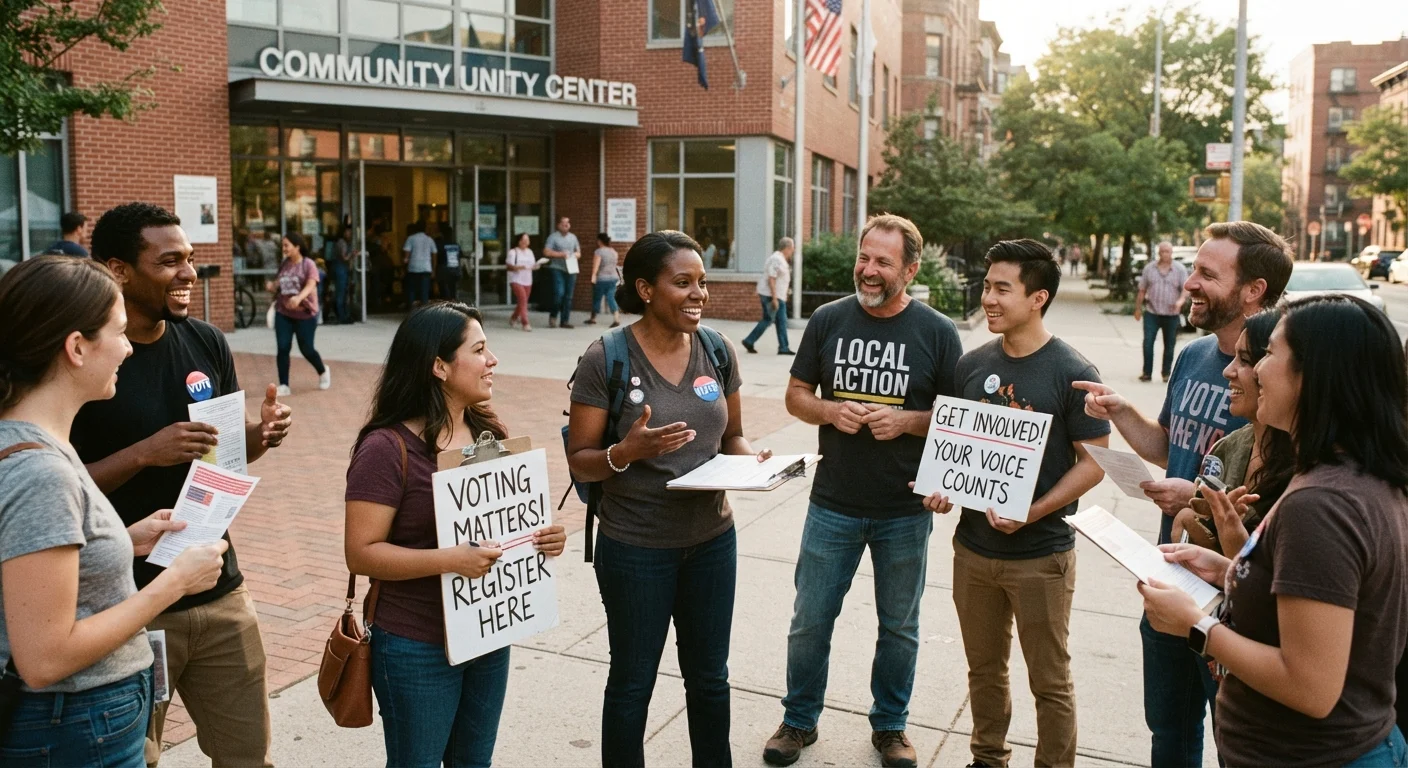
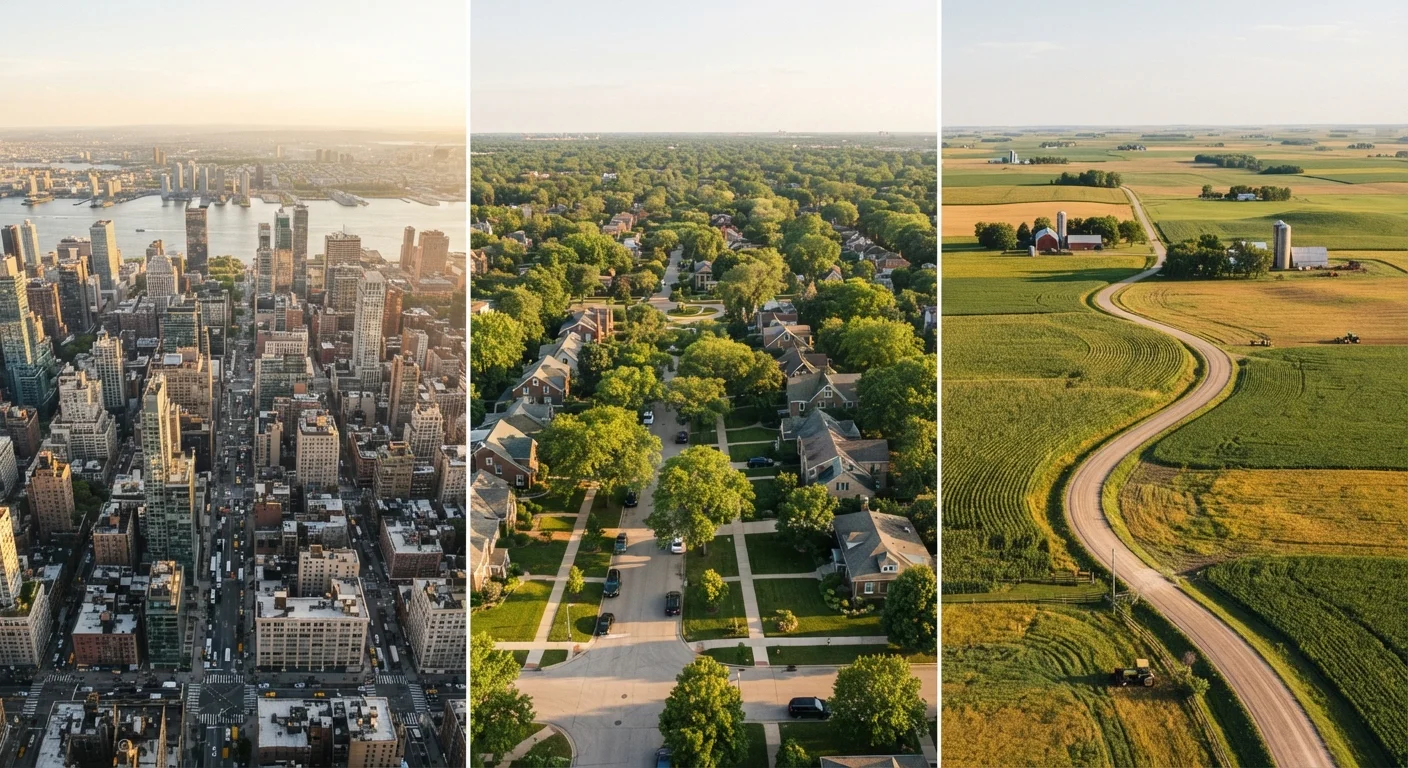
Research from the Pew Research Center and the National Opinion Research Center has consistently found that rural residents report higher rates of community attachment than their urban counterparts, yet urban areas often outperform rural ones on formal civic participation measures such as organized volunteering and voter registration drives. Suburban residents, meanwhile, frequently describe community in terms of school systems, homeowners associations, and youth sports leagues — structures that are neither the organic familiarity of rural life nor the dense civic fabric of a city.
Understanding these differences isn't about ranking places. It's about recognizing that connection is built through different mechanisms across different geographies.
| Urban | Suburban | Rural | |
|---|---|---|---|
| Neighbor familiarity | Often low | Moderate | Typically high |
| Formal civic infrastructure | Strong and diverse | Organized around schools/HOAs | Limited, often strained |
| Informal mutual aid | Patchwork, interest-based | Moderate, life-stage dependent | Deep and generational |
| Third places (cafés, libraries, etc.) | Abundant | Declining | Scarce and closing |
| Social isolation risk | High for newcomers | High outside family life stage | High amid outmigration |
| Community type | Opt-in, interest-based | Geography and institution-based | Long-term familiarity-based |
Urban America: Anonymous but Infrastructure-Rich
City life is often characterized as lonely — a contradiction of millions of people who rarely know one another's names. There's real data behind that perception. Urban residents consistently report lower rates of knowing their immediate neighbors compared to rural or suburban dwellers. Physical density does not automatically produce social closeness.
Yet cities tend to develop robust civic infrastructure that compensates: community boards, neighborhood associations, cultural organizations, mutual aid networks, libraries with active programming, and advocacy groups that mobilize residents around shared interests. Civic participation, in its formal sense, often thrives in urban environments precisely because population size supports dedicated organizations.
Urban community also tends to be opt-in and interest-based rather than geography-based. A resident may feel stronger ties to a faith community, a running club, or an immigrant cultural organization than to the block they happen to live on. Our article on how immigrant communities have shaped American identity illustrates how this layered, chosen-community model has long been part of city life.
Building Connection in a Dense City
Urban residents looking to deepen community ties often find more success through interest-based groups — faith communities, recreational leagues, neighborhood mutual aid networks — than through proximity alone. Attending a local community board meeting is one concrete way to plug into civic life and meet neighbors who are actively invested in the area.
Suburban America: Organized but Potentially Isolated
The American suburb promised community — safe streets, good schools, friendly neighbors with shared lawns. In many respects it delivered. Suburban residents typically report high satisfaction with their local schools and feel relatively safe in their neighborhoods. Formal structures like homeowners associations and parent-teacher organizations create ready-made civic touchpoints.
But suburban design carries a structural tension: car dependency limits the kind of casual, unplanned social contact that sidewalks and corner stores naturally generate. Without what sociologists call "third places" — the coffee shops, barbershops, and libraries that anchor informal social life — residents can go days without meaningful interaction outside their immediate household. The slow decline of the third place is felt particularly acutely in auto-oriented suburbs.
Suburban community also tends to be life-stage dependent: families with children are drawn into rich social networks through schools and activities, while empty-nesters and young singles can find the same environment surprisingly isolating. See our piece on signs a neighborhood is genuinely civically engaged for markers that distinguish surface-level cohesion from real connection.
Rural America: Familiar but Resource-Stretched
Rural community is often built on long timelines. Families who have lived in the same county for generations develop dense webs of mutual obligation — helping with harvests, covering child care in emergencies, showing up without being asked. Informal mutual aid, the kind that doesn't get counted in volunteer statistics, is frequently stronger in rural settings than anywhere else.
That deep familiarity cuts both ways. Rural communities can also be less welcoming to newcomers, and social pressure in small, tight-knit populations can be intense. Research on social trust suggests that while rural residents express high interpersonal trust within their known networks, trust toward strangers and institutions can be lower than in cities.
Rural settings also face structural pressures on community: the closure of local hospitals, schools, and third places like diners and community centers hollows out the physical infrastructure around which social life organizes. Geographic distance makes attending civic events harder. And as explored in our piece on why Americans keep moving, rural outmigration of younger residents strains the bonds that once held these communities together.
Rural Community Is Under Real Structural Pressure
The loss of schools, hospitals, and gathering places in rural America isn't just an inconvenience — it actively erodes the social infrastructure that holds communities together. Residents and policymakers alike should recognize that maintaining physical community anchors is inseparable from maintaining social connection. If you're researching a rural area to live in, pay attention to what institutions remain active and well-supported.
What All Three Settings Share — and What Divides Them
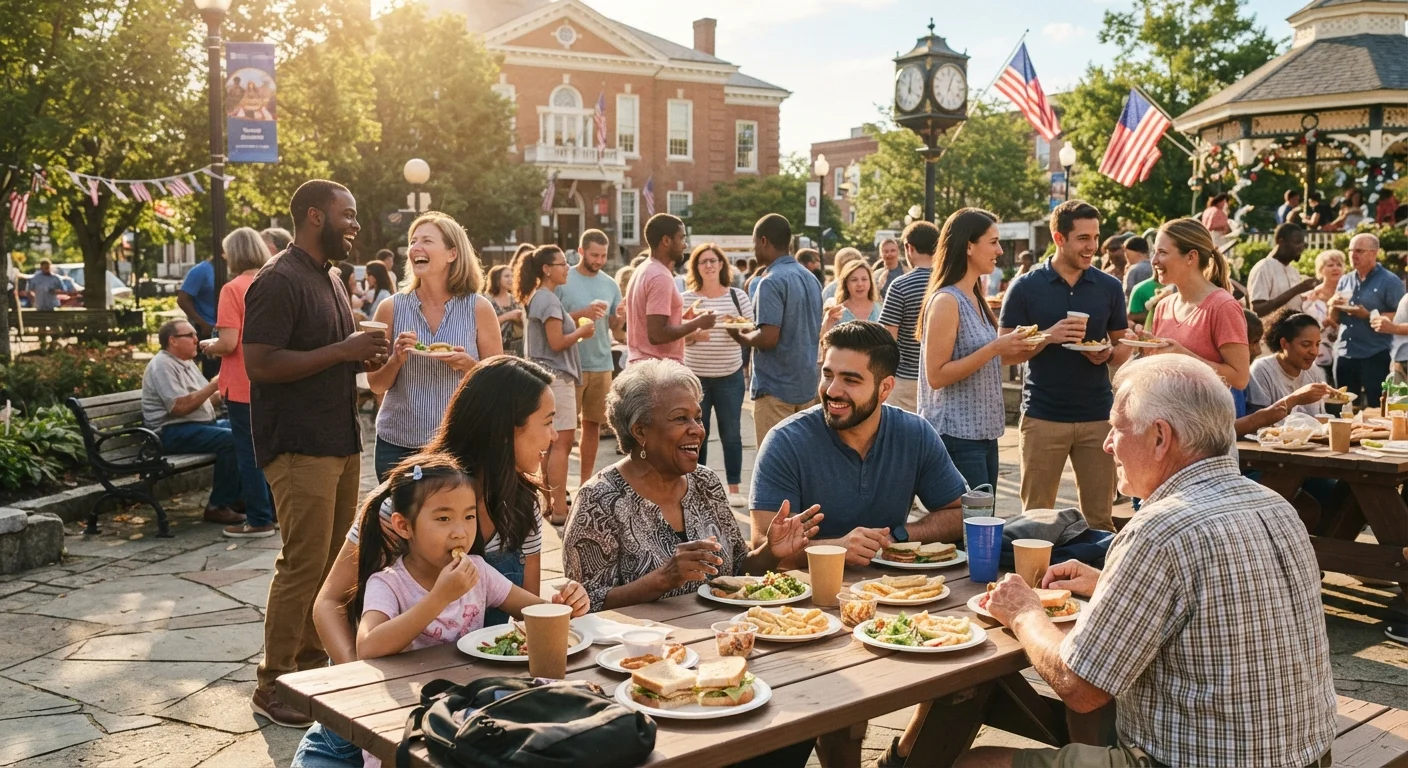
Across all three geographies, community functions best when it has physical anchors, regular rituals, and some mechanism for resolving conflict. Block parties, high school football games, and church potlucks all serve versions of the same social purpose — repeated, low-stakes contact that builds familiarity over time.
The differences lie in scale, density, and the degree to which community is structured versus organic. Urban residents may need to be more intentional about building it; rural residents may inherit it but struggle to sustain it as populations shift; suburban residents may find it readily available during certain life stages and elusive at others.
Geography also interacts with generational expectations. As our coverage of generational gaps in community responsibility shows, younger Americans are more likely to find community online or through interest-based networks regardless of where they physically live — a shift that complicates any simple geography-based analysis. Likewise, for those who have moved frequently, online communities and neighborhood associations may serve complementary roles depending on which setting they now call home.
This article is for general informational and educational purposes. Community experiences vary significantly by individual circumstance, local history, and demographic factors not fully captured here.