
Why Generations See Community Duty Differently
Americans broadly agree that communities matter. But when it comes to who is responsible for maintaining them — and how — the generational divides can be surprisingly sharp. These aren't simply political differences; they reflect fundamentally different life experiences, economic realities, and cultural touchstones that shaped each cohort's relationship with collective life.
Research from institutions like the Pew Research Center consistently finds that trust in public institutions, attitudes toward government, and definitions of civic participation vary significantly across age groups. Understanding these differences isn't about assigning blame or picking winners — it's about recognizing that people are often talking past each other because they're working from different mental models of what community actually demands.
For more on how geography also shapes these dynamics, see our piece on how community looks different across urban, suburban, and rural America.
| Baby Boomers | Generation X | Millennials | Gen Z | |
|---|---|---|---|---|
| Primary civic framework | Formal institutions and local government | Pragmatic, self-reliant networks | Peer-driven mutual aid | Systemic accountability |
| Trust in public institutions | Moderately high | Skeptical but engaged | Low but locally engaged | Very low institutionally |
| Preferred form of participation | Voting, civic groups, volunteerism | Direct personal action | Grassroots organizing | Advocacy and digital mobilization |
| Definition of community duty | Upholding shared institutions | Reliable personal integrity | Collective care and solidarity | Structural fairness and equity |
| View of government's role | Legitimate lead actor | Limited but necessary | Supplementary to community | Often inadequate or complicit |
Boomers and Gen X: Institutions vs. Independence
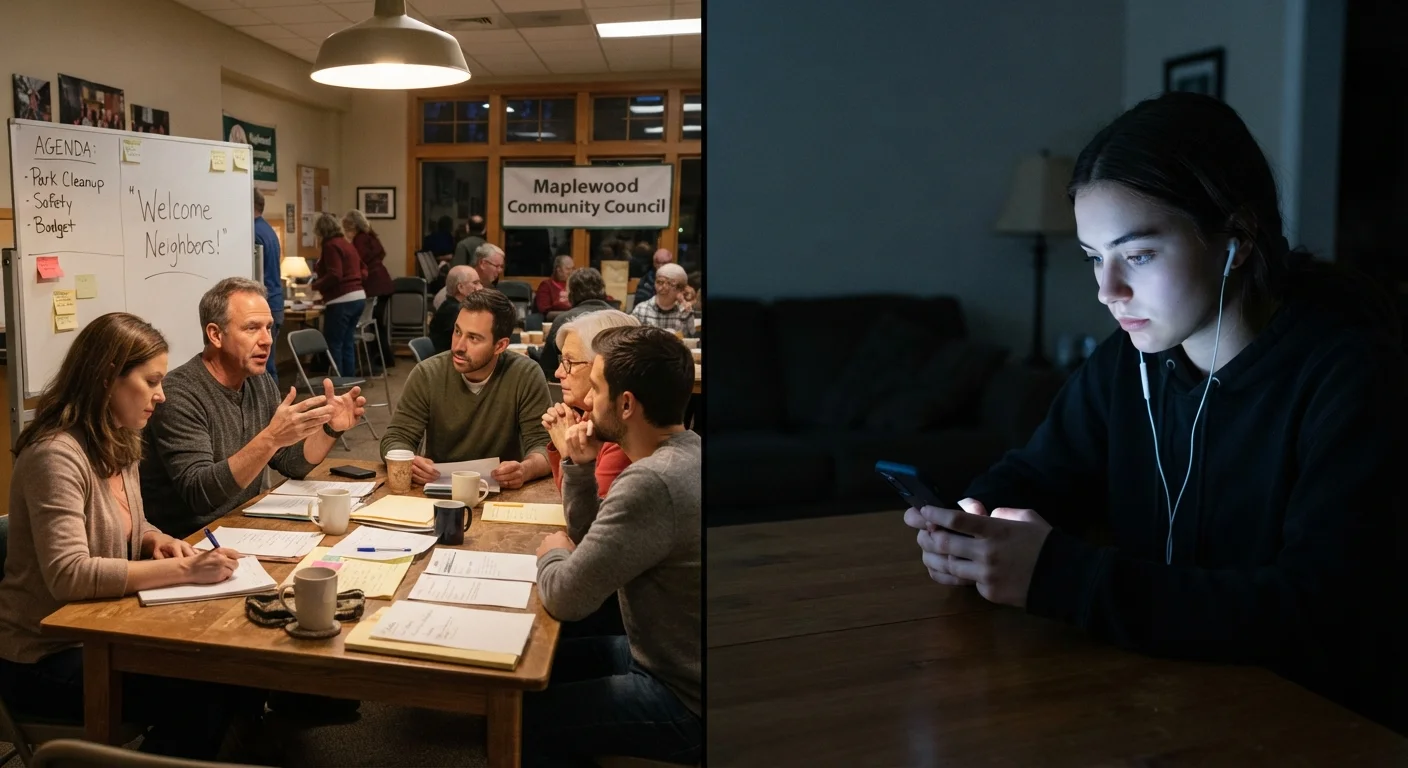
Baby Boomers (born roughly 1946–1964) came of age during a period of relative institutional confidence — the post-war era, the Civil Rights Movement, the Great Society programs. For many in this generation, community responsibility is closely tied to formal participation: voting, joining civic organizations like the PTA or Rotary Club, attending city council meetings, and supporting local services through taxes and volunteerism.
Generation X (born roughly 1965–1980) inherits a more complicated picture. Coming of age during stagflation, the AIDS crisis, and rising divorce rates, many Gen Xers developed a pragmatic skepticism toward institutions they saw as unreliable. Yet they are not disengaged — they often show up in quieter, less visible ways: mentoring individuals, supporting local businesses, maintaining neighborhood relationships without formal structure. Research suggests Gen X tends to prize self-reliance while still recognizing interdependence.
Bridge the Gap With Shared Goals
When working across generational lines on community issues, leading with concrete shared outcomes — safer streets, better schools, more green space — tends to be more effective than debating the 'right' form of civic participation. What looks like disagreement about values is often a disagreement about methods. Finding the overlap in desired results can open the door to genuine collaboration.
The contrast matters. Where a Boomer might advocate for a new community center through the city government, a Gen Xer might prefer organizing a neighborhood fundraiser — same goal, very different instincts about who should be doing what.
Millennials and Gen Z: Mutual Aid and Systemic Thinking
Millennials (born roughly 1981–1996) entered adulthood during the 2008 financial crisis and came to civic life amid declining institutional trust. Their model of community responsibility leans heavily on peer networks, mutual aid, and collaborative problem-solving. Concepts like cooperative housing, community fridges, and crowdfunded local support became more visible under Millennial organizing energy. They tend to view community duty as interpersonal and grassroots rather than top-down.
Gen Z (born roughly 1997–2012) goes a step further, often framing community responsibility through the lens of systemic accountability. Climate, racial equity, and economic fairness are frequently cited as collective obligations — not just personal virtues. Digital-first organizing comes naturally to this cohort, which raises questions about how online and in-person community connections compare in effectiveness and depth.
27%
Gen Z adults who say they trust government
Pew Research Center surveys have consistently found Gen Z among the least likely generations to express confidence in federal government to do what is right.
2x
Boomers' voter turnout vs. younger generations
U.S. Census Bureau data on voter turnout shows older Americans vote at roughly twice the rate of Americans under 30 in midterm elections.
Younger generations are also statistically less likely to own homes or have long residential tenure — factors that research links to lower rates of traditional neighborhood engagement, even when personal civic values are strong.
Where the Friction — and the Common Ground — Lies
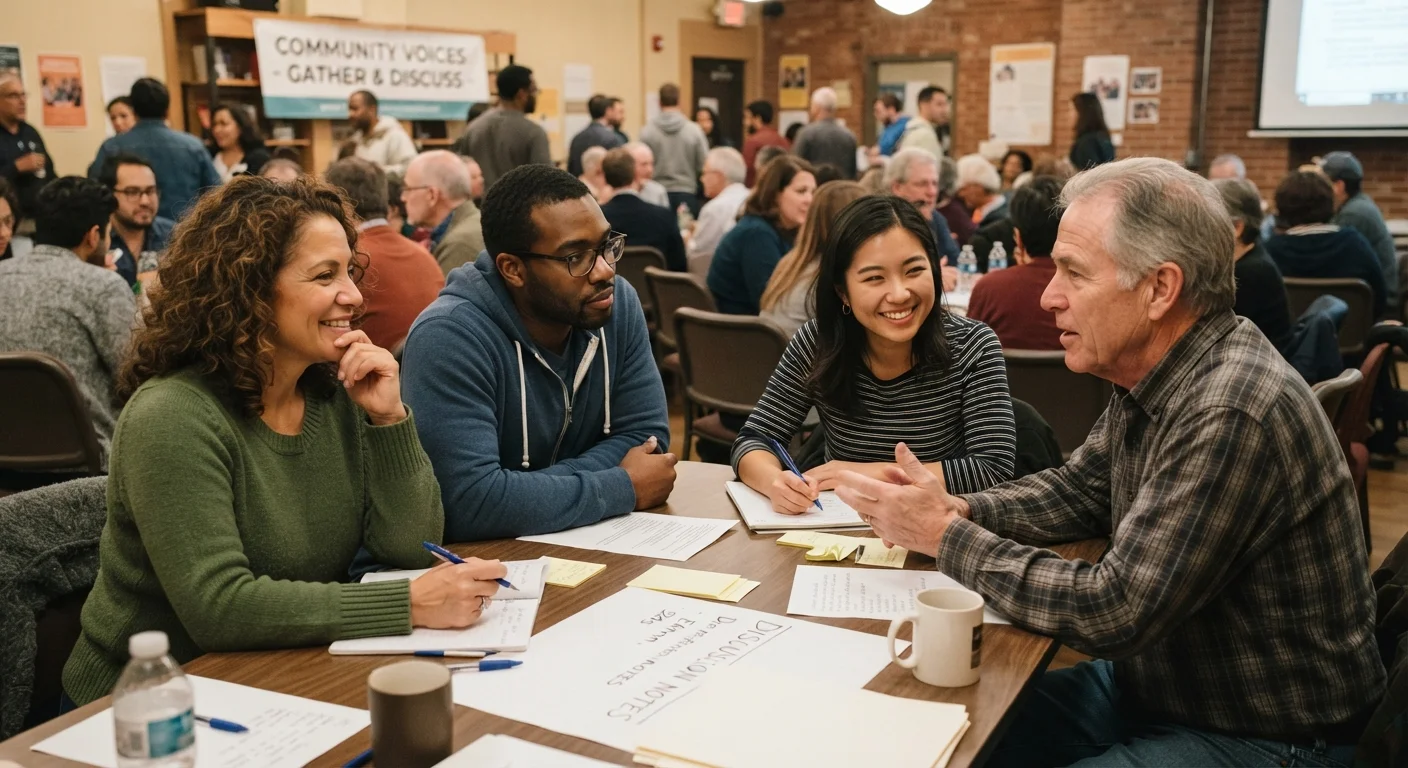
These different frameworks create real friction. When a Boomer city council member and a Gen Z community organizer are both trying to improve a neighborhood, they may fundamentally disagree about who holds the authority to act and what counts as legitimate participation. A Gen Xer who quietly mentors youth may feel dismissed by a Millennial who prizes visible collective action. These gaps in how people define civic virtue can make collaboration harder even when the underlying goals overlap.
The common ground, however, is real. Across all four generations, surveys tend to show broad agreement that neighbors should look out for one another, that community decline is a genuine problem, and that personal action matters. Researchers studying social trust in America note that while institutional trust has eroded, interpersonal trust at the neighborhood level has proven more durable.
Cross-generational households — like those navigating the challenges described in our look at the sandwich generation — often become informal laboratories for exactly this kind of values negotiation, with family members holding genuinely different views on collective obligation sitting at the same dinner table.
Ultimately, the gaps are real but not insurmountable. What looks like apathy in one generation is often simply a different idea of where duty properly lives — and recognizing that distinction is where meaningful civic conversation can begin.